
 Swan Bradshaw
Santorini, Greece
Day 1
We disembarked the Oosterdam in Athens this morning and caught a flight over to Santorini. We got breakfast on board before disembarking so that made it a relaxing morning and then had plenty of time to get to the airport, the three hour wait at the airport was longer than the 30 minute hop over to the island, but all in all an easy transition after the cruise days.
Santorini
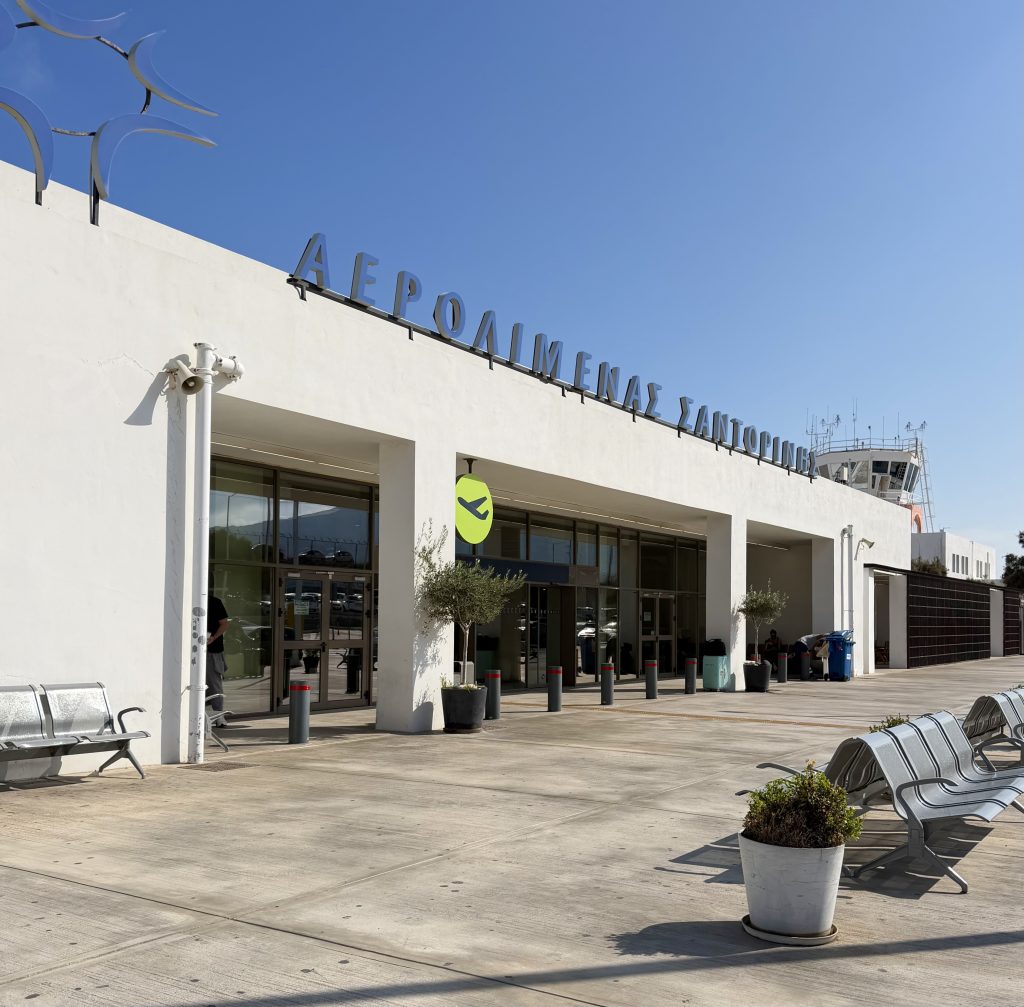
Santorini airport is fairly small. It took us about 10 minutes after we got off the plane, picked up our luggage, and exited.
Our Uber driver was super friendly and introduced us to many things about Santorini as he drove us to the hotel.
Mystique Marriott
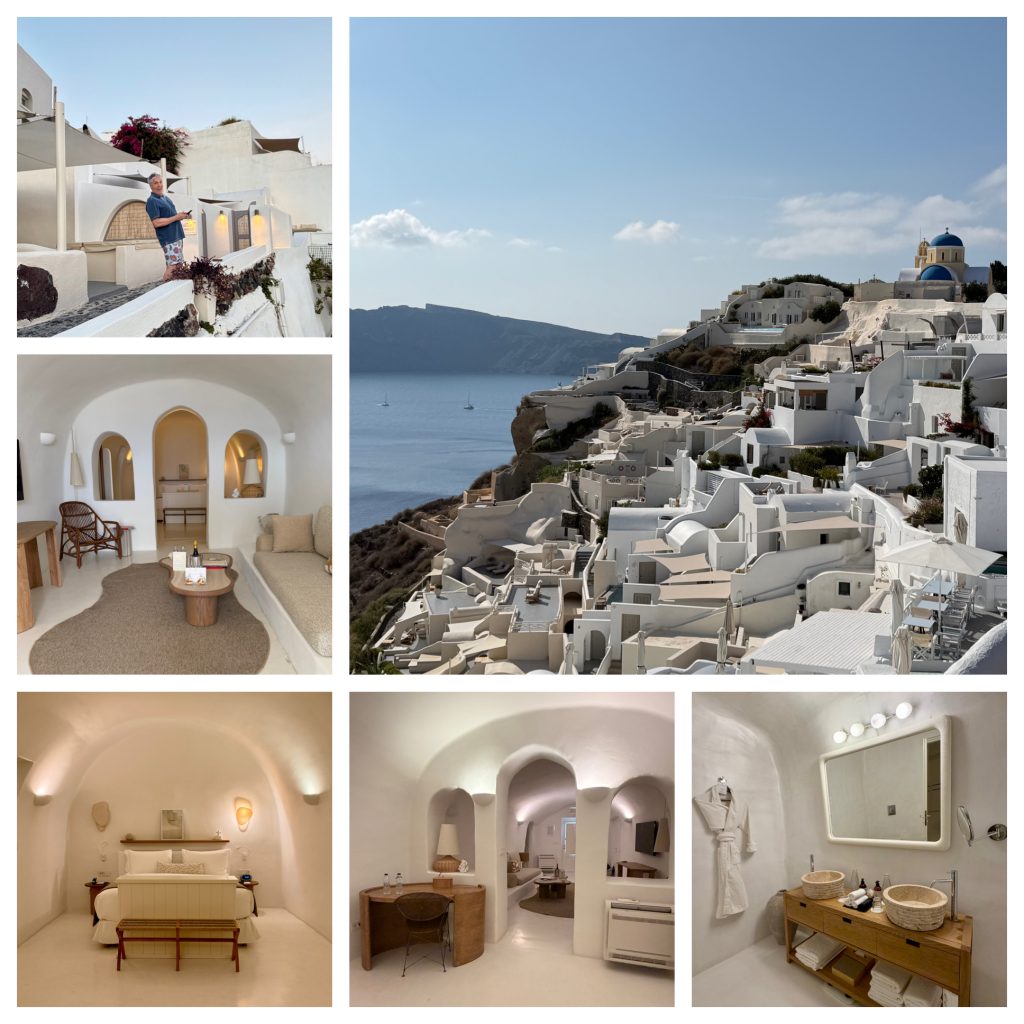
We checked into Mystique, a Marriott “Luxury Collection” Hotel, in Oia. It sits on the rim of the Santorini Caldera (the collapsed volcanic crater), overlooking the Aegean Sea and the volcano. The property opened in 2007 under and was built as a collection of cave-style suites carved into the caldera cliffs. It started with about 18 rooms and has grown to around 42. An interesting detail from the recent renovation: some of the bedside tables are made from compressed olive pits—an inventive use of local material.
We were upgraded into a room with a private jacuzzi—exactly the kind of quiet luxury that makes the legs and shoulders unwind after travel. The view out over the Aegean Sea and the stillness of the room (pretty much a caldera cave) felt like a proper reward.
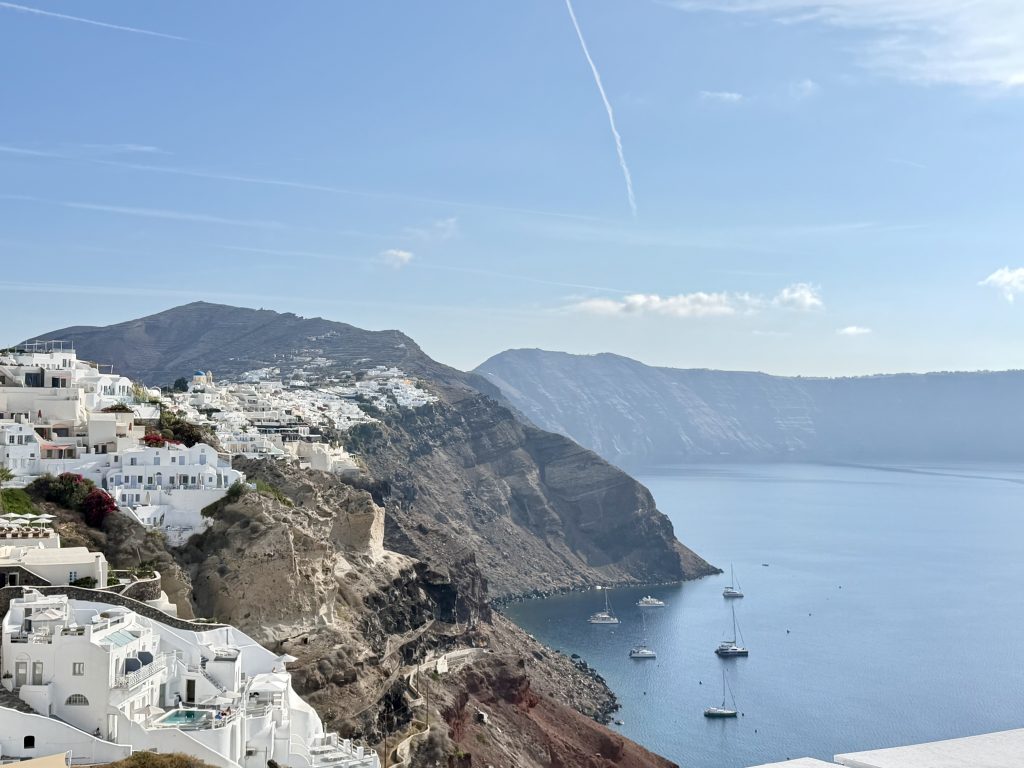
Later we walked down the main street from the hotel into Oia. The light, the whitewashed walls, the blue domes, and the open Aegean views were as striking as everyone says.
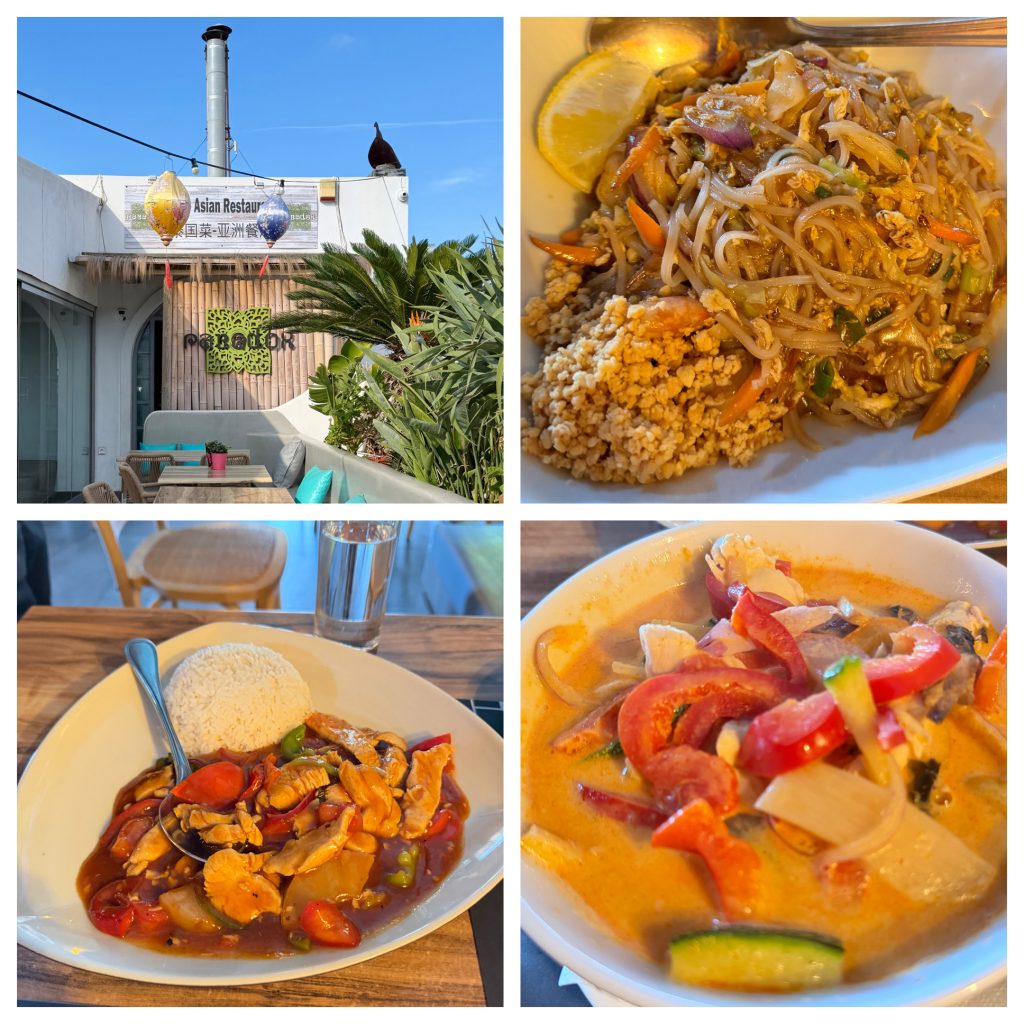
We stopped for a late lunch at Paradox Thai, then finished the afternoon with gelato and Greek donuts. Simple, sweet, and perfect for the setting.
Church of Saint Georgios (Agios Georgios)
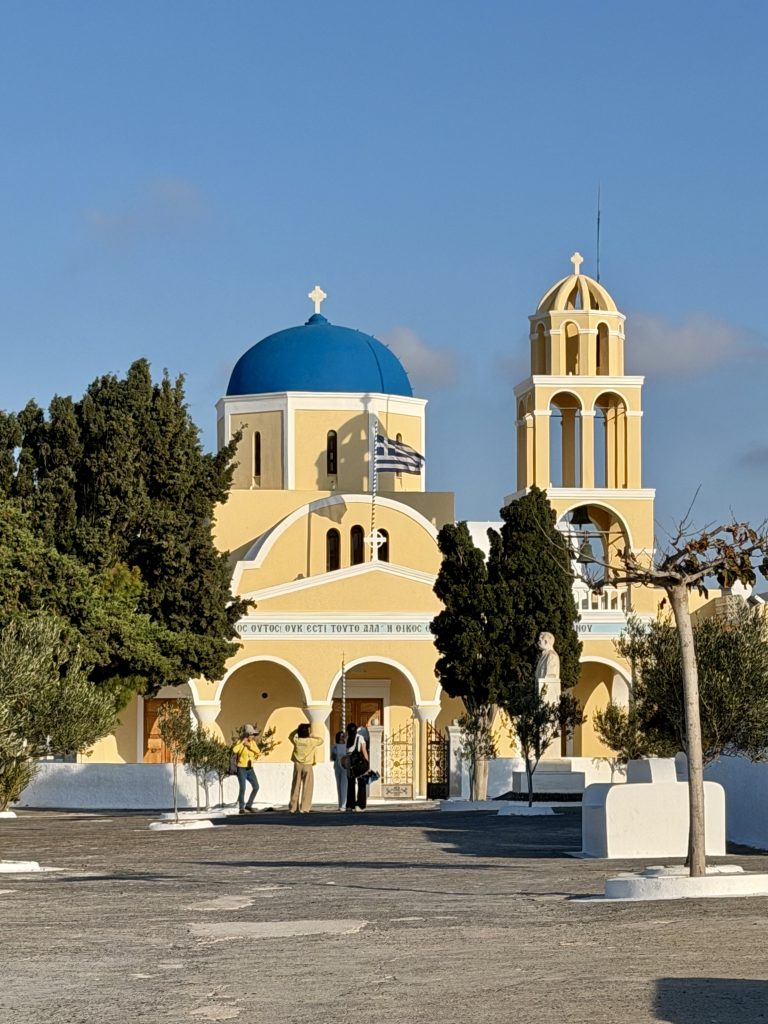
We also passed by the Church of Saint Georgios. Built in the early 19th century by the Nomikos shipping family, it was nearly destroyed in the 1956 earthquake and fully restored in 1966–67. The yellow facade and blue dome make it stand out among Oia’s whitewashed churches. Inside is a historic icon of St. George slaying the dragon, brought from Constantinople and silver-plated in 1869. It sits on a spacious square with cypress trees at the eastern edge of the village.
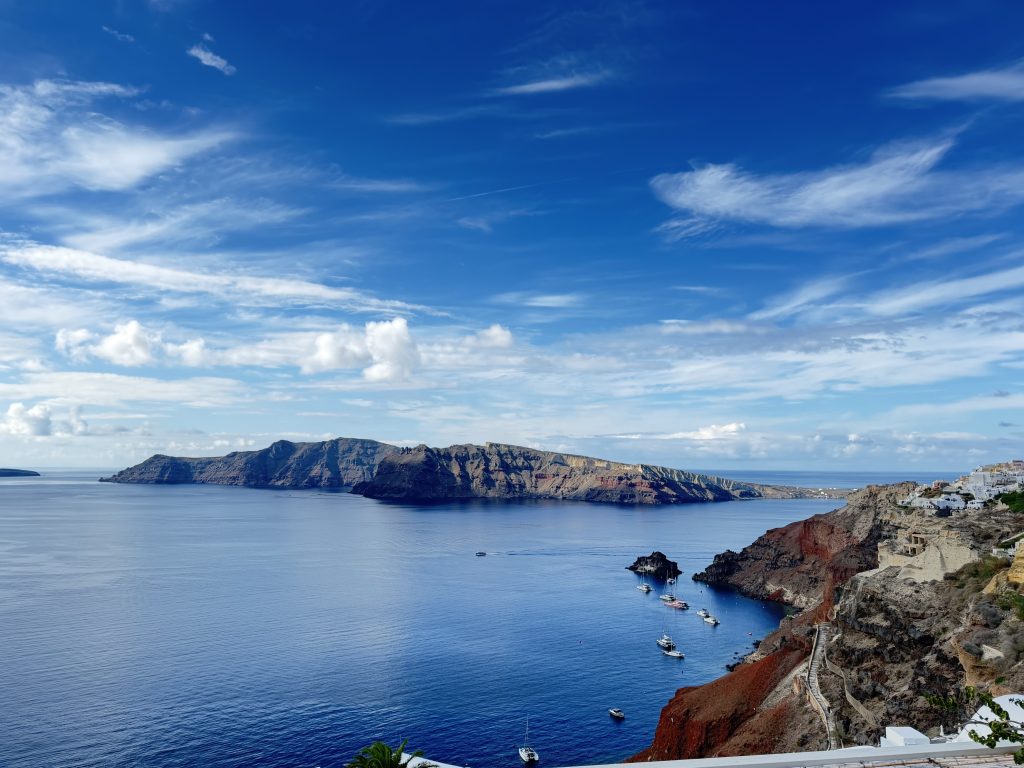
Beautiful scenery all around, and the jacuzzi waiting back at the room made the whole day feel unhurried and restorative,
Day 2
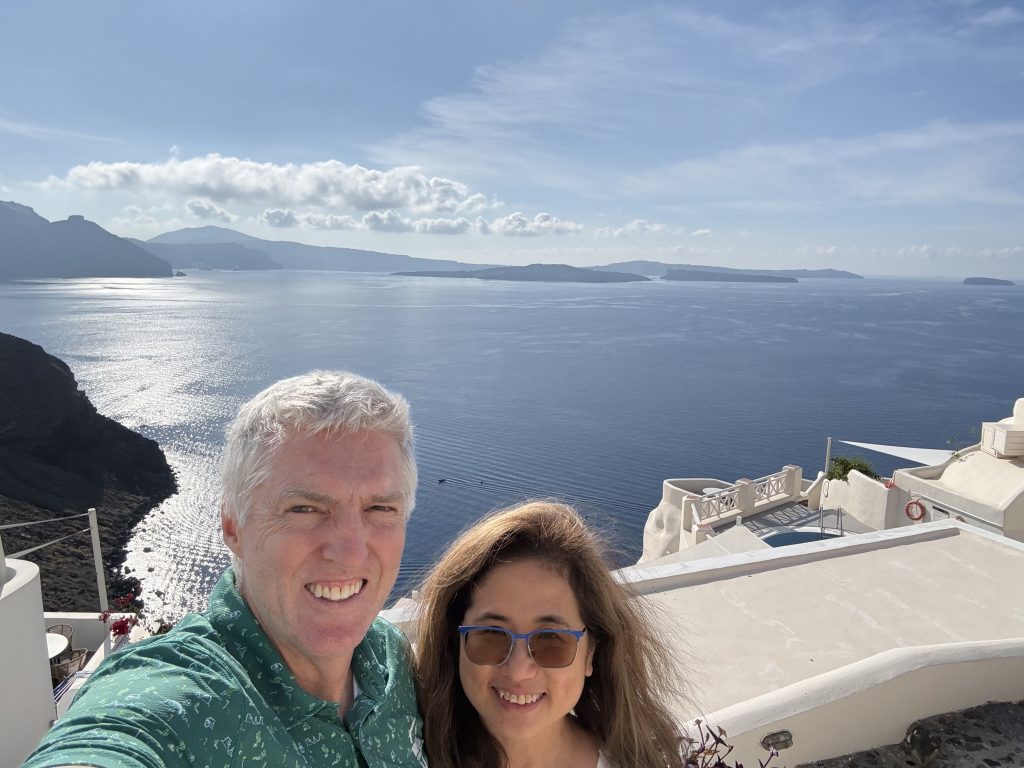
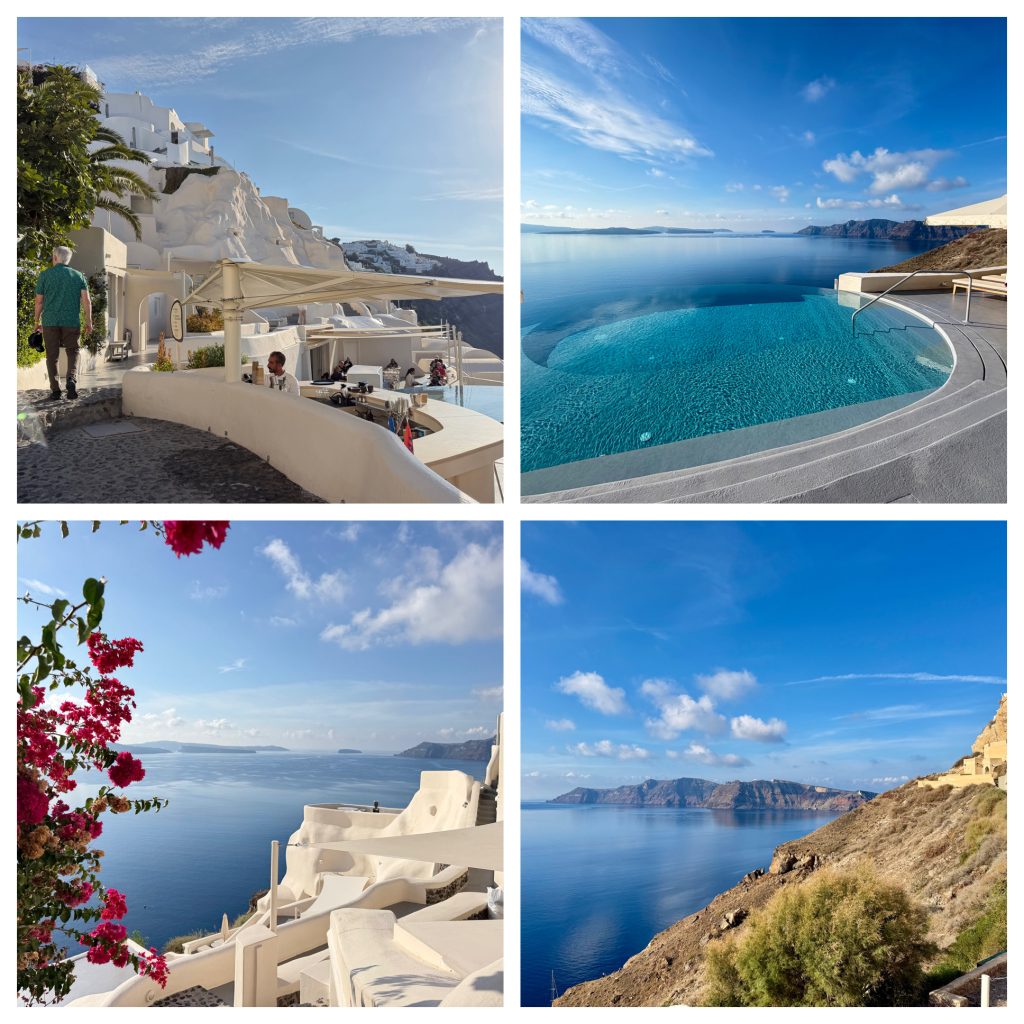
This morning we had breakfast at the hotel, the stairs going up and down are definitely not knees-friendly but the views made it all worthwhile.
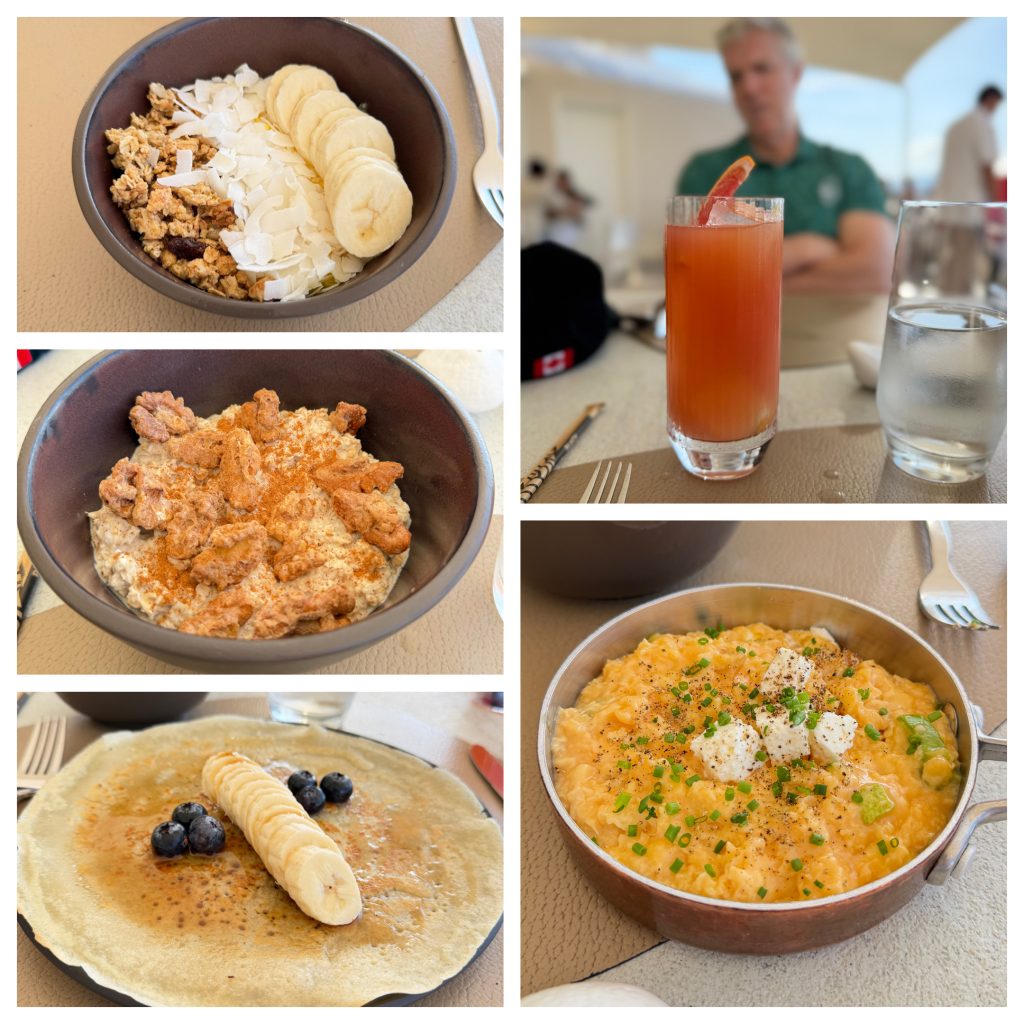
I had oatmeal with walnuts and cinnamon And crepes with fruits while Kevan ordered the Mediterranean yogurt bowl and a traditional Santorini breakfast dish with potatoes, zucchini and all the good stuff. I was most amazed with how crunchy the walnuts in my oatmeal were, the best I’d ever had and Kevan raved about the Greek yogurt, infused with mango and slightly different consistency from what we get in the US, but it was amazing!
After that we took a stroll up Main Street. By 9:30am, that place was already swarmed with tourists everywhere. Buildings on the calderas with blue domes were photo stops for everyone, including us.
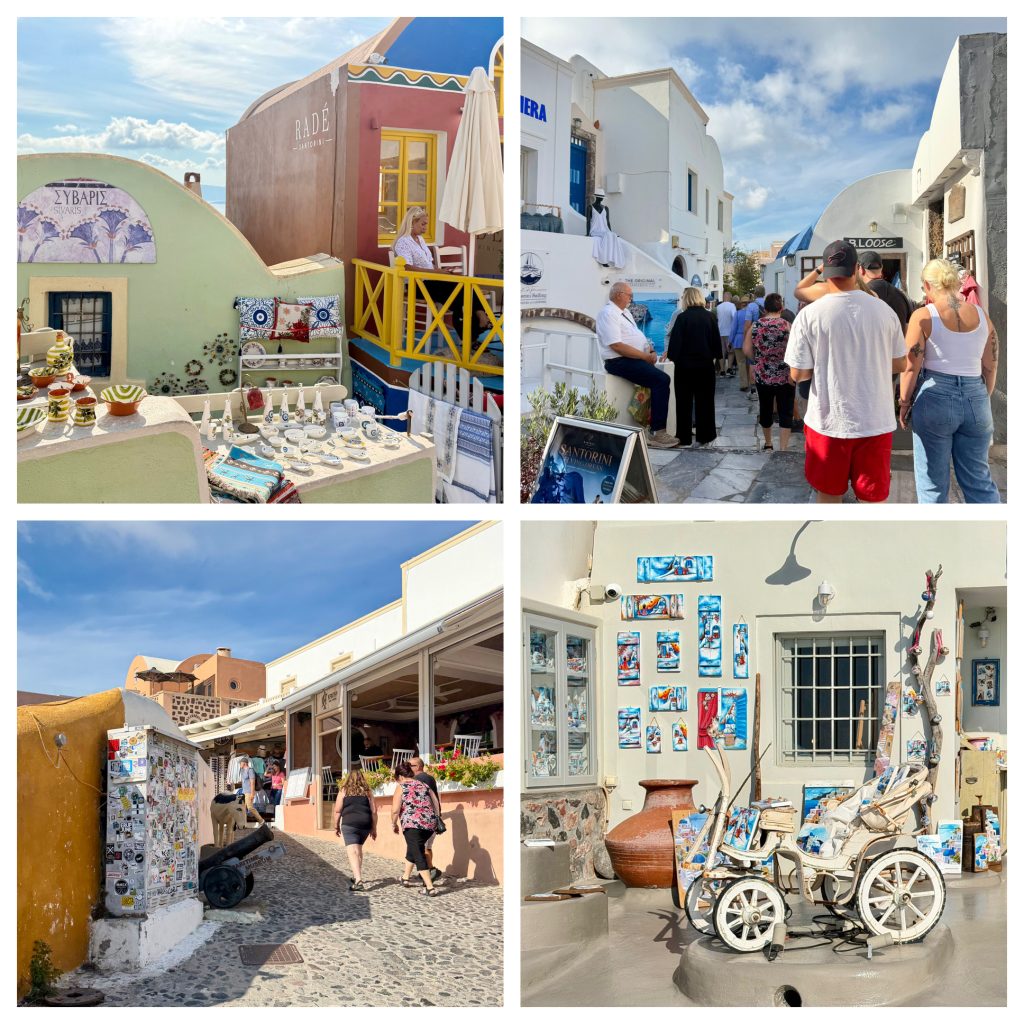
There were shops and restaurants lining up along the paths; apparently, these shops shut down for business starting in November in the slow season so they are at the end of the selling season.
Oia Village
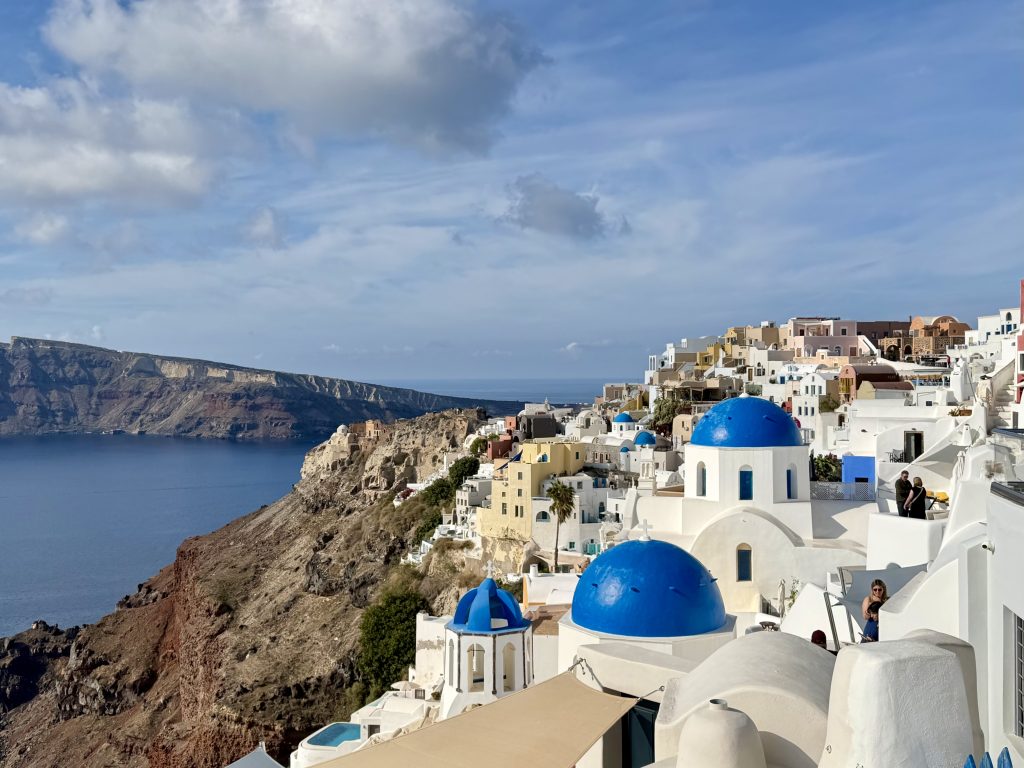
Oia sits at the northern tip of Santorini, a dense cluster of whitewashed houses, blue-domed churches, and marble-paved lanes built along the caldera rim. The main pedestrian path runs roughly east–west through the village; it is narrow, uneven in places, and lined with shops, galleries, and small restaurants.
Walking it once in daylight is useful so you know the steps, turns, and quieter side lanes before dark. Midday cruise-ship crowds can fill the main street, so early morning or late afternoon is quieter. From Mystique the walk into the center is short and mostly downhill toward the castle end.
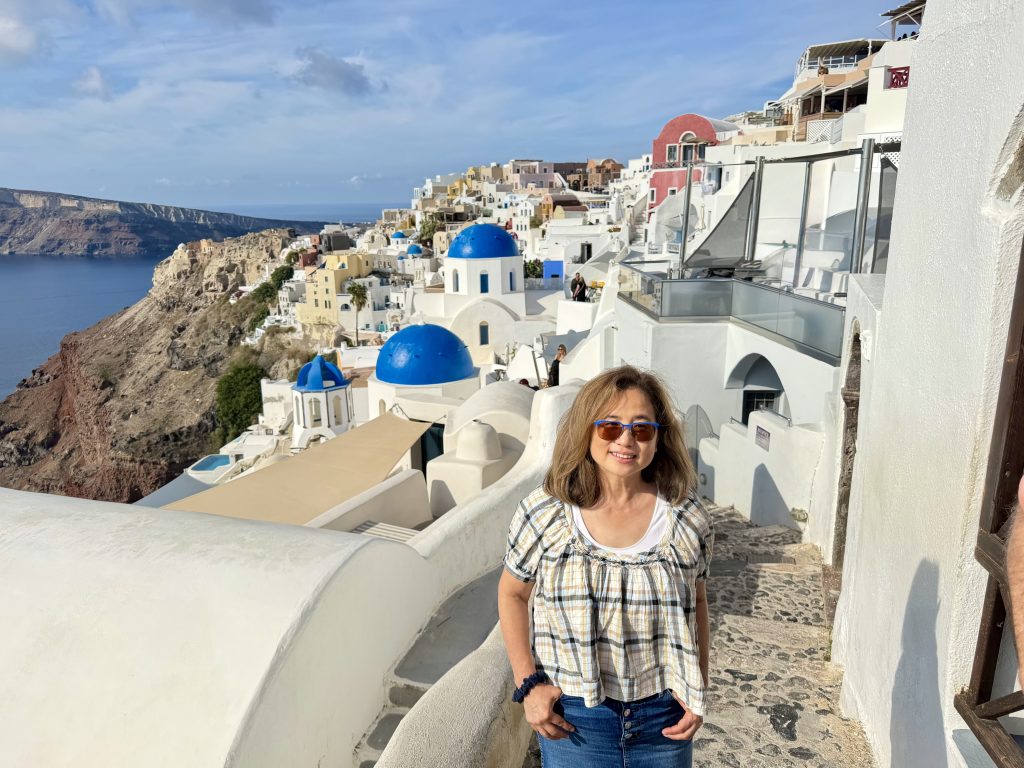
In the background are the three blue domes of the iconic cliffside churches in Oia, Santorini — a cluster of neighboring Greek Orthodox buildings that form one of the most photographed views in Greece.
The largest and most prominent blue dome belongs to Agios Spyridon Church (built in 1867). It is dedicated to Saint Spyridon and is distinguished by its matching blue bell tower with three arches and hanging bells.
The second blue dome belongs to the neighboring Anastasi Church (also called Anastasis or the Church of the Resurrection of the Lord), completed in 1865. It is dedicated to the Resurrection of Christ and is recognizable by its distinctive pale pink or peach-colored bell tower.
The third blue dome is the smaller domed bell tower that completes the classic “three blue domes” composition, most often associated with the Agios Spyridon complex.
Together, these whitewashed Cycladic churches sit side-by-side on the caldera edge above the Aegean, their cobalt domes echoing the colors of the Greek flag and the sea beyond.
Oia Castle Ruins (Castle of Agios Nikolaos / Kasteli of Agios Nikolaos)
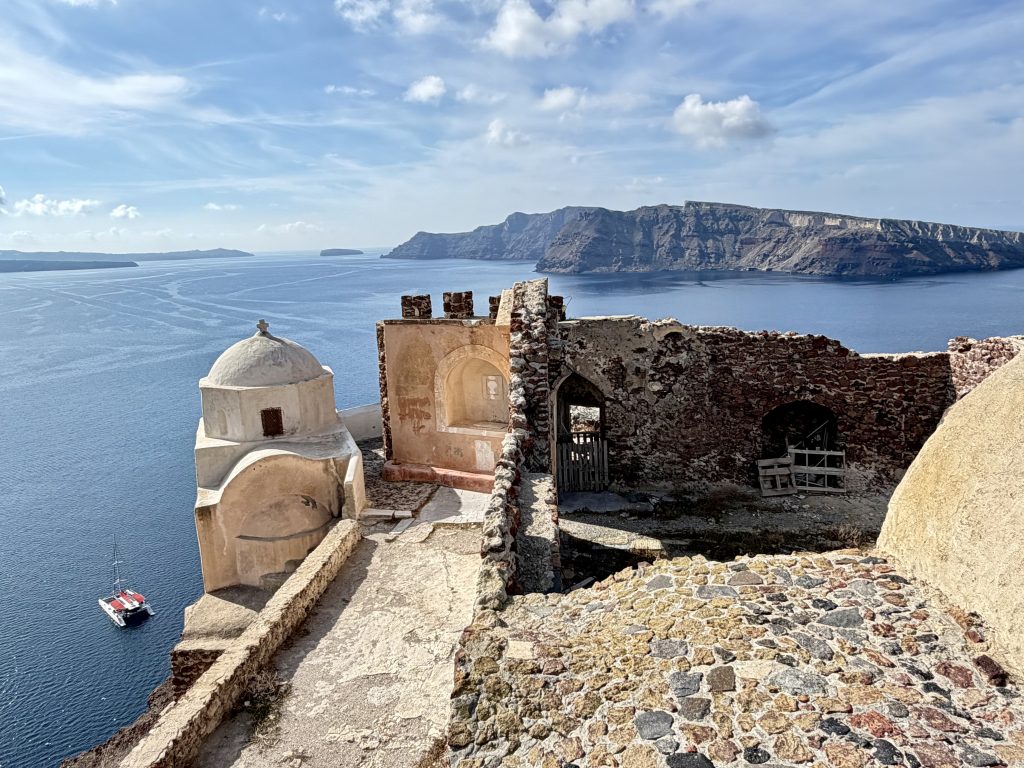
The Castle of Oia stands at the northwestern tip of the village on the edge of the caldera.
The Venetians built it around 1480 at the northwestern tip of the village, on the edge of a cliff, as one of several fortified settlements on Santorini meant to protect against pirate raids. It had thick walls, a watchtower above Amoudi Bay, narrow gateways, and residences inside. The original Church of Panagia Platsani once stood within its walls and is still visible over the castle wall.
The Ottomans took control of the island in the late 16th century. The castle stood for centuries afterward, but the powerful earthquake of July 9, 1956 (roughly magnitude 7.8, followed by a strong aftershock) caused severe damage. Large parts of the fortress and nearby buildings collapsed into the sea, leaving only fragments of walls and stone platforms.
Today the ruins are one of Santorini’s best-known sunset spots. People gather on the remaining stone platforms each evening to watch the sun set over the caldera, with the broken walls the view.
Ammoudi Bay
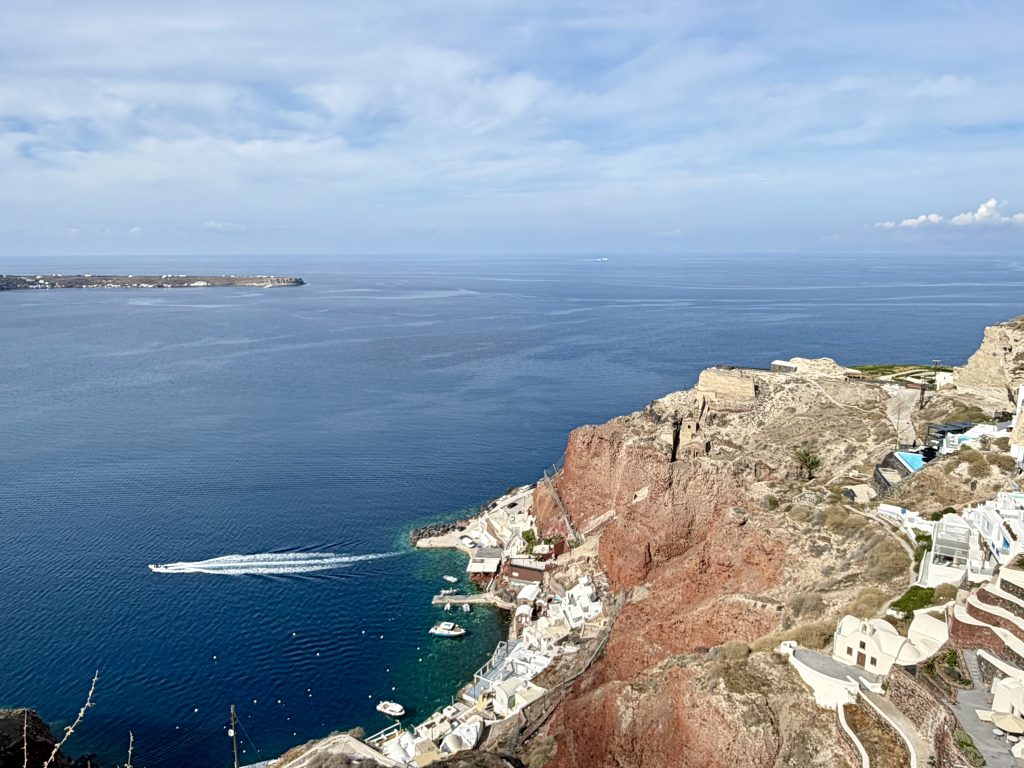
Ammoudi is the tiny fishing port directly below Oia, reached by a long, steep staircase of several hundred steps from the village (or by taxi/road around). The bay has a handful of waterfront tavernas serving grilled fish and local dishes, plus rocky swimming spots. The water is clear but cool by late October.
We also visited the Church of Panagia Platsani which is on the path to the Oia Old Castle.
Church of Panagia Platsani (also Panagia Akathistos Hymn)
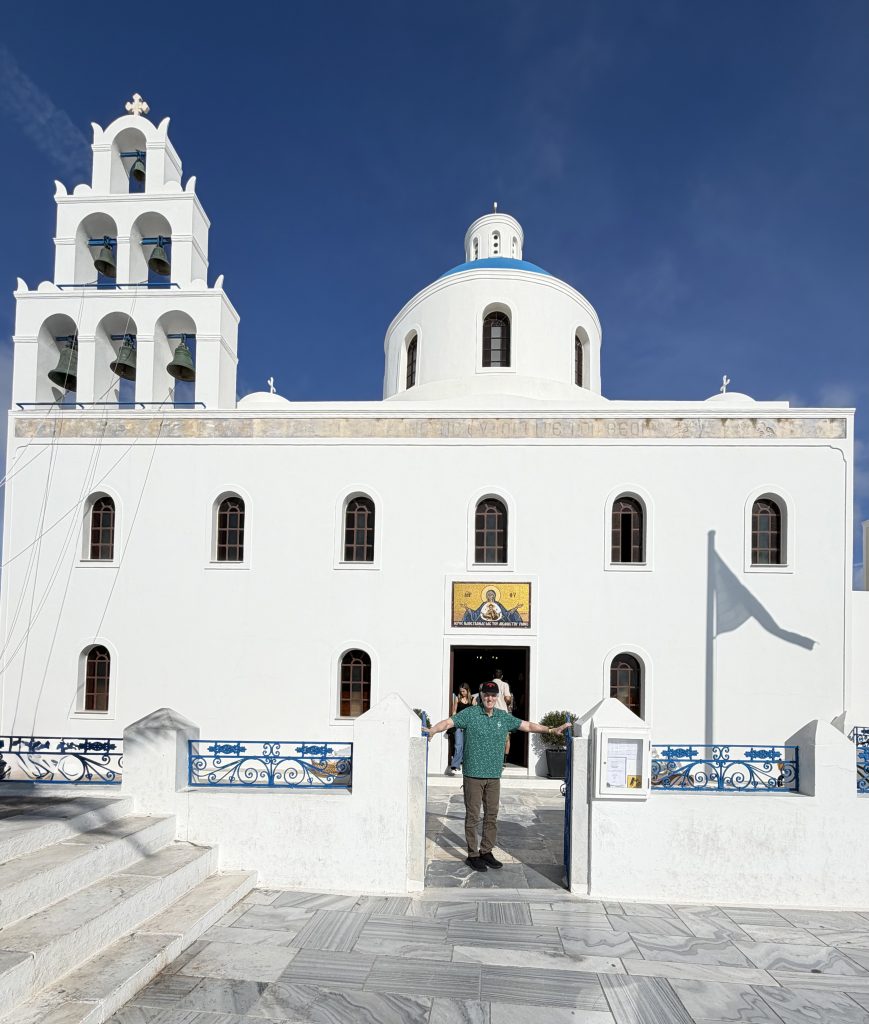
It is located in the main square of Oia, Santorini. It’s the main parish church of Oia: classic whitewashed Cycladic style with a blue dome and an icon of the Virgin Mary above the entrance.
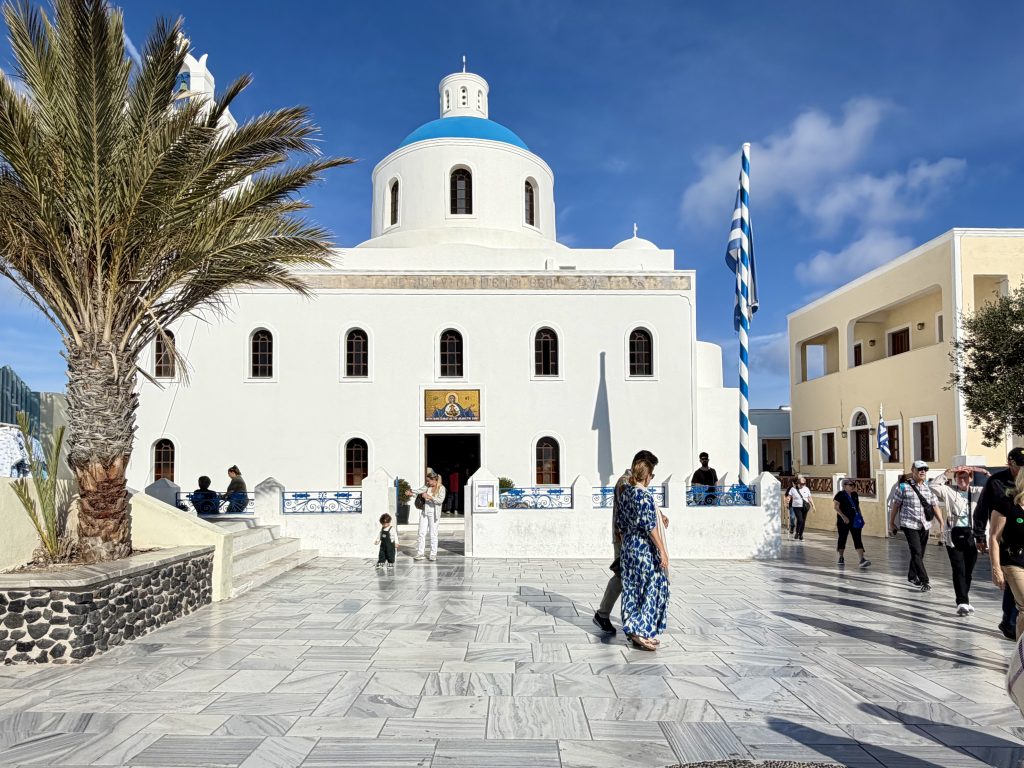
The original church was inside the old castle and was destroyed in the 1956 earthquake; the current building was rebuilt on the central square in the 1960s.
The name “Platsani” comes from a local legend about an icon of the Virgin found floating in the sea (the waves made a “plats-plats” sound). It is dedicated to the Akathistos Hymn. We wandered over to the door and their Divine Liturgy was in session so we slipped out quietly.
Lunch at the patio outside our hotel room was amazing!
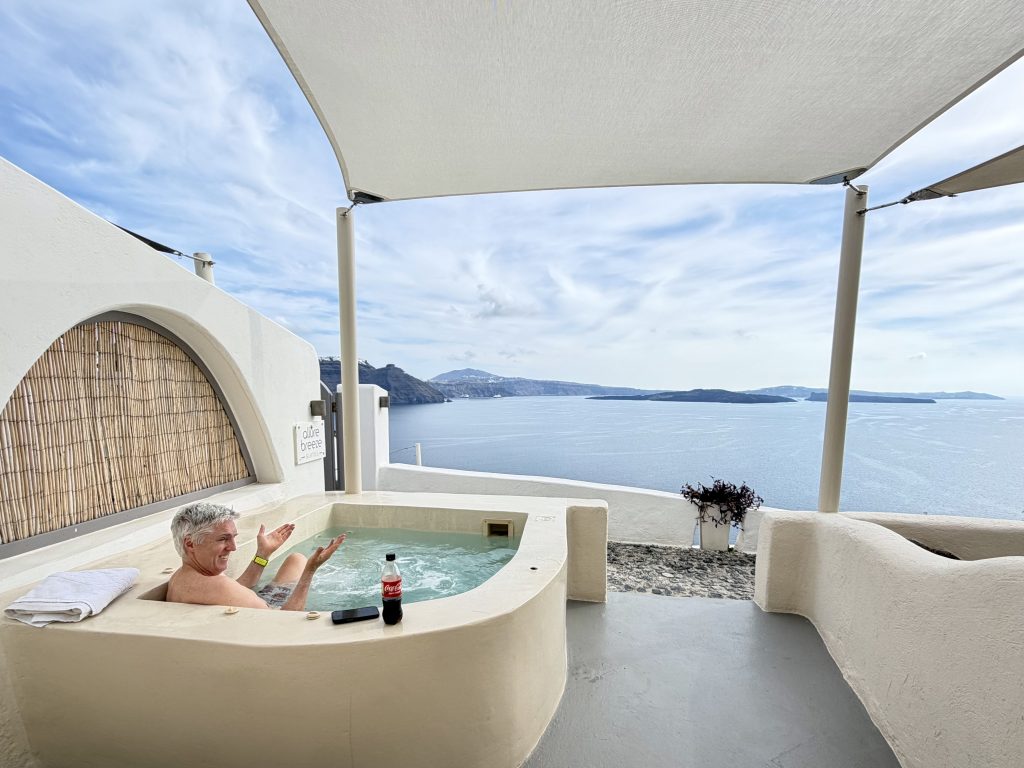
Kevan had a blast in the jacuzzi while enjoying the beautiful view of Santorini and Coke Zero!
Day 3
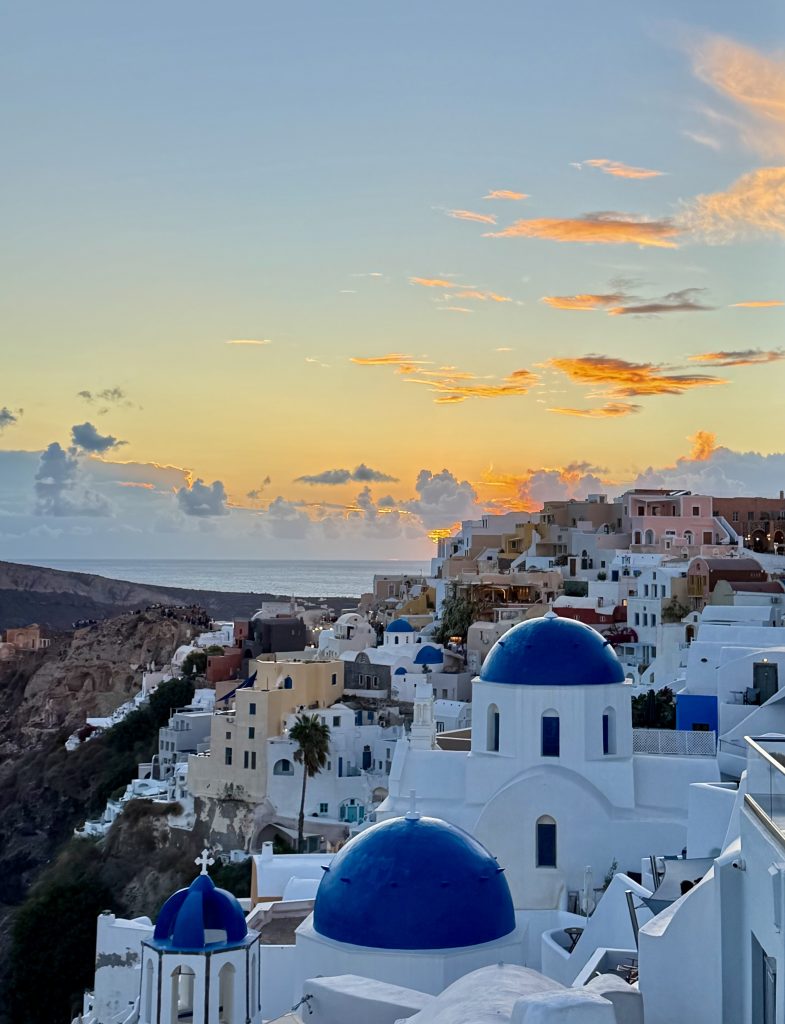
Beautiful sunset this evening!
Places we could have visited but decided to use the extra day just chilling at the resort and nearby Oia town.
Fira
Fira is the main town and commercial hub of Santorini, built on the caldera rim. It has the cable car down to the old port, the Orthodox Cathedral of Saint John the Baptist, many shops, restaurants, and the bus station. From Oia it is roughly 20–25 minutes by bus or taxi. You can walk the caldera path from Fira south through Firostefani toward Imerovigli if you want a scenic rim walk. The full Fira–Oia hike is longer and more demanding, so it is usually better avoided the day after an early morning arrival.
Imerovigli and Skaros Rock
Imerovigli is the highest village on the caldera rim, just north of Fira. It is quieter than Fira or Oia and offers wide views. A short walk leads to the Skaros Rock headland, a rocky outcrop with good “blue dome plus volcano” photo angles that avoid the densest crowds on Oia’s main street.
Akrotiri archaeological site
Akrotiri is the excavated Bronze Age town on the southern part of the island, buried by the Minoan eruption. The site is covered, with pathways through the ruins. It is best combined with a nearby beach stop rather than rushed before an Oia sunset.
Red Beach
Red Beach is a small volcanic beach near Akrotiri, known for its red and black cliffs. The setting is striking, but the path down can be steep and uneven, and the water is cool in October. Many people simply view it from the overlook above rather than scramble down.