
 Swan Bradshaw
Day 1
Kraków, day one was a full day, started with a 2 hr train ride from Warsaw, mostly through flat farm fields, also some forested areas.
Stradom House Hotel
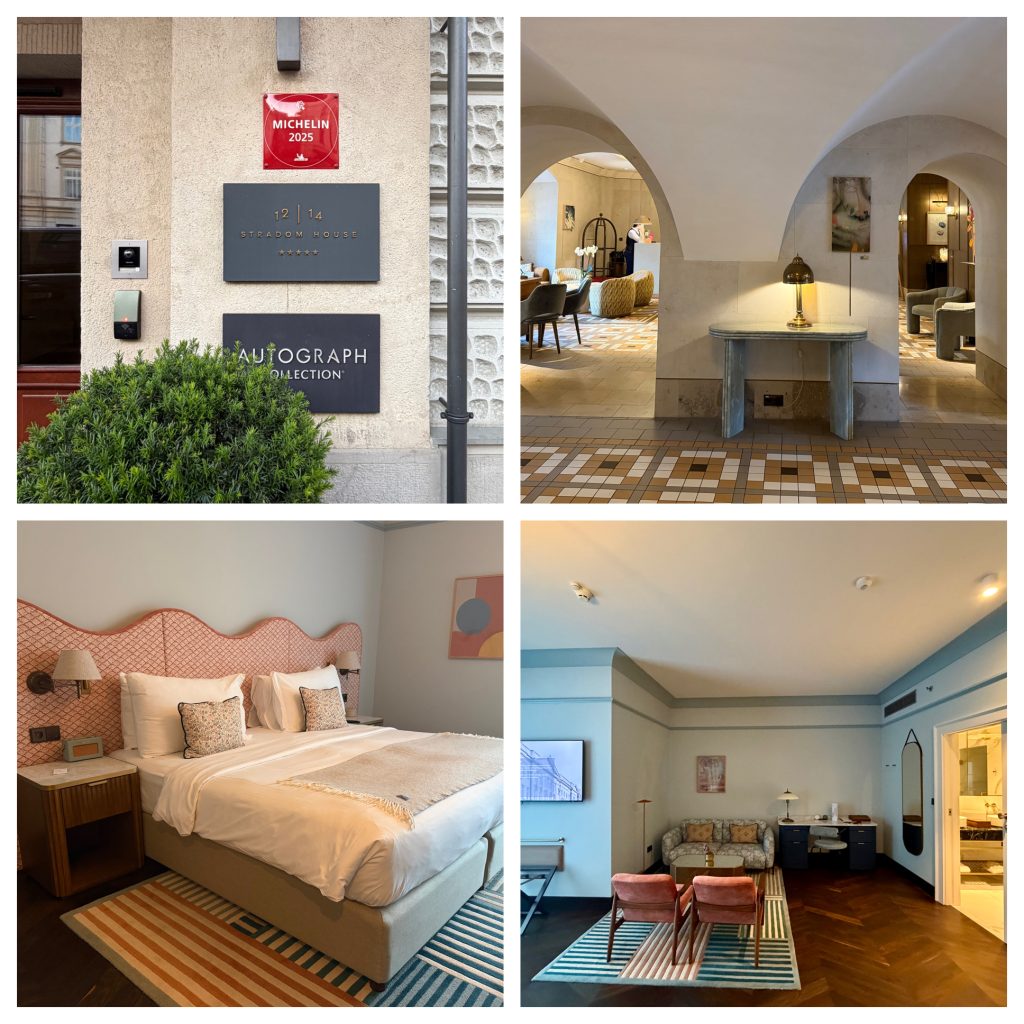
We checked into Stradom House, a Marriott autograph hotel in what used to be a 14th-century church and monastery. It sits on the old road between Wawel and Kazimierz.
Oskar Schindler’s Enamel Factory
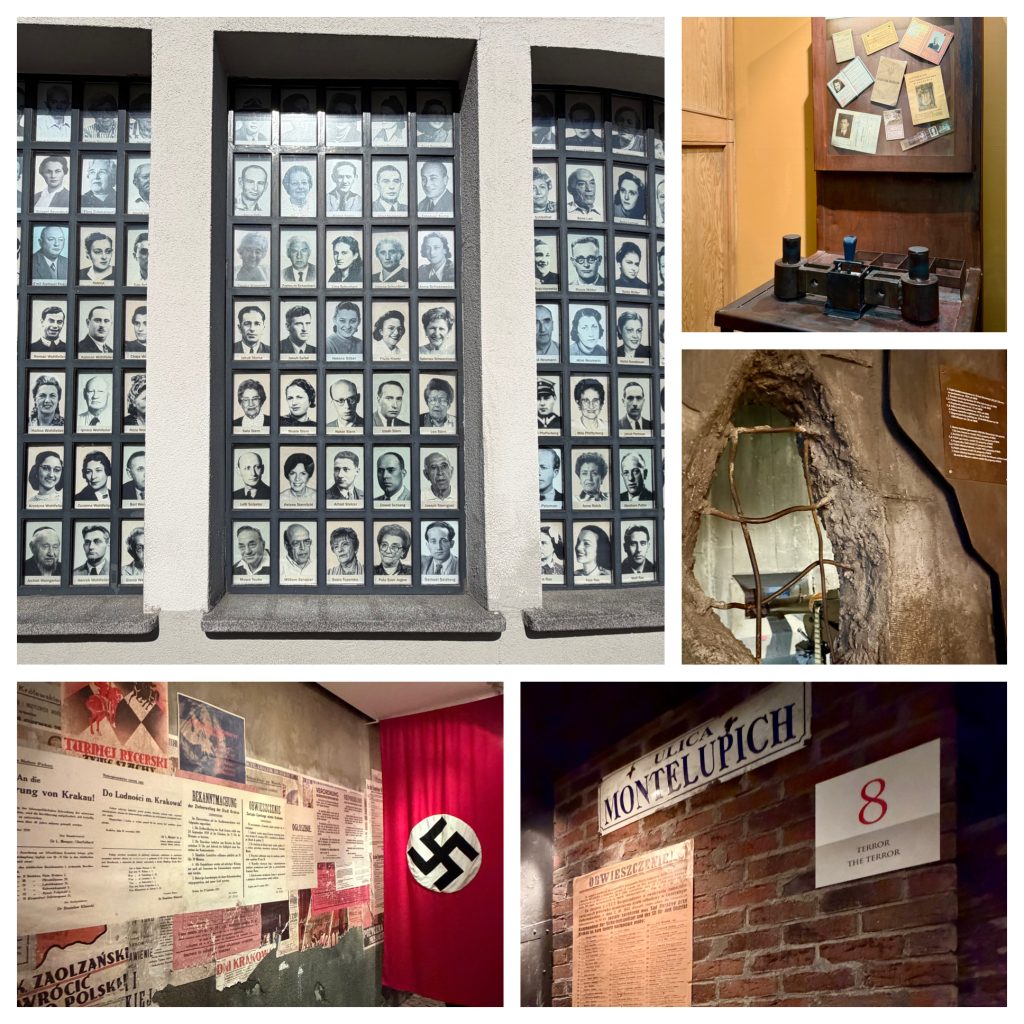
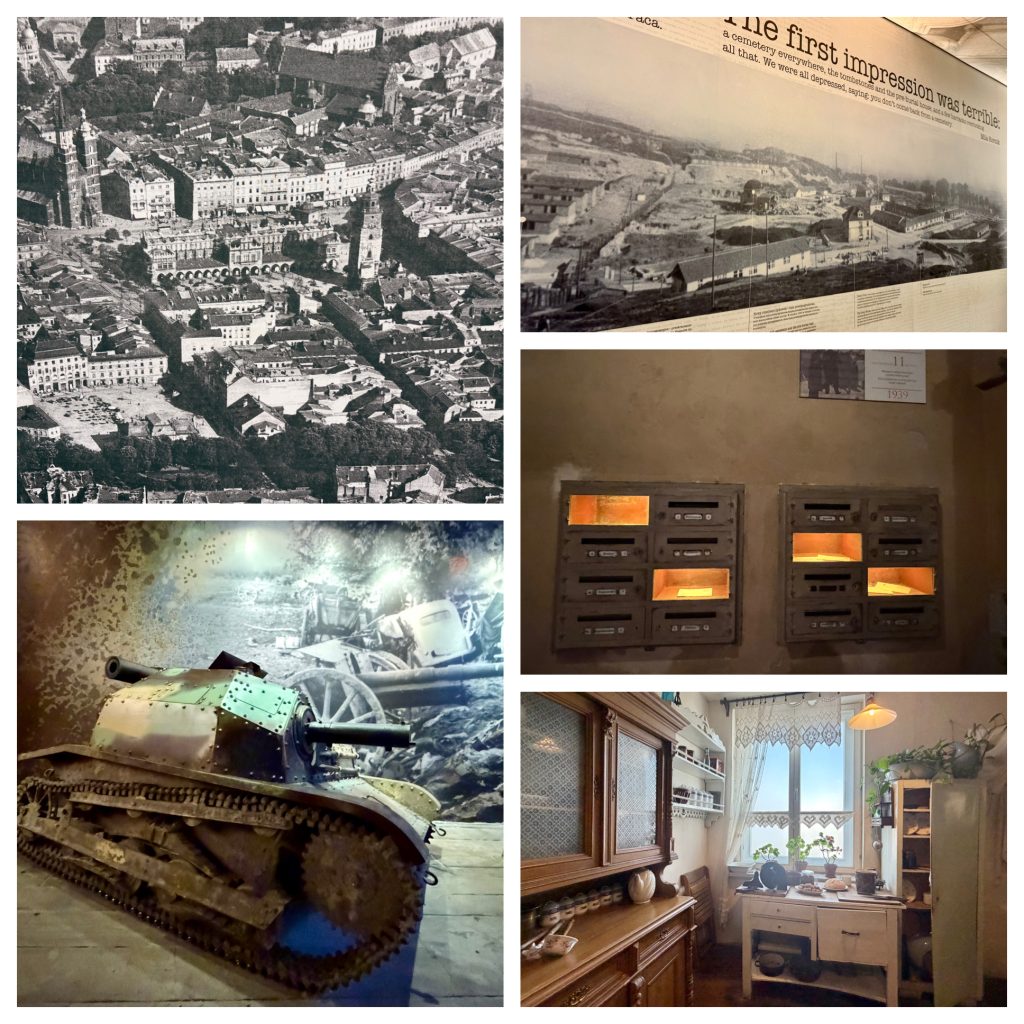
First stop in krakow was Oskar Schindler’s Enamel Factory in Zabłocie. The museum is all about Kraków under nazi occupation, 1939 to 1945, including the timeline, impact on the city, and the horrors of Auschwitz. Schindler’s factory made mess kits for the German army. His list, the workers he kept on the books and later moved to Brünnlitz, numbered about 1,200.
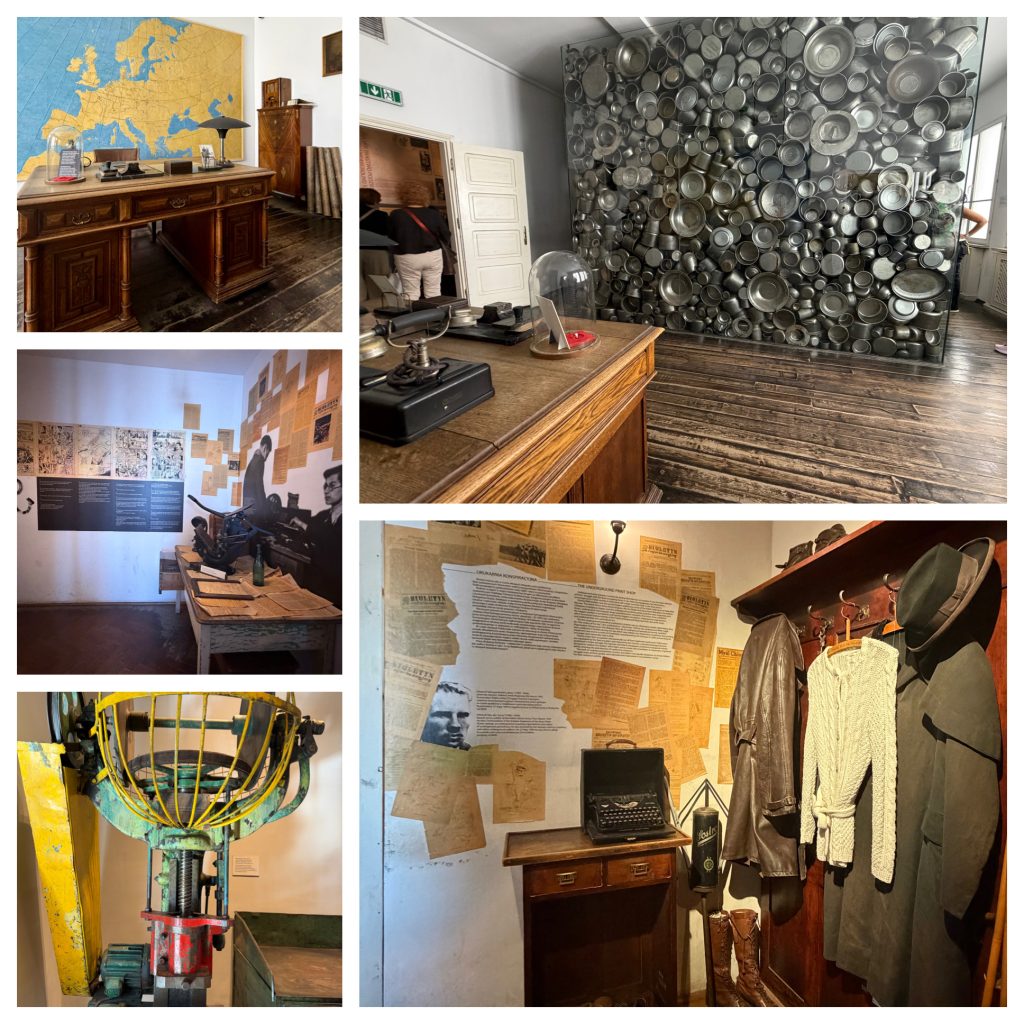
The factory before and during the war
Schindler’s factory only makes sense if you keep three places separate: Kazimierz, where Jewish Kraków had lived for centuries; the ghetto, where the occupiers locked those people up; and the factory, just outside the ghetto wall, where a job could keep someone off a death-camp train.
The factory
In 1937 three Jewish businessmen opened a small enamelware plant in Zabłocie, an industrial district on the south side of the river. It made ordinary pots and pans. By the summer of 1939 the company was already bankrupt.
Germany took Kraków on 6 September 1939. Oskar Schindler, a German businessman from Moravia and a Nazi Party member, arrived looking for easy acquisitions. That autumn the occupation authorities handed him the failed plant. In January 1940 he leased the buildings, bought the stock, and ran it as a German factory. He became the legal owner only in 1942.
At first it was a moneymaking scheme. He produced kitchenware, then shell casings, so the army would class the plant as essential war work. Essential work was the protection. People on the payroll were harder to deport.
Early on, most workers were non-Jewish Poles. Jewish workers grew from a little over 150 in 1940 to about 1,100 by 1944. Schindler paid the SS a daily fee for each one — a few złoty a head — and spent far more on bribes, food, and favors so officers would leave them alone. Shifts were still long, the shops were cold, and disease spread. It was forced labor. It was also safer than the camp.
After the ghetto was cleared in March 1943, survivors were sent to the Płaszów camp under Amon Göth and walked to the factory under guard. Schindler then paid and argued his way to a small fenced subcamp on the factory grounds, so his workers slept there instead of in the main camp.
In 1944, with the Soviet army closing in, the Nazis started emptying Kraków’s camps. Schindler moved the machines and about 1,200 Jewish workers — the list — to a new plant in his home region. Those people lived. The administration building is now a museum of occupied Kraków. His own story comes late in the exhibition.
SS guards
The SS was the Nazi Party’s private army, not the regular German army. Hitler used it for secret police work, the camps, and mass killing. In Kraków, SS units built and sealed the ghetto, ran Płaszów, chose who went on a transport, and carried out shootings during the ghetto clearance. Day-to-day gate guards were sometimes SS men and sometimes auxiliaries from Ukraine and elsewhere, under SS officers.
A guard’s power was simple: he decided whether a work pass was honored, whether a column got through the gate, and whether someone was pulled out of line. Schindler’s method was to stay between his workers and those men — pay the fee, bribe the officers, and keep repeating that the workers were needed for army production.
Wawel Royal Castle and Cathedral
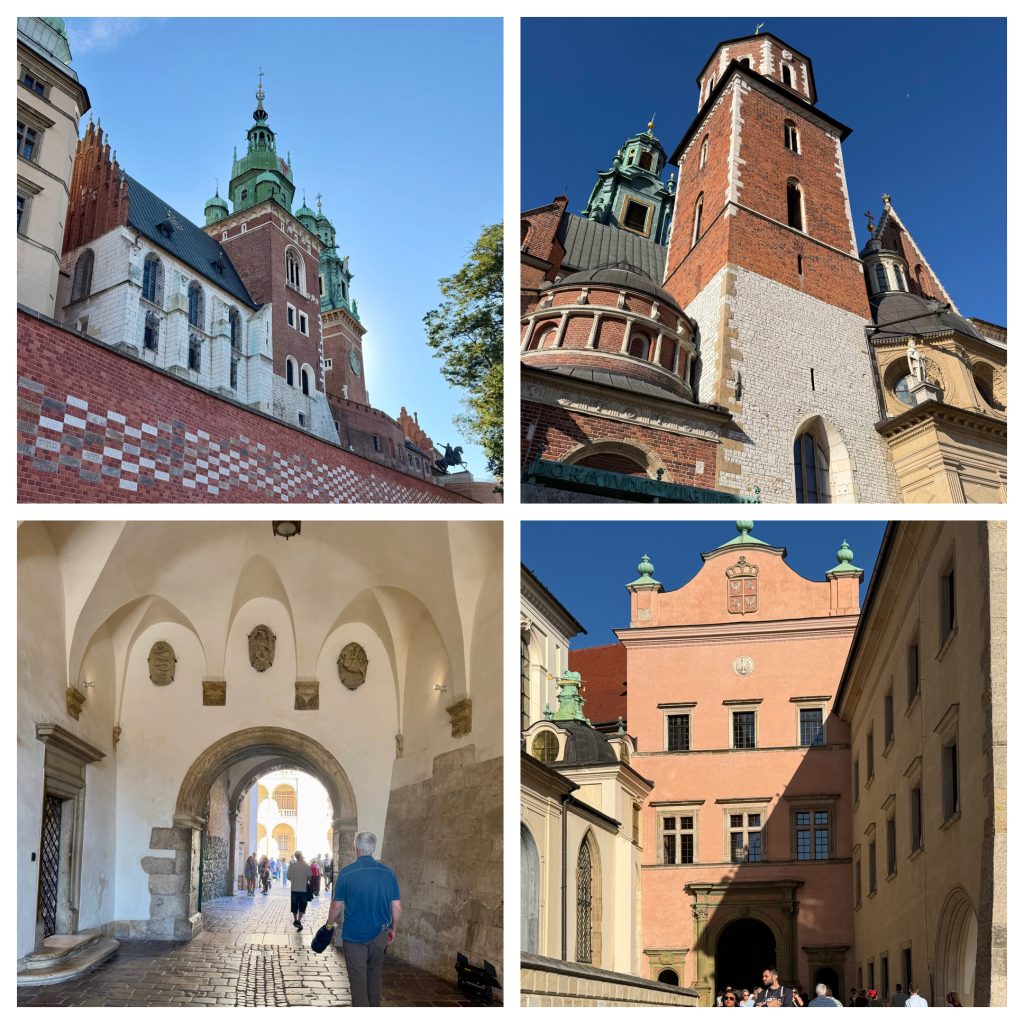
We went to Wawel for a tour of the castle and the royal treasury. This castle is huge and was the seat of polish kings.
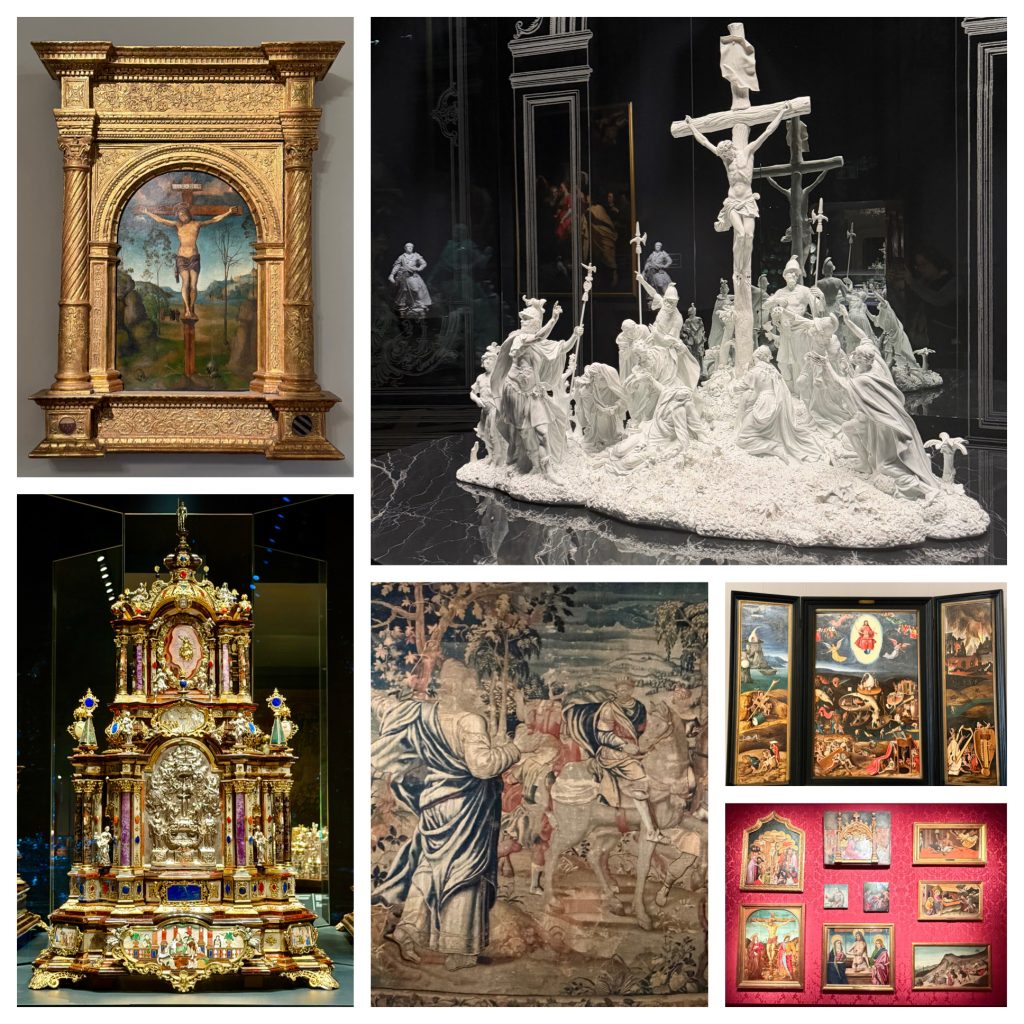
The treasury still tells the story of the Szczerbiec, the jagged coronation sword.
Wawel is the limestone hill above the Vistula where Polish kings were crowned and buried. The Royal Castle and the Cathedral stand side by side, but they are separate institutions with separate tickets.
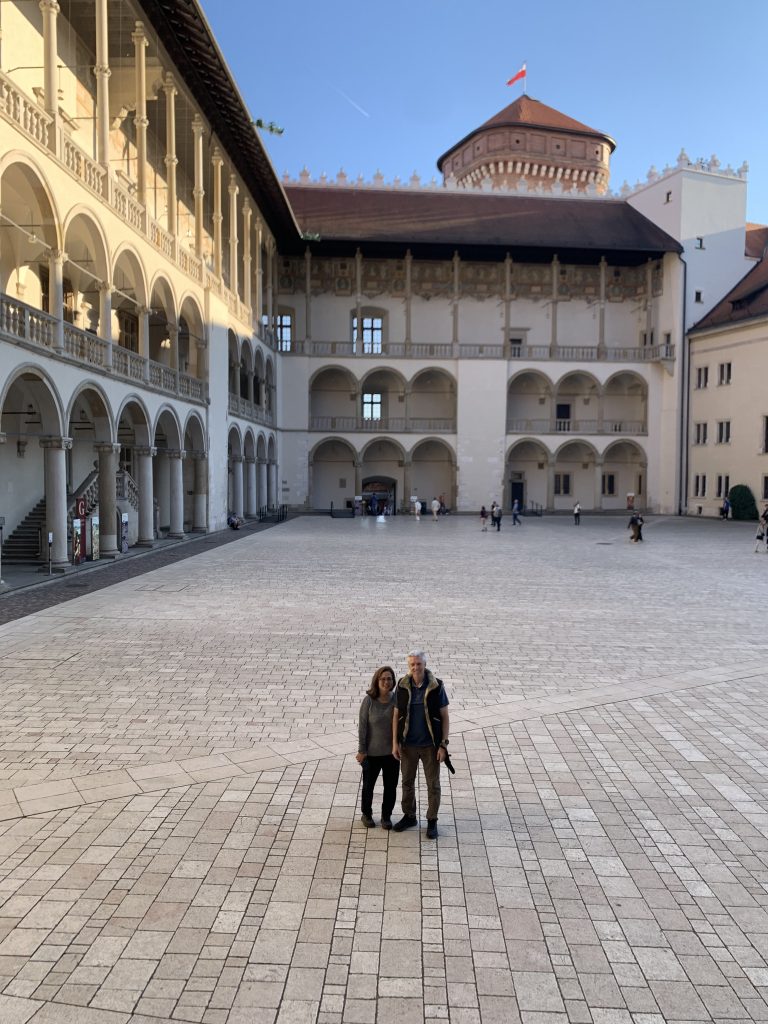
The courtyards and ramparts are free.
The Hill and the Castle
People have used this rock above the Vistula since long before Poland was a kingdom. Around the year 1000 it became a seat of the first Polish rulers, with a fort and a church. From the 1300s to the late 1500s it was the center of the kingdom.
Casimir the Great rebuilt the castle in Gothic in the 14th century. The building you see now is mostly the Renaissance palace added in the early 1500s for King Sigismund the Old, by Italian architects. The arcaded courtyard, open to the sky on three levels, is the part people come to see.
In 1596 the court moved to Warsaw. Coronations and funerals stayed at Wawel. Later wars damaged the palace, and from 1846 to 1905 the Austrian army used the hill as a barracks. It was restored in the early 1900s and became a national museum. During the German occupation the Nazi governor lived in the castle.
Inside, tickets are sold by route. The state rooms on the upper floor are the ceremonial chambers, with a carved wooden ceiling and royal tapestries. The private apartments are one floor down. The treasury holds the coronation sword. Underground, a small round church from about the year 1000 is still standing. The courtyard itself needs no ticket.
The Dragon
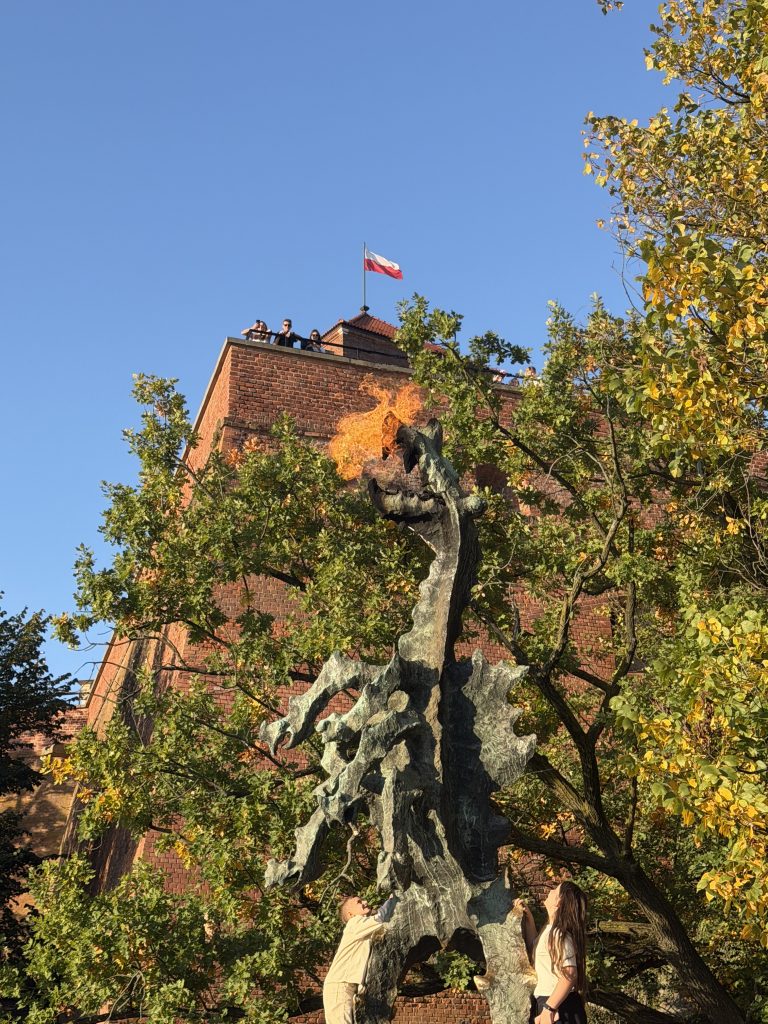
Long before there was a castle, a dragon was said to live in the limestone cave under Wawel. It ate sheep and cattle, and then people. Knights who went into the cave did not come out.
Prince Krak, the legendary founder of the city, offered a reward. A poor shoemaker named Skuba took it. He stuffed a sheepskin with sulfur and tar and left it outside the den. The dragon swallowed it whole. The sulfur caught fire in its stomach. The dragon rushed to the Vistula and drank until it burst.
Krak then built his stronghold on the hill, and the city took his name. The cave is real. The dragon statue at the river exit breathes real fire on a timer. The rest is the legend Poles tell children.
The Cathedral
The cathedral beside the castle is the third church on that spot. The one you enter was begun in 1320 and consecrated in 1364. Polish kings were crowned here from 1320 until 1764, and most of them are buried below.
At the center is the shrine of St. Stanislaus, a Kraków bishop killed by the king in 1079 and later made a saint. Side chapels were added over the centuries. The finest is the Sigismund Chapel, built in the 1520s, with a gilded dome. It is often called the best Renaissance chapel north of the Alps.
The crypt is a national burial place, not only a royal one. Kings lie there, and so do Kościuszko, the poet Mickiewicz, and Józef Piłsudski. The Sigismund Bell, cast in 1520, hangs in the tower. It weighs about 11 tonnes and is rung only on great occasions. The stair up is narrow. The view over the river and the old town is the best on the hill.
The cathedral is still a working church, so tourist entry stops for services. It has its own ticket, separate from the castle. Plan on the crypt and the bell if you do one paid thing, and the courtyard even if you do none.The castle
Tickets are sold by route, not as one blanket admission.
• State Rooms (second floor). The ceremonial sequence, including the Envoys’ Hall. Its coffered ceiling once held 194 carved wooden heads; about 30 survive. Flemish arrases from the Sigismund II Augustus collection hang here, and the Ottoman tent collection is shown on this floor.
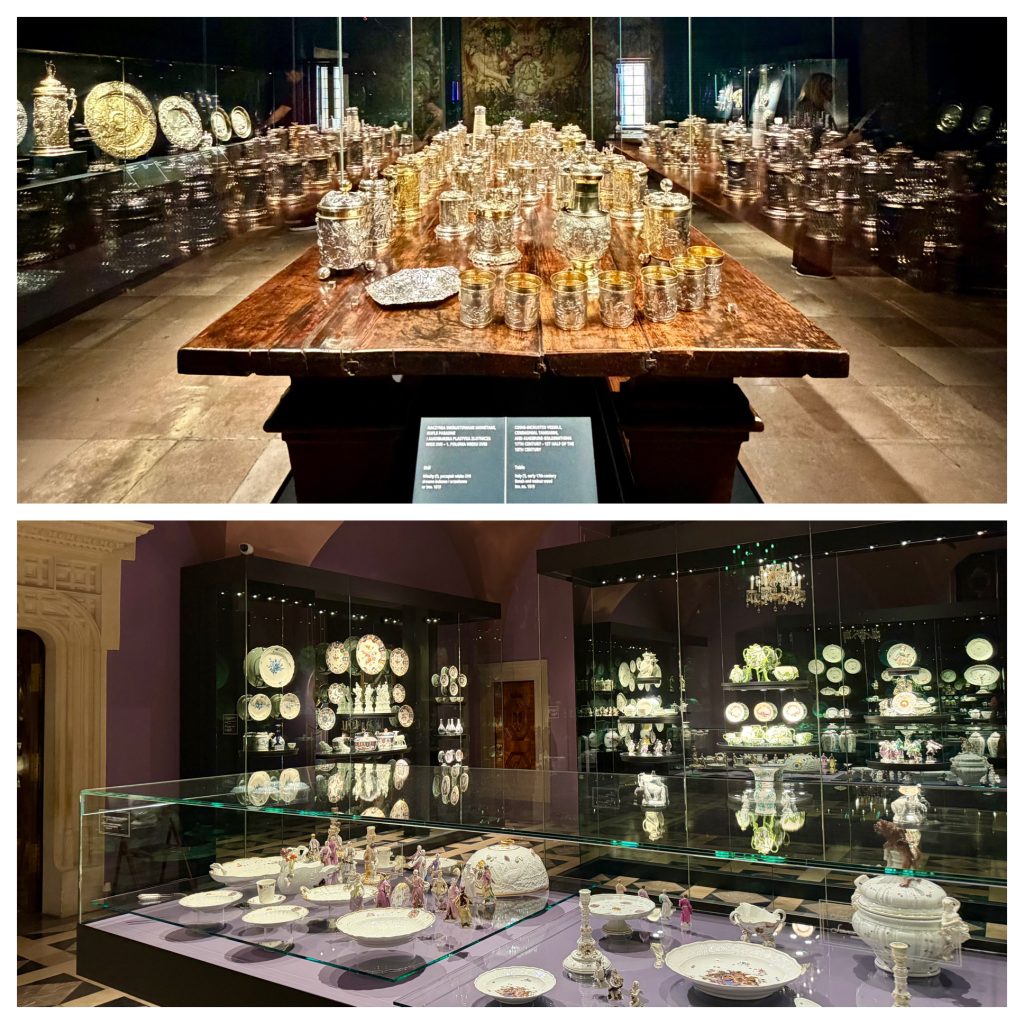
• Royal Private Apartments (first floor). Smaller living rooms, with period furniture, paintings, and the porcelain cabinet.
• Crown Treasury and Armoury. The coronation sword Szczerbiec, regalia, and royal jewels in the treasury; arms and armor next door.
• Lost Wawel (underground). Archaeology of the hill, including the surviving walls of the 10th–11th-century Romanesque rotunda of Sts. Felix and Adauctus, plus a lapidarium of carved stone.
• Dragon’s Den. The limestone cave under the hill, open seasonally (through 31 October). The fire-breathing dragon statue at the river exit is modern.
• Courtyard, walls, and gardens. The arcaded courtyard is free. Gardens are seasonal and included with most interior tickets.
Kazimierz
Okrąglak
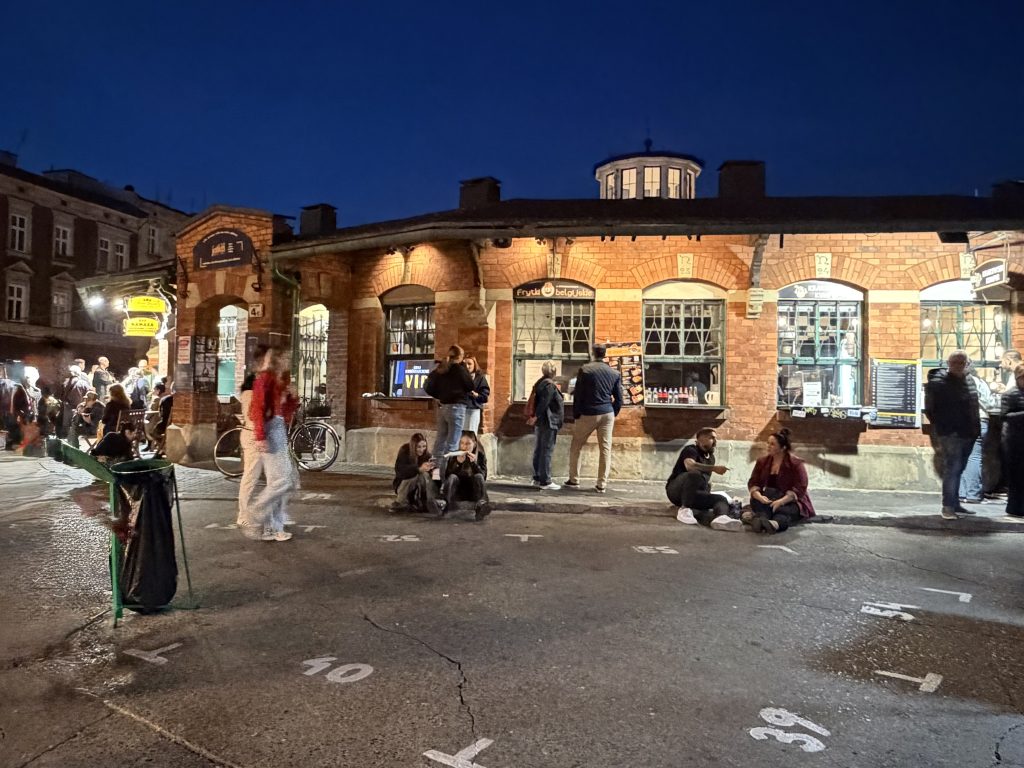
Dinner was at the open air food stalls in Kazimierz: a spicy zapiekanka, a vegetarian one, and a combo, then two kinds of naleśniki.
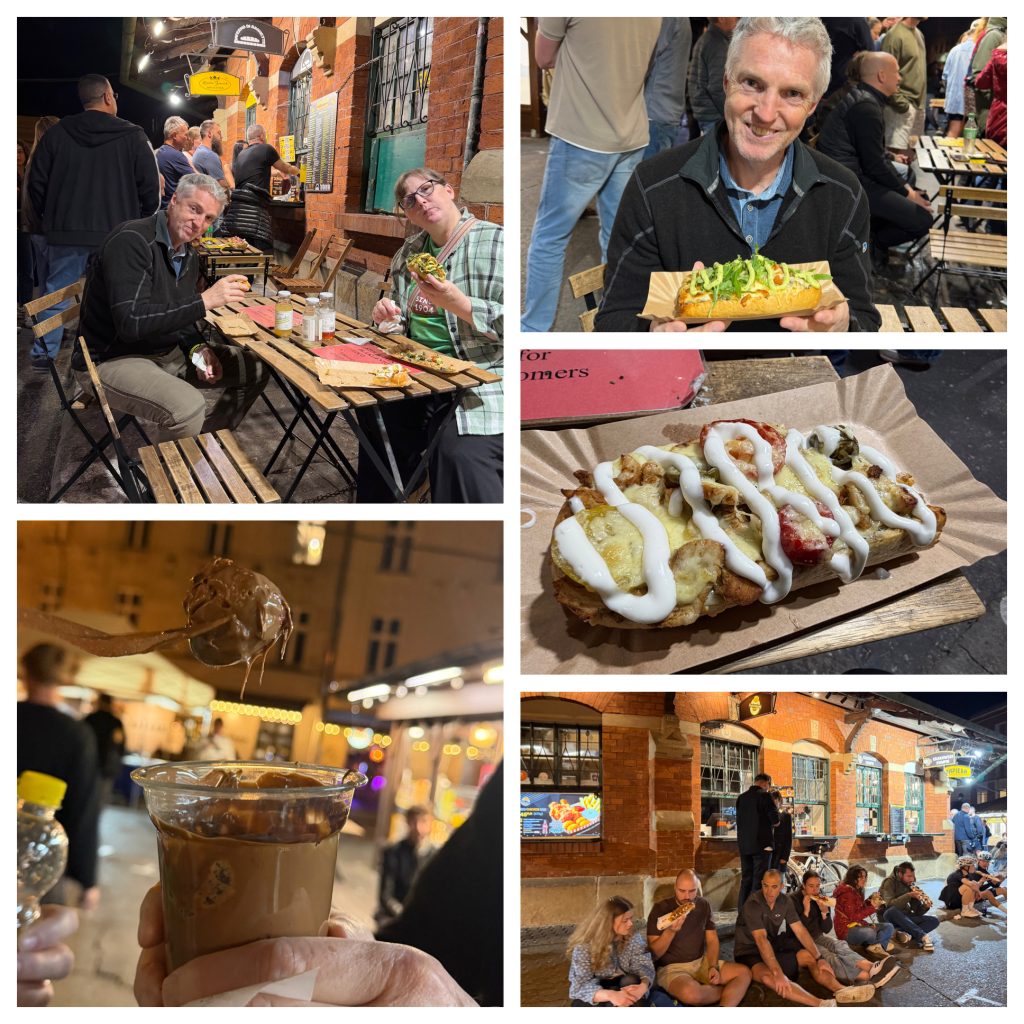
A zapiekanka is half a baguette with mushrooms and tomatoes and melted cheese, sauce stripe on top, eaten standing up. The classic was late-communist street food, still sold from the round Okrąglak on Plac Nowy. Naleśniki are the older comfort food, thin crepes with sweet or savory fillings.
Karski’s Bench
From the stalls it is a short walk to Szeroka Street. Beside the Remuh Synagogue is Jan Karski’s bench, from 2016. Karski, a courier of the Polish Underground, got into the Warsaw Ghetto and a transit camp, then carried the report to London and to Roosevelt in 1942 in an effort to stop the holocaust.
Wall of Tears
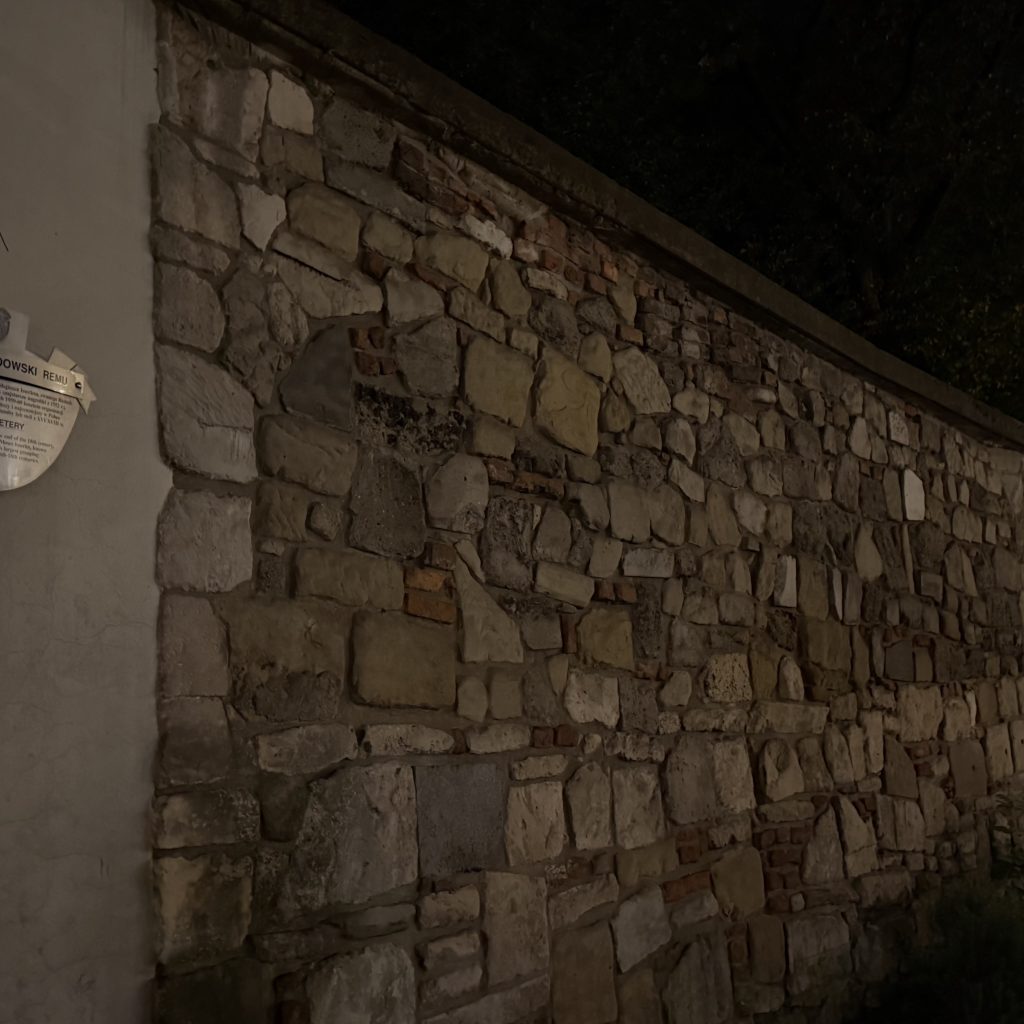
Next to the bench is the Remuh Cemetery, opened in the 1530s. The nazis tore up the graves and used the ground as a dump. After the war, digs turned up about 700 broken tombstones. The pieces that could not stand again were set into the cemetery wall along Szeroka, the Wall of Tears.
We checked out the murals on surrounding streets, then back to Stradom house. A full first day. The city keeps its centuries stacked in a very small radius.
The Tree That Cannot Be Cut Down
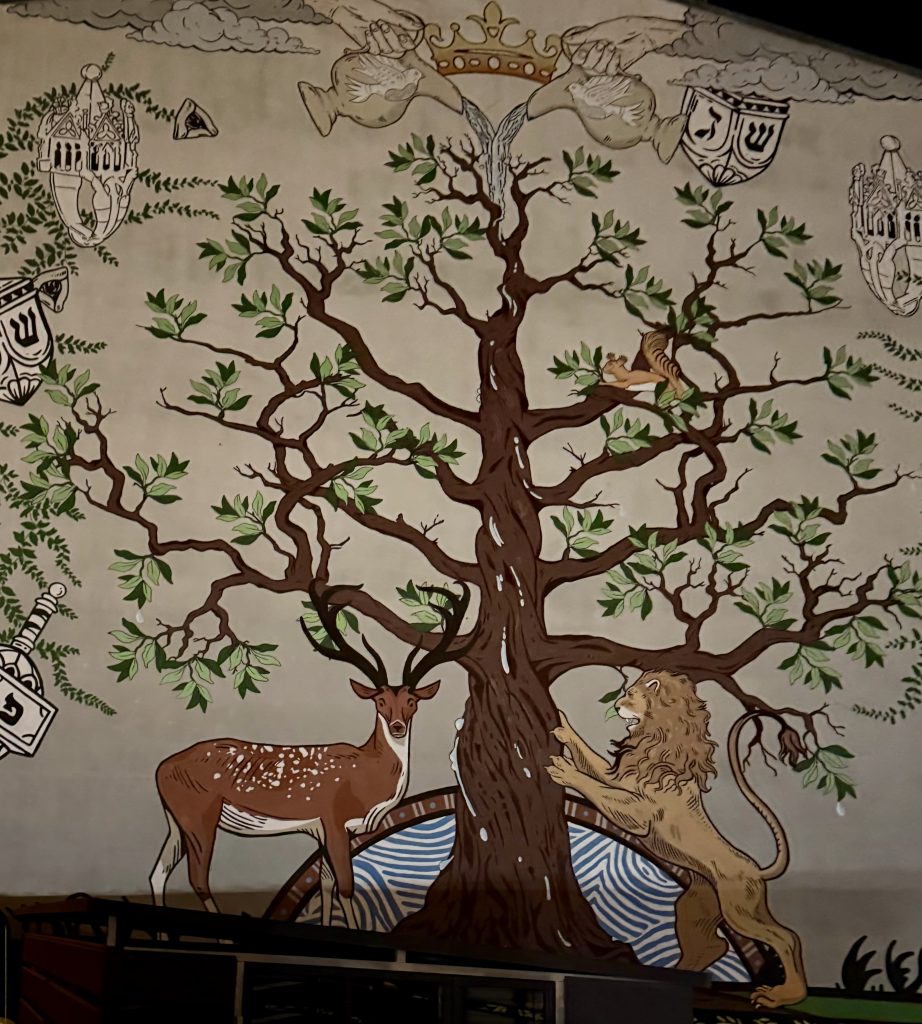
This 2023 mural “The Tree That Cannot Be Cut Down,” painted by Przemysław Wideł, Karolina Danek, Joanna Dobranowska, and Piotr Jakób in the style of a traditional Jewish papercut, is on Plac Nowy in Kazimierz, near by the old Remuh cemetery.
The tree comes from a local legend. During the war the Remuh cemetery was wrecked and used as a dump, and only a handful of stones survived — among them the grave of Rabbi Moses Isserles, the Rema. The story says a huge tree grew over it and hid the stone so it could not be destroyed.
Another version says the tree grew because he had buried a book on the spot before he died.
On the wall it also stands for life, the seasons, and the district growing back.
Water poured from the jugs into the crown is lasting culture: a people that kept going through the worst of history. The two birds holding the crown mark Kazimierz, founded as its own royal city by Casimir the Great before it was absorbed into Kraków. The deer, lion, and squirrel are old Jewish animal symbols, the kind still carved on the tombstones nearby — the lion for Judah, the deer from the saying “swift as a deer, strong as a lion.” The little Gothic buildings and the shields with Hebrew letters are synagogues and Torah ornaments, and the artists tucked traditional sweets and toys into the leaves.
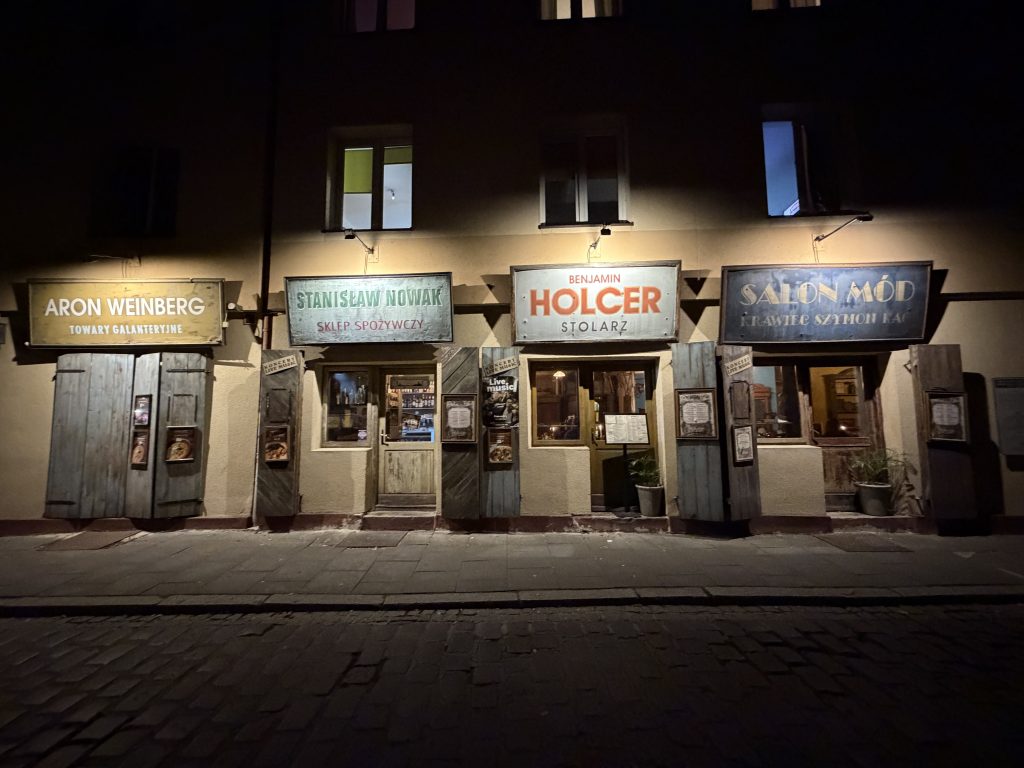
More building in Kazimierz… these buildings retain the old architecture of Poland from old times!
Day 2 (Sunday)
Wieliczka Salt Mine
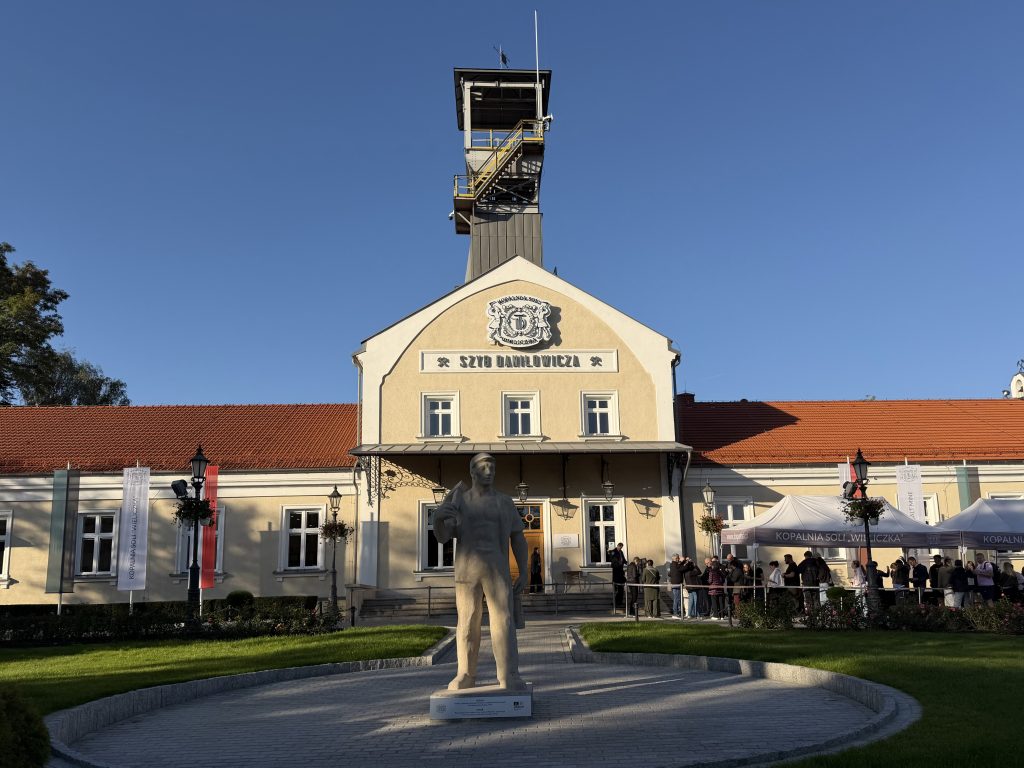
Amazing visit today to the Wieliczka Salt Mines, a UNESCO underground chapels and lakes just outside Kraków – the stairs are the part nobody puts in the photos!
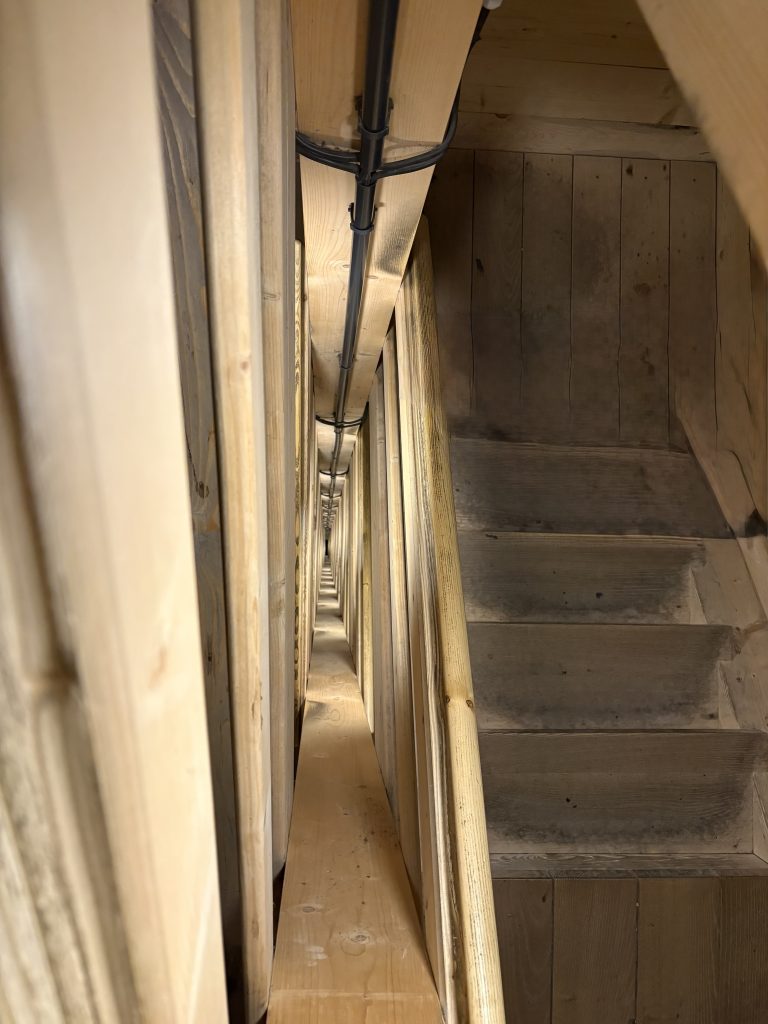
You walk down about 800 stairs in total – about half are wooden steps that get you to the first level, 210 feet underground. Your calves notice. The route keeps going from there – a little over 2 miles across the first three of nine levels, down to 450 feet. The mine itself does not stop there. Nine levels reach 1,100 feet, with something like 150 miles of galleries. The tour shows about 2 percent of it.
It stays a steady 63–64°F the whole way, and fortunately there is an elevator for the ride back up.
The rooms are the big surprise. These are not tunnels.
Michałowice Chamber
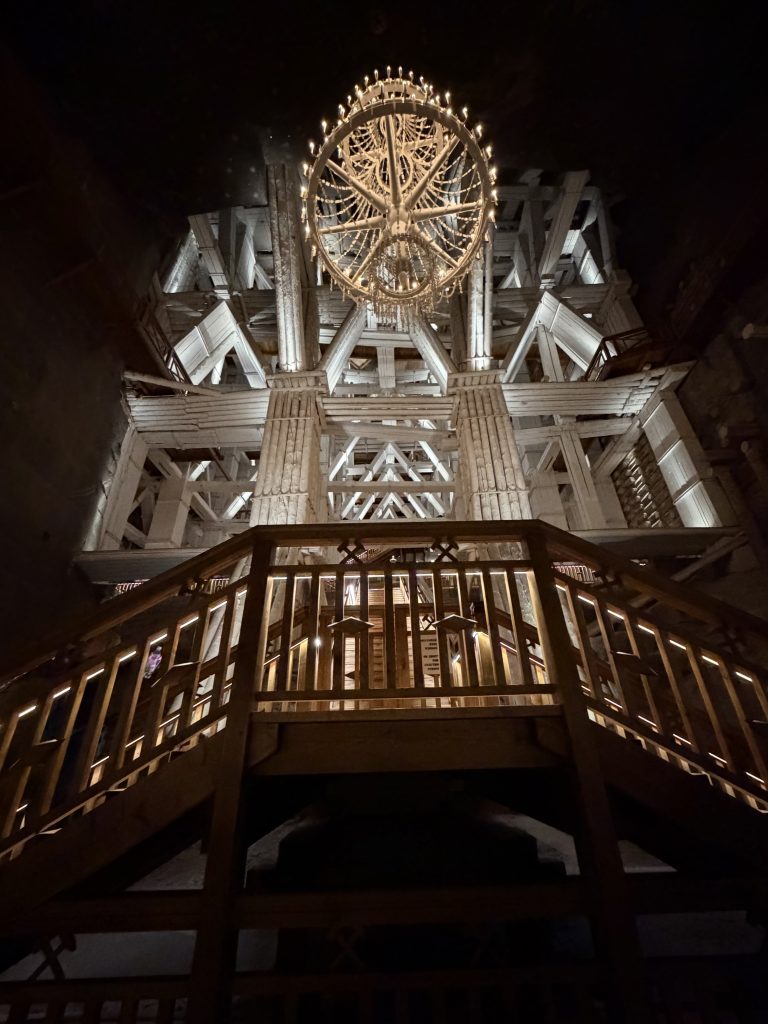
Cut between 1717 and 1861, rises about 118 feet, with a volume around 800,000 cubic feet, held by a timber gallery you walk through on more than one level.
St. Kinga’s Chapel
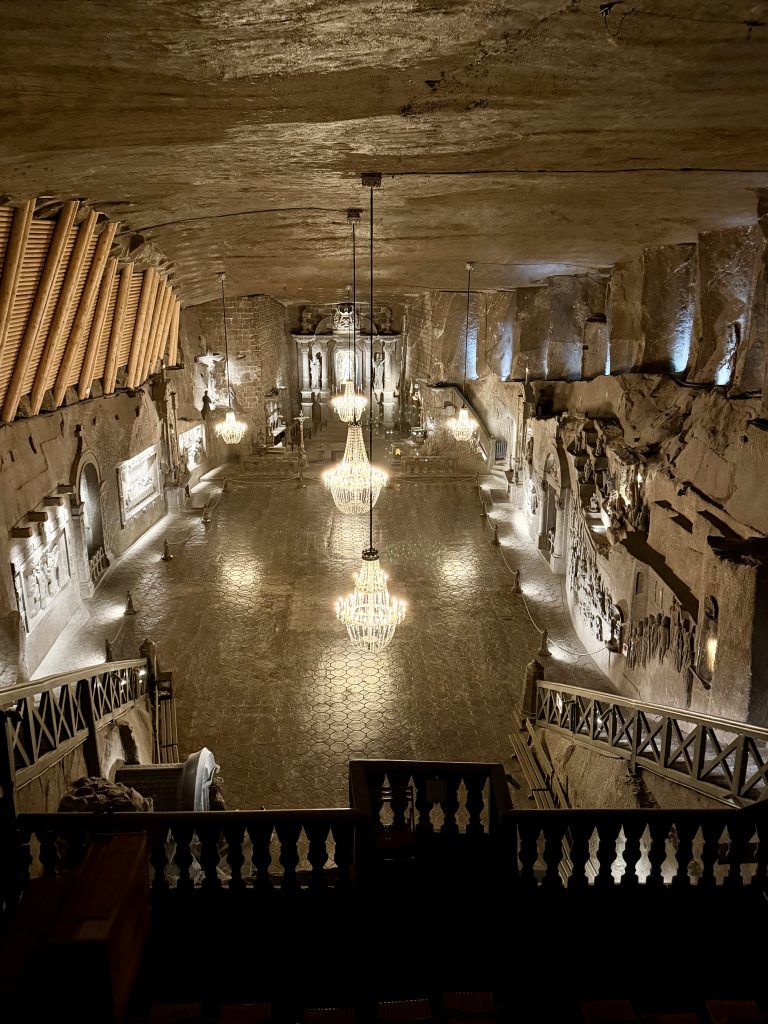
It is the biggest of the mine’s chapel, 331 feet down,177 feet long, 59 wide, and 39 high, big enough for about 400 people.
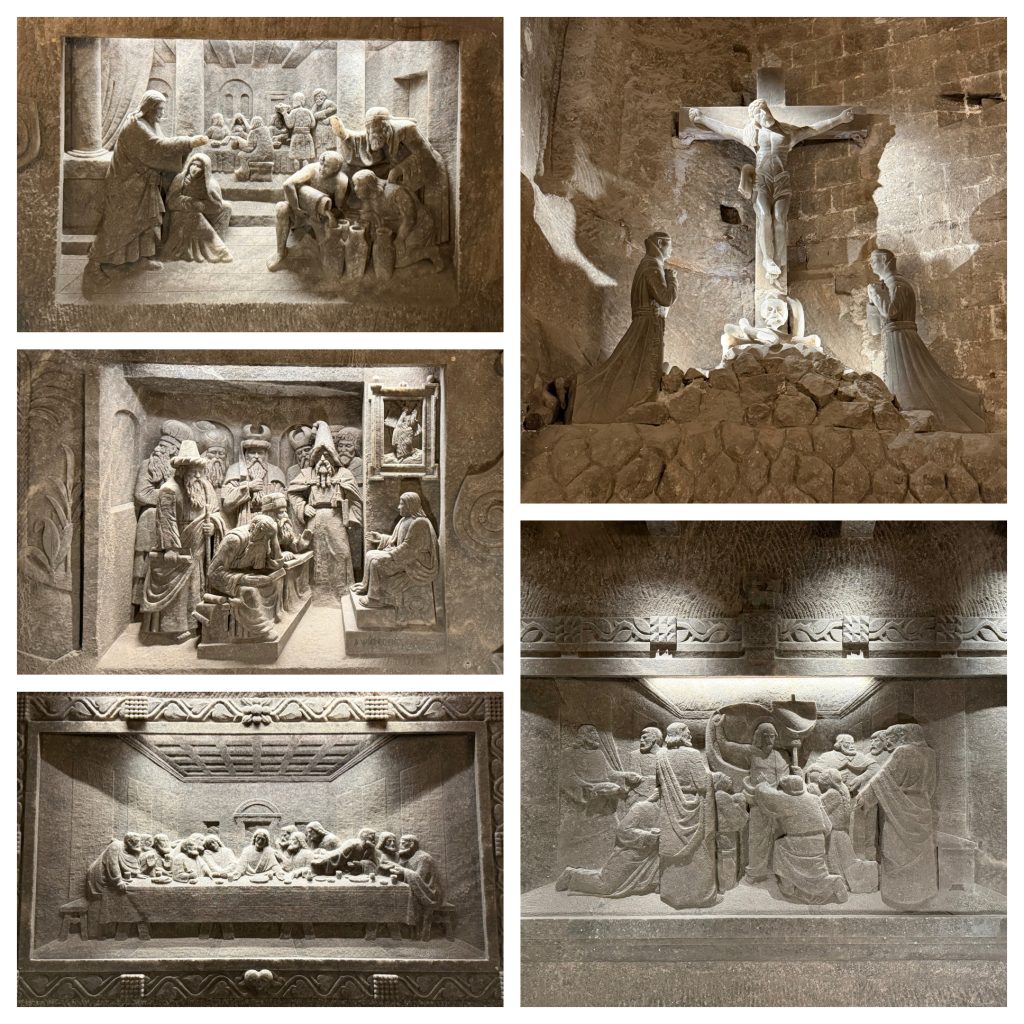
The entire chamber – the altar, sculptures, floor, the reliefs along both walls, and chandeliers (salt crystals set in wooden frames) are carved entirely from rock salt. The timber bracing on the left is original mine support.
Chapel of the Holy Cross
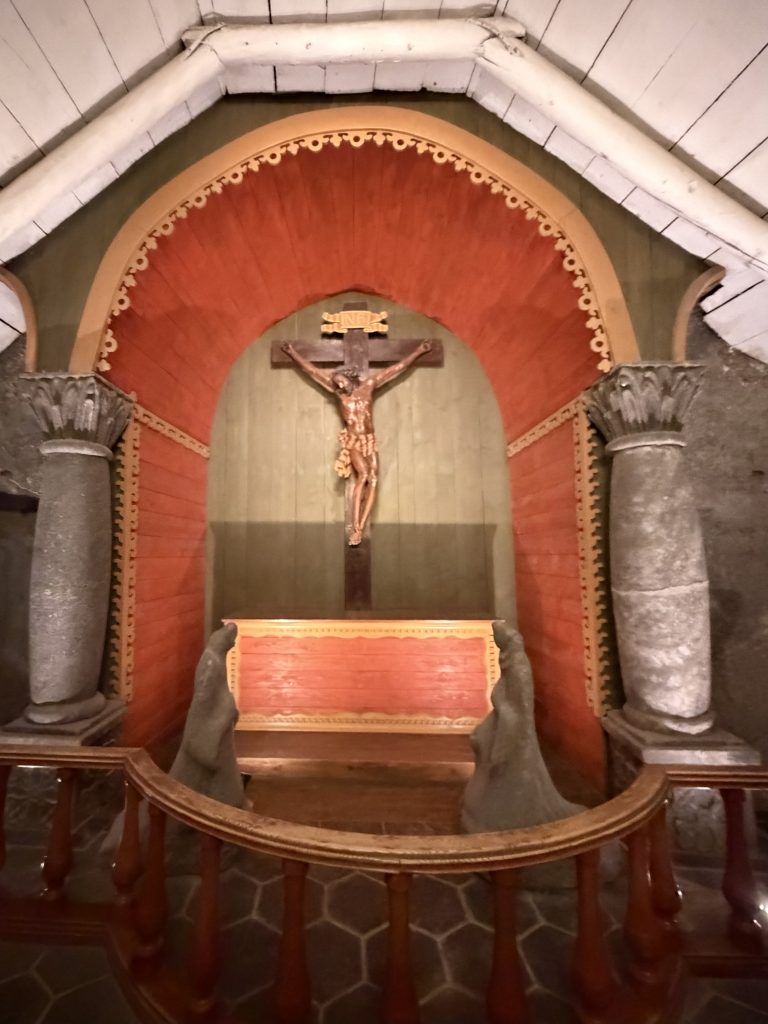
It is the Chapel of the Holy Cross in the Wieliczka Salt Mine near Kraków, about 100 meters underground. Miners built it in the 19th century.
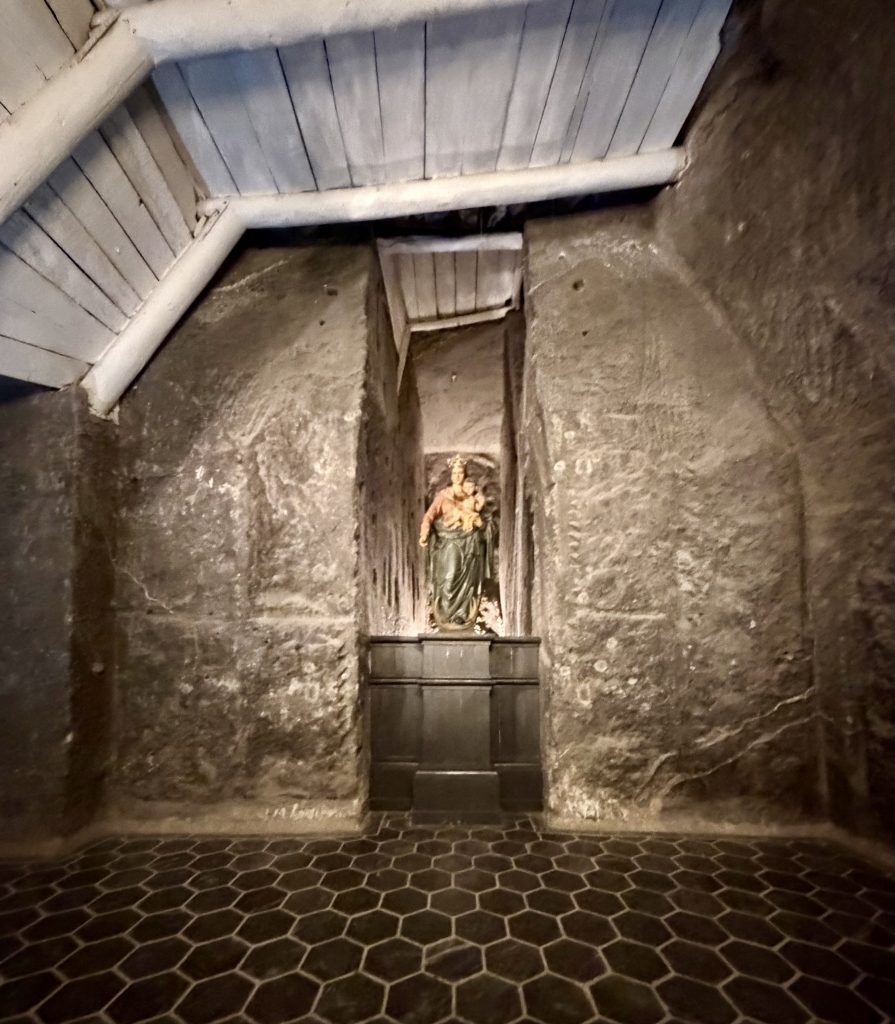
The crucifix, arch, and railing are wood; the columns and the two kneeling monks are carved from salt.
The Warszawa Chamber
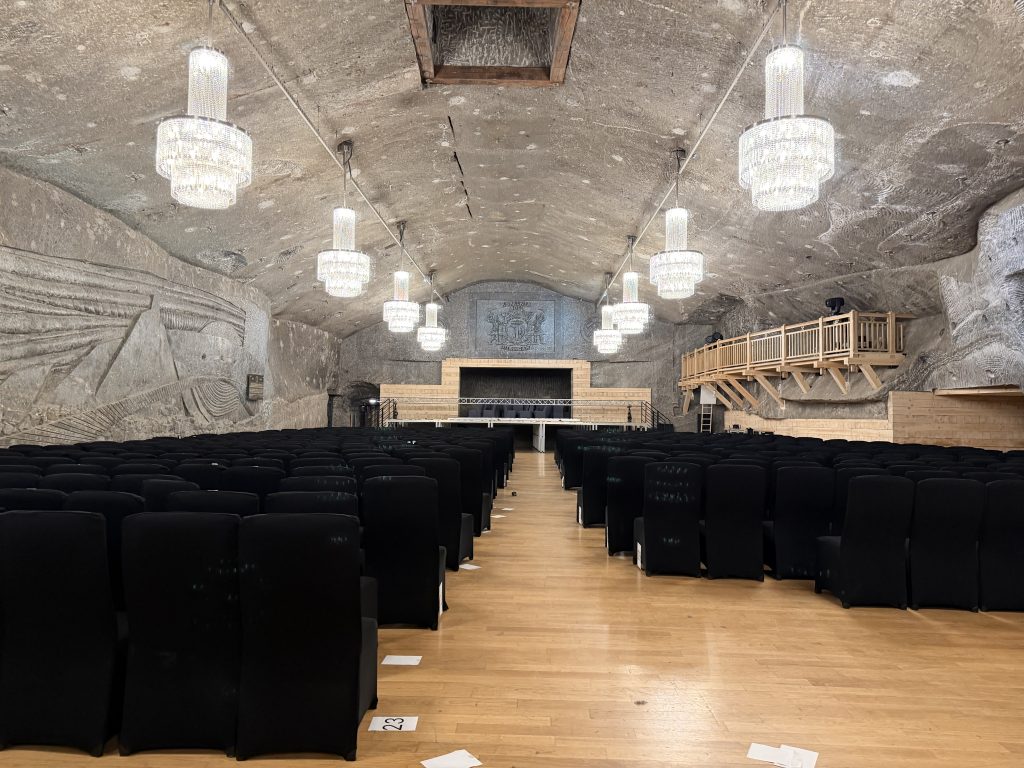
At 410 feet, covers about 7,300 square feet and can hold several hundred people. AThese chambers are massive! Old workings higher in the mine once reached even taller, close to 300 feet, before they were worked out.
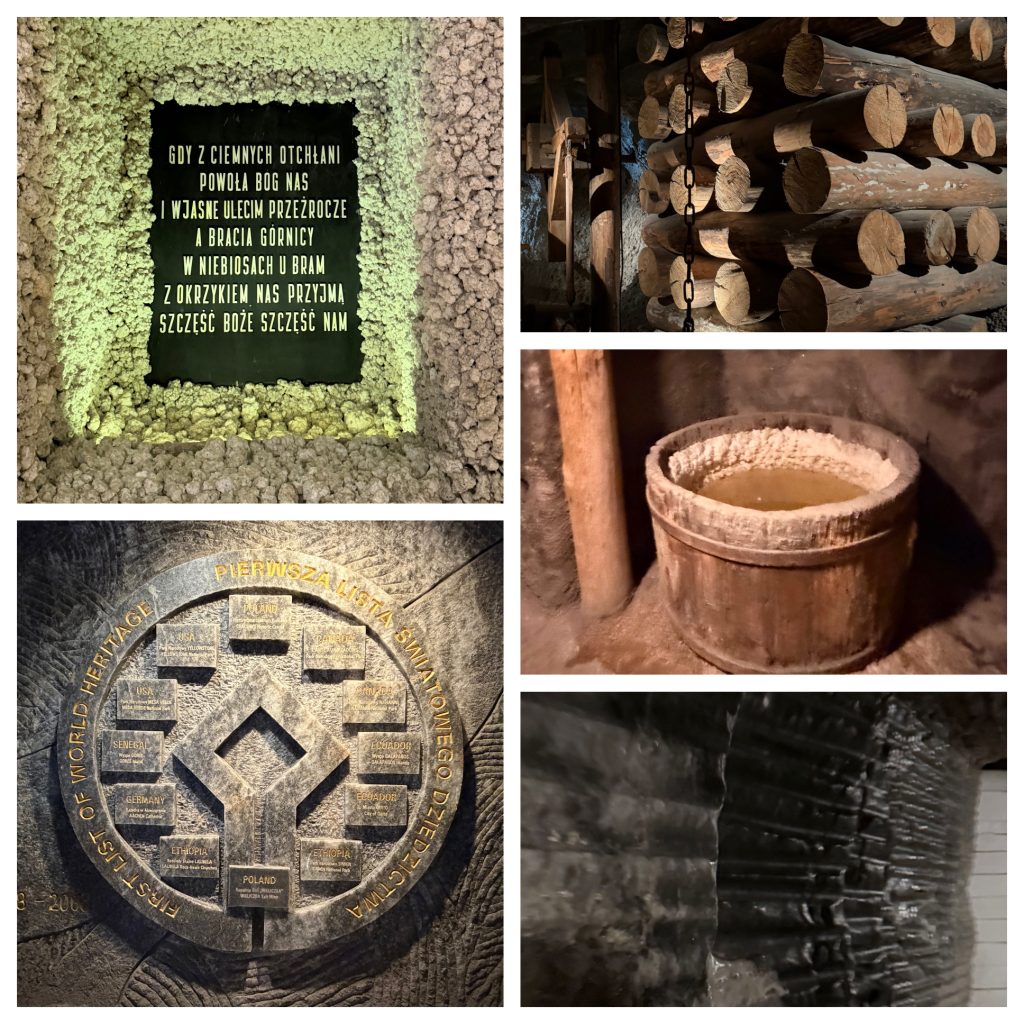
People was were making salt here long before anyone cut rock. Surface brine springs were boiled nearby from Neolithic times, and by the 1100s this was the great salt works of the region, Magnum Sal.
Solid salt turned up in the 1200s while a brine well was being deepened. Shafts followed.
Wieliczka received town rights in 1290, and the Kraków Saltworks, Wieliczka plus Bochnia, became one of the largest enterprises in the kingdom.
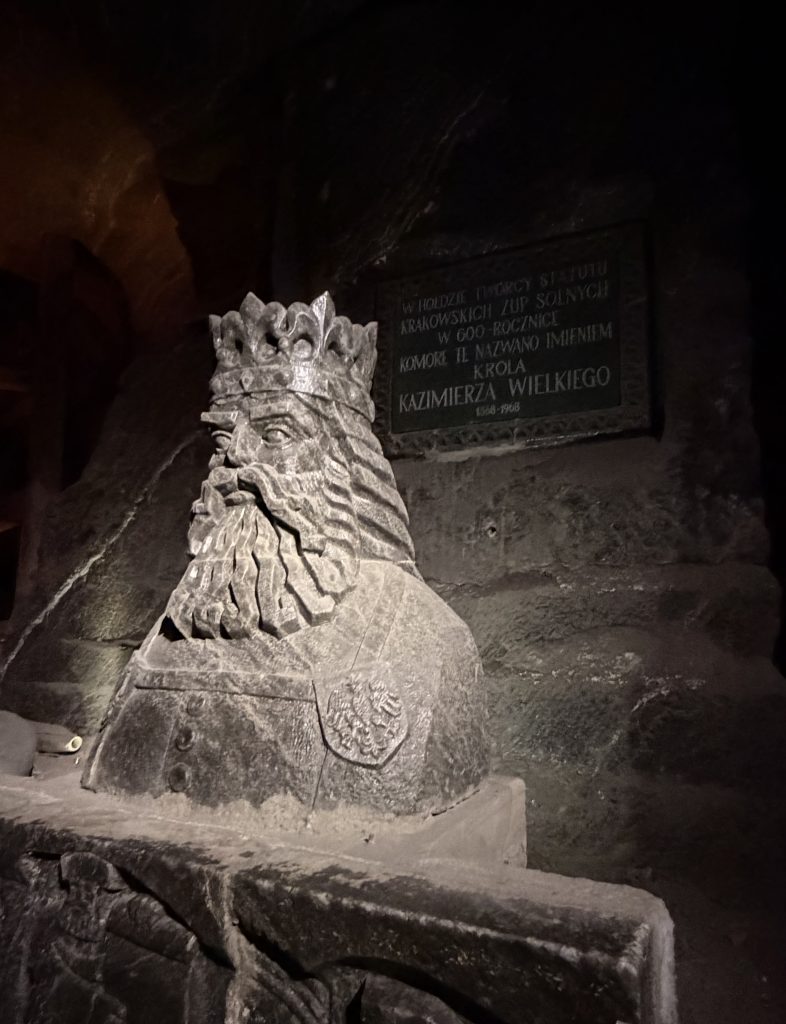
Under Casimir the Great, salt revenue was estimated at about a third of the royal treasury. That money helped turn a wooden Poland into a stone one, including the Kraków Academy, the country’s first university.
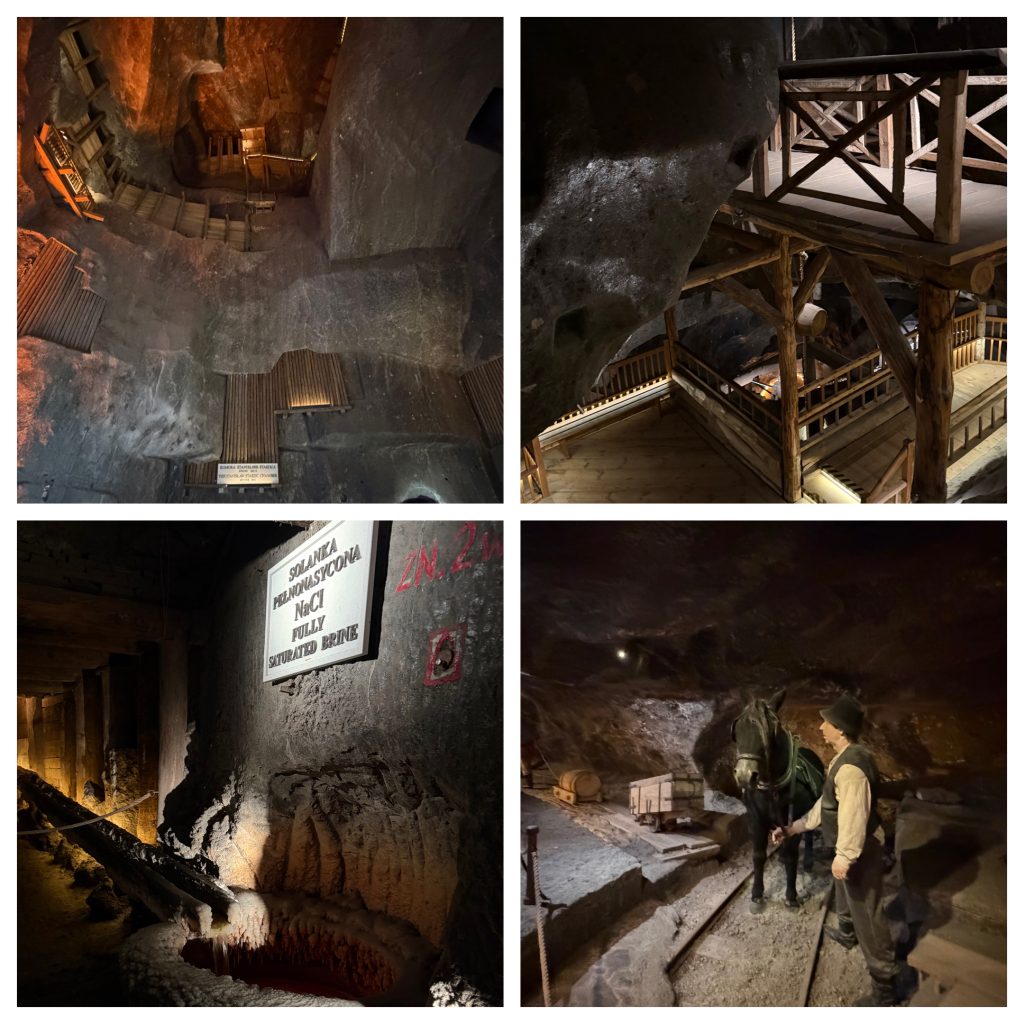
In the 1500s and 1600s some 2,000 people were producing more than 33,000 tons a year. Rock-salt mining ended in the 1990s.
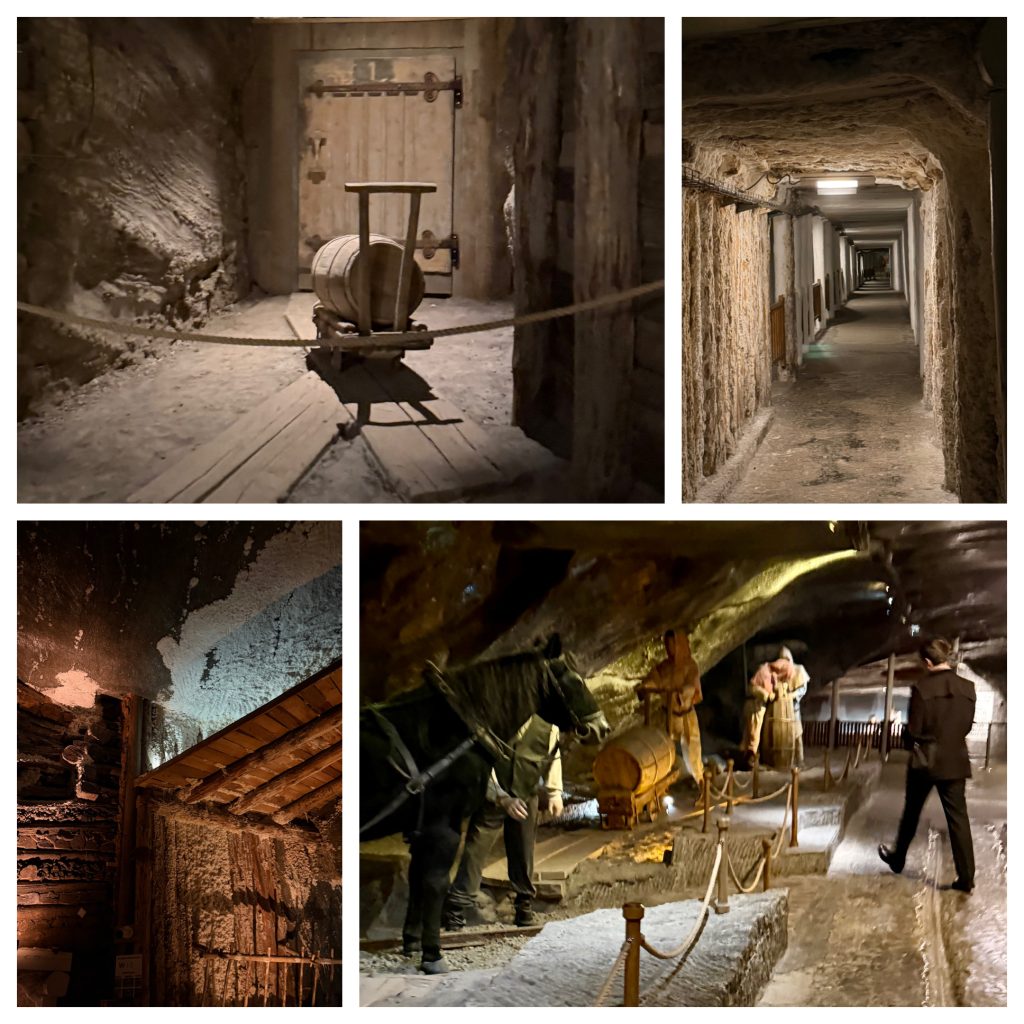
What still comes out is drainage brine, collected so fresh water does not dissolve the workings, then evaporated into table salt on the surface.
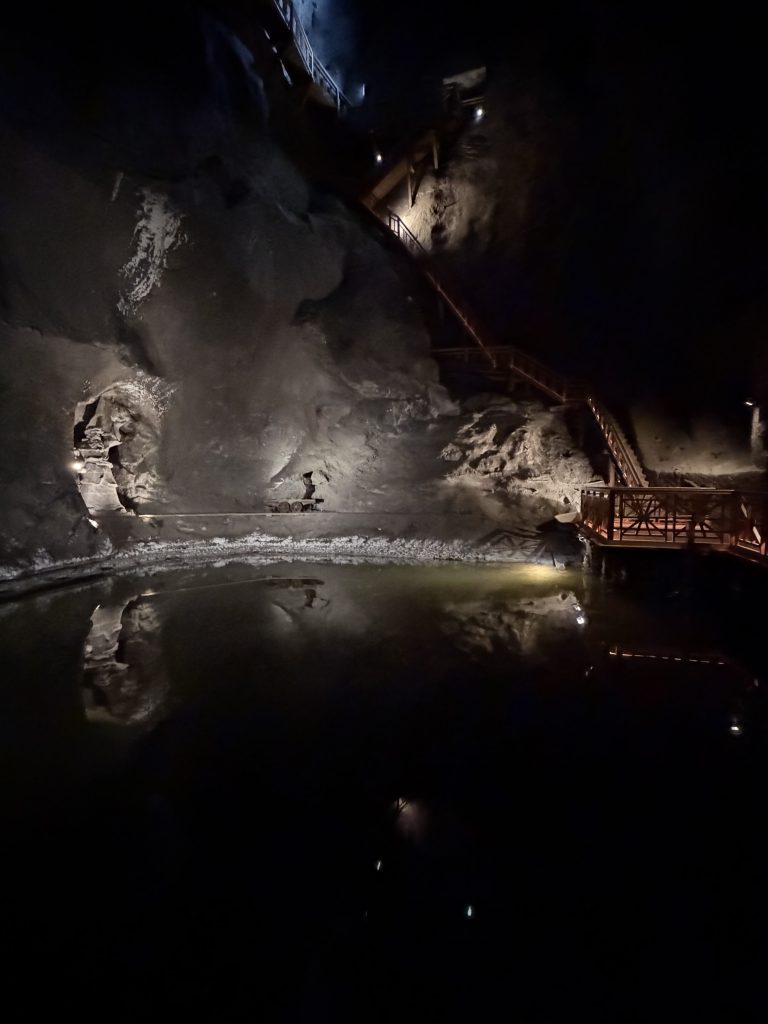
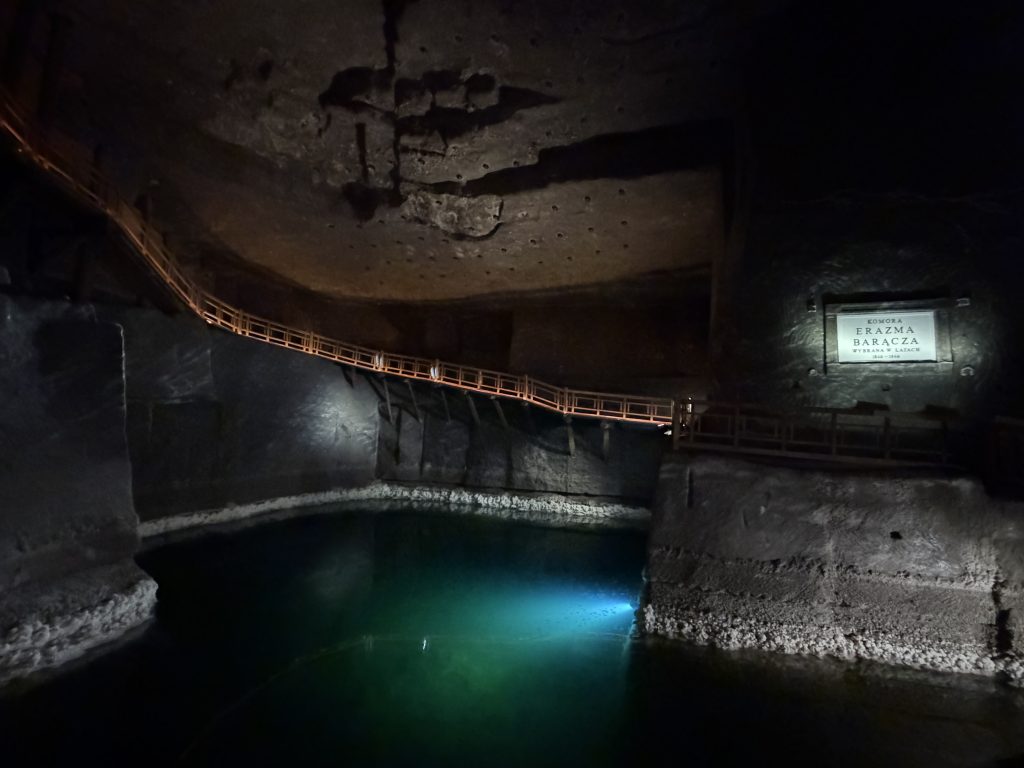
The underground lake is real brine, not a painted backdrop. Cool, quiet, and a little humbling once you are standing in a room the size of a church, cut out of salt. Worth the stairs. Don’t skip this on your trip to Poland! 🇵🇱
A great Sunday afternoon in Kraków, after the salt mines we moved from the brightness of the town market square to a quieter kind of memory, and then back to the hotel along the river.
Rynek Główny
Main Market
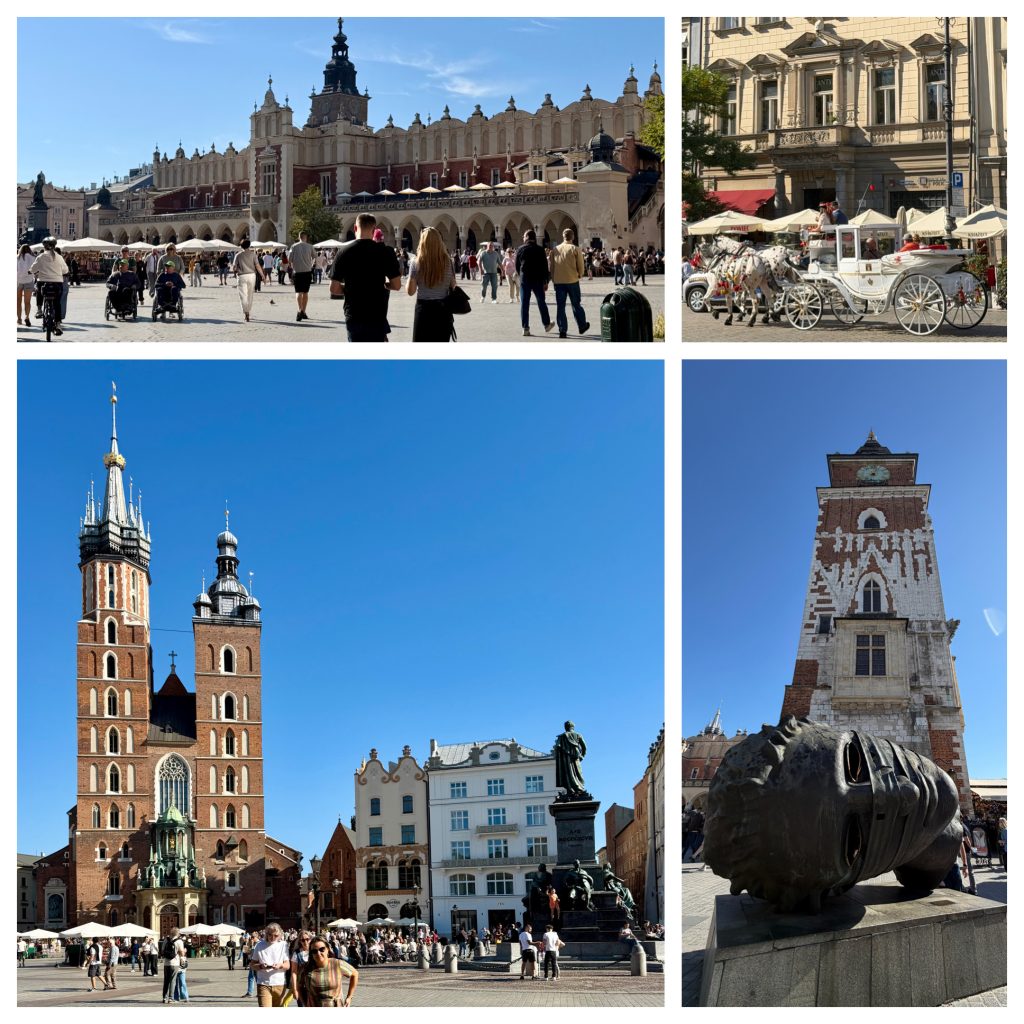
The afternoon started in Rynek Główny, the great medieval square at the heart of the Old Town.
Sukiennice (Cloth Hall)
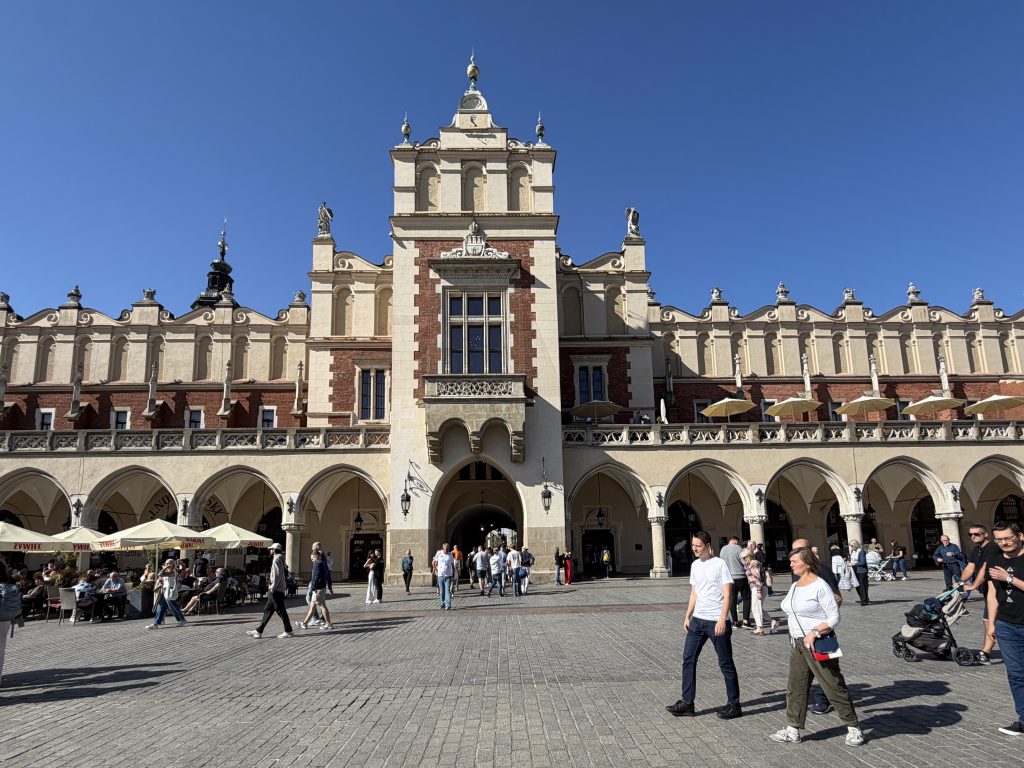
We strolled down the long arcades of the Sukiennice (Cloth Hall), where merchants have traded under those Renaissance stalls since the 1500s. Stalls under the arcades still sell amber, crafts, and souvenirs. The upper floor houses a gallery of 19th-century Polish painting in the National Museum.
St. Mary’s Basilica
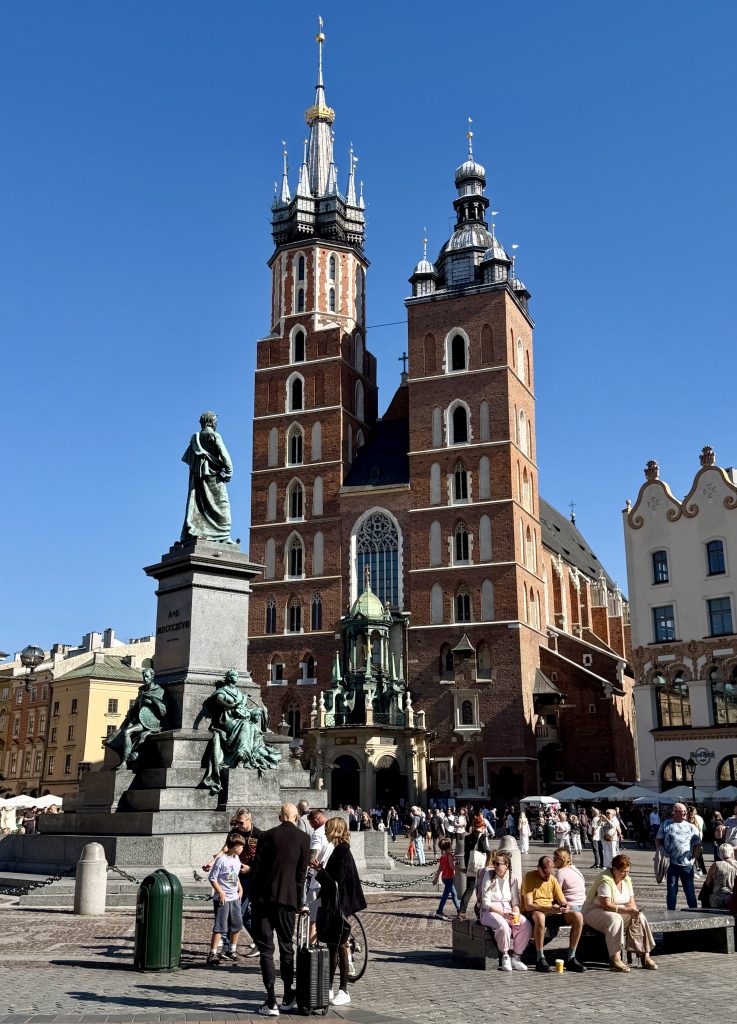
After that we went out to the square to see the unequal towers of St. Mary’s Basilica. One tower is taller because, so the story goes, the two brother-builders could not agree.
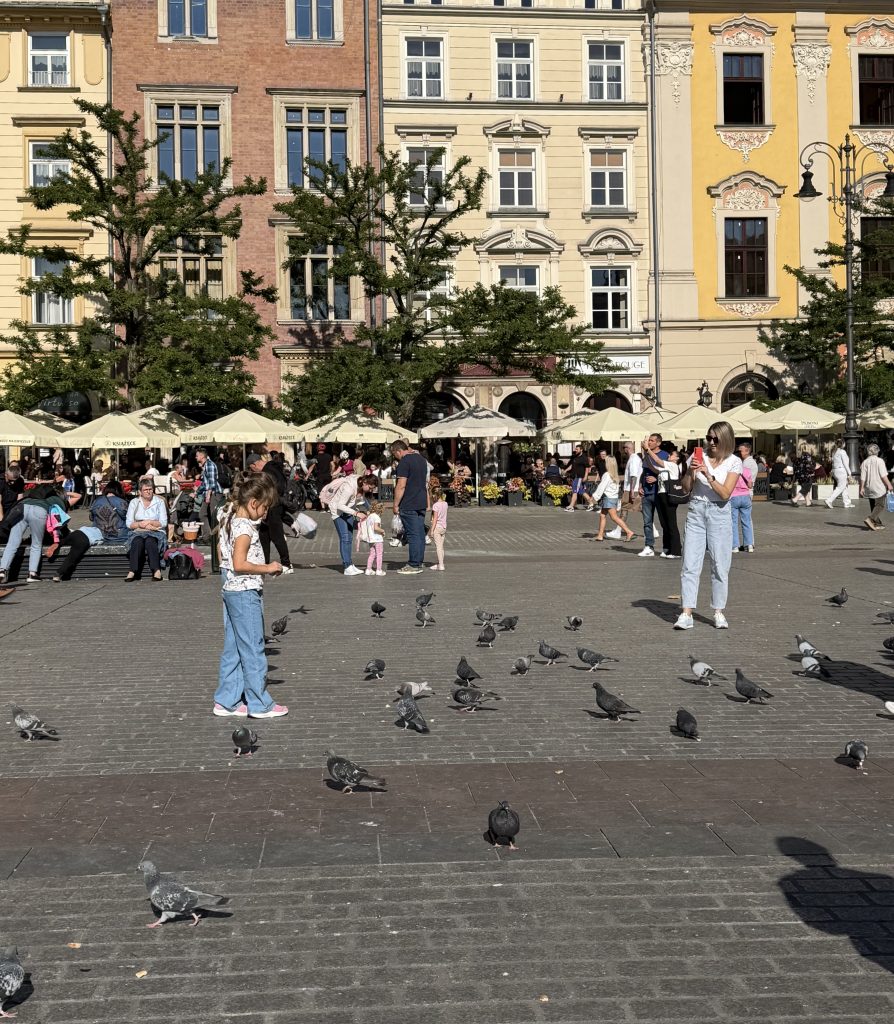
Tons of pigeons throughout the cobblestone courtyard, and on the hour a call sounded from the higher tower. A lone trumpet played out, then cut off mid-phrase. The trumpet call has sounded since at least 1392, when a trumpeter kept watch for fire and approaching danger. The abrupt ending belongs to a later legend: that in 1241 a sentry warning the city of a Tatar raid was struck in the throat by an arrow and never finished the tune.
Old Jewish Ghetto – Ghetto Wall
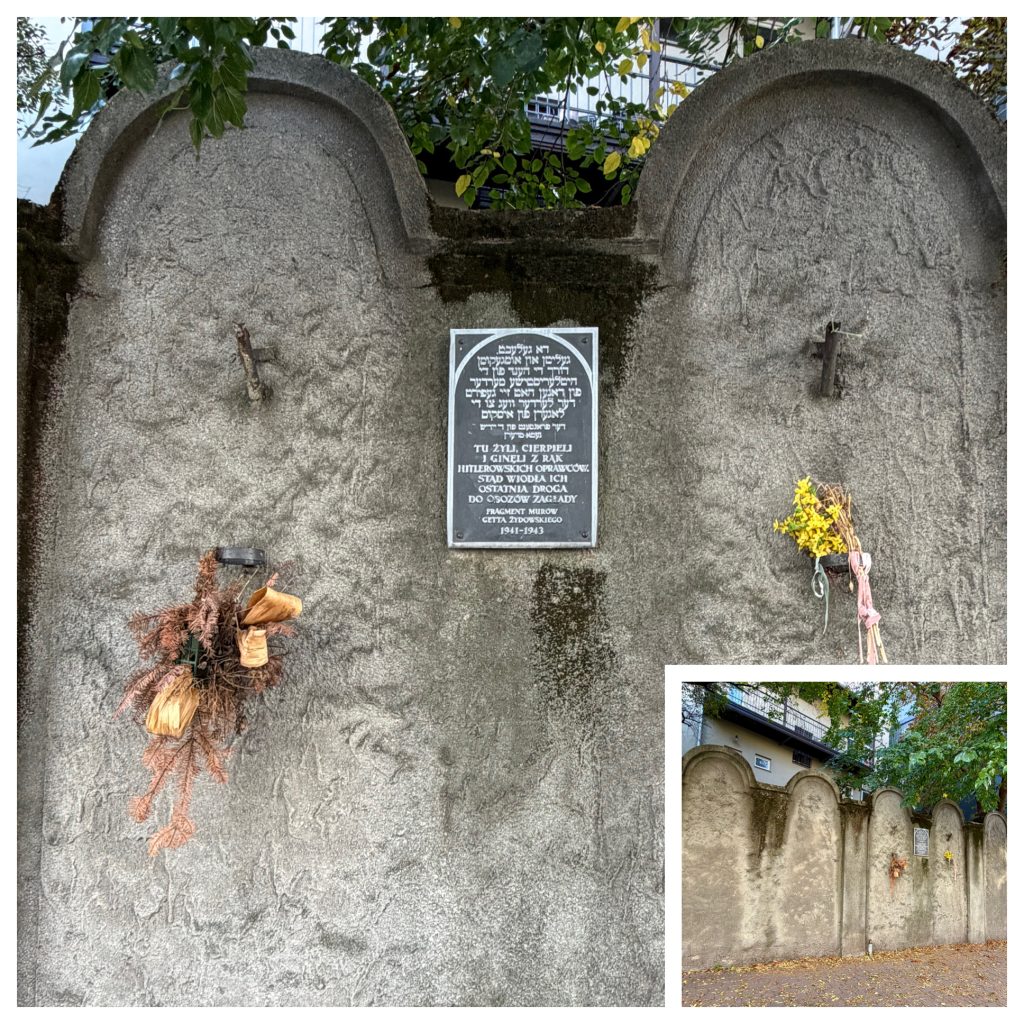
After lunch at the town square we went to the old Jewish ghetto area to see a short stretch of the ghetto wall that remains. Its top shaped like Jewish tombstones — a deliberate cruelty when the Nazis sealed the Kraków Ghetto here in March 1941.
Plac Bohaterów Getta – Heroes Square
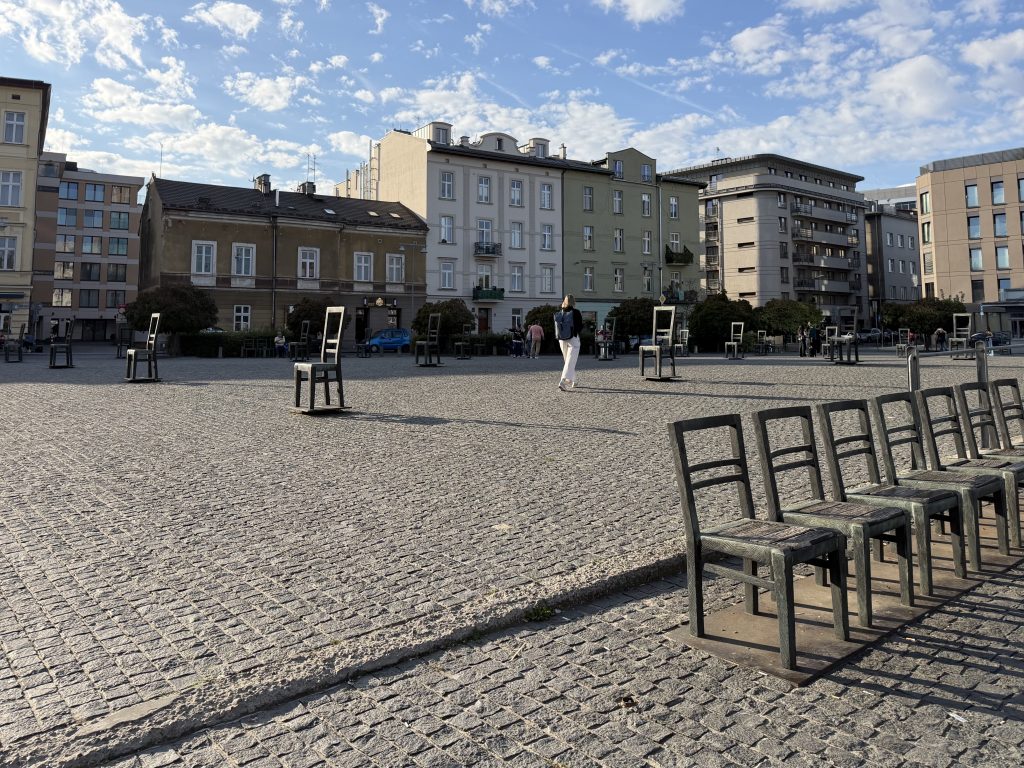
A few minutes on is Plac Bohaterów Getta, once Plac Zgody, the assembly place for deportations. The city has set 33 empty bronze chairs in the square, facing the old Eagle Pharmacy where Tadeusz Pankiewicz stayed and tried to help.
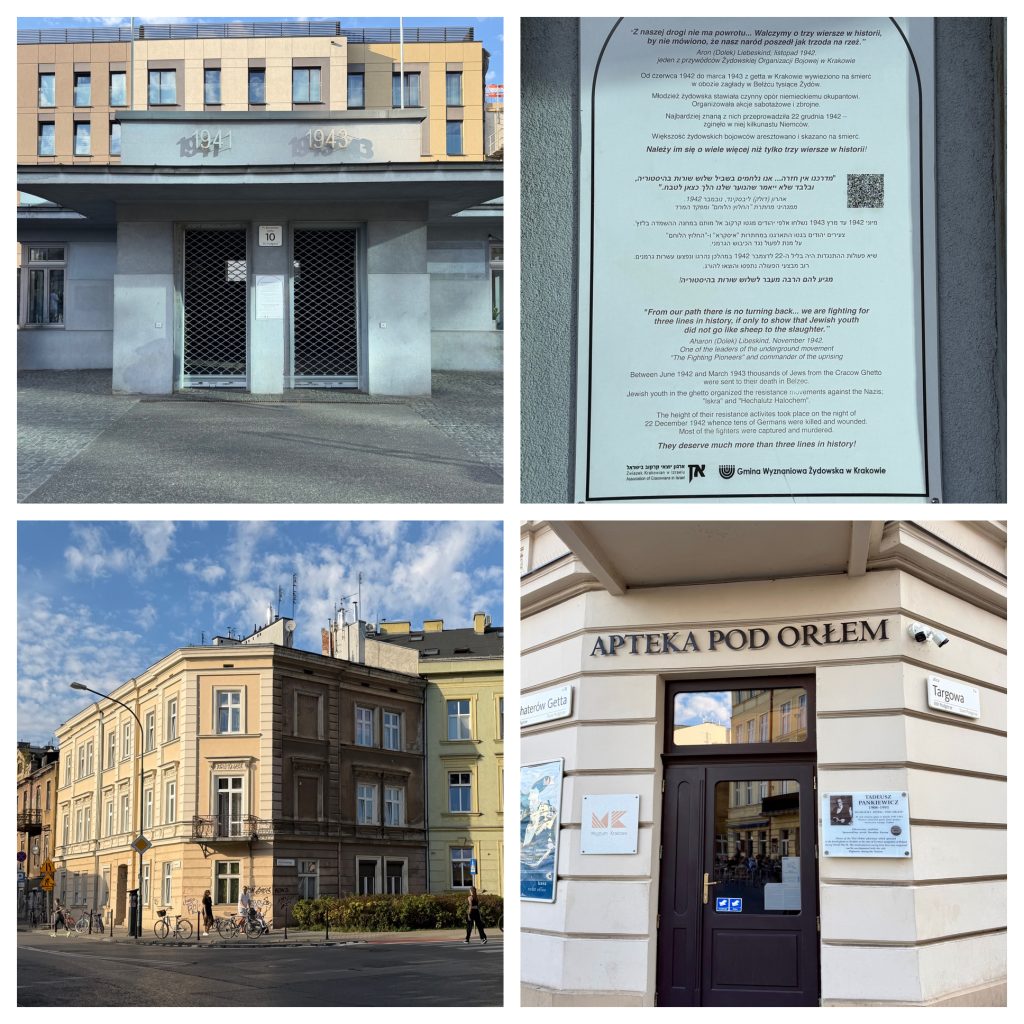
The chairs stand for the furniture left behind when the ghetto was liquidated in March 1943, and for the people who never came back to sit in them. Around fifteen thousand Jews were forced into that small district; most did not survive.
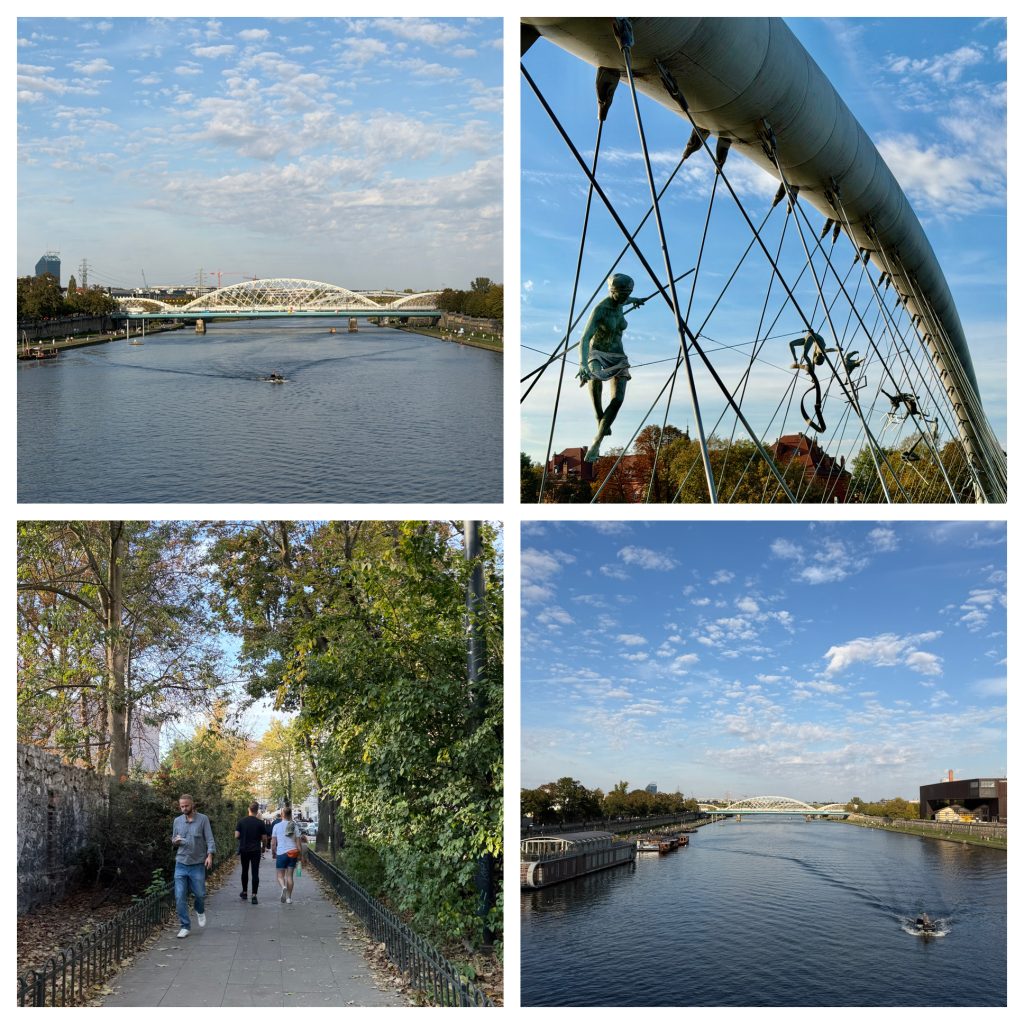
The walk back to the hotel was the gentlest part of the day. Over the river (beautiful pedestrian bridge and riverside walking paths), through Kazimierz as the light went gold on the synagogues and side streets, then into Stradom — the old suburb between Kazimierz and Wawel, on the flood plain where a royal bridge once carried the road south. Quiet streets, trees shedding fall leaves, the castle hill ahead, and the hotel waiting at the end of it.
A very full day – market bustle, a broken trumpet call, and a square of empty chairs. Kraków holds both, a short walk apart.
Auschwitz-Birkenau
We skipped it this time as we have been to Dachau. Messed up with advanced tickets purchase and couldn’t secure any the day before. Tickets should be purchased at least a week ahead.
Day 3 (Monday)
Leaving for Budapest catching a 9am flight.
Worth visiting but not possible in this window
Czartoryski Museum. Leonardo’s Lady with an Ermine. Small and quiet. Free some Tuesdays.
St. Mary’s interior / Wit Stwosz altar / tower climb. The square itself is enough this trip.
MOCAK (contemporary art next to Schindler’s Factory) and Kościuszko Mound (city view).
Holidays Affecting Travels
Sukkot, Shemini Atzeret, Simchat Torah, and the holidays around them
These belong to a three-week autumn block that begins with the High Holy Days and ends with rejoicing in the Torah. Jewish days begin at sundown the evening before.
High Holy Days
These come first and will already be over before you reach Kraków. Rosh Hashanah, the Jewish New Year, runs in 2026 from sundown Friday 11 September through Sunday 13 September. It is a time of judgment, the shofar, and festive meals. Yom Kippur, the Day of Atonement, runs from sundown Sunday 20 September through Monday 21 September. It is a full-day fast and the holiest day of the year.
Sukkot — Festival of Booths
Sukkot follows five days after Yom Kippur. In 2026 it lasts from sundown Friday 25 September through nightfall Friday 2 October. It is one of the three biblical pilgrimage festivals, along with Passover and Shavuot.
It has two layers of meaning: gratitude for the harvest, and memory of the wilderness, when God sheltered Israel in temporary dwellings after the Exodus. The central practice is living in a sukkah, a hut roofed with cut branches so the sky can be seen through it. Meals are eaten there; some people sleep in it. Each day except Shabbat, people take the Four Species—palm, myrtle, willow, and etrog (citron)—and wave them.
In the Diaspora the first two days, 26 and 27 September 2026, are full festival days: no work, synagogue, festive meals. The middle days are Chol HaMoed, a semi-holiday when work is allowed with some limits and travel is common. The last day of Sukkot is Hoshanah Rabbah, Friday 2 October 2026, a peak of prayer before the season turns inward.
Shemini Atzeret — Eighth Day of Assembly
This is a separate holiday, not an eighth day of Sukkot. In the Diaspora in 2026 it runs from sundown Friday 2 October through Saturday 3 October. After a week of public celebration and the sukkah, the day is quieter: stay one more day with God. Many communities say the prayer for rain and recite Yizkor, the memorial prayers for the dead. Work is forbidden. In Israel this day is combined with Simchat Torah.
Simchat Torah — Rejoicing in the Torah
In the Diaspora in 2026 this runs from sundown Saturday 3 October through Sunday 4 October. The annual cycle of public Torah reading finishes at the end of Deuteronomy and starts again at Genesis the same day. Scrolls are carried around the sanctuary in circuits called hakafot, with singing and dancing. It is loud, joyful, and communal. Work is forbidden, and tourist hours at community synagogues and cemeteries are usually cancelled.
Why there are two days outside Israel
In Israel, Shemini Atzeret and Simchat Torah are observed together on one day. In the Diaspora, including Poland, an extra festival day is kept, so they fall on Saturday and then Sunday.