
 Swan Bradshaw
Budapest, Hungary
Budapest was created in 1873 when three settlements were unified: Buda (the hilly western bank of the Danube, home to Buda Castle), Pest (the flatter eastern bank), and Óbuda. “Buda” still commonly refers to that western side of the city, not the whole capital.
Short history
Romans built Aquincum here. Magyars arrived around 896. After the Mongol invasion of 1241, the kings fortified Castle Hill. The Ottomans held Buda from 1541 to 1686 and left the bath culture. Under the Habsburgs, Pest exploded into a European capital; the 1867 Austro-Hungarian Compromise funded the Parliament, Andrássy Avenue, and the first metro on the continent. Buda, Pest, and Óbuda officially became one city in 1873. The 20th century hit hard: CT World War I and the Treaty of Trianon, the 1944–45 siege that wrecked the castle and bridges, then the 1956 uprising against Soviet rule. The riverfront and Castle District are UNESCO-listed because that layered story is still visible.
Hungary in brief
Magyars (Hungarians), a Uralic-speaking steppe people, entered the Carpathian Basin under Árpád around 895. Stephen I made it a Christian kingdom about 1000.
The medieval kingdom was a Central European power until the Ottomans smashed it at Mohács (1526). Hungary split for 150 years among Ottomans, Habsburgs, and Transylvania. The Habsburgs took most of it after 1699.
After the failed 1848 revolution, the 1867 Compromise created Austria-Hungary. Defeat in World War I and the Trianon Treaty (1920) cut the country to about one-third of its former size.
World War II, Soviet occupation, and communism followed; the 1956 uprising was crushed. Communism ended in 1989. Hungary joined NATO in 1999 and the EU in 2004.
What to know before you go
Hungary is Schengen. Schengen is a group of European countries that dropped internal border checks with each other. Hungary is one of them. U.S. citizens get 90 days in any 180-day period across the whole zone—this trip already uses days from Poland. Passport should be valid at least three months past your Schengen exit. ETIAS (online pre-authorization) has been delayed; as of mid-2026 it is more likely 2027 than October 2026, but check official EU sources before you fly.
Currency is the forint (HUF), not the euro. Cards work almost everywhere in Budapest; use bank ATMs (OTP, K&H, Erste), not Euronet. Pay in forints if a place offers euros—the rate is usually poor.
October highs are around 55°F, lows near 44°F, shorter days, possible rain. Layers, a waterproof, and comfortable shoes for cobblestones. Thermal baths are open year-round.
Public transport is excellent (metro, trams—especially tram 2 along the Pest embankment). A 72-hour BKK travel card is the simple buy. Bolt or official taxis beat street hails.
English is common in hotels and tourist areas; Hungarian is otherwise hard. Tipping about 10 percent is normal if service isn’t already included. The city is generally safe; watch bags in crowded squares and on the metro.
Book ahead: Parliament interiors, Széchenyi (or Rudas), and any evening cruise. Gellért Bath is closed. If you want one palace-and-view morning and one soak-and-market day, that is the right split for three nights.
October 5, 2026
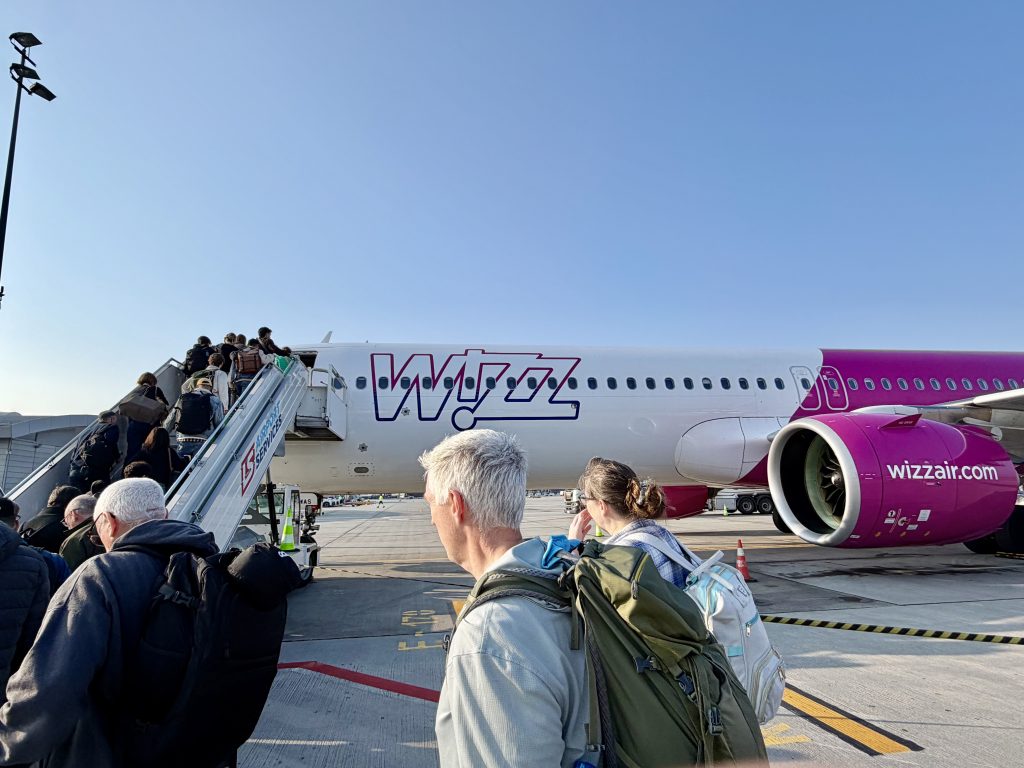
What a day! We left Kraków early and landed in Budapest ready to walk, and the city delivered.
The flight itself was the weak link. Wizz Air got us here in under an hour, and the ride was smooth enough, but that is about where the compliments stop. We departed late, boarding was a cluster, and they seem to look for every chance to nickel-and-dime you. We had already paid for priority status and two carry-ons each, but one roller bag was half an inch too wide, so it had to be checked for $100. Then Kevan got to haul it down the tarmac and load it himself. Flight was fine. Airline, not so much. Would skip Wizz next time.
Budapest Marriott Hotel
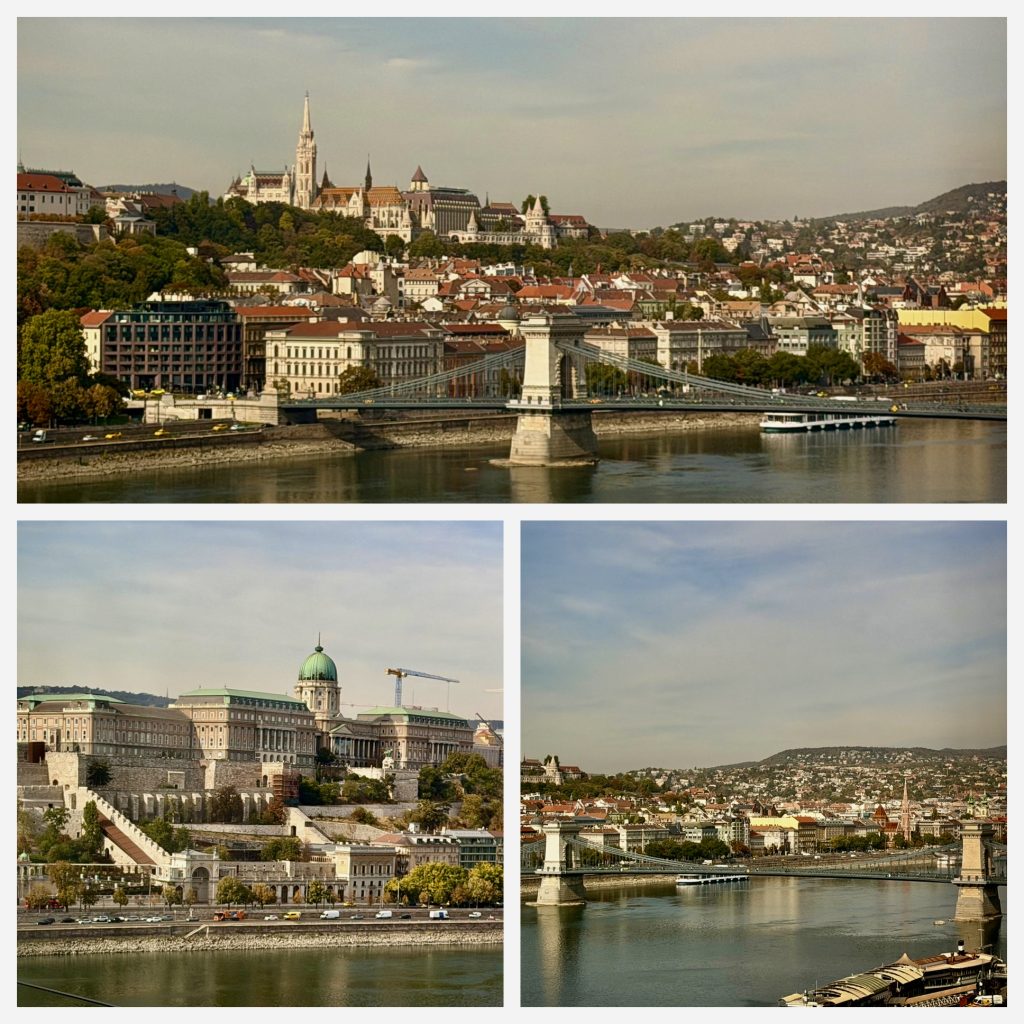
Checked into the hotel! The Budapest Marriott more than made up for it. They got us checked in early, and the rooms look straight out over the Danube toward Castle Hill looking over Buda Castle, the Chain Bridge, and the Citadel. The lounge is a good one. We went back for dinner and the spread was solid. The fitness center later in the day was very nice too. Location cannot be beat: Pest riverfront, directly across from the Buda Castle complex. Impressed all the way around.
Budapest only became one city in 1873. Before that it was Buda on the hills and Pest on the flat east bank, and you feel that split the minute you start walking.
The Pesti Vigadó
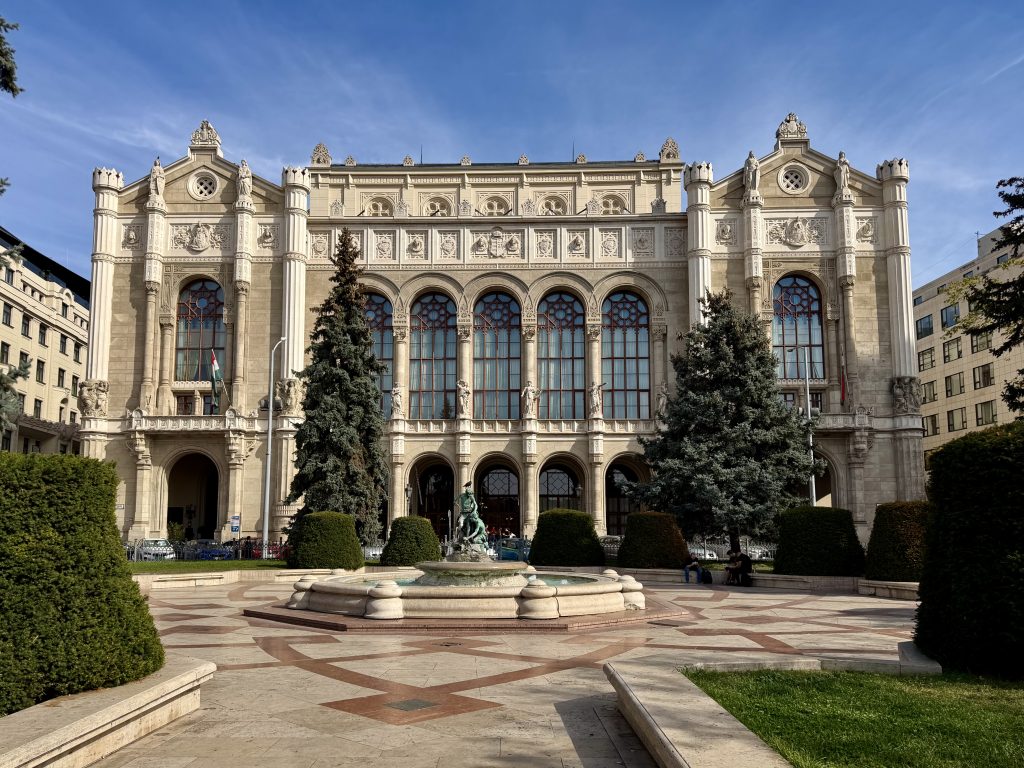
It is a Romantic-style concert hall on the Danube in central Budapest, designed by Frigyes Feszl and opened in 1865. It replaced the Redoute, destroyed in the 1848–49 War of Independence, and wasf built in a deliberately Hungarian style, with folk motifs, coats of arms, and statues of muses and national figures.
Liszt, Johann Strauss, Debussy, and Rubinstein performed here, and the 1873 ceremony that united Buda, Pest, and Óbuda into Budapest was held in the building. The basin in your photo is the Children’s Fountain by Károly Senyei (1896). The hall is still used for concerts and exhibitions.
Széchenyi Chain Bridge
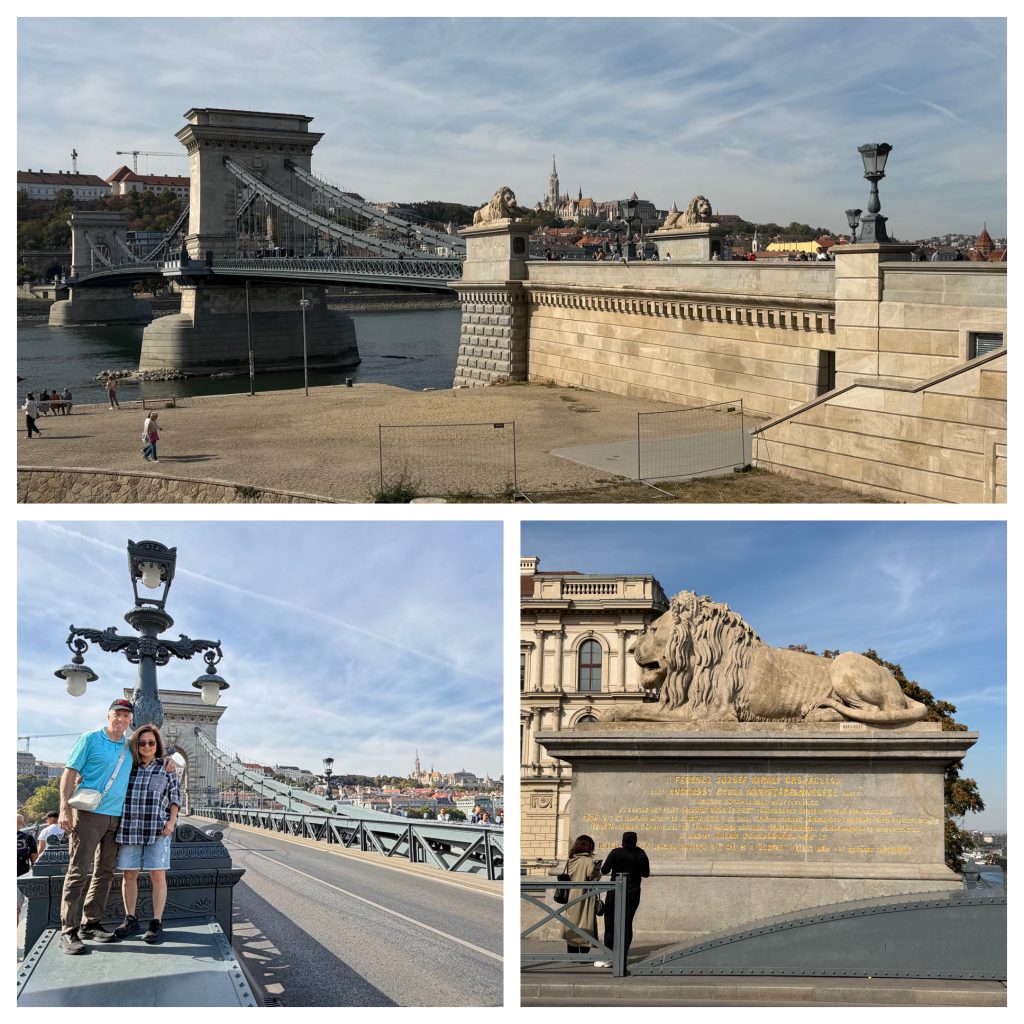
Opened in 1849 as the first permanent Danube bridge between Buda and Pest. Count István Széchenyi drove the project; William Tierney Clark designed it and Adam Clark built it. Germans destroyed it in 1945; it was rebuilt after the war.
Buda Castle Funicular
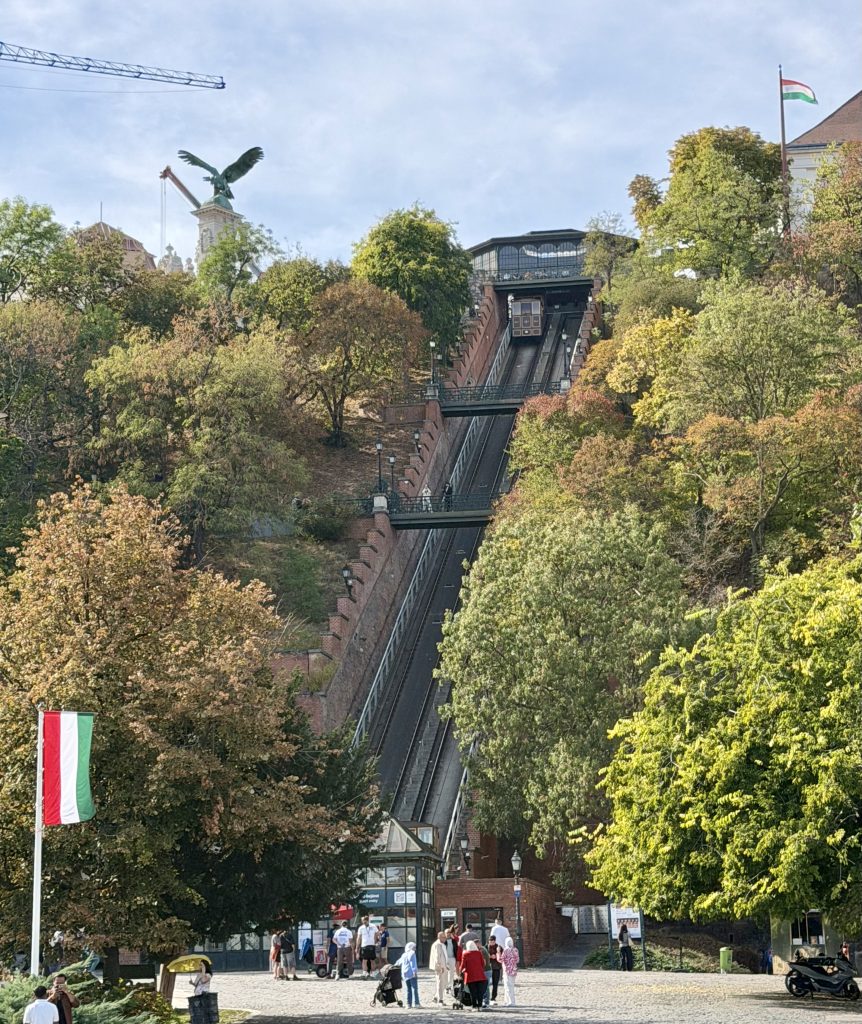
The Buda Castle Funicular opened 2 March 1870, one of the oldest funiculars still in use.
It was the second funicular in Europe, modeled on Lyon’s. Count Ödön Széchenyi, son of the Chain Bridge’s István Széchenyi, pushed the project so people could reach government offices on Castle Hill without the climb.
It ran on steam from Clark Ádám tér to the palace. A bomb destroyed it on 20 December 1944. The wreckage was removed, not rebuilt. It stayed closed for decades.
It reopened 4 June 1986 with electric drive and period-style cars, Margit and Gellért. Track is 95 metres; the rise is about 50 metres. Part of the UNESCO Danube-bank site since 1987.
It was closed this week for maintenance so we took the hop on/off Castle Tour shuttle instead.
The Official Budapest Castle Bus Shuttle
It is a hop-on/hop-off electric shuttle that looks more like an oversized open tuk-tuk than a bus. It is built for the narrow streets of Castle Hill, which the large tour buses cannot enter. It boards at Clark Ádám tér, beside the Chain Bridge and the closed funicular, then climbs to the top and loops past Fisherman’s Bastion and Matthias Church, the Buda Tower area, the Royal Palace at Dísz tér, and the Várkert Bazár before returning to the start.
You can hop off at any stop, stay as long as you like, and catch the next one, which runs about every 5–10 minutes from 09:00 to 17:00. A ticket covers one full loop and ends when you get back to Clark Ádám tér.
Matthias Church
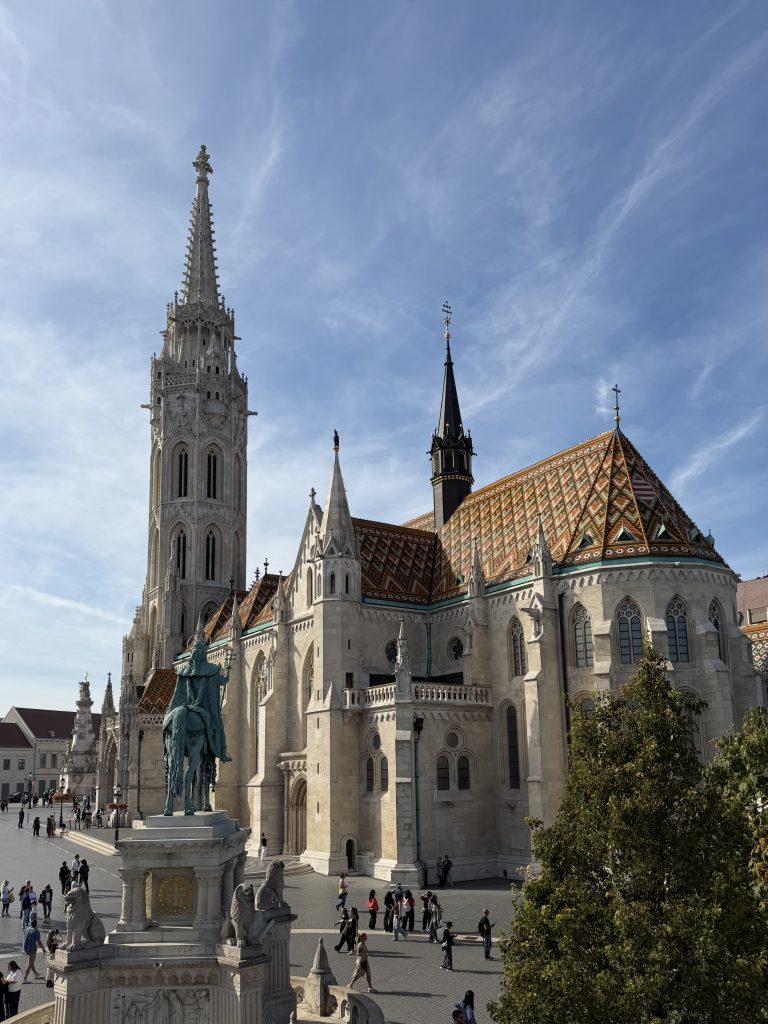
Beside it is stunning, the Church of Our Lady built in 1250s, where Habsburg kings were crowned. It takes its everyday name from King Matthias Corvinus, who rebuilt it in the 15th century.
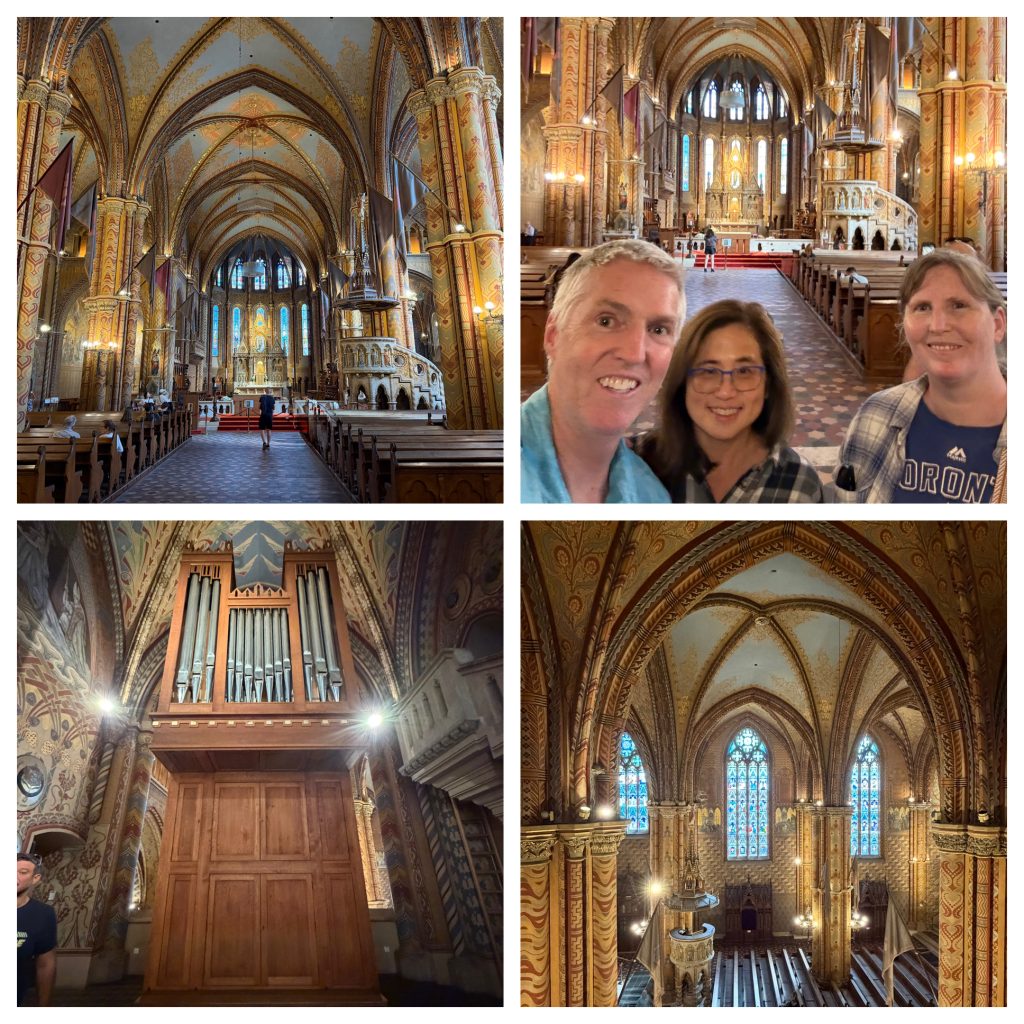
Named for King Matthias, who was married here. Used as a mosque under the Ottomans; Schulek restored it in late-1800s neo-Gothic. The colored roof tiles are worth the stop on their own.
Fisherman’s Bastion
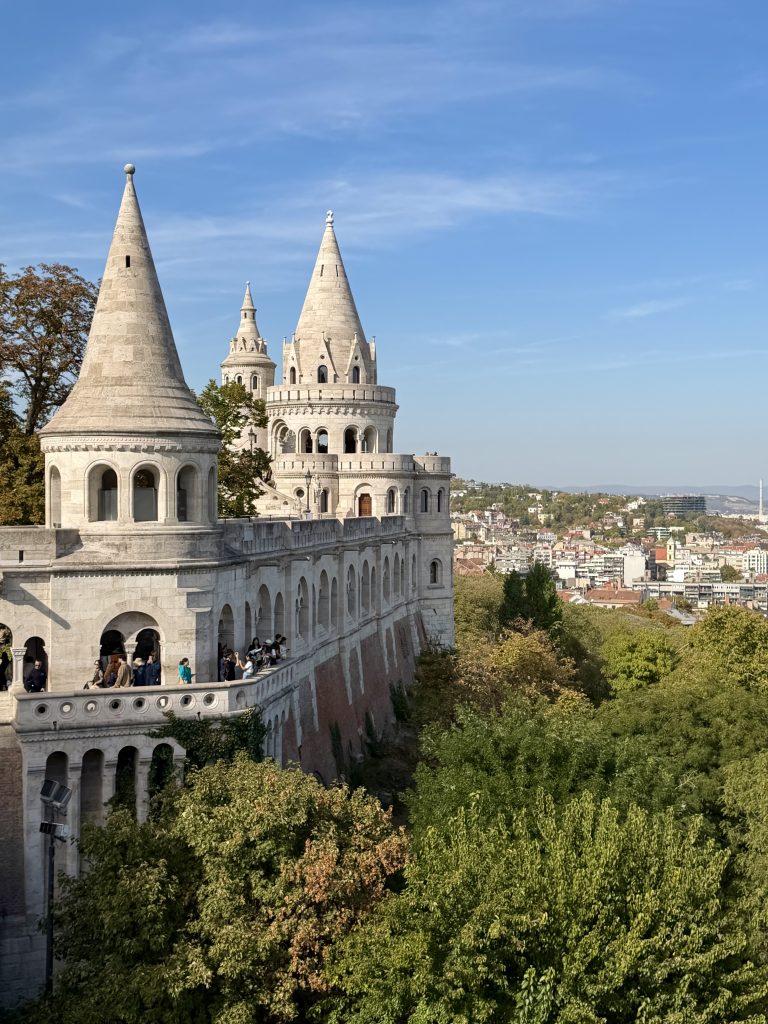
It looks medieval and is not. It was built around 1900 as a lookout and a frame for the church next door, tied to Hungary’s millennial celebrations. The seven white towers stand for the seven Magyar chieftains. The name is older than the building. This stretch of wall was once defended by the fishermen’s guild from the town below.
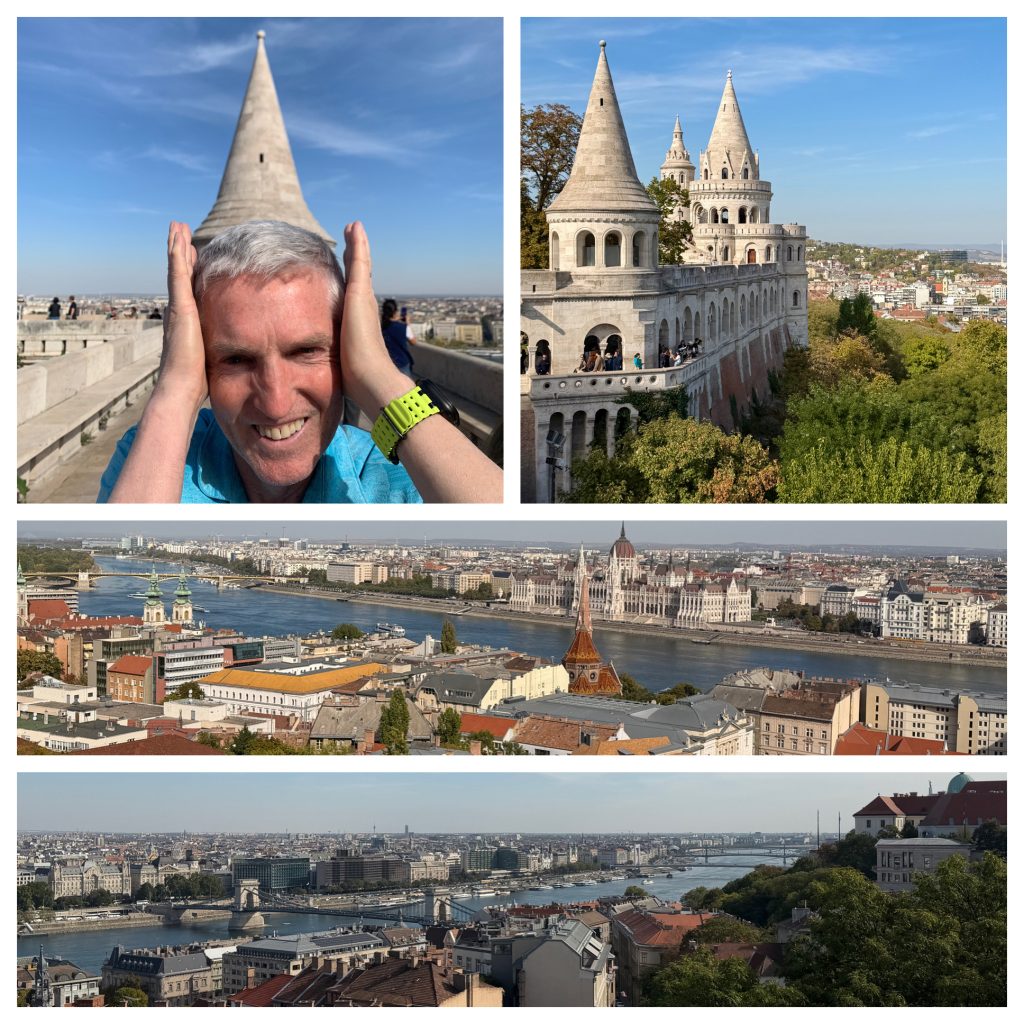
Buda Castle
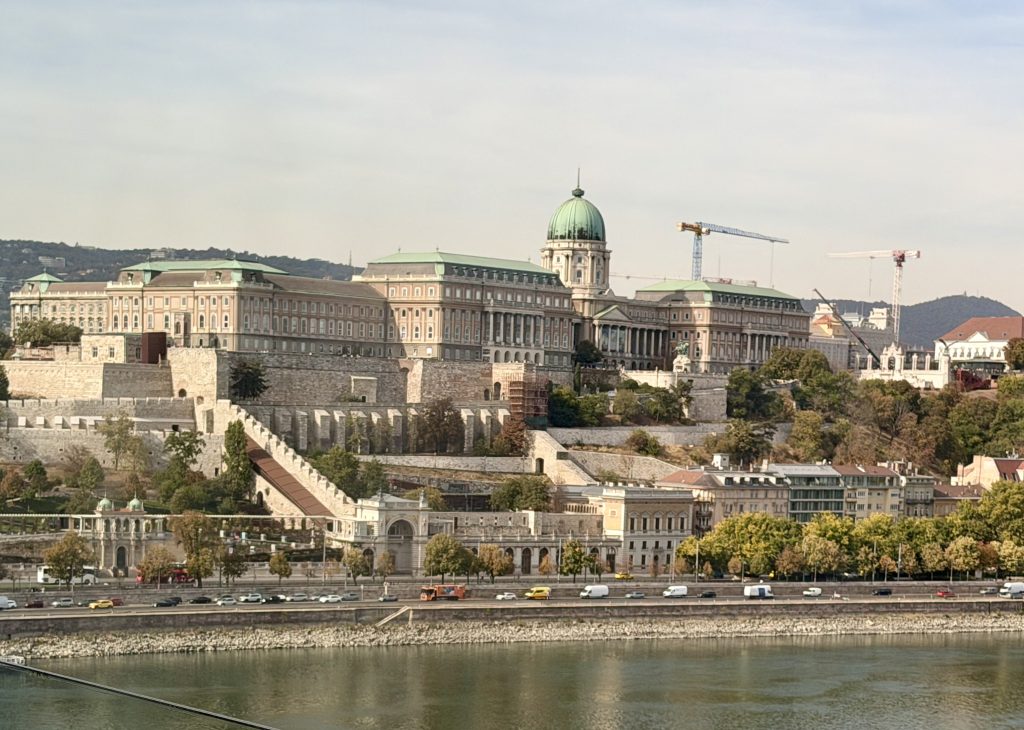
Up on Castle Hill we caught the changing of the guard at the Sándor Palace, the presidential office, and only just in time. Short ceremony, sharp uniforms, worth the pause.
Buda Castle dates back to the 1240s and sits on ground that has changed hands again and again: Magyar kingdom from the late 800s, wrecked by the Mongols in 1241, Ottoman Empire from 1541 to 1686, Habsburg Austria and then Austria-Hungary until 1918, Nazi Germany in the siege of 1944–45, then Soviet occupation until 1989. Most of what we saw was rebuilt after the war leveled the hill. The views back down to the river are worth the climb.
Mary Magdalene Tower
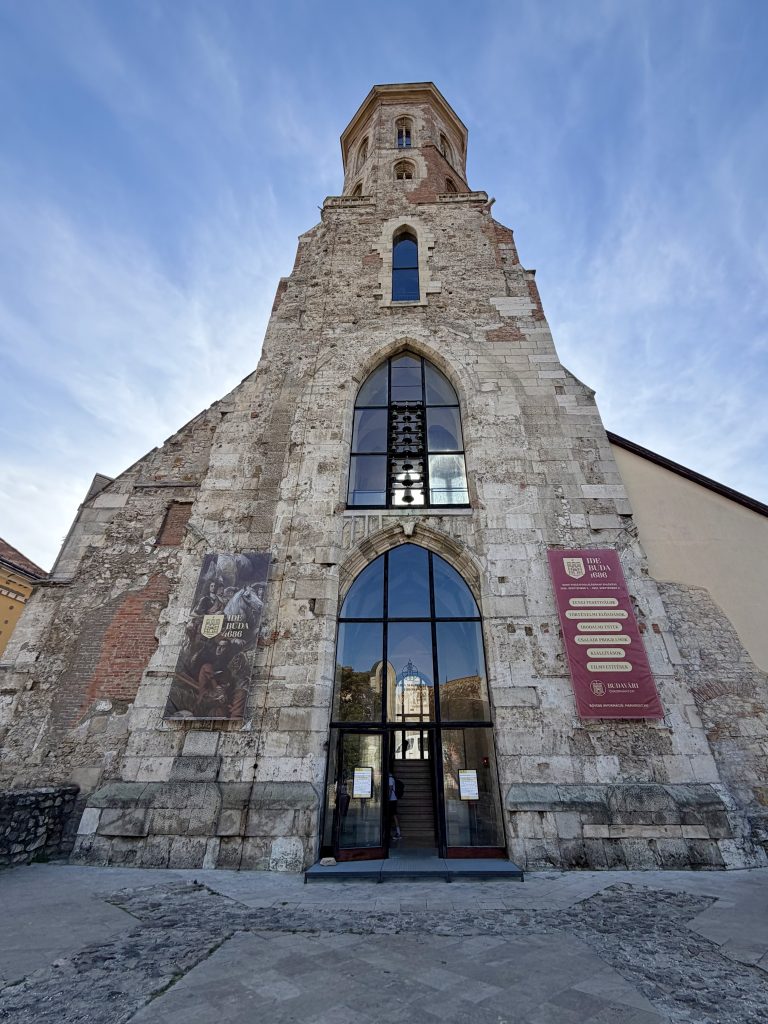
We also stopped at the Mary Magdalene Tower, in honor of Jodi’s daughter Magdalena. Only the tower is left of a 13th-century Gothic church; the main church was destroyed in the war.
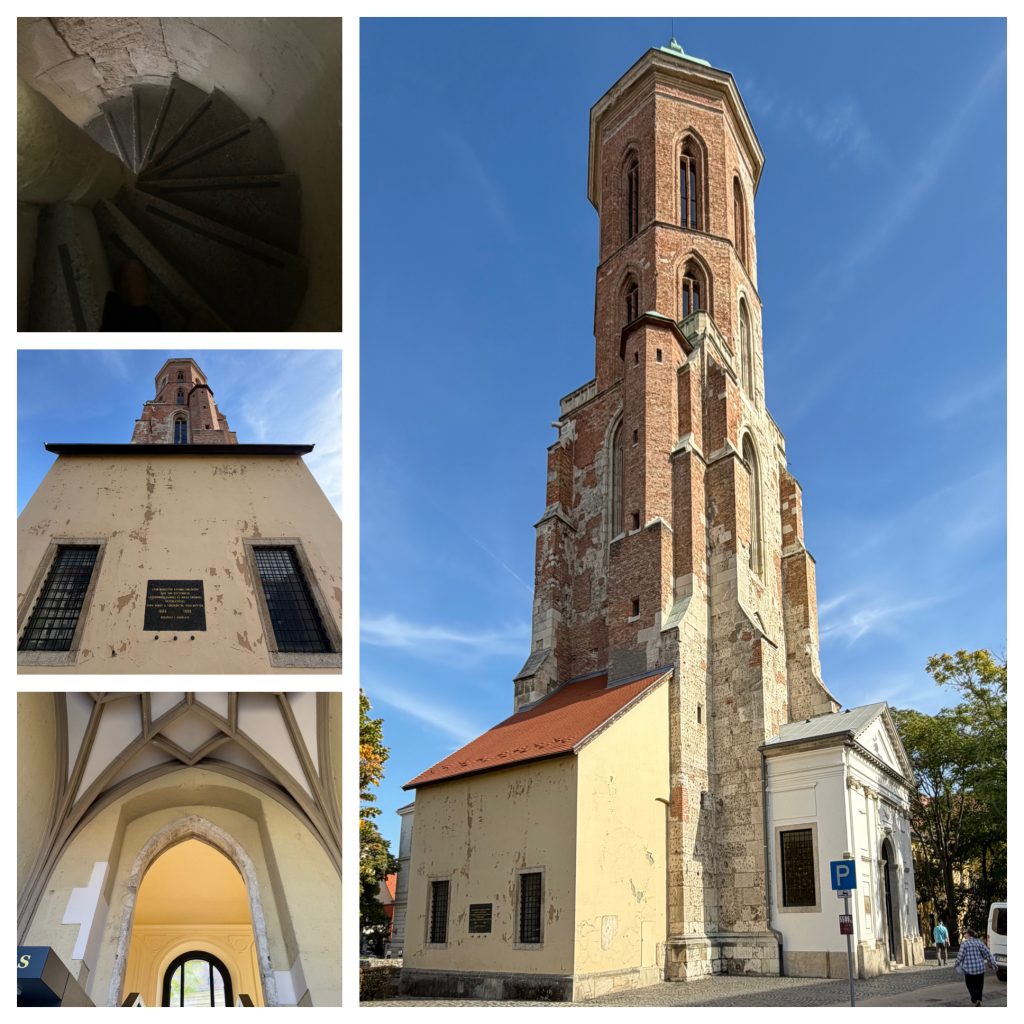
Inside, a tight stone spiral stair winds all the way up, a ton of steep steps, narrow enough that you keep a hand on the wall and pass people single file. It opens a little as you climb, then drops you out at the top with a full circle: Castle Hill, the Danube, Pest spread flat on the far bank, and the Buda Hills behind you. A good view, but not recommended if you have bad knees.
Hungarian chimney cakes
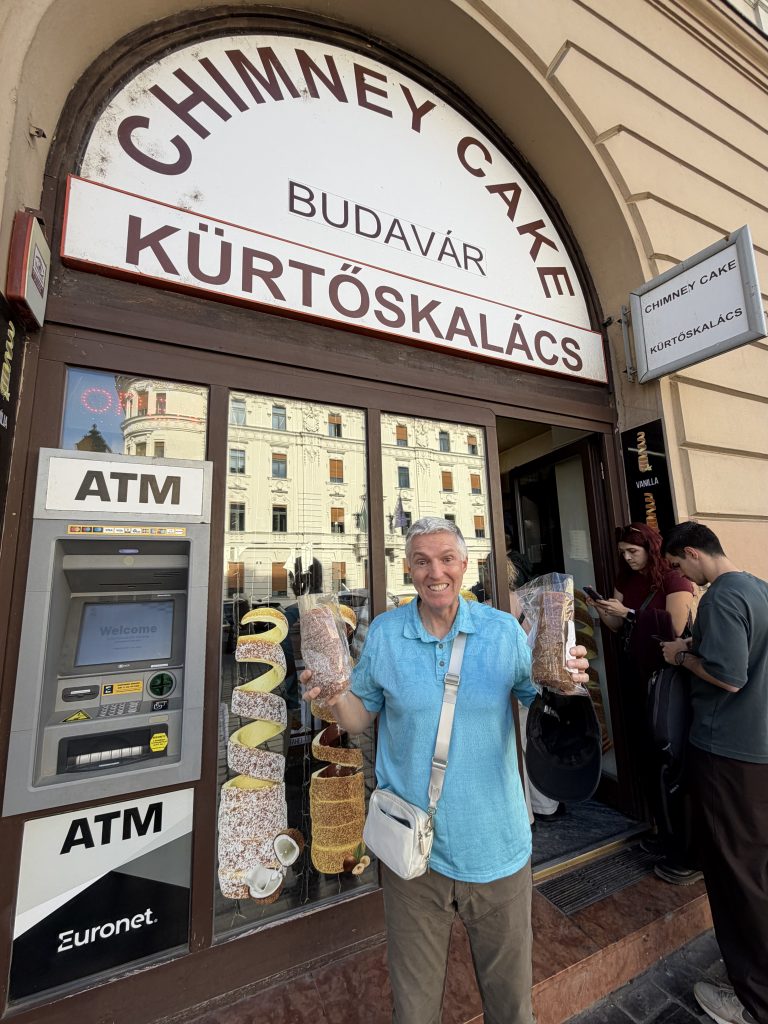
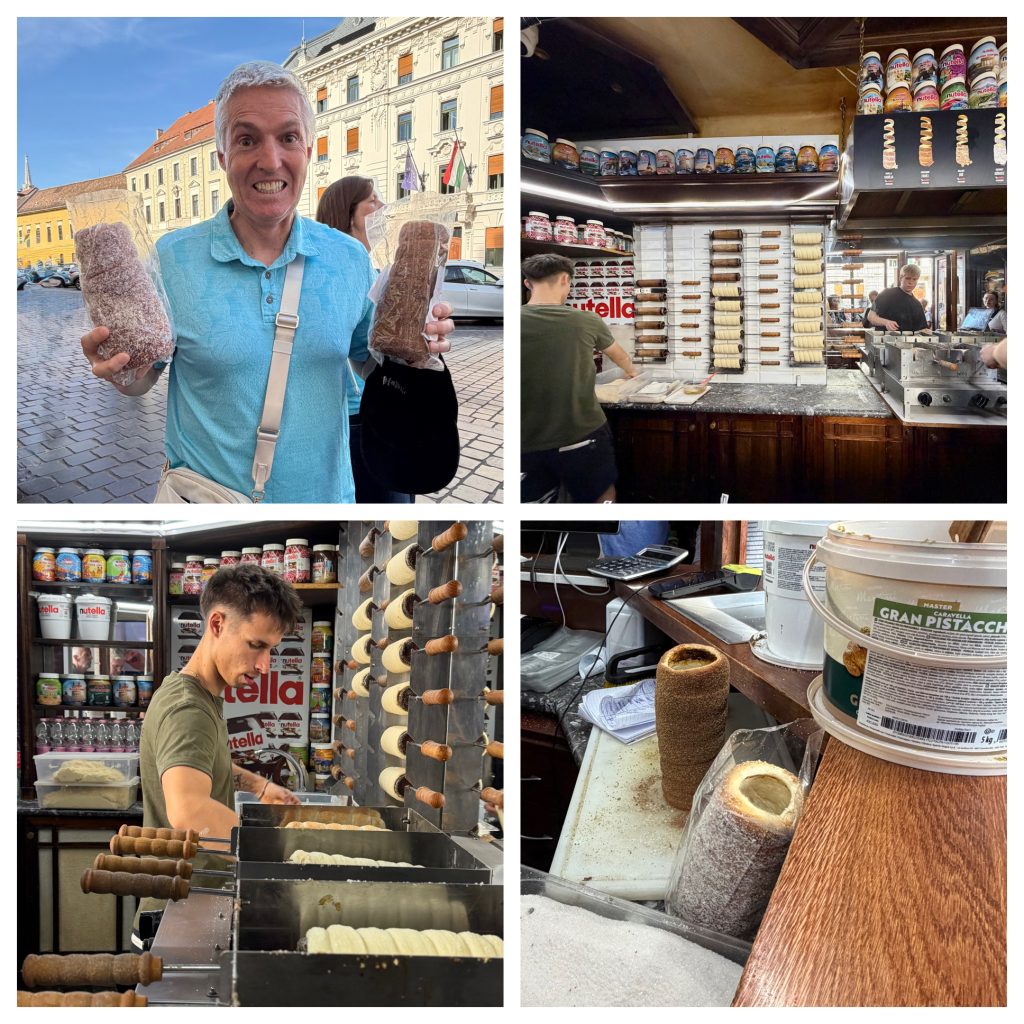
On the way we found a confectionery making kürtőskalács, Hungarian chimney cakes: dough on a spit, sugar caramelized until it shatters. A Transylvanian sweet with a written record from the 1600s. Delicious.
Walked back across the Chain Bridge under clear skies. Stunning buildings, imposing architecture, the river bright between the hills and the flat. Great start to the Hungarian part of the trip. Buda is on the west bank while the light is still soft. Cross from Pest, go up, and move north on Castle Hill before the Bastion fills.
Vet Gellért Hill / Citadella
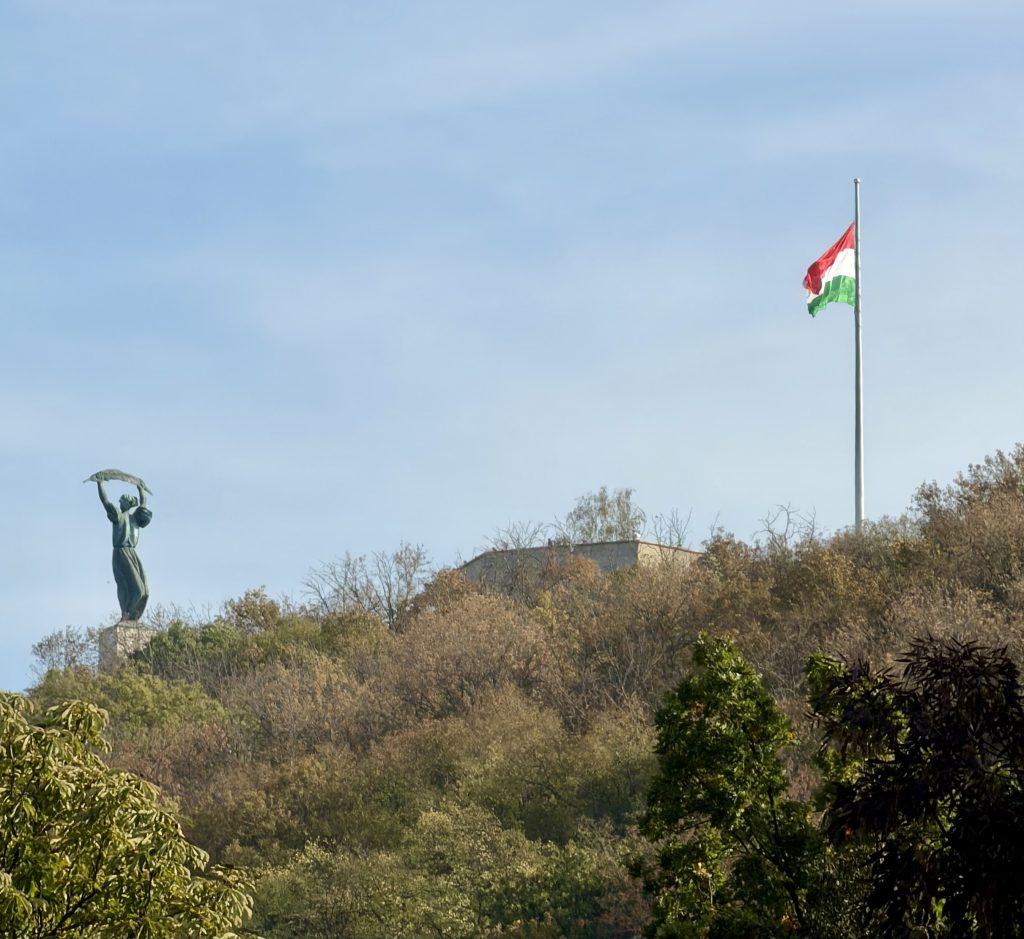
Named for Bishop Gellért, killed here in 1046. Habsburgs built the Citadella after 1849 to overawe the city. The Liberty Statue (1947) first marked the Soviet arrival; its meaning shifted after 1989. We did not climb up there!
October 6 — Pest
Margaret Island

The morning started earlier than the sightseeing. Kevan jogged Margaret Island before the rest of us were out. It is a separate piece of the city, not a continuation of City Park: a long park in the Danube, north of the hotel, reached by the Margaret Bridge. The island is named for St. Margaret, daughter of Béla IV, who entered a convent here after the Mongol invasion. The nunnery ruins are still there. Most of what you run through now is the public park laid out in the late 1800s — plane trees, quiet paths, the river on both sides. A good morning loop. Not the afternoon plan.
A day in Budapest that ran from a great hotel breakfast to gold leaf, iron shoes, and a river lit up after dark.
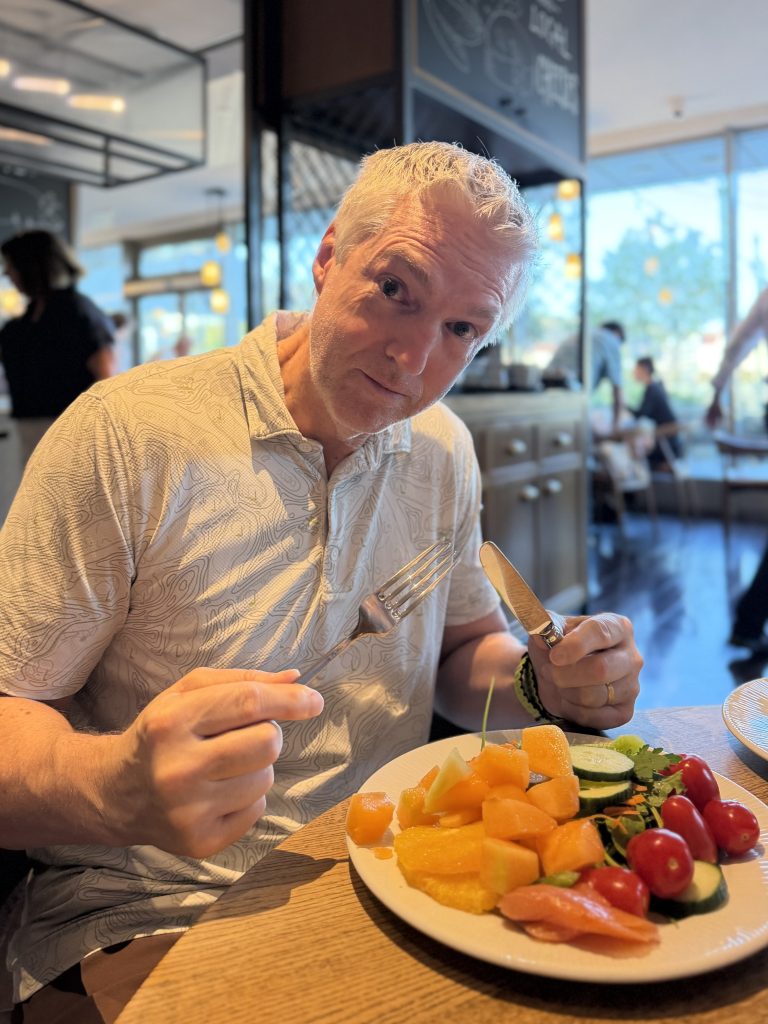
Wonderful breakfast at the Budapest Marriott, the right start before a long walk through the city.
Dohány Street Synagogue
We walked to the Great Synagogue at Dohány Street, Europe’s largest, it opened in 1859 for Budapest’s growing Jewish community. It is the largest synagogue in Europe. The quarter was the wartime ghetto. Garden graves and a Holocaust memorial sit beside it.
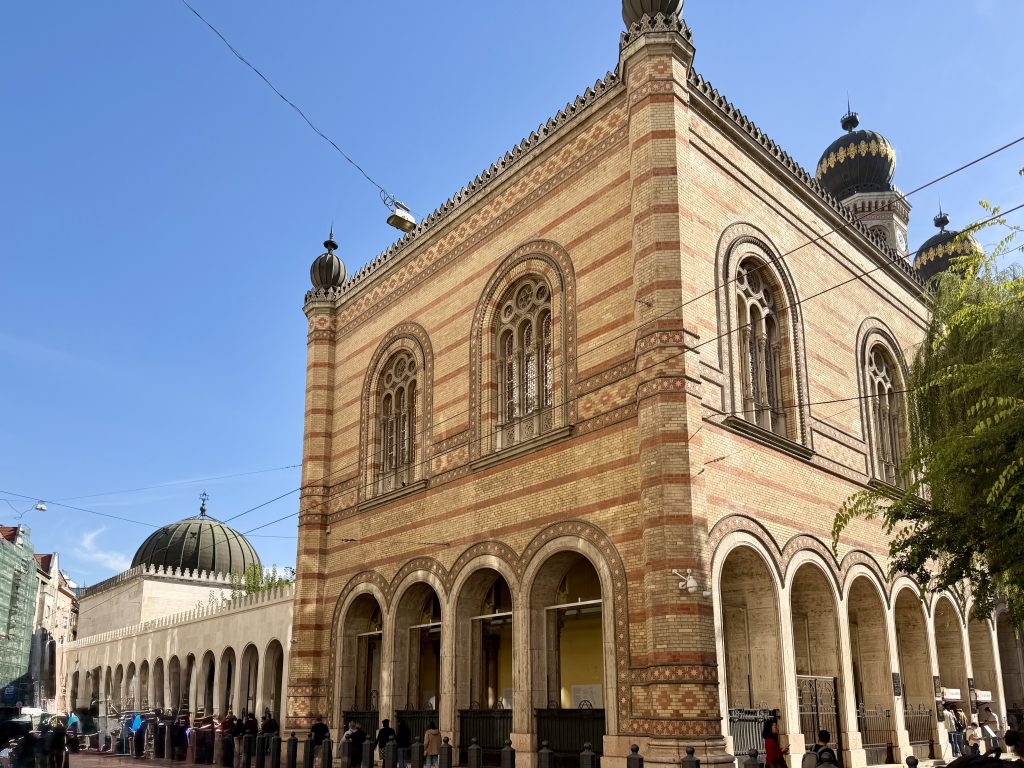
It’s Beautiful structure – red brick, twin towers with onion domes, arches and patterns borrowed from old Spanish and North African design. It sits just off the street line so the building faces Jerusalem.
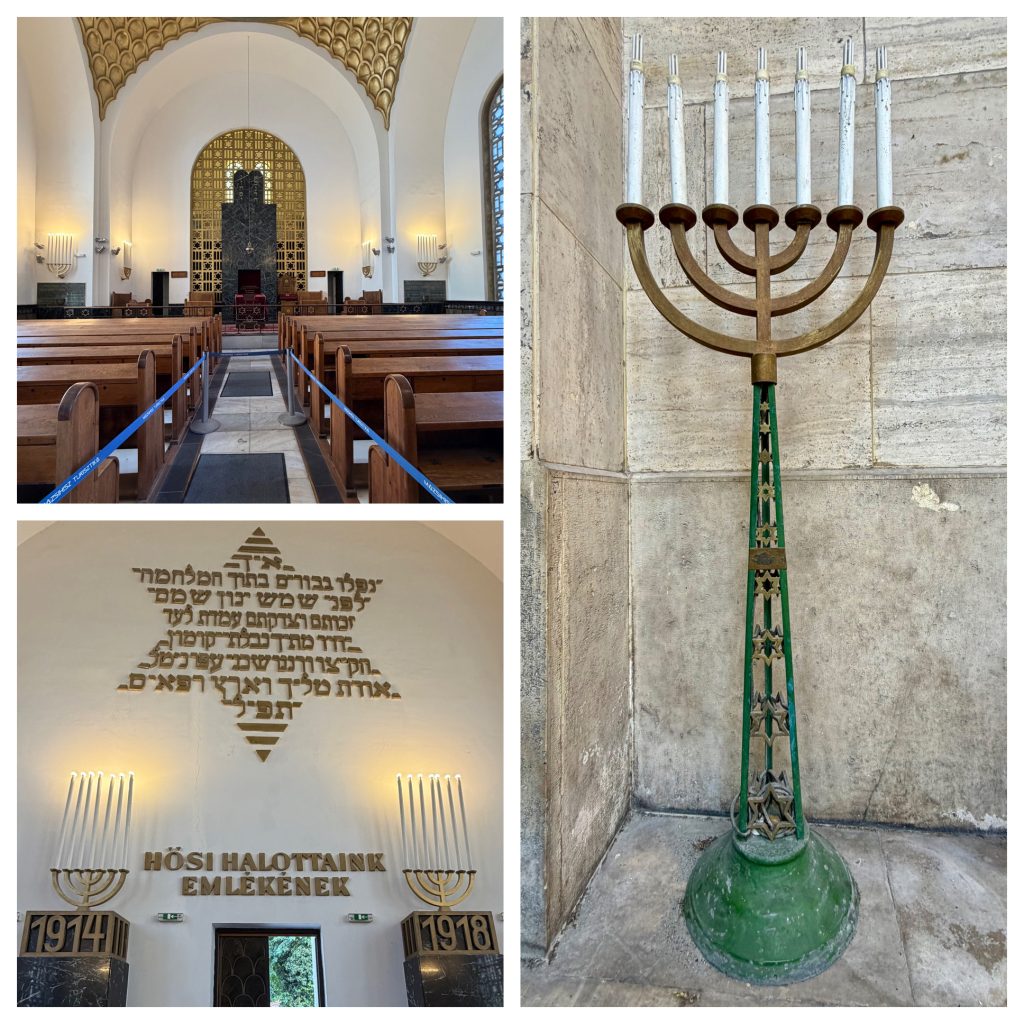
Inside: stars, gold, and an organ. It is still an active synagogue, built for a Hungarian Jewish community that wanted a modern public face and a traditional service — Hebrew prayer, a sermon, and that organ — which is why the room feels a little closer to a cathedral than to a small Orthodox synagogue.
Dohány Street later marked the edge of the Budapest ghetto. In the winter of 1944–45 the courtyard became a burial ground, something Jewish tradition would not allow beside a house of prayer. Cold, hunger, the siege of the city, and killings by Hungary’s fascist militia left the dead in the streets, and they could not be carried to a cemetery. About 2,300 people were buried here in 24 unmarked mass graves. Jewish law forbids moving the dead, so they remain, in the middle of the courtyard.
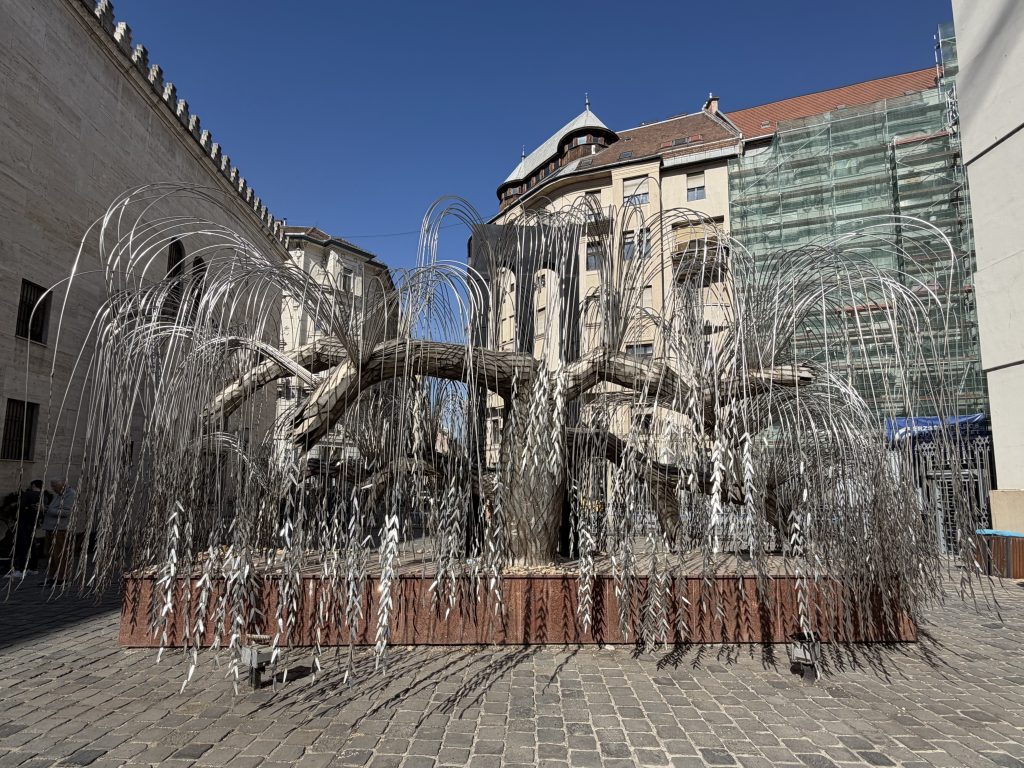
Beside the graves, the Tree of Life memorial carries the names of Hungarian Jews murdered in the Holocaust, metal leaves on bare branches.
St. Stephen’s Basilica
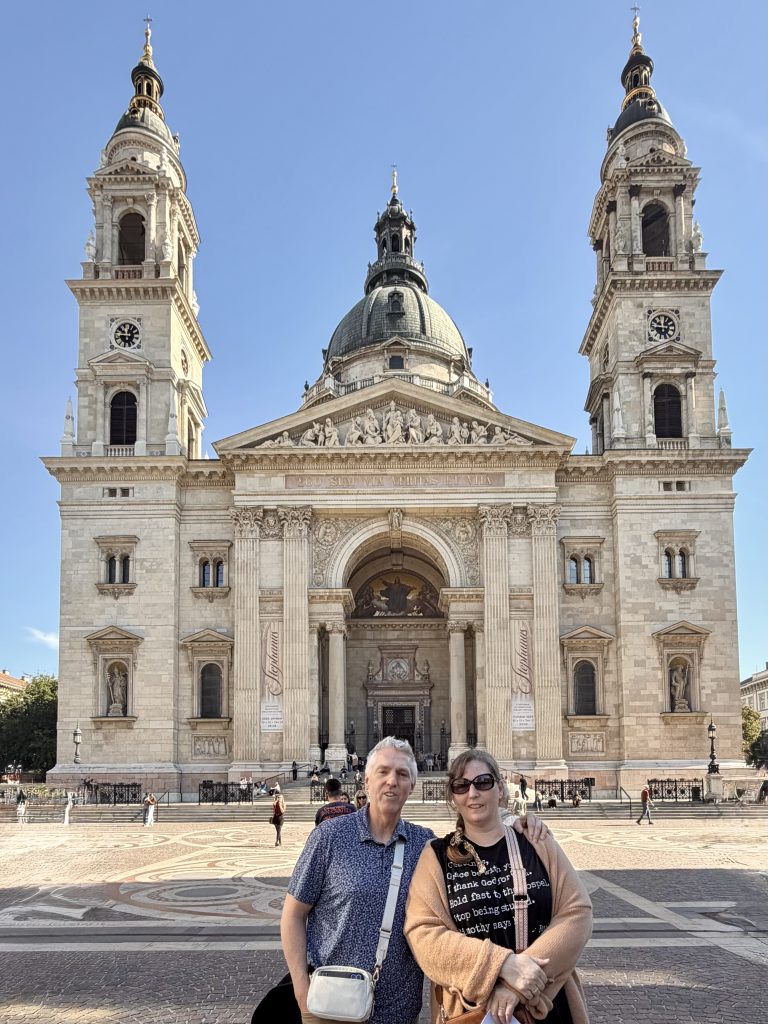
From there we walked to St. Stephen’s Basilica, built 1851–1905. Absolutely gorgeous, and imposing as you approach the front of the structure.
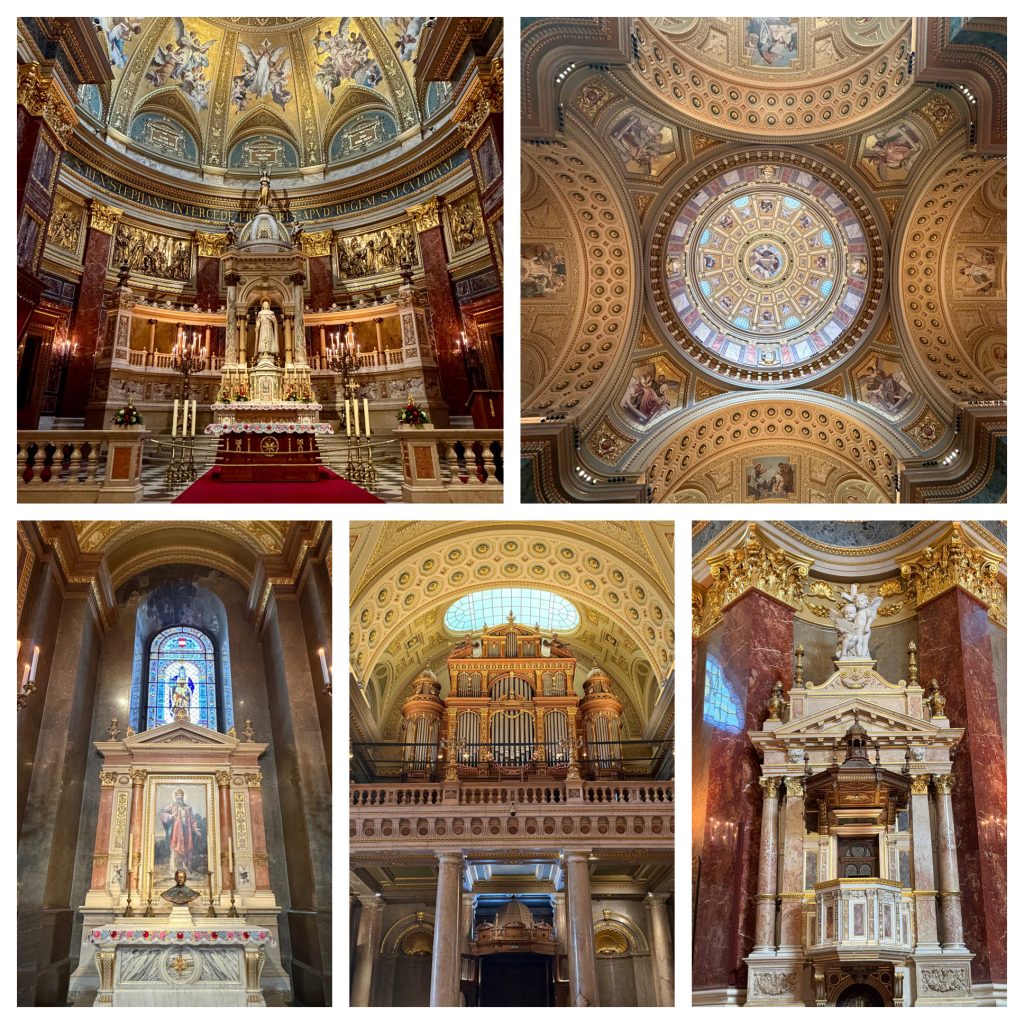
Classical outside, heavy with marble and mosaics inside, finished in 1905 and named for King Stephen I, Hungary’s first king (crowned 1000) who brought Hungary into Christian Europe around the year 1000. His preserved right hand is kept in a shrine here, the Holy Right.
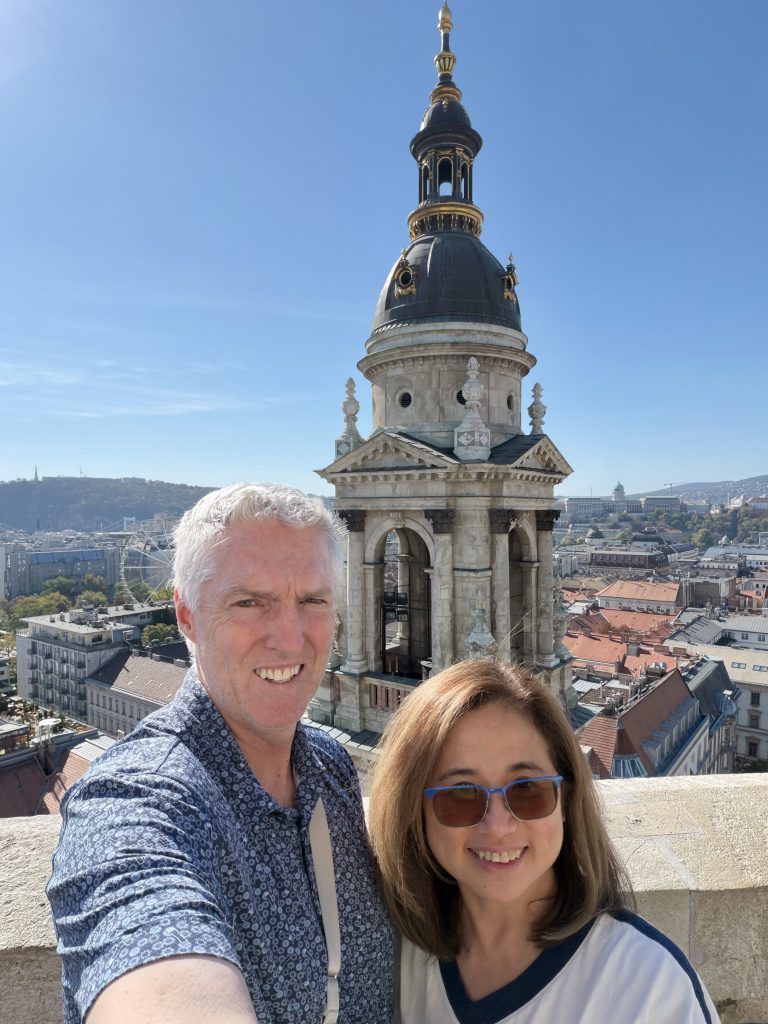
The dome is 96 meters, the same height as Parliament. The number marks 896, the traditional date Hungarian tribes settled this part of Central Europe. For a long time nothing in the city was allowed to rise above the two of them: church and state, on the same level.
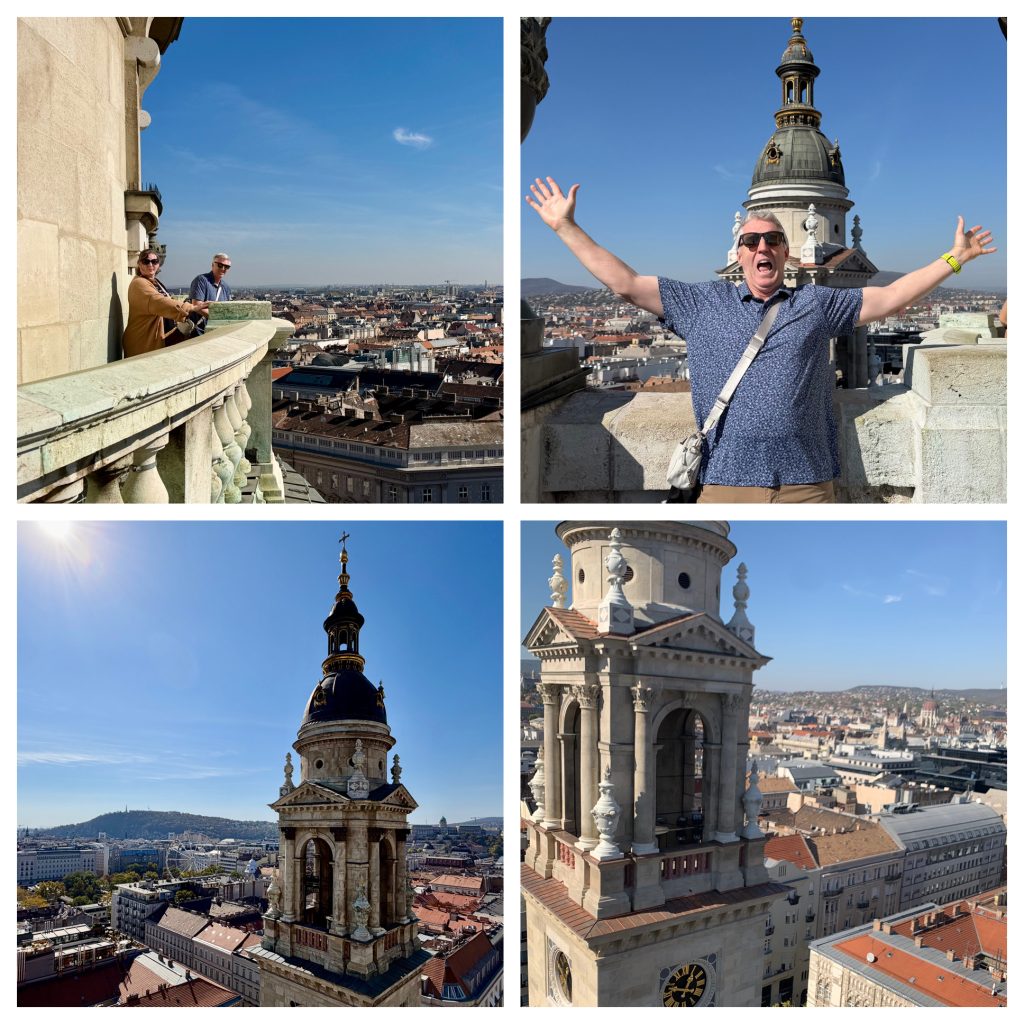
Be sure to go up to the panoramic terrace viewing level, awesome views of Pest, the Danube, and the Buda hills.
Shoes on the Danube Bank
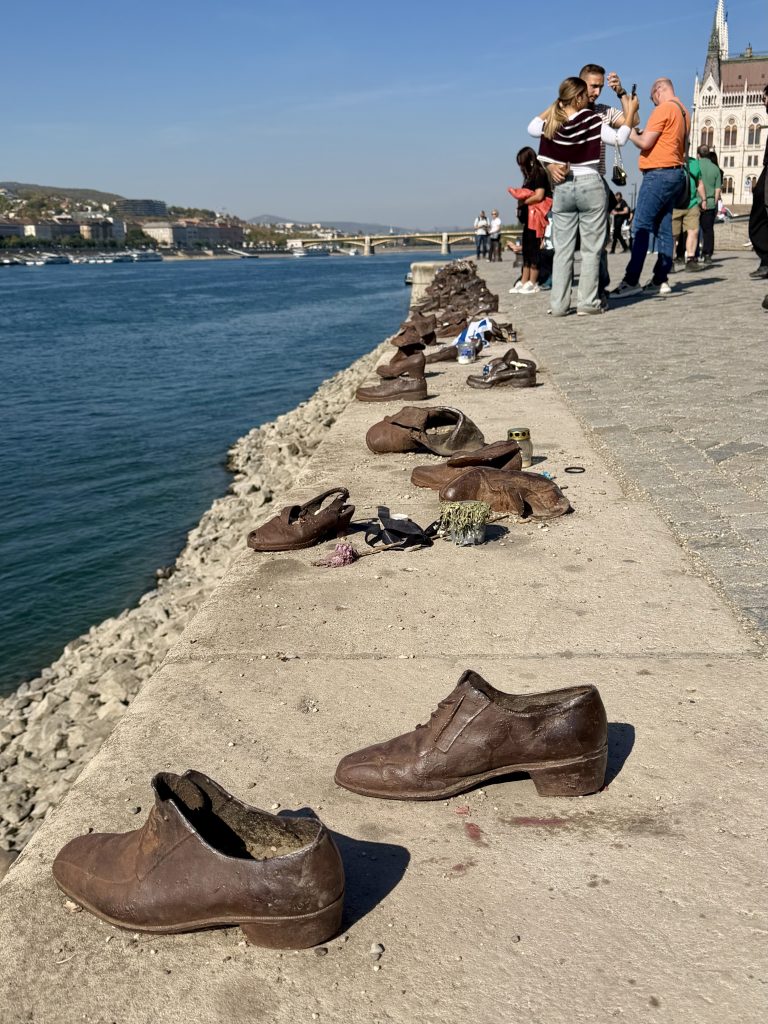
From there we walked straight west to the Danube embankment and a little north to the Shoes on the Danube, just south of Parliament. Sixty pairs of cast-iron shoes — men’s boots, women’s heels, children’s shoes, in 1940s styles — are fixed to the stone at the waterline, as if their owners had only stepped out of them. The memorial is almost quiet. The river is not.
In the winter of 1944–45, after Hungary’s fascist Arrow Cross Party took power, militiamen marched Jews from the Budapest ghetto to this stretch of the river. They were ordered to remove their shoes first. Leather was scarce and valuable; the killers kept or resold them. Victims were often tied together in groups of three and shot at the water’s edge so the bodies fell into the Danube and the current carried them away. Estimates of people killed this way run into the thousands.
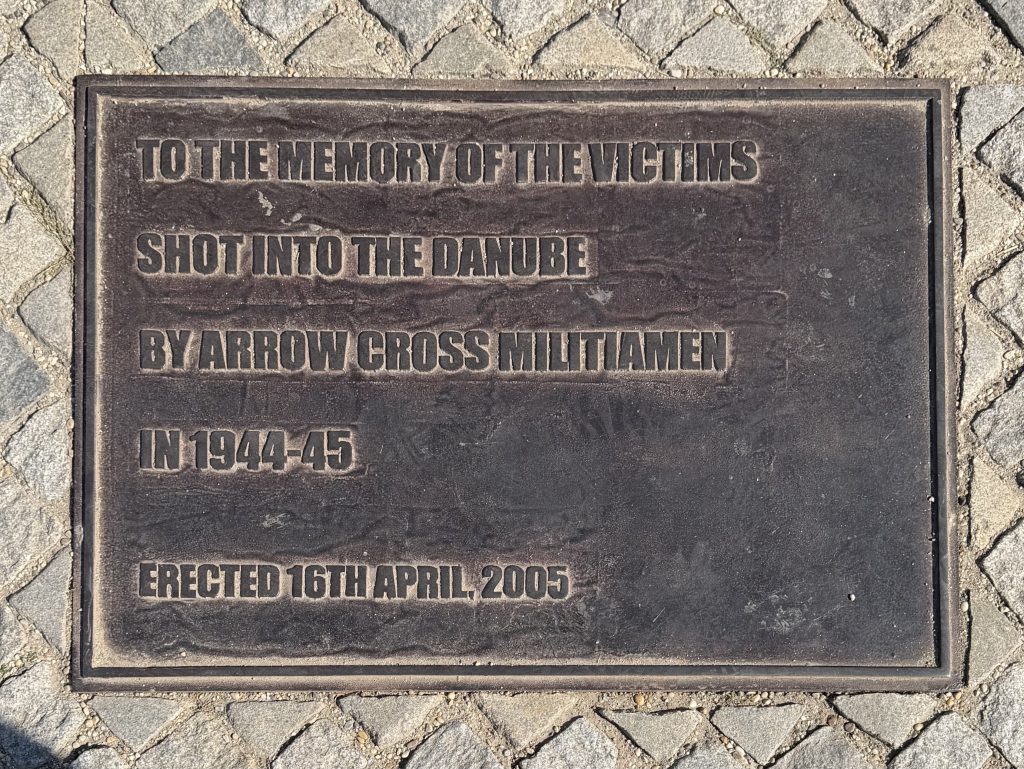
Conceived by film director Can Togay and sculpted by Gyula Pauer, the memorial was unveiled on 16 April 2005. Iron plaques in Hungarian, English, and Hebrew read: “To the memory of the victims shot into the Danube by Arrow Cross militiamen in 1944–45.” People still leave stones, candles, and flowers in the shoes.
Hungarian Parliament Building
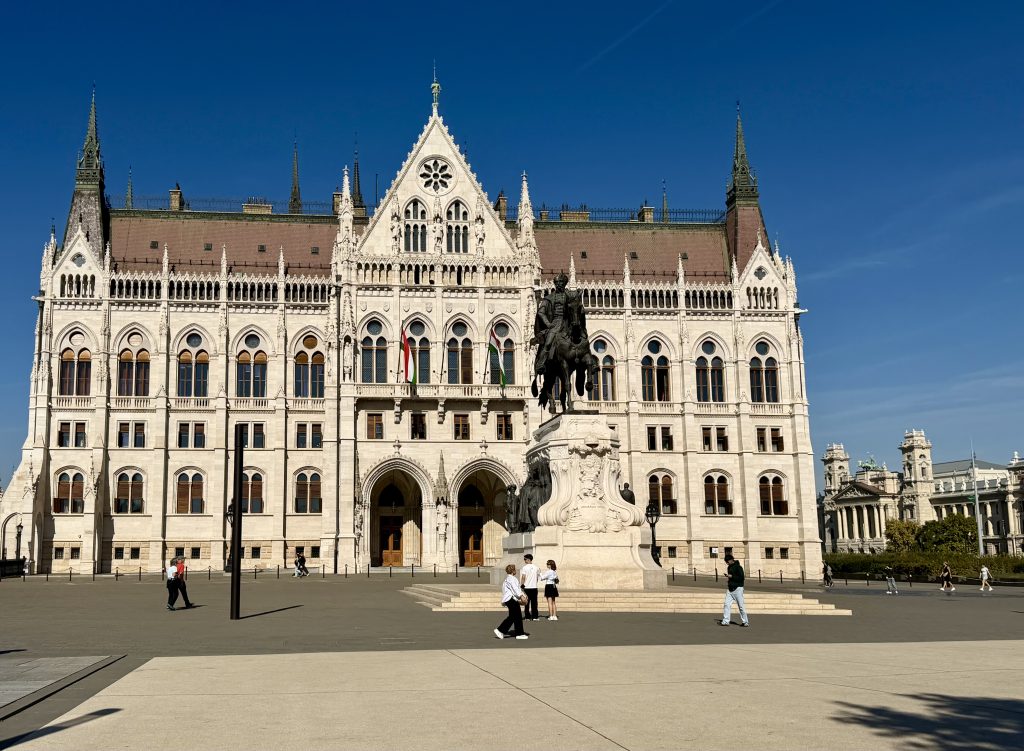
A little ways down the Danube is the Hungarian Parliament (Országház), another massive and gorgeous structure that puts the scale of the place in perspective. It is the seat of the National Assembly and the country’s main symbol of statehood.
From the river it is the landmark that defines the Budapest skyline: a long spine of spires on the Pest bank, the political counterpart to the royal palace across the water. It looks like a cathedral that learned to govern.
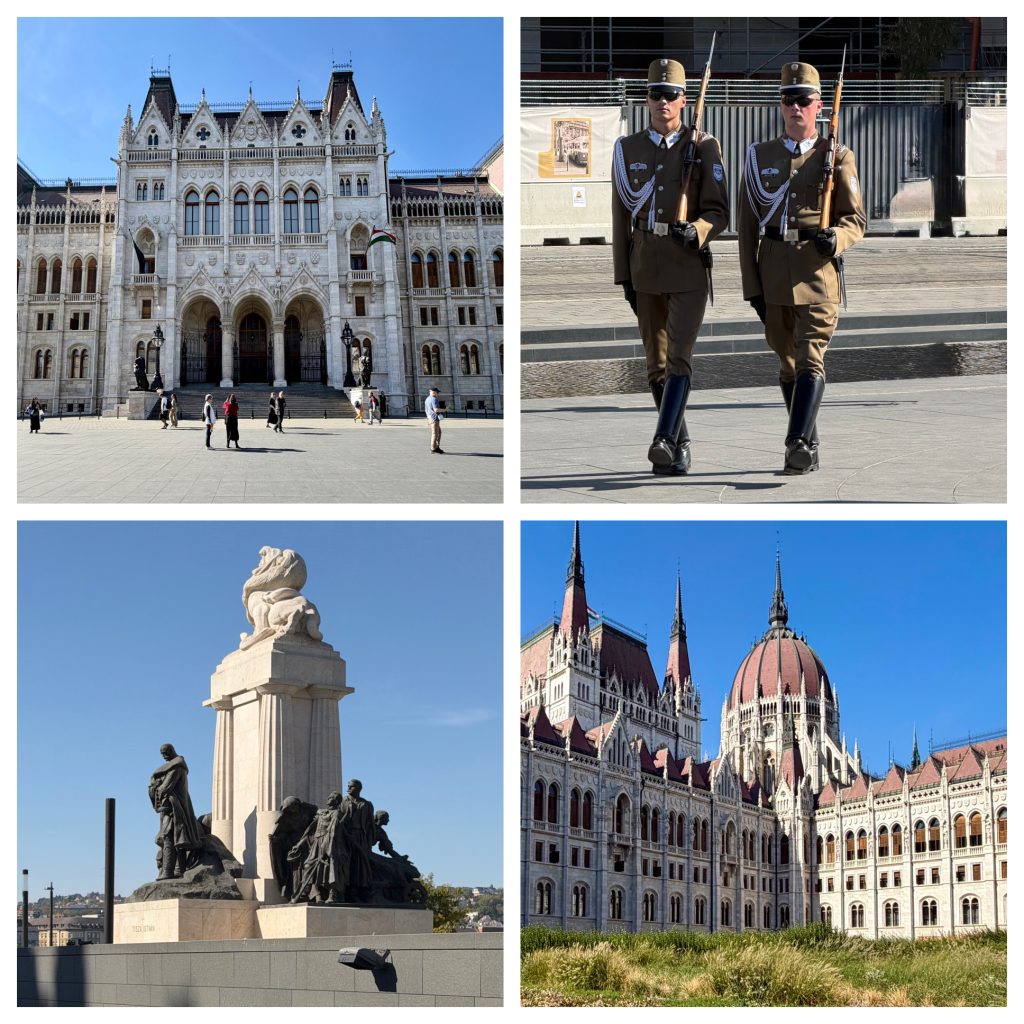
Imre Steindl designed it in Gothic Revival, with a central dome, to rival the great parliaments of Europe, especially Westminster. Work started in 1885 and it opened around Hungary’s 1,000-year celebration in 1896; construction ran to 1904. It is one of the largest parliament buildings in the world — 691 rooms, a dome full of gold, and the legislative chambers set under that dome. The Holy Crown of St. Stephen, the historic emblem of Hungarian sovereignty, has been on display there with the coronation regalia since 2000. The crown itself dates back over a millennium.
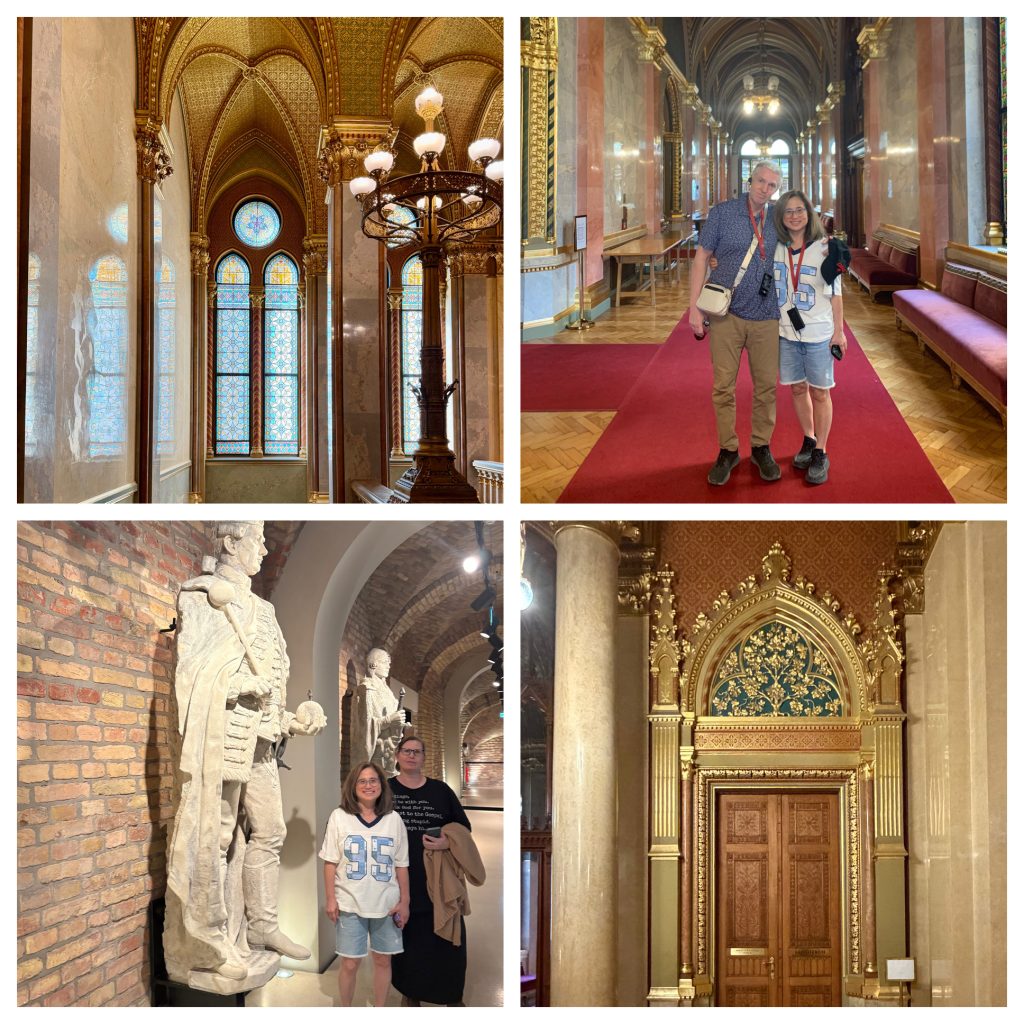
The dome is 96 meters high, and the main stair has 96 steps. That number is not a building code. It is 896 written onto the city, the traditional date of the Magyar conquest of the Carpathian Basin, which the millennial celebrations of 1896 made a national symbol and wrote onto the city.
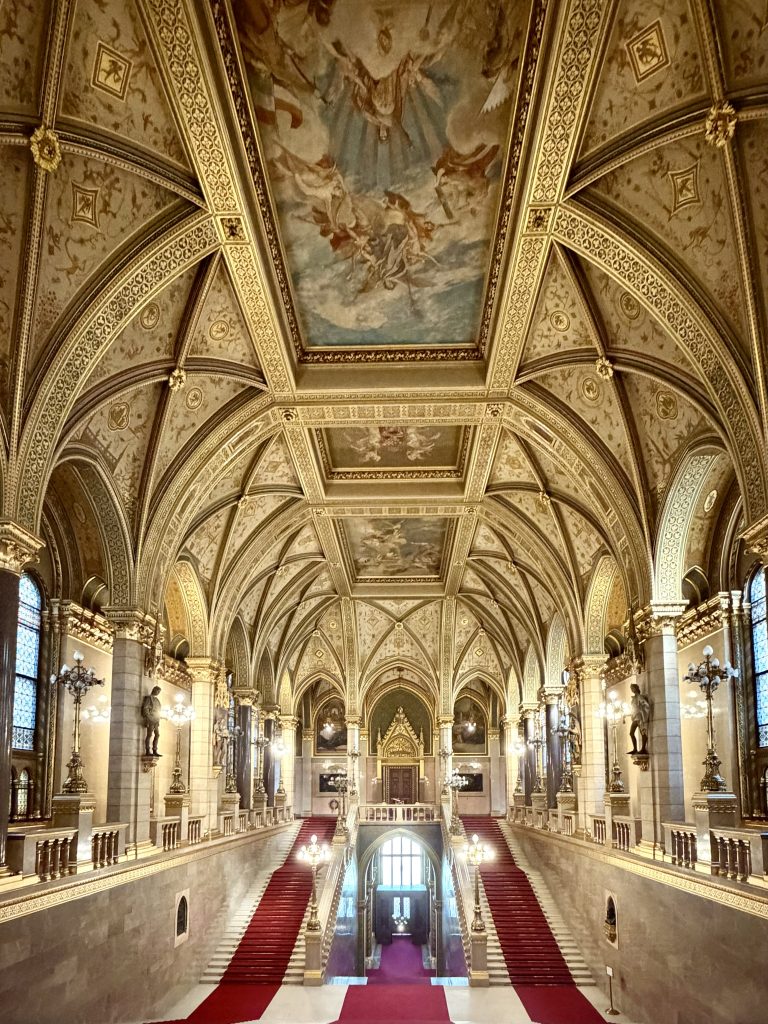
St. Stephen’s Basilica was finished to the same height around the same time, so state and church stand level, neither above the other. For a long time that also set the informal ceiling of the historic skyline. The Parliament has 365 turrets, one for each day of the year.
A Very Late Lunchl
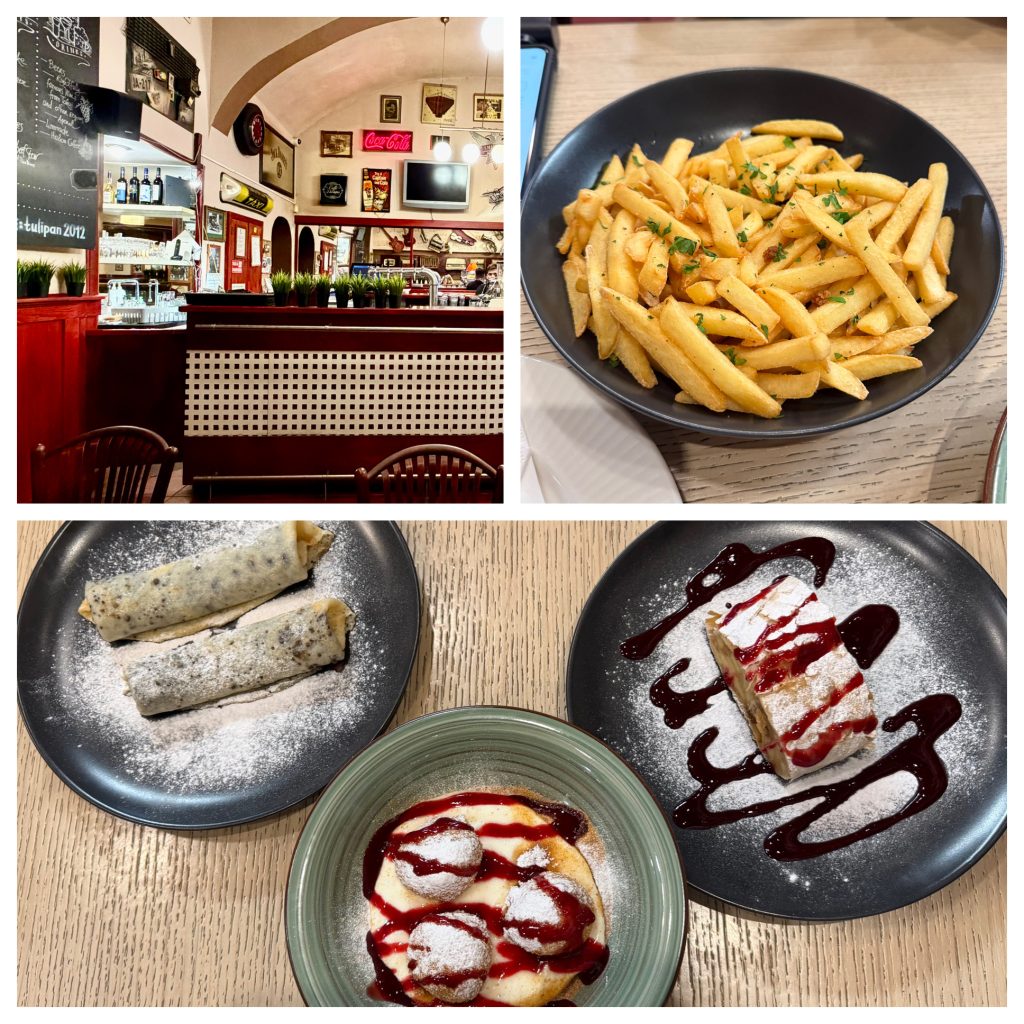
After the tour we ducked into a bistro next to Parliament for some crêpes, apple strudel, and ricotta cheese balls, a small sweet pause before the evening.
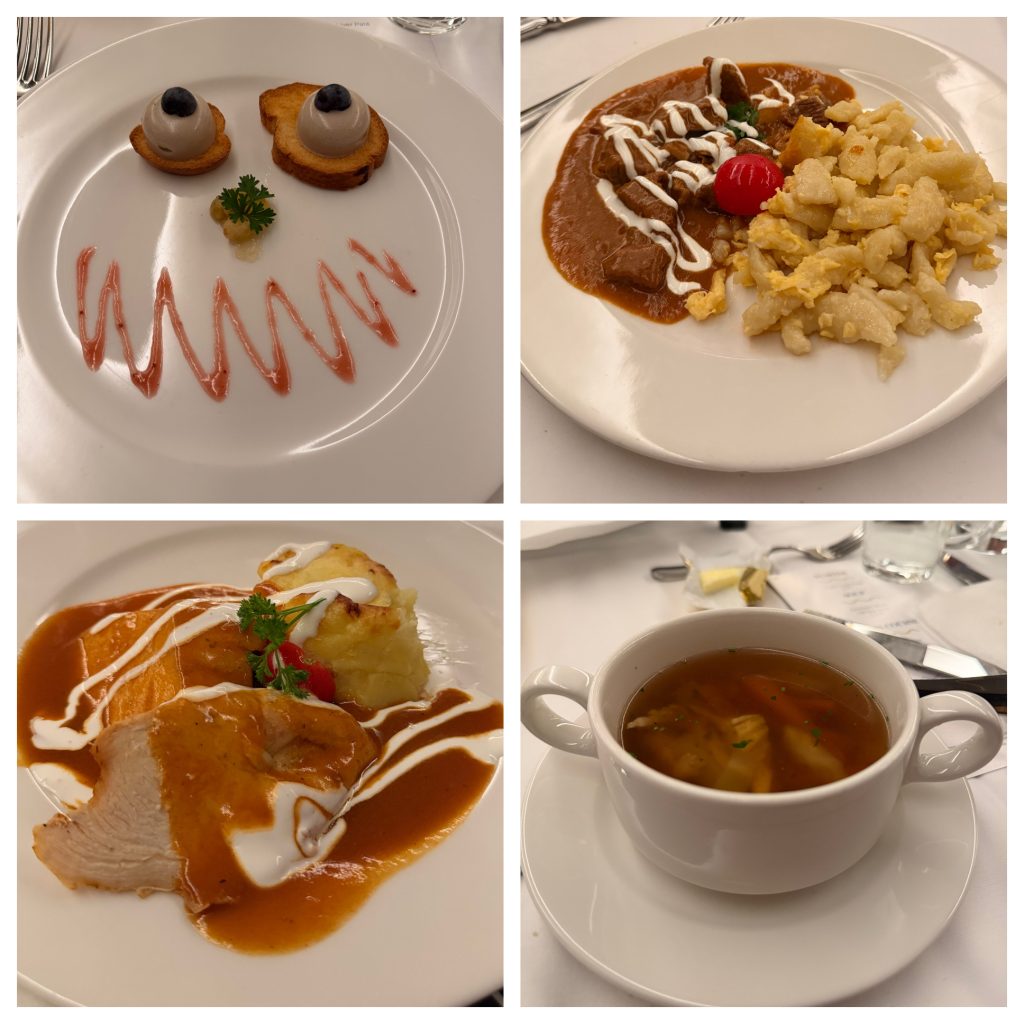
Back to the Marriott for a quick break, stopped at the Marriott lounge just to see what they had on for dinner, which turned out to be the right call. Shepherd’s pie, pork knuckle and potatoes. Lucky we ate there, the cruise dinner was not great.
Danube River Cruise
At 7:30 we were on the Danube for our river cruise. Live music – violin, cello, and a cimbalom, the Hungarian hammered dulcimer (a cross between a harp and a piano, played with 2 hammers), and they were really good.
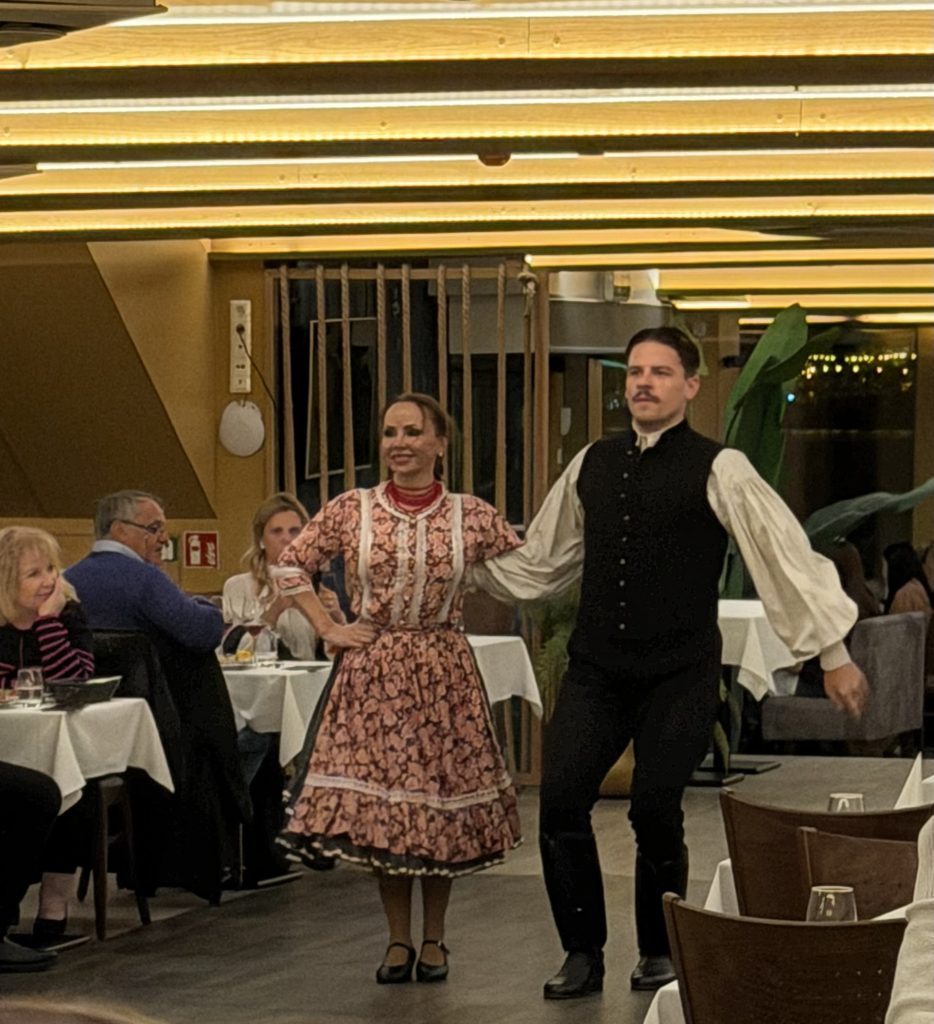
Later on Hungarian dancers came out and that was really well done. The four-course dinner was only so-so.
The sights carried the evening.
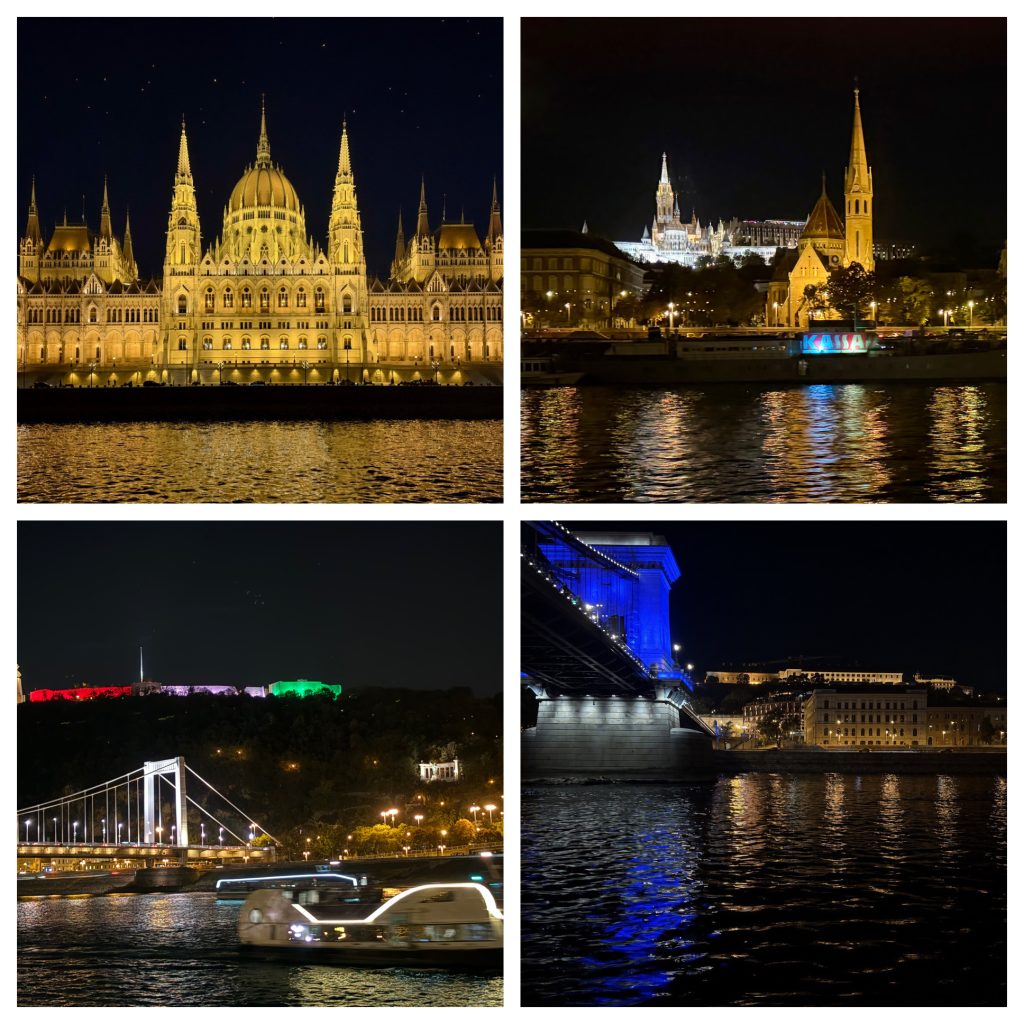
The Parliament floodlit like lace, the Chain Bridge, Buda Castle and the Fisherman’s Bastion climbing the hill, Margaret Bridge, the city reflected in the river. Folk tunes over the water, nothing prettier than Budapest at night. Another great day.
Nemzeti Színház
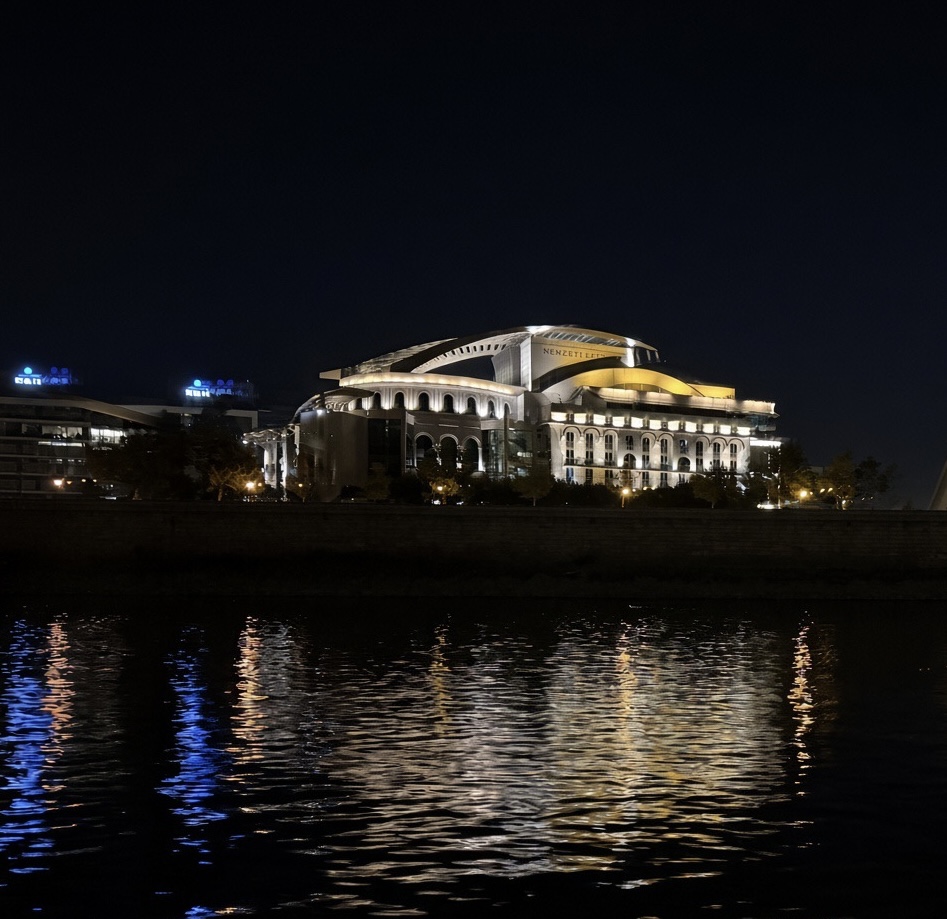
Night on the Danube, under the Rákóczi Bridge.The lit building is the Nemzeti Színház, Hungary’s National Theatre, opened in 2002 on the Pest bank in Ferencváros.
October 7
Andrássy Avenue
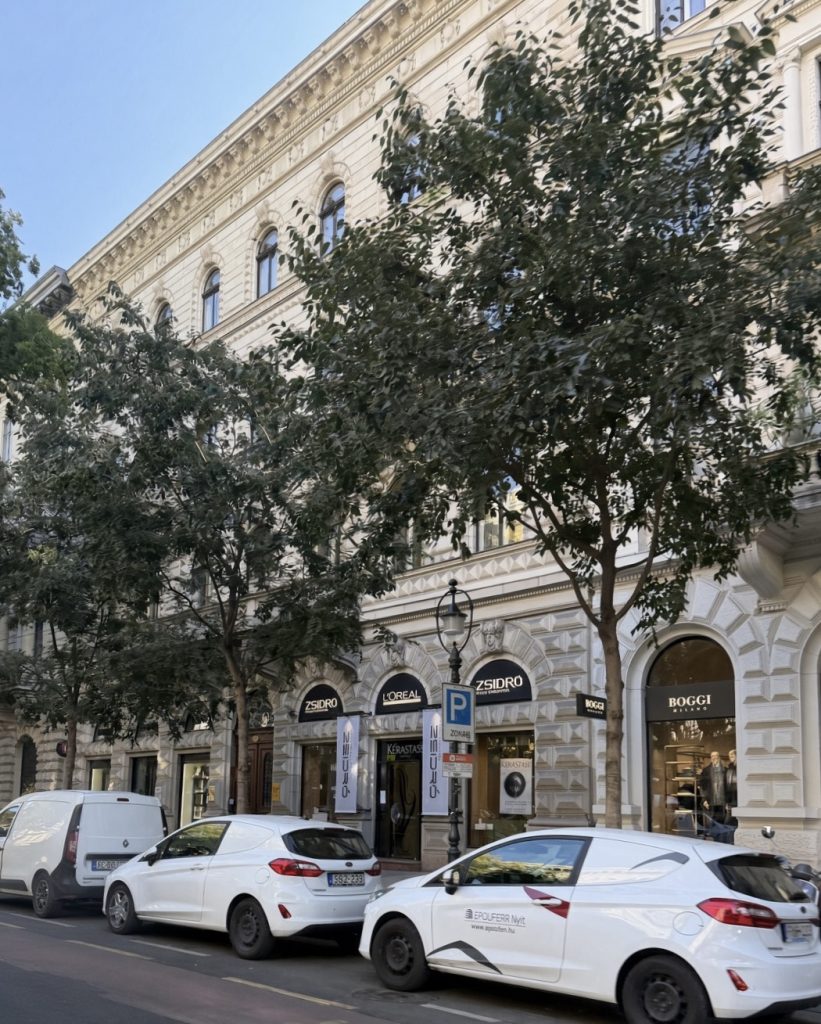
A slower last full day. We left the Marriott and drove out along Andrássy Avenue, the long straight run from the inner city toward the park. The avenue does the announcing: opera, mansions, plane trees, then the square at the end. We passed through it and went on into City Park.
City Park
Vajdahunyad Castle
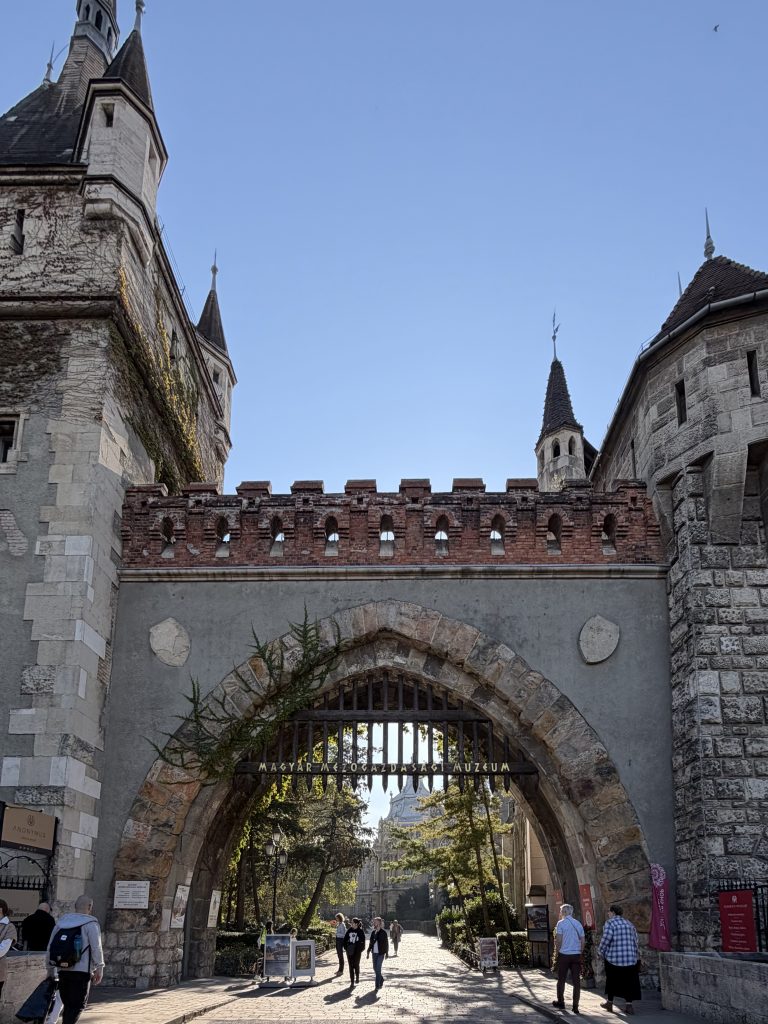
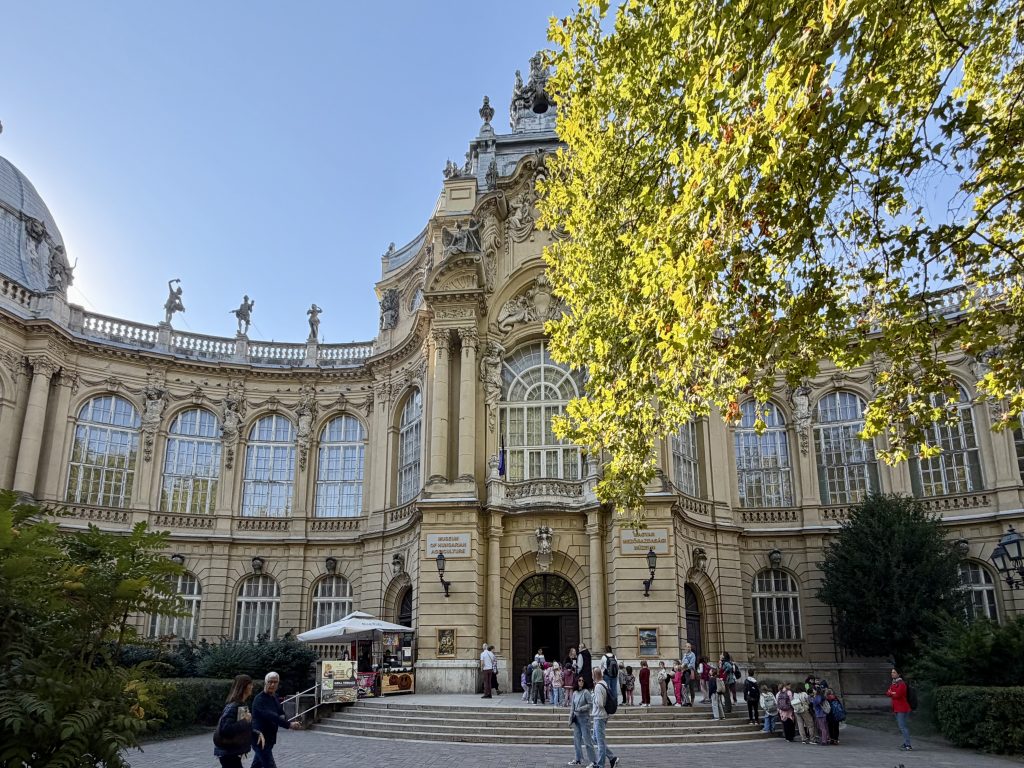
It was not too busy when we arrived, but the Vajdahunyad Castle area filled quickly with school groups. Pre-schoolers in matching vests, high schoolers trying to look like they were not on a field trip, teachers counting heads in the courtyard. The castle can take it.
The castle sits on the lake like a stage set: a white Romanesque chapel on one side, a dark Gothic wing with pointed towers on the other, Baroque curves in between, all reflected in the lake.
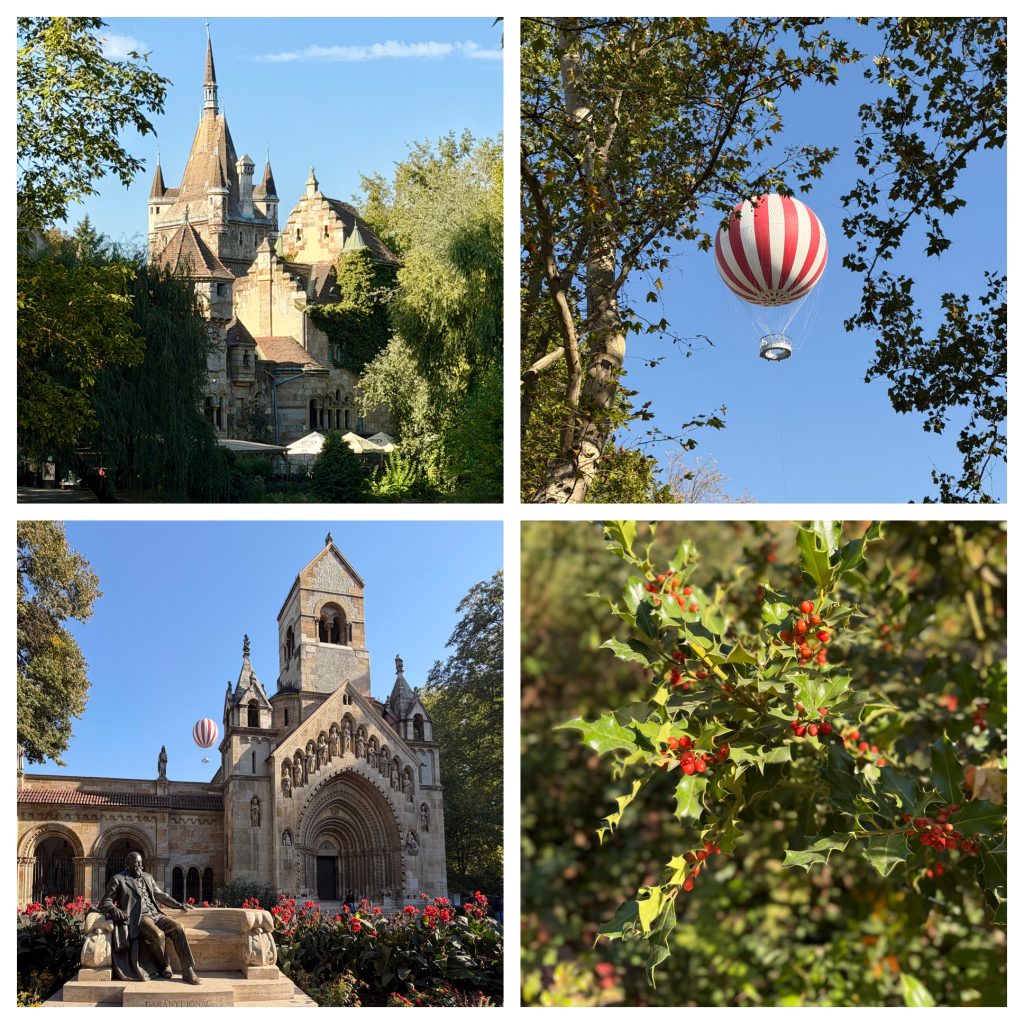
It looks like a medieval fortress, but it was built for Hungary’s 1896 Millennium Exhibition and rebuilt in stone a few years later — Romanesque, Gothic, Renaissance, and Baroque all in one complex. We walked the courtyards and the lakeside path.
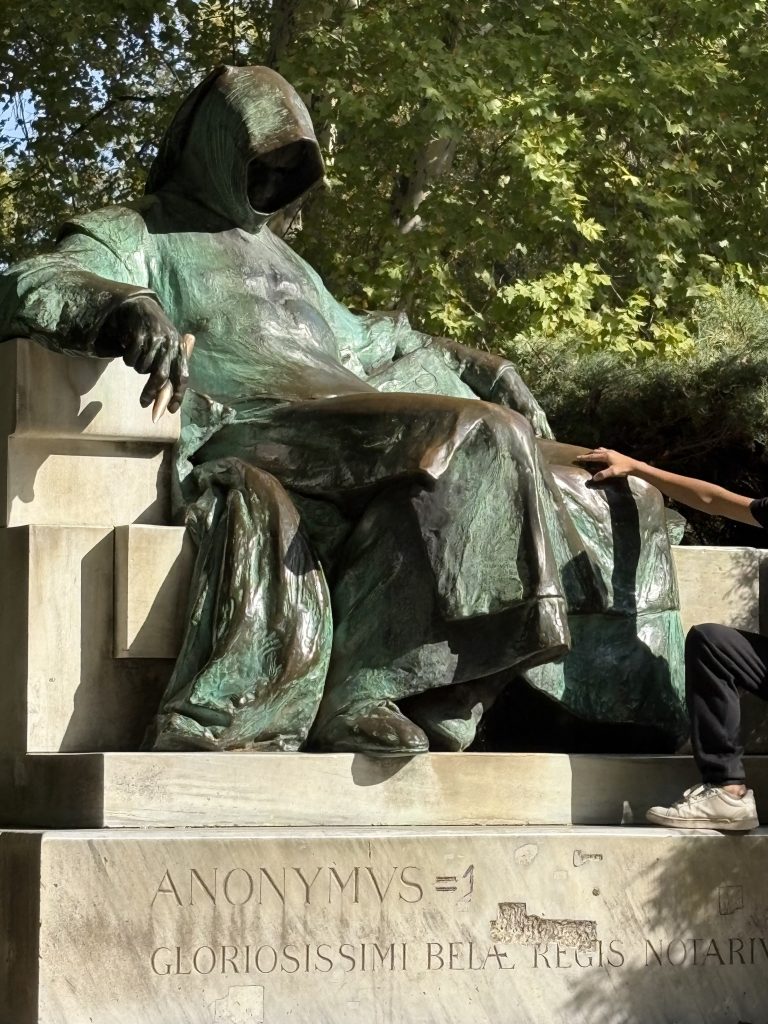
Out front of the castle on a bench is the statue of Anonymous, the hooded chronicler. Students lined up to rub the pen in his hand for luck on exams. Others were rubbing it just for luck. The teenagers already knew. The little ones just wanted a turn.
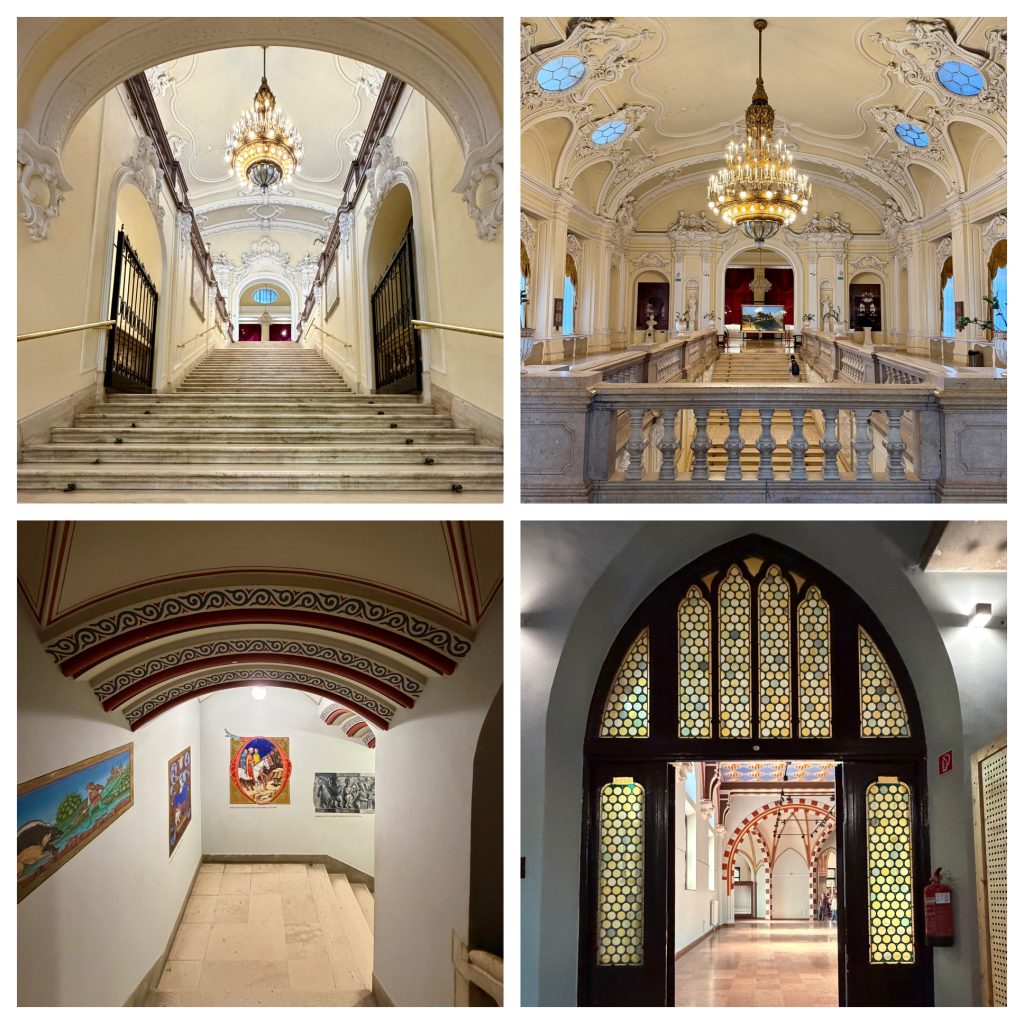
We did the museum tour inside. It is the agricultural museum, quieter than the courtyard.
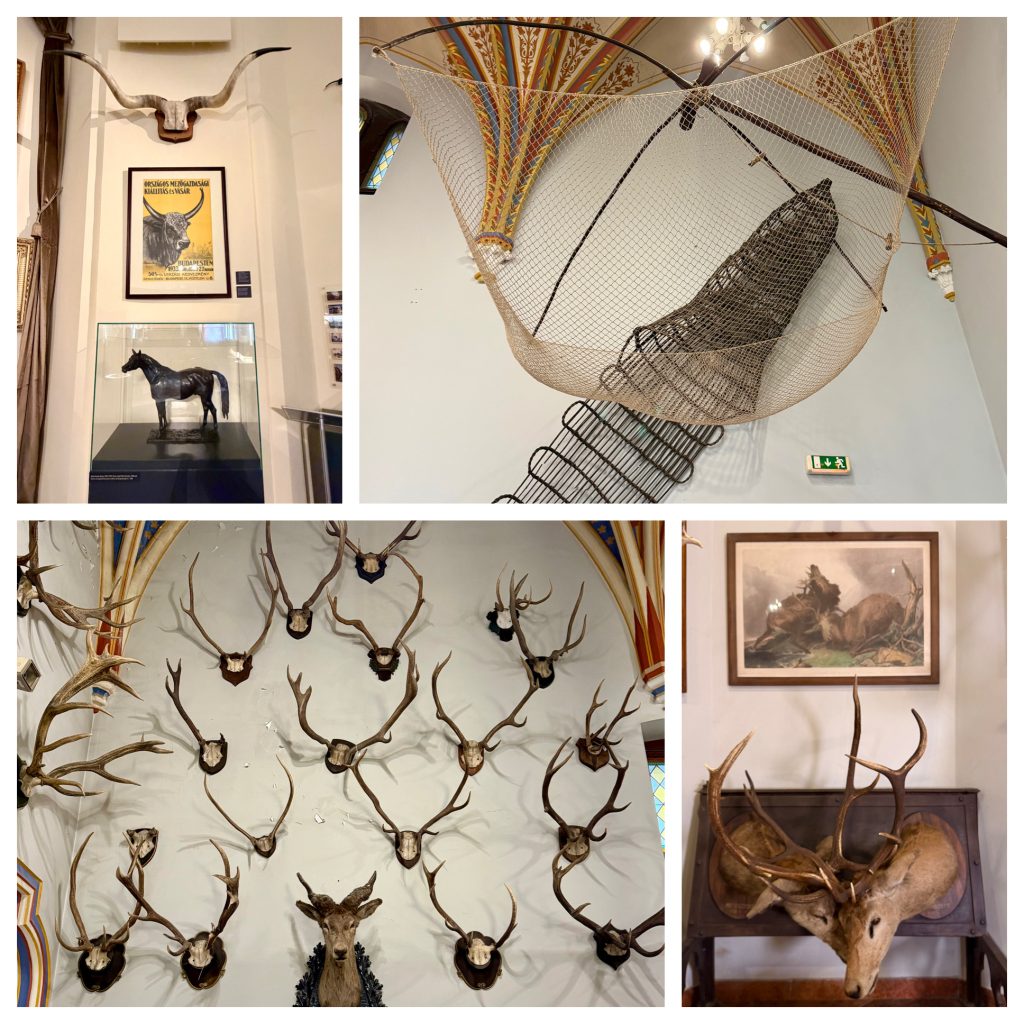
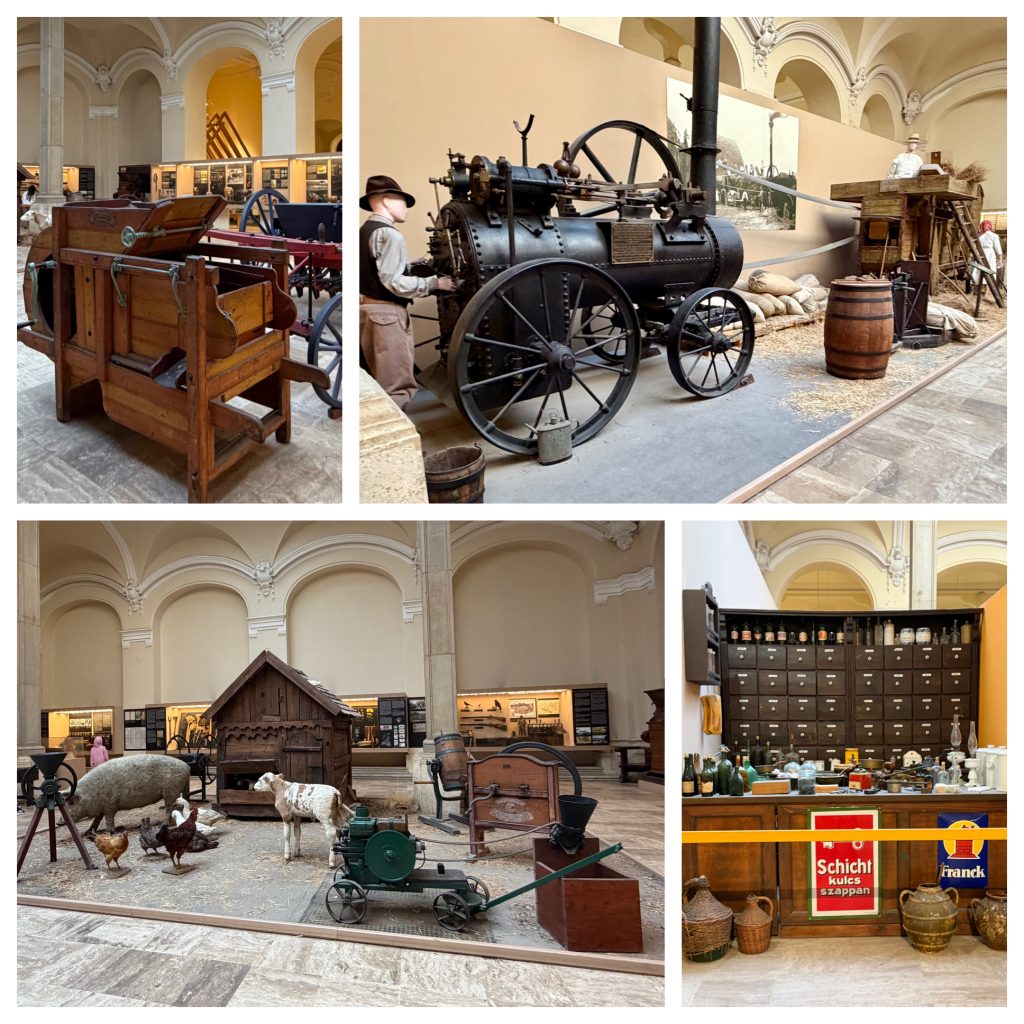
Old ploughs, wine presses, fishing nets, rooms that smell faintly of wood and dust. Hunting, wine, and farming halls, and the gate tower for the view back toward the square.
Outside, another school was posing on the bridge. The lake beside the castle is still open water; the ice rink does not start until mid-November.
Heroes’ Square
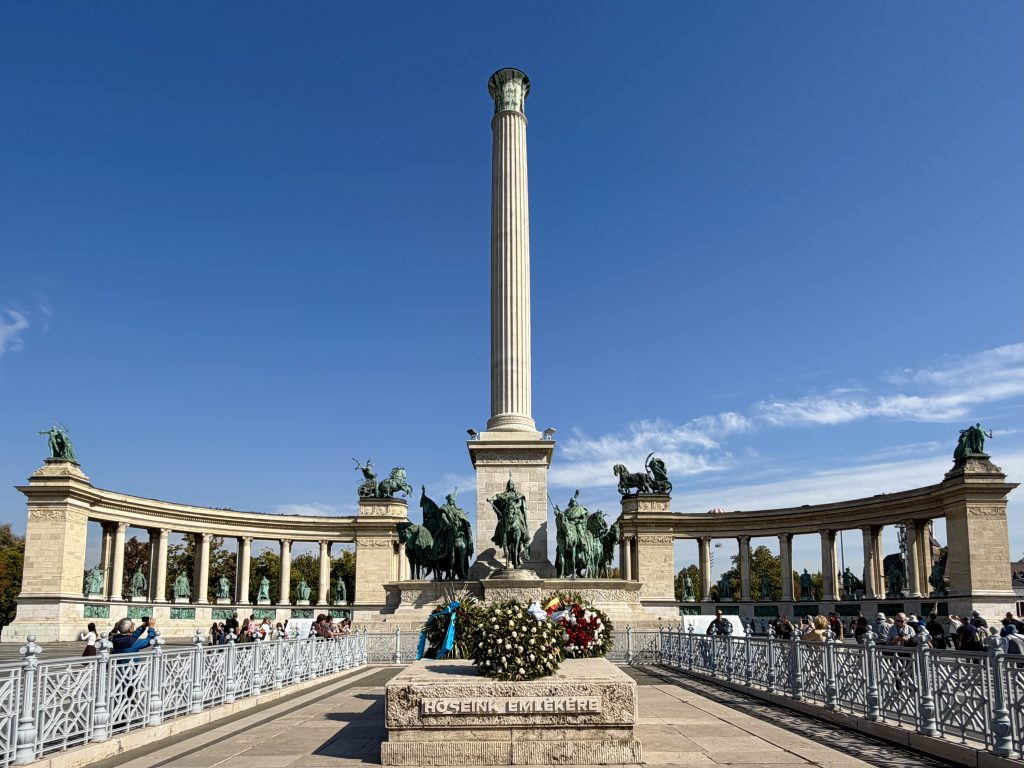
Heroes’ Square is a five-minute walk back toward the avenue, and a different mood. Wide, empty in the middle, loud at the edges. Grand arrival at the end of Andrássy, built for the 1896 millennium: column and colonnade of the Magyar conquest and later rulers, later a stage for 1956 and the end of communism.
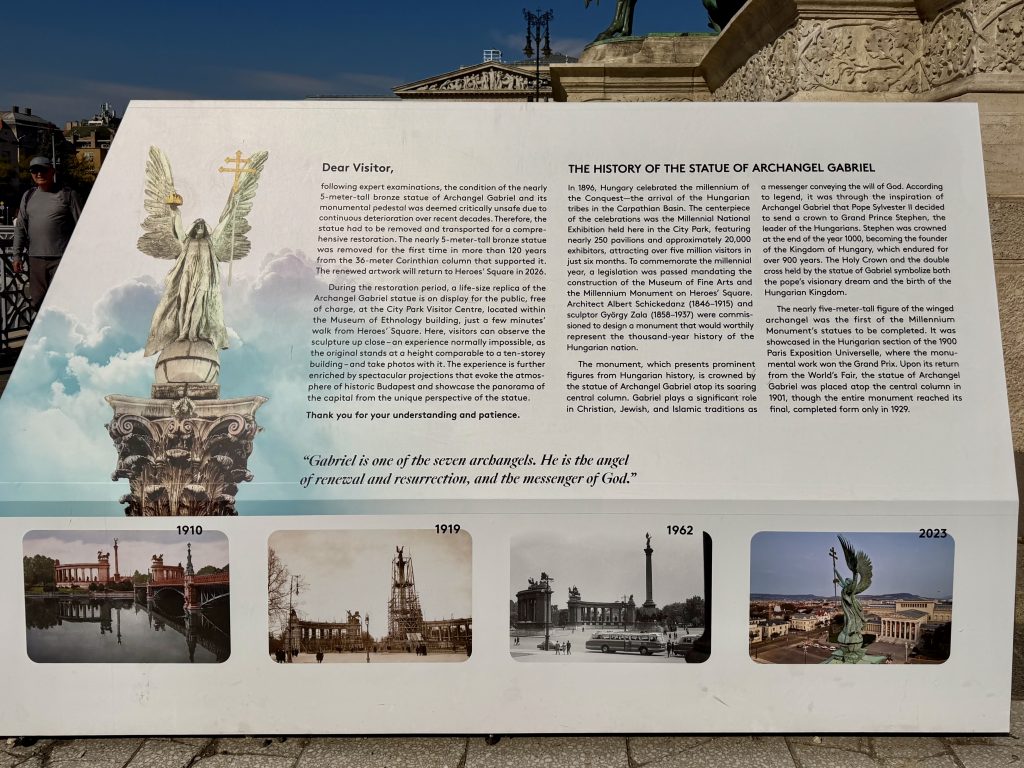
The archangel Gabriel on the column is offsite getting repaired. The seven original Hungarian chieftains stand below him, the colonnade of kings and fighters curved behind like a backdrop. Great for a photo. Less good if you are trying to hear a guide over three classes at once.
Around the Square…
Great Market Hall
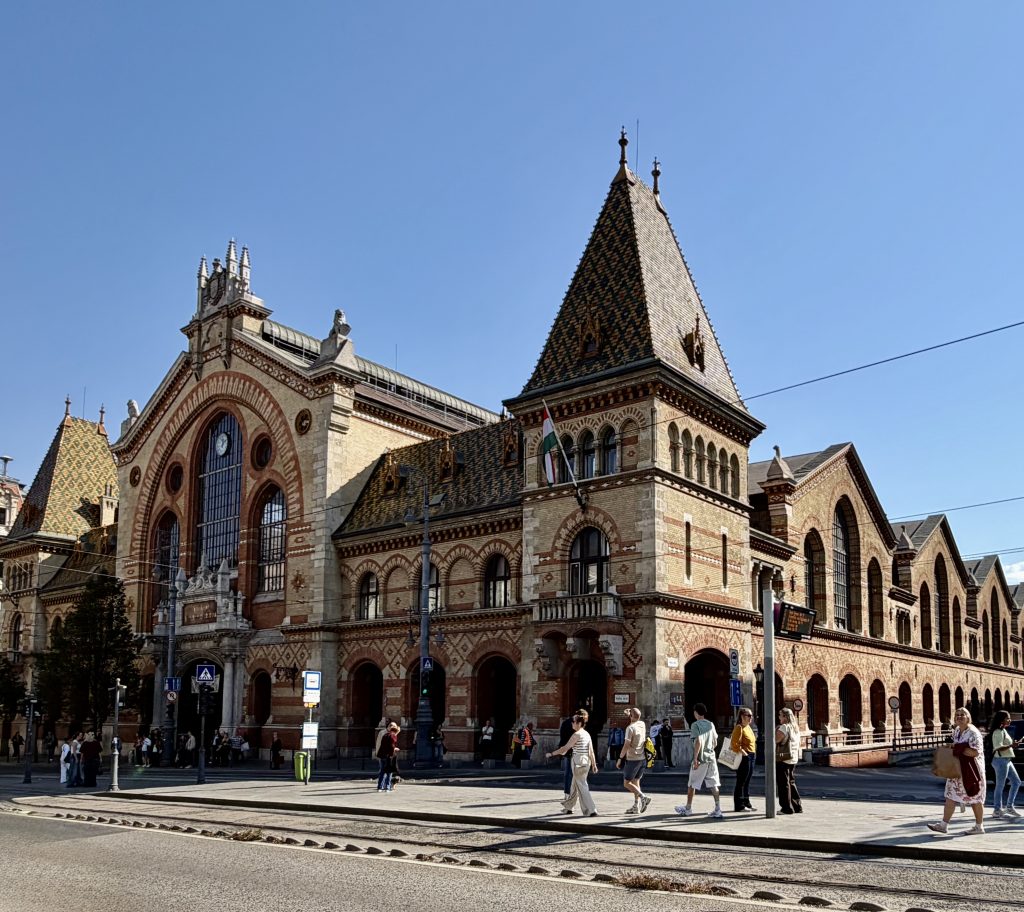
Then on to the Great Market Hall, which was the opposite kind of crowded.
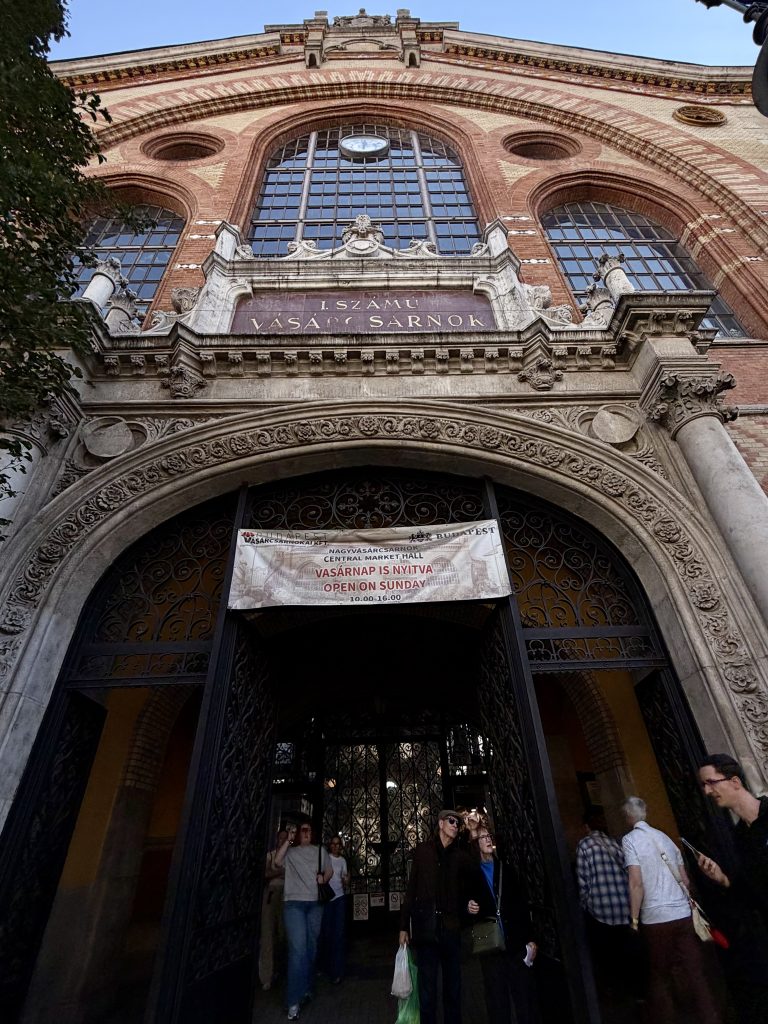
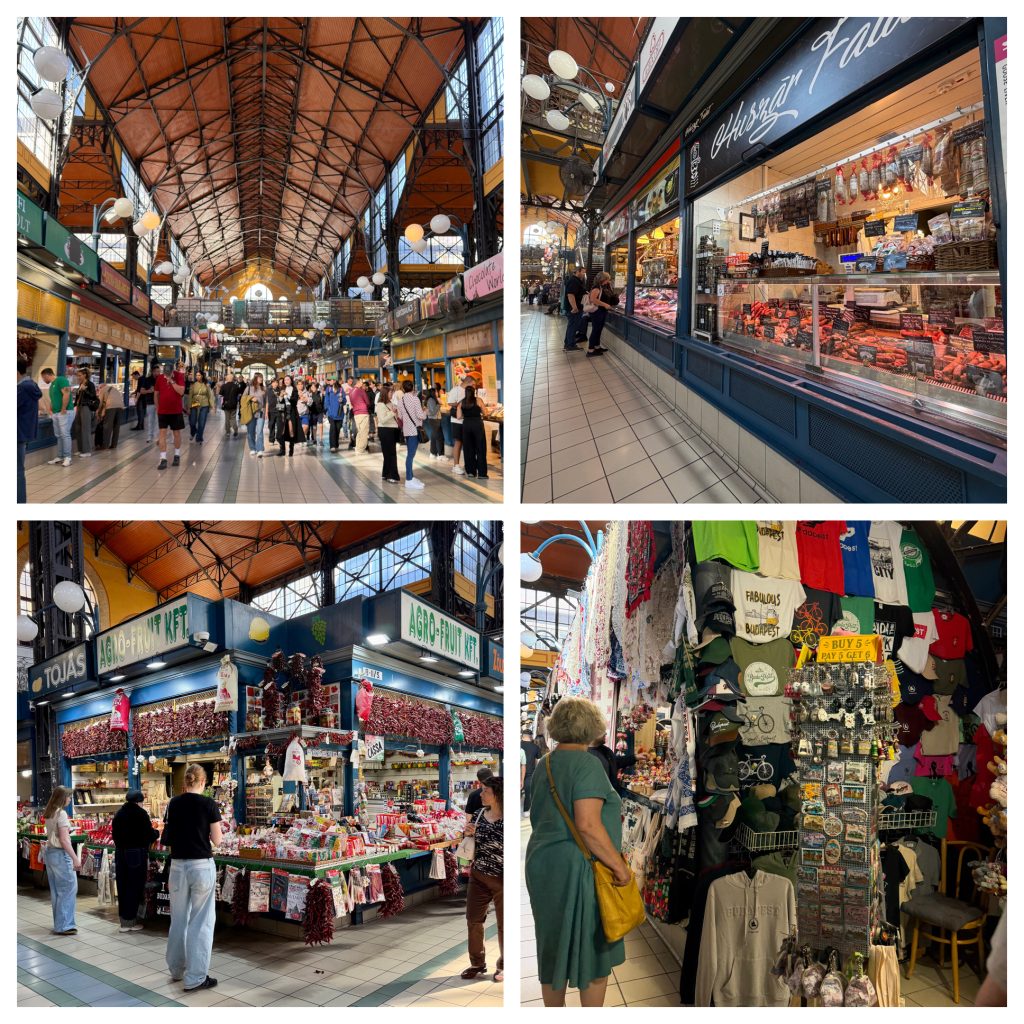
Three floors, iron galleries, a paprika-colored roof, and the hall doing what it has done since 1897: feeding people.
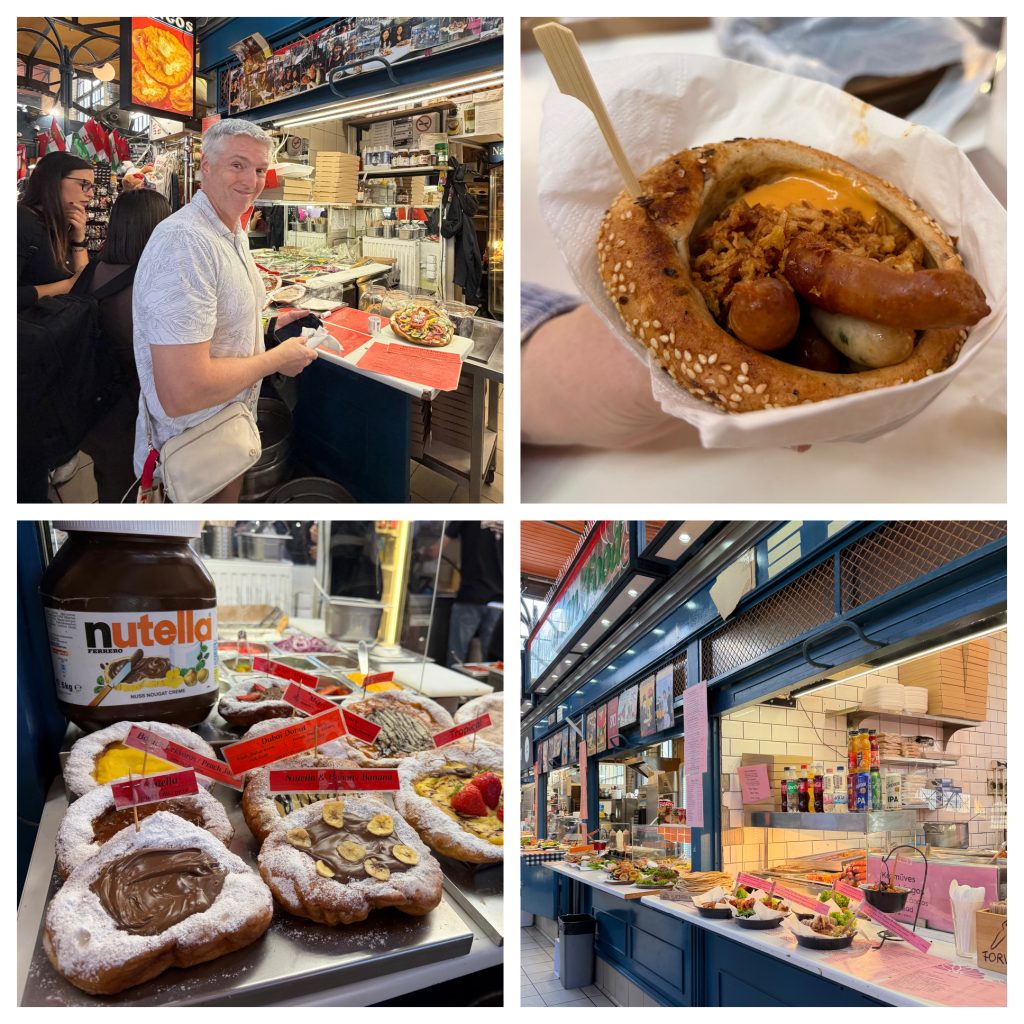
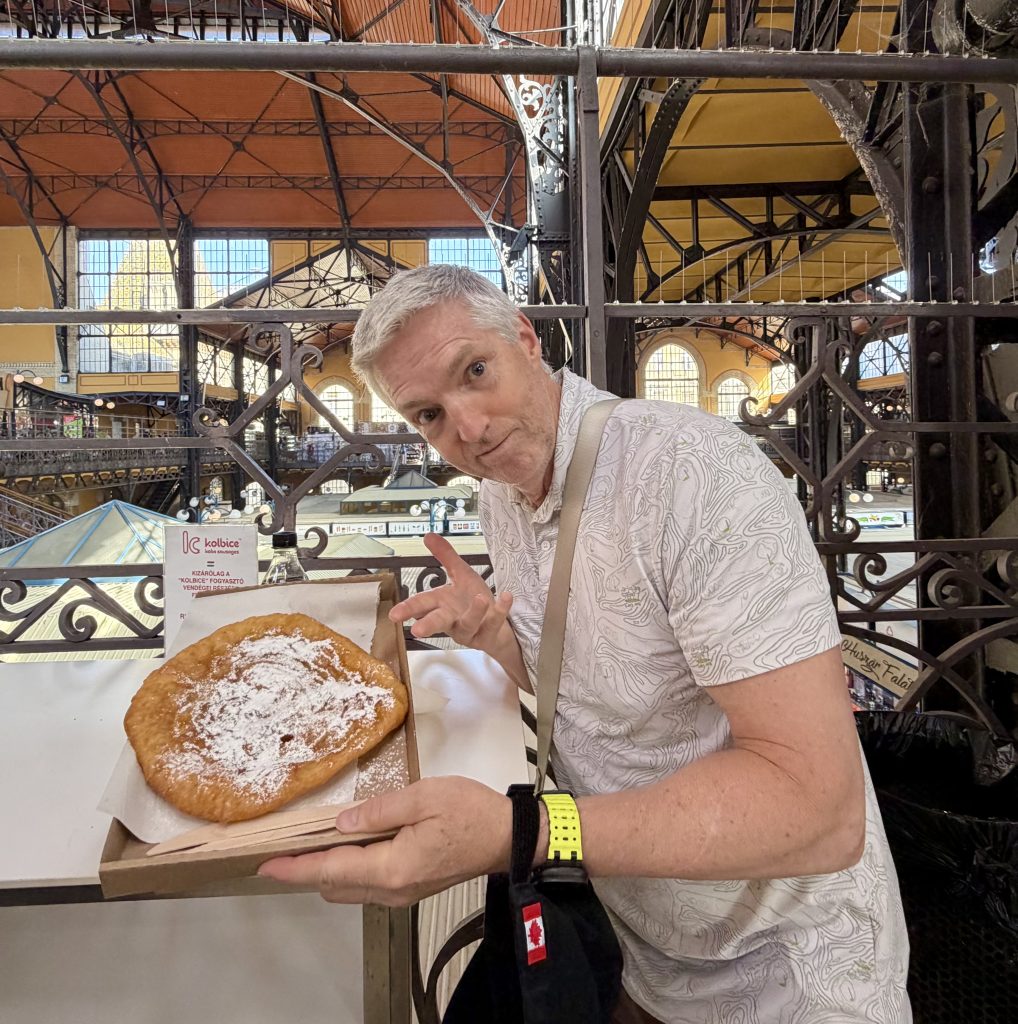
Lángos fry bread came out of the oil still blistered, honey and cinnamon and sugar oozing off. Then the Hungarian street food: mini grilled sausages stuffed into a seeded bread cone with sauce, eaten by hand, no plate, no plan.
Upstairs is mostly souvenirs. Downstairs is still a market, if a polished one.
Back to the Marriott
We Ubered back to the Marriott. Our driver had done a year of high school in Beverly Hills and treated the ride like a conversation he had been waiting to finish. His advice for next time: skip the Great Market and go instead to Lehel Market. More of a neighborhood hall, much more traditional, and about 80 percent cheaper than the tourist market we had just left. He said it the way locals say it, like it should have been obvious. Lehel Market is on our list for next time – better Langos and fewer souvenirs.
Százéves Étterem
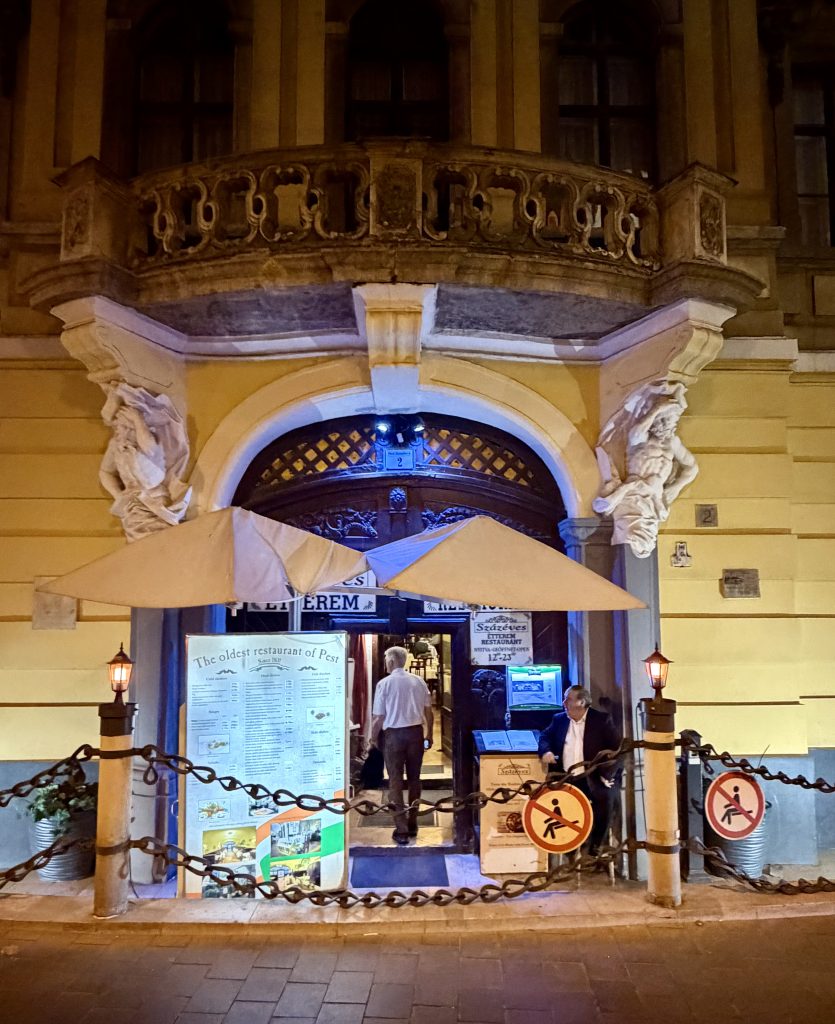
Wonderful dinner tonight on the terrace at Százéves Étterem, the Hundred-Year Restaurant, in the heart of Pest. An easy five-minute walk from the Budapest Marriott along the river and a short turn inland to Piarista utca.
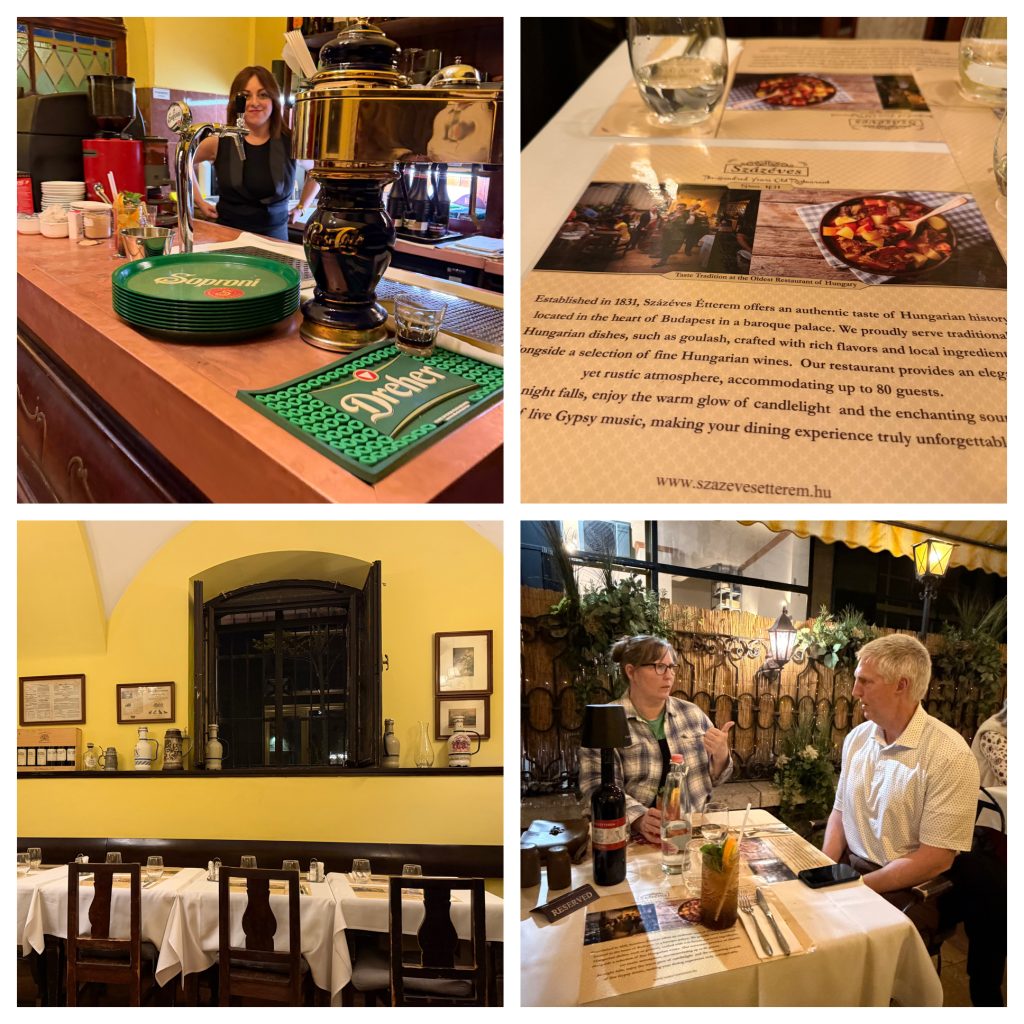
The restaurant sits on the ground floor of a small Baroque palace and has been serving guests here since 1831, which makes it one of the oldest restaurants in Budapest. In 1931, at the hundred-year mark, it took the name it still carries.
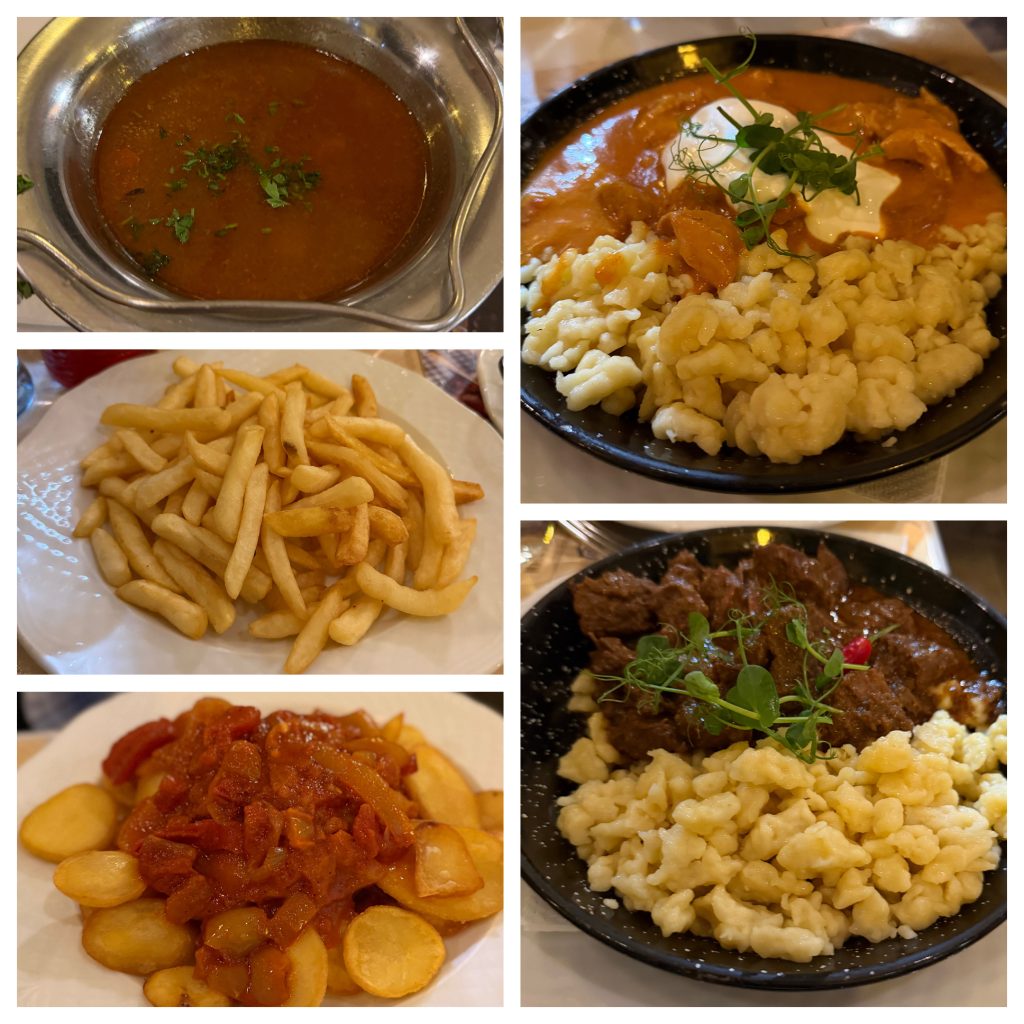
The terrace was a perfect spot for a classic Hungarian spread. Kevan had pörkölt, the thicker version of goulash, a meat stew slowly braised with onion and plenty of paprika until the sauce clings to the meat. I had chicken paprikás. Jodi had goulash, and we shared her paprika potatoes.
The music was a real highlight. A small ensemble played classics and traditional gypsy music, the kind of strings-and-cimbalom sound that belongs with this food. Candlelight, the band, and a meal that has been served on this corner for nearly two centuries. It was great.
Places we skipped this trip
Széchenyi Thermal Bath
The vast yellow palace in City Park, outdoor pools plus indoor thermal halls. Named for Count István Széchenyi (1791–1860), the reformer Hungarians still call “the Greatest Hungarian.” He was not a king. He endowed the Hungarian Academy of Sciences, introduced steam shipping on the Danube, and insisted that nobles as well as commoners pay the toll on the Chain Bridge. The baths opened in 1913; outdoor pools were added in 1927. The water rises from wells nearly a kilometre down. Go late morning. Don’t dunk your head in the hottest water.
October 8
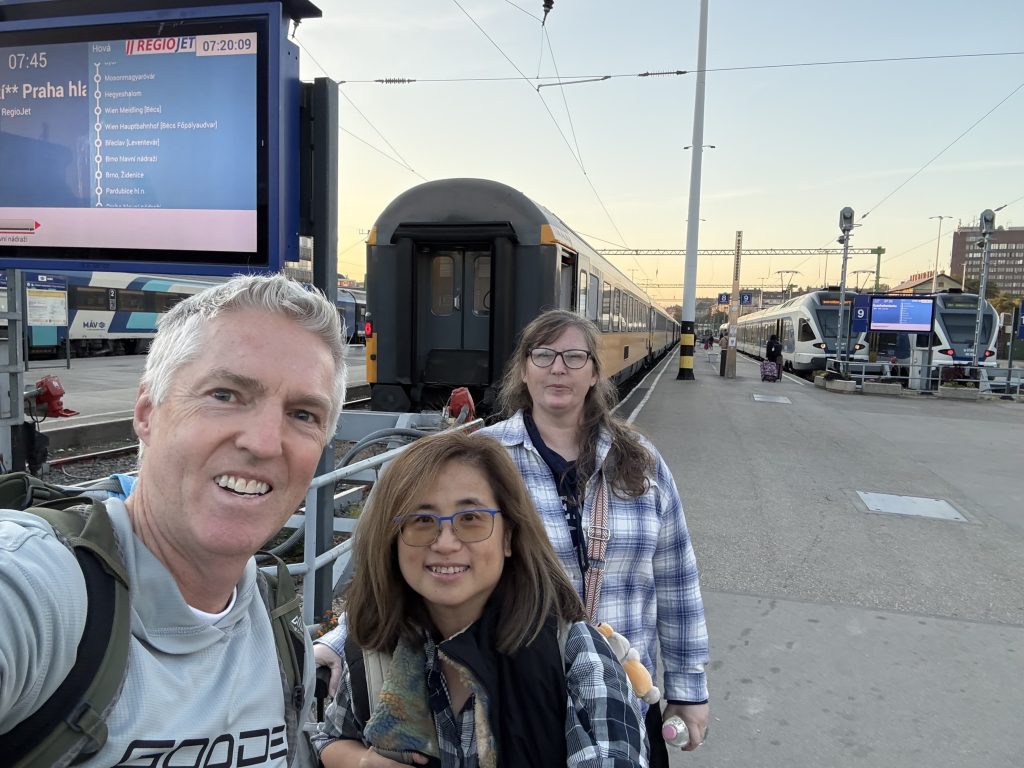
Taking a train to Prague!
Tickets you actually need on this itinerary:
Must pay
• Buda Castle Funicular — ride ticket
• Matthias Church — interior
• Rudas Baths
• Hungarian Parliament — interior tour only; the square and river view are free
• Dohány Street Synagogue — church, museum, and memorial garden
• Széchenyi Thermal Bath
Pay only if you want that part
• Fisherman’s Bastion — lower terraces free; upper towers ticketed after 9 a.m.
• St. Stephen’s Basilica — dome/terrace (and usually a paid interior ticket); you can see the square for free
• Hungarian State Opera — short tour; walking past is free
• Vajdahunyad Castle — outside and the park are free; museums inside cost extra
• Danube cruise — only if you take the boat; the promenade is free
• Citadella exhibition — the hill and viewpoint are free
No ticket Chain Bridge, castle courtyards and terraces, Gellért Hill paths, Shoes on the Danube, Andrássy Avenue, Heroes’ Square, City Park, Great Market Hall (you pay for food, not entry), Jewish Quarter streets, Gozsdu Udvar, Margaret Island.