 Swan Bradshaw
Day 1
Kelowna
After disembarking our Holland America cruise in Vancouver, we headed East to Kelowna—about 245 miles away, weaving through BC’s stunning mix of landscapes, from the lush Fraser Valley to the rugged Cascades and sunny Okanagan Valley, tracing the historic Cariboo Trail used by 1860s gold rush miners.
The Coquihalla Highway, built in the 1980s for Expo 86, smooths the journey with its tunnels and bridges over steep passes—a modern engineering win!
We first caught a shuttle to the airport where we picked up our car from Long Term Parking and headed straight for dim sum at Continental Seafood Chinese Restaurant in Richmond, Vancouver for some tasty har gow and siu mai—back to the city’s Asian roots from the railroad era.
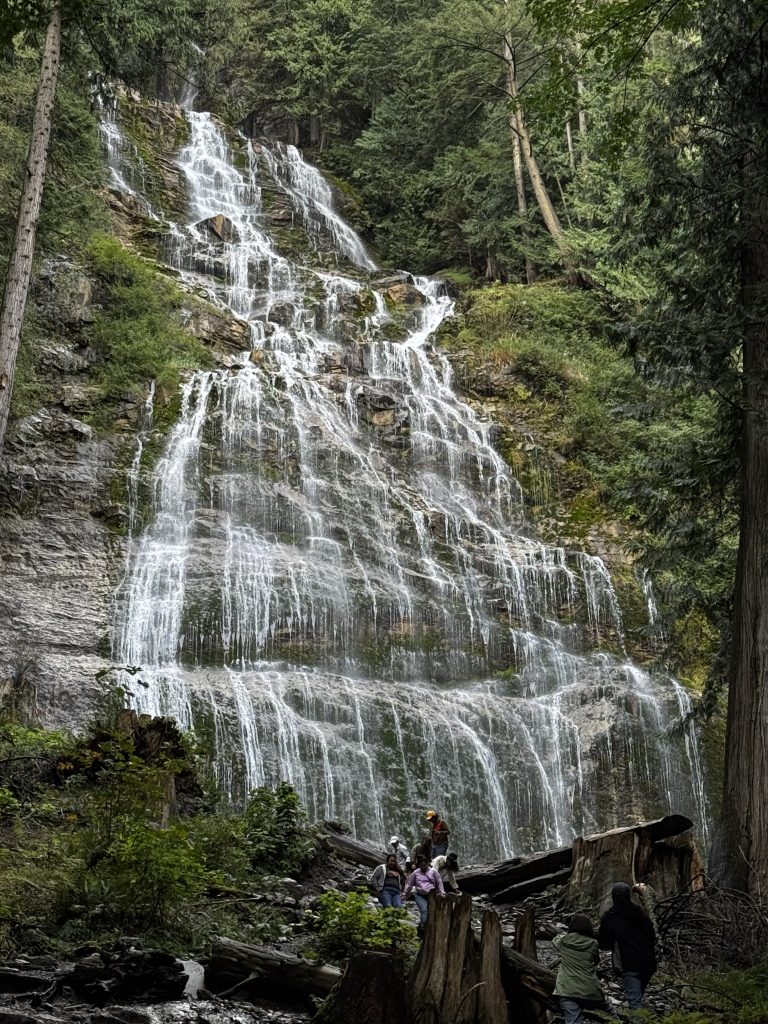
Next, we stopped at Bridal Veil Falls Provincial Park, hiking to a stunning 60-meter waterfall framed by cedar-scented forest—Canada’s sixth-tallest tied to Stó:lō legends.
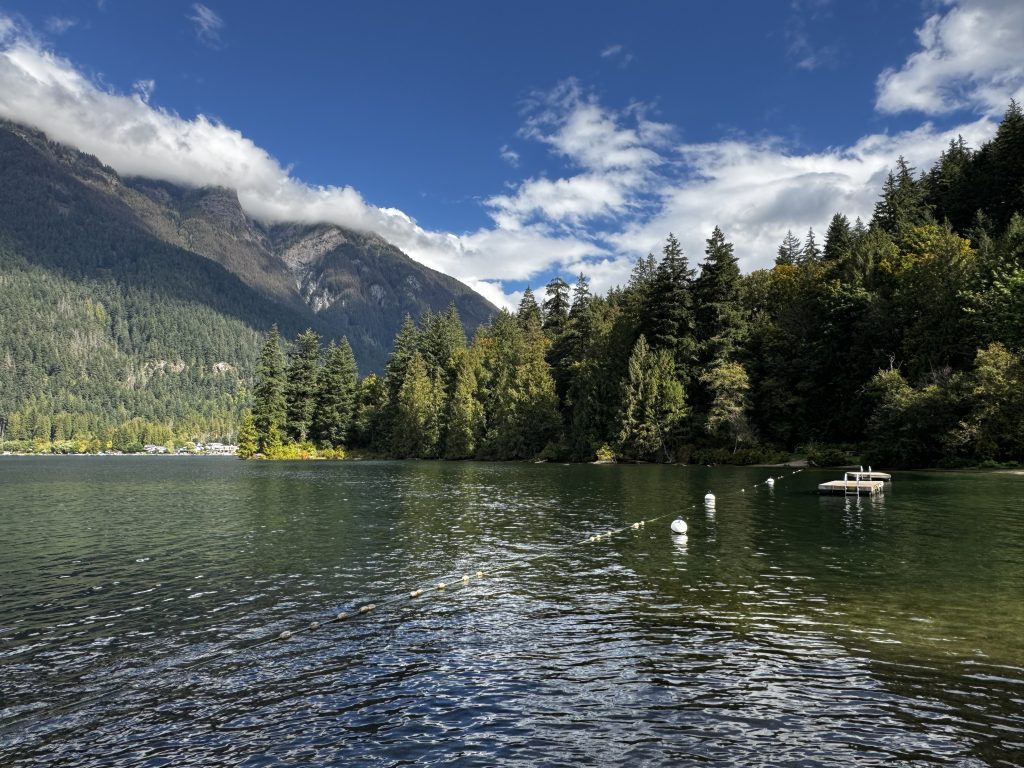
Next, we stopped at Kawkawa Lake in Hope, a quirky town of 6,000 where the Fraser and Coquihalla rivers meet.
The Coquihalla climb offered dramatic rock faces and alpine views, with a pause at Kwakwaka’wakw Summit Viewpoints for a breathtaking ridge panorama, home to grizzlies and goats.
Rolling into Merritt, we stopped at the Nicola Valley Overlooks to take in rolling hills and lakes, home to syilx/Okanagan peoples for millennia. The scenery turned dry and golden, a stark shift from the coast.
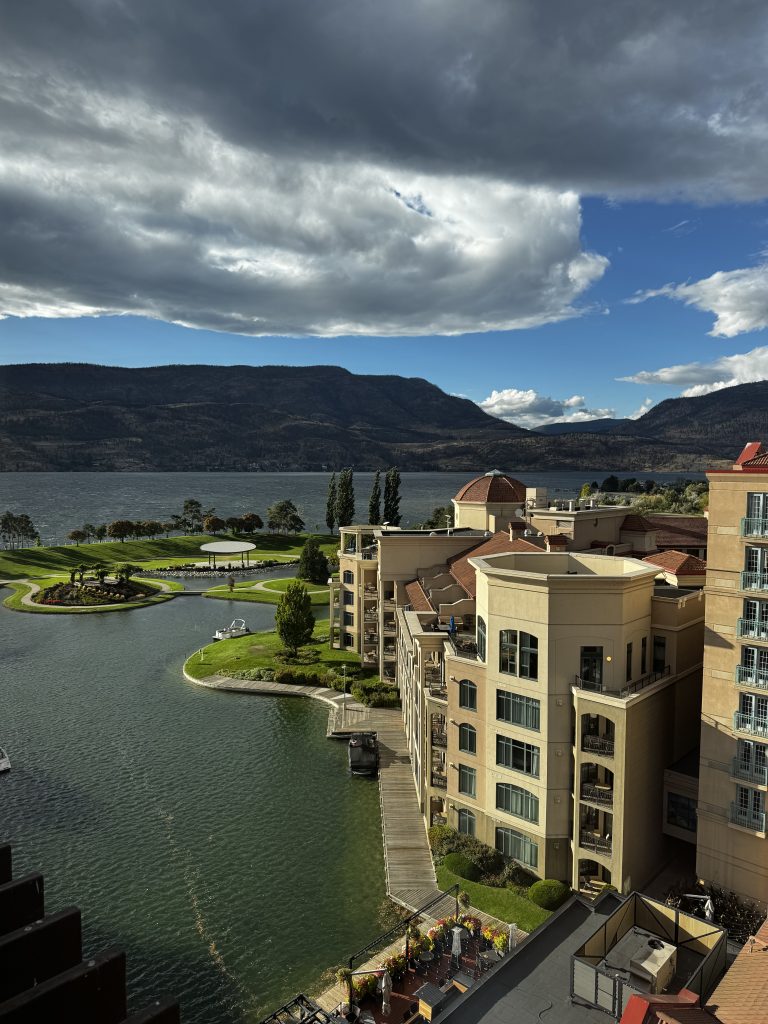
By late afternoon, we arrived in Kelowna, settling into the Grand Okanagan Resort on Okanagan Lake, surrounded by vineyards in Canada’s warmest valley—perfect for unwinding after a day of driving from our cruise’s end. From river valleys to mountain passes, this trip packed BC’s history and beauty into one scenic ride.
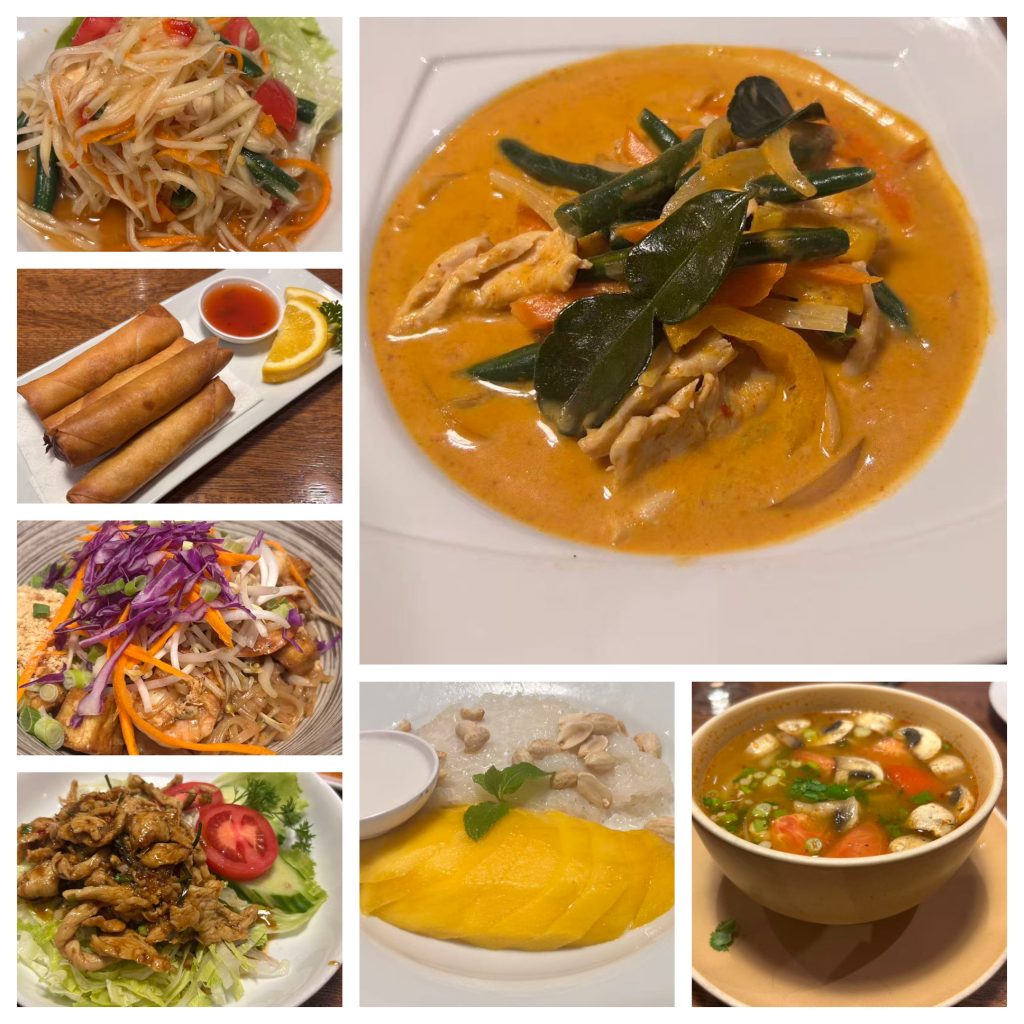
We took a walk at night to dinner at Bai Tong Thai Restaurant, very authentic Thai food! A very nice evening in perfect weather right beside gorgeous Okanadan Lake!
Next: off to Banff!
Day 2
Banff
After enjoying Kelowna’s lakeside charm, we drove to Banff—about 260 miles , crossing from British Columbia into Alberta’s breathtaking Rockies. This route transitions from the Okanagan Valley’s sunlit orchards to the jagged peaks and vibrant lakes of Banff National Park, following ancient indigenous trade paths used by the syilx/Okanagan and Stoney Nakoda peoples, later paved in the 1920s and 1930s as the Banff-Windermere Highway to open the area to visitors.
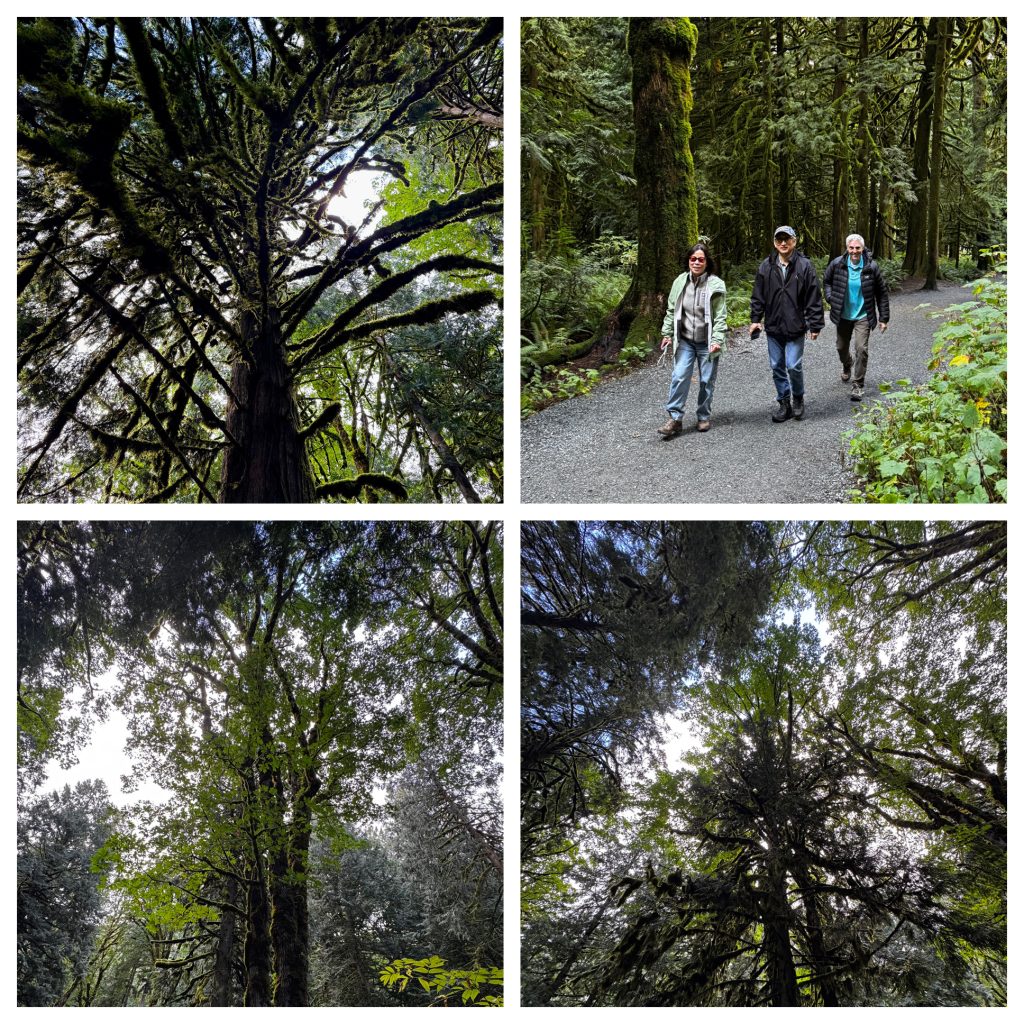
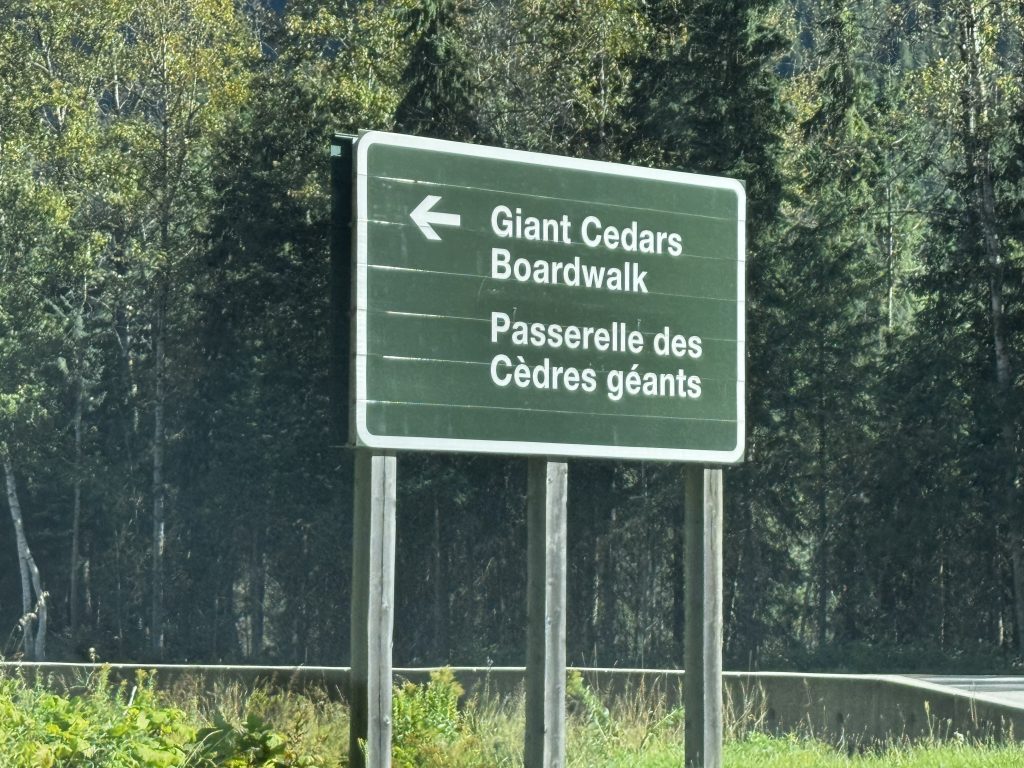
The drive climbed through Shuswap’s Monashee Mountains, and we paused at Giant Cedars Boardwalk in Mount Revelstoke National Park, hiking a short trail among towering 500-year-old western red cedars—some reaching 60 meters—rooted in a mossy forest since the last Ice Age.
Continuing on, we crossed into Alberta via Kootenay National Park, stopping at Marble Canyon, a narrow chasm carved by Tokumm Creek, with green waters and limestone walls—a geological wonder with fossils from ancient oceans, protected since 1920.
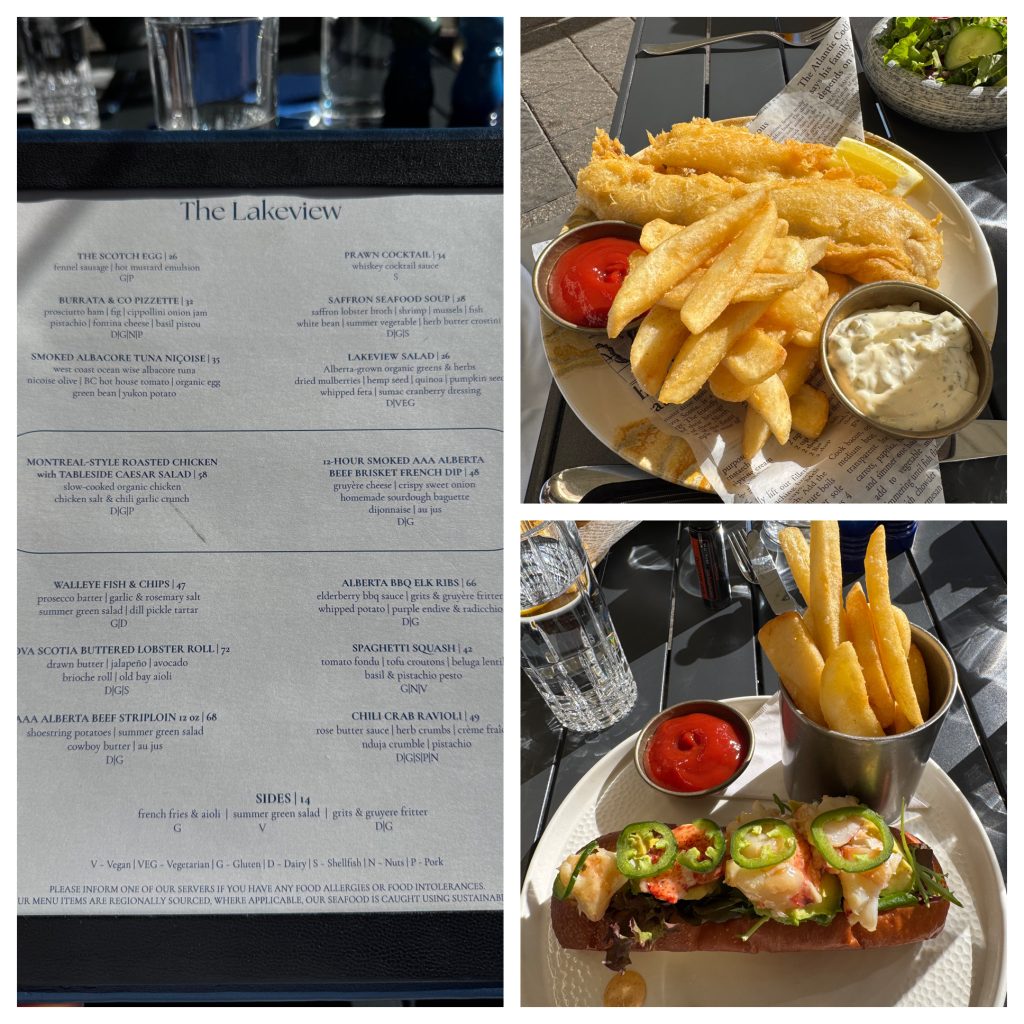
Later in the afternoon, we enjoyed a late lunch at Lakeview Lounge at the Fairmont Chateau Lake Louise, soaking in the stunning view of Emerald Lake and Victoria Glacier.
By evening, we arrived in Banff and settled into our cozy Airbnb in Harvie Heights, just a stone’s throw from the townsite. This quiet hamlet offers a front-row view of Mount Rundle and easy access to Banff National Park, teeming with grizzlies, elk, and over 1,000 plant species.
From Okanagan orchards to Rocky Mountain splendor, this drive wove history and nature into a perfect day.
Next, we will be exploring Lake Louise and Moraine Lake!
Fun facts: People residing in Banff must have a job in the area, residency requirements are tied to employment directly. So you become homeless if you get fired; thus, workers are very service-oriented to keep their jobs!
Day 3
Today kicked off with our tour group picking us up bright and early for a packed day exploring some of the most stunning spots in the Canadian Rockies – mainly Banff National Park in Alberta and spilling over into Yoho National Park in British Columbia—part of the UNESCO World Heritage Site that showcases the dramatic peaks, glaciers, and valleys formed during the Laramide Orogeny around 70 million years ago. These parks were established in the late 1800s, largely thanks to the Canadian Pacific Railway pushing through the wilderness, opening up tourism and protecting these natural wonders. We followed a route hitting six iconic sites with set times at each to keep things moving.
Lake Louise
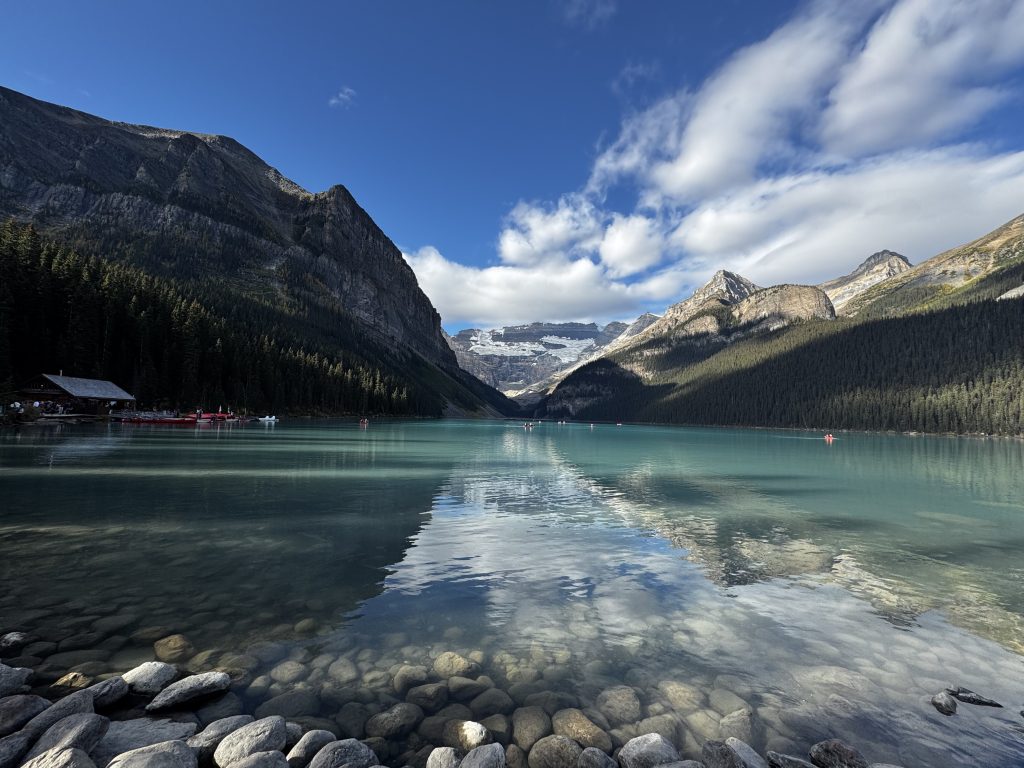
We started at Lake Louise, where we spent about 60 minutes soaking in the views. This glacier-fed lake sits at an elevation of around 1,600 meters in Banff National Park, making the nearby settlement Canada’s highest permanent community. Its famous turquoise color comes from rock flour—fine silt ground by glaciers and suspended in the water, refracting light in that mesmerizing way. Historically, the area was an outpost for the Canadian Pacific Railway starting in 1884, and it got its name from Princess Louise, daughter of Queen Victoria. Fun fact: the lake freezes solid in winter, turning into a massive ice rink, and it’s backed by the imposing Victoria Glacier, which has been retreating due to climate change.
Moraine Lake
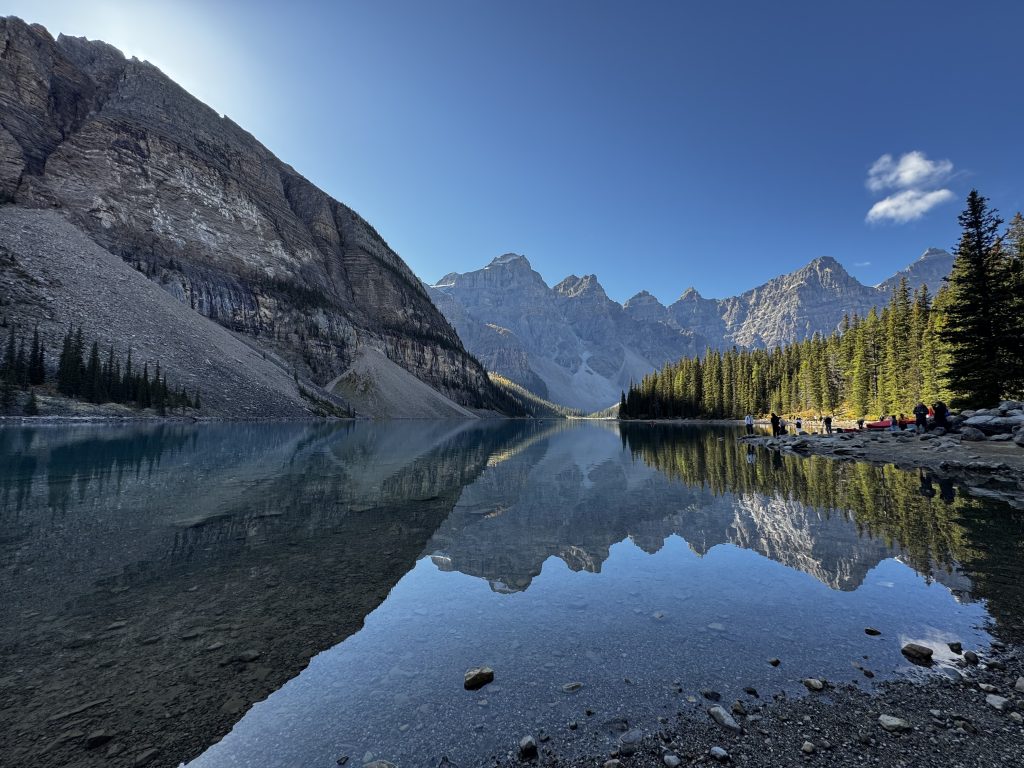
Next up was Moraine Lake, another 60-minute stop just a short drive away in the same park’s Valley of the Ten Peaks. At 1,884 meters elevation, this spot is surrounded by ten jagged mountains, and its vivid blue waters are also thanks to glacial melt. The lake was formed by a moraine dam—a pile of debris left by retreating glaciers—and it’s so photogenic it once graced the back of the Canadian $20 bill. Discovered in 1899 by explorer Walter Wilcox, it’s a testament to the Ice Age sculpting of the Rockies, with sedimentary rocks layered from ancient seabeds. Interesting tidbit: the water doesn’t fully thaw until June, and the area teems with grizzly bears, so we stuck close to our guide.
Temple Mountain
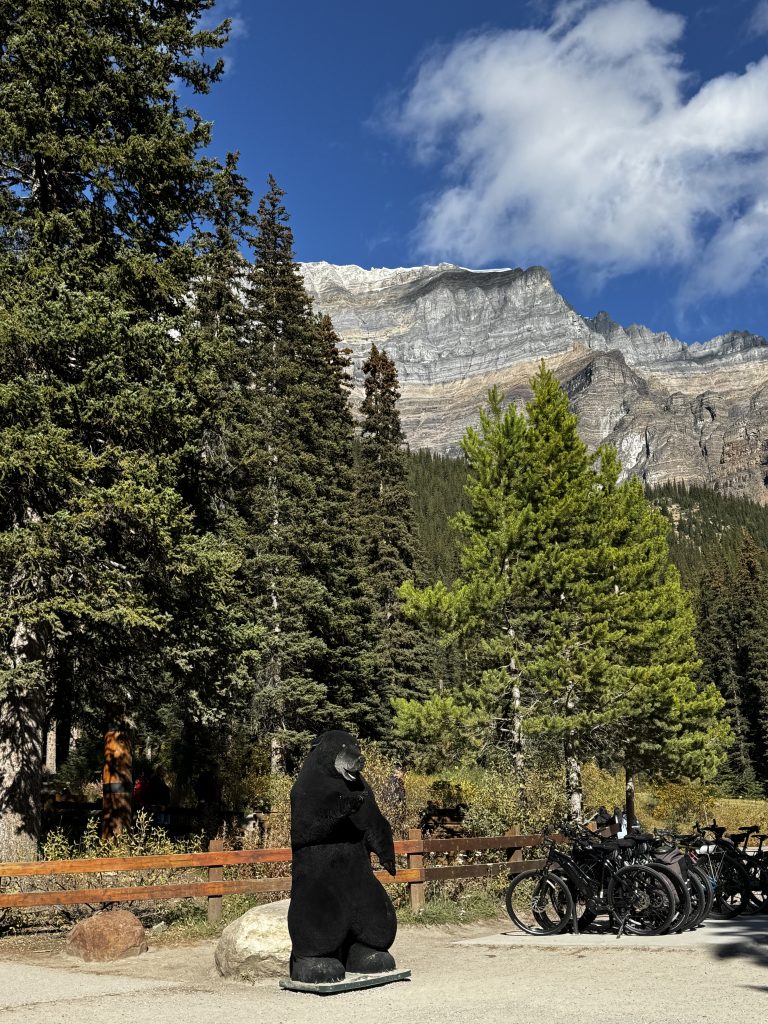
Temple Mountain in the backdrop. The glacier in this mountain is permanent year round!
Emerald Lake
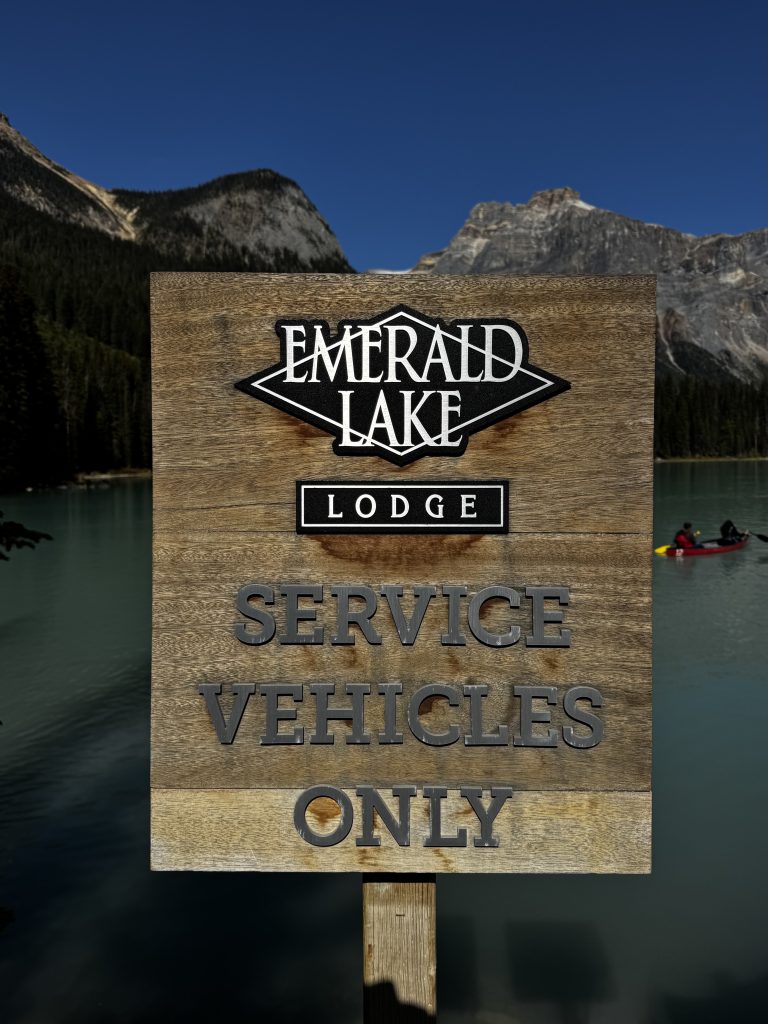
We crossed into Yoho National Park for Emerald Lake, allotting 30 minutes there. This gem in British Columbia gets its name from the emerald-green hue caused by the same rock flour phenomenon, nestled amid dense forests and the President Range at about 1,300 meters.
Yoho, meaning “awe” in Cree, was established in 1886 after the railway revealed its waterfalls and peaks. The lake was spotted in 1882 by a railway guide, and today it’s home to a historic lodge built in 1902. A cool fact: pockets of temperate rainforest thrive here due to the moist climate, supporting unique ecosystems with old-growth cedars.
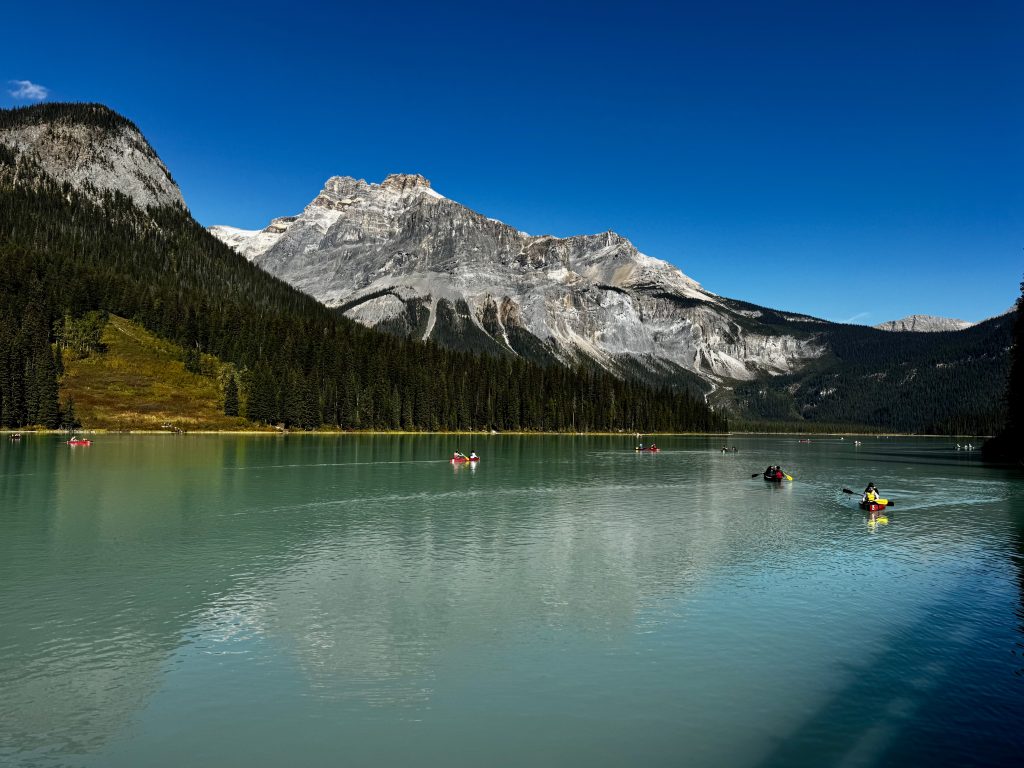
In the background, you can see on the mountain where the ski runs have been carved out for winter fun, that is Lake Louise ski resort, a world renowned ski destination where Kevan used to ski in his younger days.
Natural Bridge
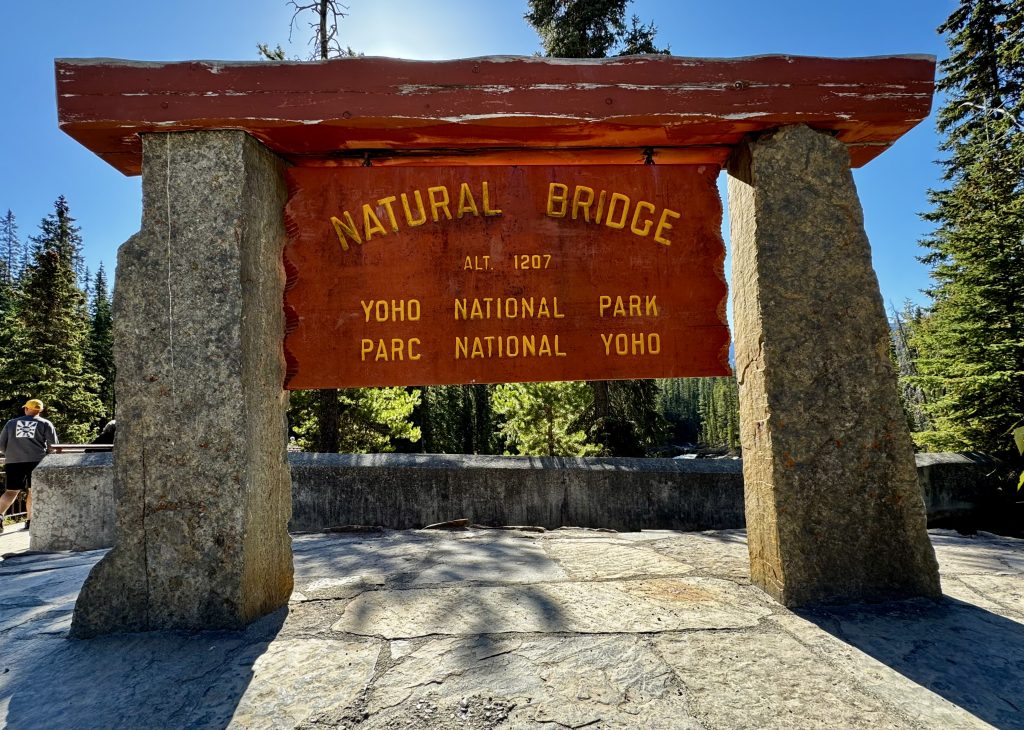
A quick 15-minute detour brought us to Natural Bridge, also in Yoho, where the Kicking Horse River has eroded a limestone arch over millennia, creating a natural span. The river got its name in 1858 when explorer James Hector was kicked by his horse nearby.
Geologically, it’s a prime example of water’s power carving through rock, starting as a waterfall and widening into a bridge. Fun note: the site highlights the park’s turbulent history with the railway, which blasted through these mountains in the 1880s, including the famous Spiral Tunnels nearby.
Kicking Horse
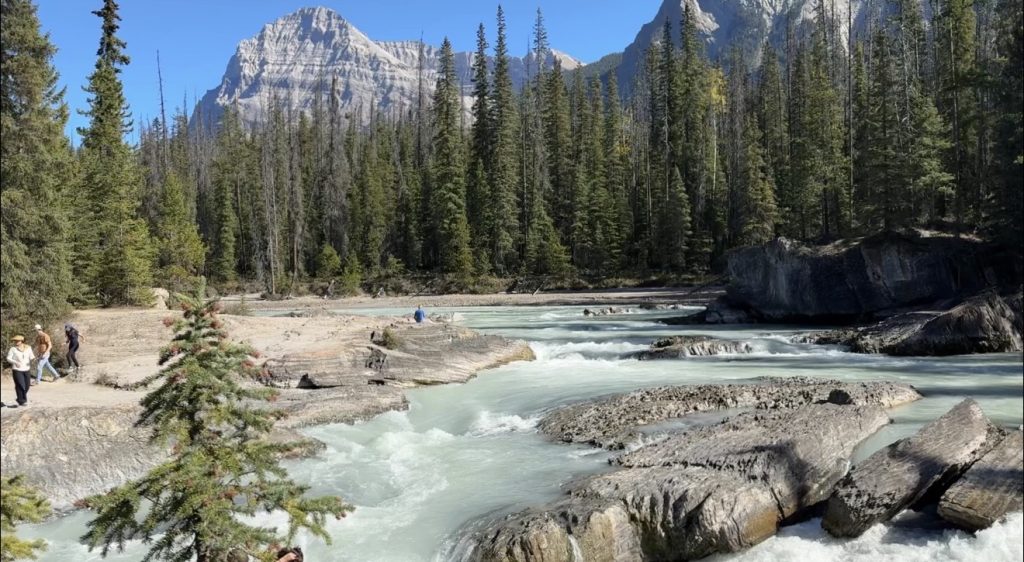
Beautiful scenery as Kicking Horse approaches the natural bridge in Yoho National Park, British Columbia!
Johnston Canyon
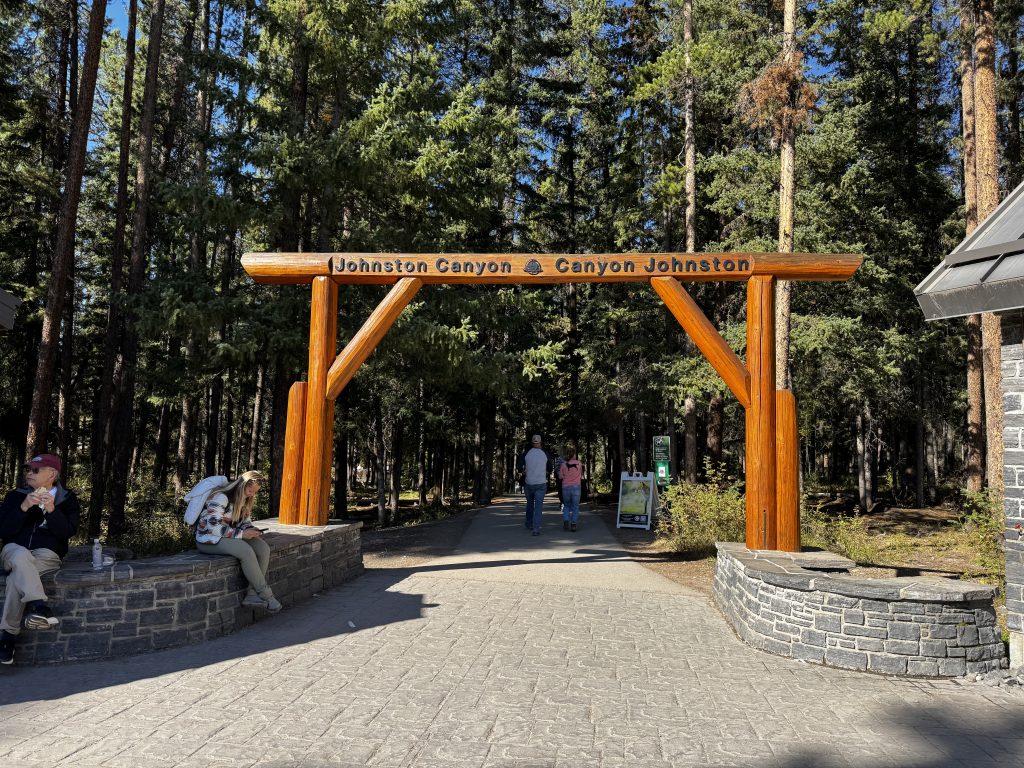
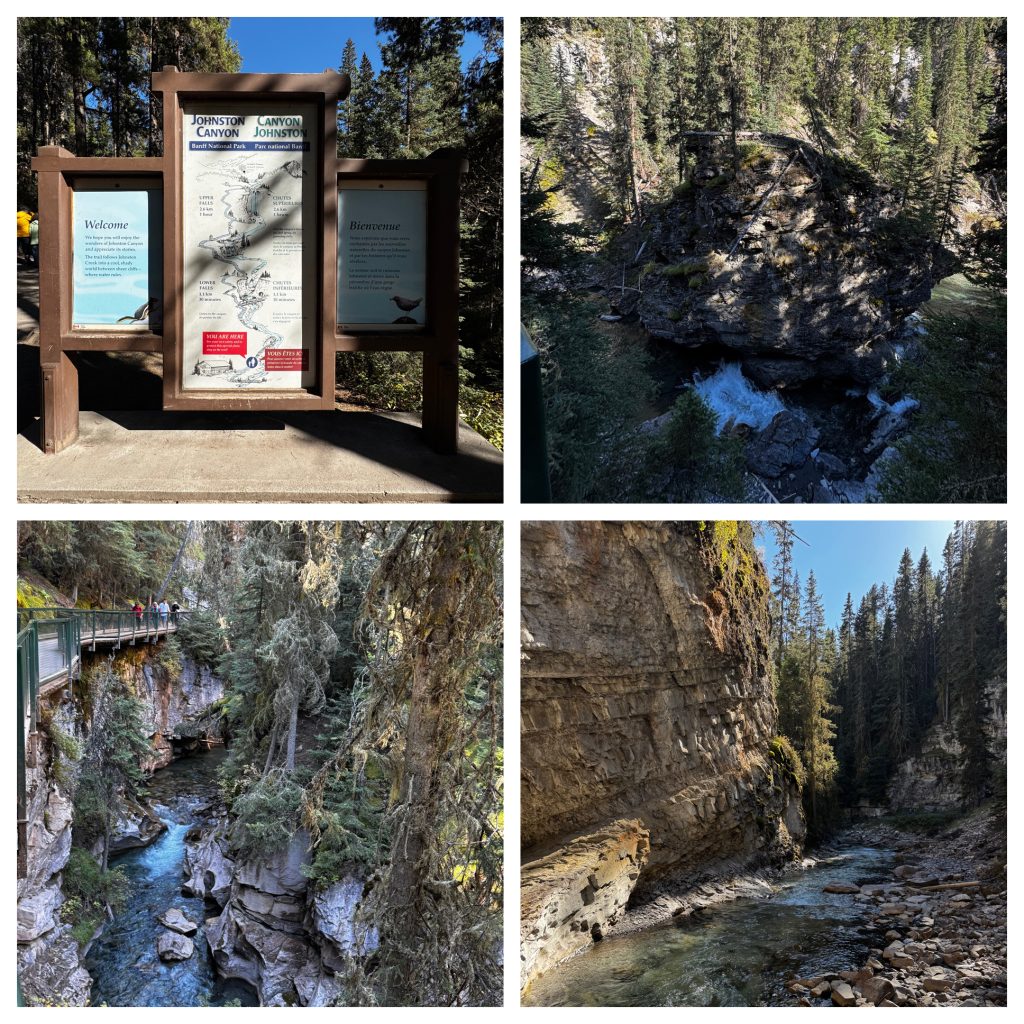
Then we headed back to Banff for an 80-minute hike at Johnston Canyon, a narrow gorge sliced by Johnston Creek over thousands of years through limestone bedrock. Named after a gold prospector in the late 1800s, it’s been a draw since the early 1900s with its catwalks bolted to the cliffs leading to upper and lower falls.
The canyon’s waterfalls freeze into ice pillars in winter, attracting climbers, and it’s fed by glacials melt from the surrounding peaks. One intriguing detail: fossils in the rocks date back 500 million years, remnants of ancient seas.
Vermillion Lakes
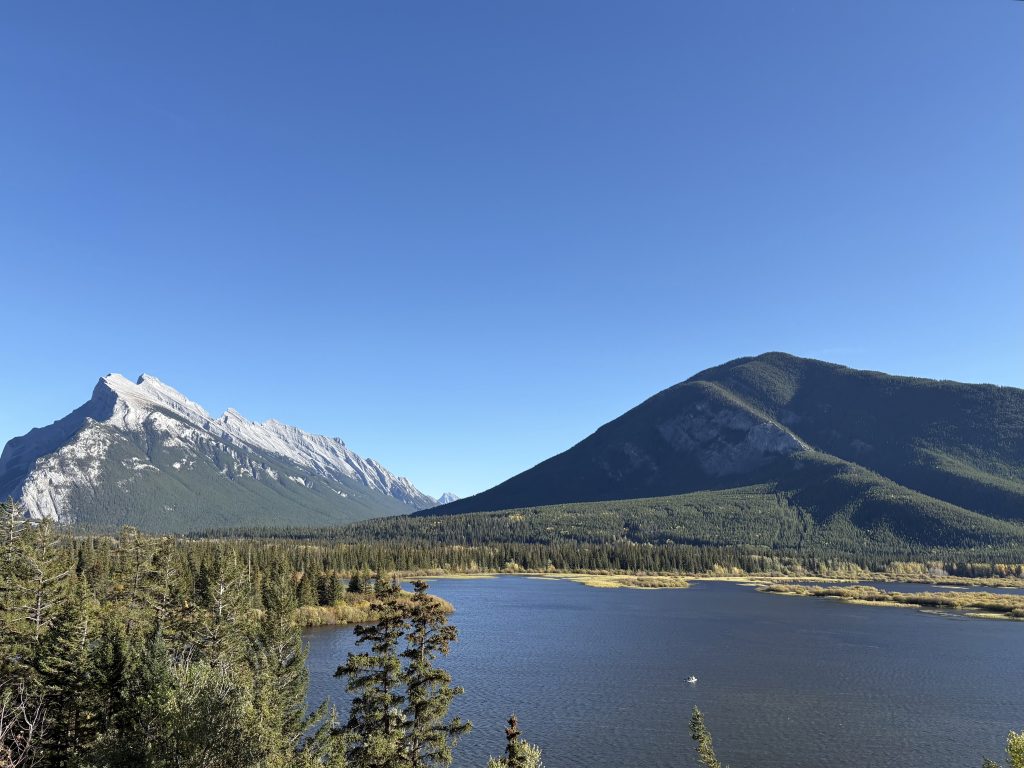
We wrapped up with a brief 10-minute stop at Vermillion Lakes, a chain of three shallow wetlands just west of Banff town.
The Three Sisters
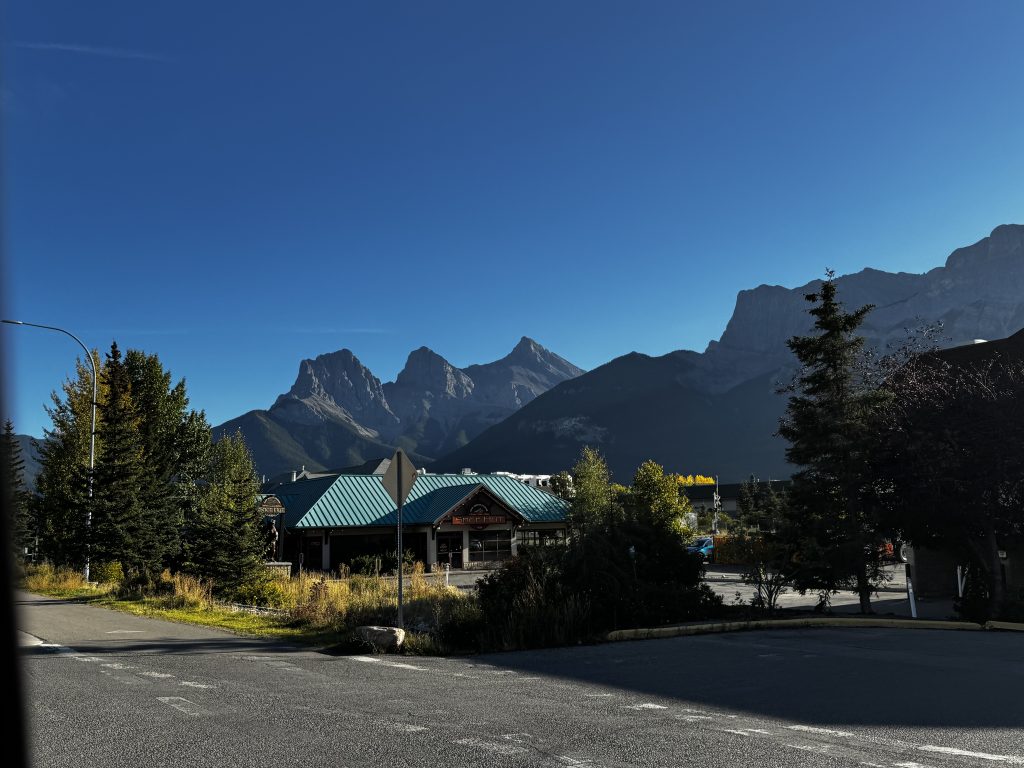
The Three Sisters are three huge peaks in Canmore, just outside Banff National Park, located in the Bow Valley, part of Kananaskis Country. Elevations for the peaks are: Big Sister (9,632 ft, “Faith”), Middle Sister (9,085 ft, “Charity”), Little Sister (8,838 ft, “Hope”). The peaks are visible from tons of Canmore spots so we were able to see them from a number of different vantage points.
In 1886, geologist George Dawson dubbed them for looking like three nuns, and thus gave them the names Faith, Hope, and Charity. They were later renamed the 3 sisters.