
 Swan Bradshaw
Day 1
We arrived at the KL Airport at noon from Singapore. Going through immigration was a bit of a hassle as we had not filled out the digital registration form prior to going through the security check. So we were sent back to download the form so all our information could get registered in the system. It was a breeze after that to go through the automated immigration check.
We found the car rental in the airport only to realize that our car was located in Terminal 1 while we landed in Terminal 2 and the terminals are about 30 minutes apart so it was just as quick for the rental car company to bring the car over which meant the pick up process took a little longer than anticipated. But the rental car company, Europcar, brought the car to us so we just had to wait at Terminal 2 for 30 minutes until the car was delivered to us. Kevan rented a standard size car from Expedia but we were surprised at the size of the car when we saw it, it was more like a mini but apparently it’s considered a standard size in Malaysia. Looking around at other cars on the road it is definitely the most common size and model but it feels tiny.

We started driving North to Ipoh at 3:30pm and arrived at our Airbnb at around 6pm. Our Airbnb (The Horizon) was very nice and bright. We cranked up the AC, unloaded, took a shower, and it was time to leave for dinner with my cousin Ah Kee and Eng Girl, and their daughters.

We had dinner at Sun Lee Hou Fook Restaurant. The food was good and we had a fun conversation recollecting the fun times (and mischief) during our youth.

Day 2
Taiping, Perak
Today we went to Taiping, the little town I was born in. Beautiful landscape on the drive with limestone mountains and tropical jungles everywhere.

Taiping Hospital
This is the hospital where I was born 58 years ago but it looks like much work had been done to preserve it.

Kindergarten
This is the kindergarten school I used to attend although it’s been repainted to a much more vibrant color scheme. It is adjacent to the Hokkien Association.

The Hokkien Association
This used to be part of my primary school. I received awards on this stage. There were two ladies working there in the back room, Kevan told them that I went to school there 60 years ago, they seemed unimpressed.

PSL Goreng Pisang
Goreng pisang (fried banana) and popiah were two of my childhood favorites. While I couldn’t find popiah in Taiping this trip, we were able to get some goreng pisang to satisfy my palate.

Lake Garden
Beautiful landscape in this area.

Hawker Stalls
Kevan and I had Char Kuey Teow and wonton noodles for breakfast this morning at the hawker stalls at Larut Matang. Delicious!

Day 3
Today we hung out with our high adventure friend Kent Chee who came up from KL to meet up with us. This guy lives life to the fullest and plans his adventures around the globe. He seems to have been everywhere, all over the world, definitely all of the high adventure spots around the globe, and he definitely doesn’t go and visit as part of a tour group. When he goes places, he goes with a backpack and stays for months as he hikes around, meets locals, and really dives into every place he visits. As an example, his next upcoming trip to the US is to hike the Pacific Coast Trail over a five month period. Then starting in 2026 he is headed to Russia to start a 10 year global adventure which kicks off there. It was great to reconnect with Ken, enjoy some great food, and reminisce about times we spent together when he visited us in China. A great day!

After lunch, we went to Starbucks while waiting for a dessert shop to open. I ordered a hot chocolate, it’s not my favorite. Whatever is added on top of the chocolate drink would seem “foo foo” to Kevan.

Bean Factory Ipoh
Dessert of amazing but the best part was listening to Kent sharing his adventure stories including using a fake ID to enter Tibet from Mainland China 5 times; helping a monk who served involuntarily due to pressure from family to gain social status escape; staying with at strangers’ homes when offered while backpacking… He’s our one of a kind friend!

Later in the afternoon, Kevan and I went to Ipoh Parade Shopping Mall in which we found some local phone chargers and Perak Stadium Hawker Center for some fried noodles and ice kacang. In case you missed the theme of the visit, it is food, food, food! And then some more food!

Day 4
We went to Concubine Lane in Ipoh Old Town to walk around a little bit. I bought a bunch of biscuits to snack on. And that brought back a ton of fond childhood memories. After that, we check out the murals in the neighborhood and visited Ho Yan Hor, a tea museum.
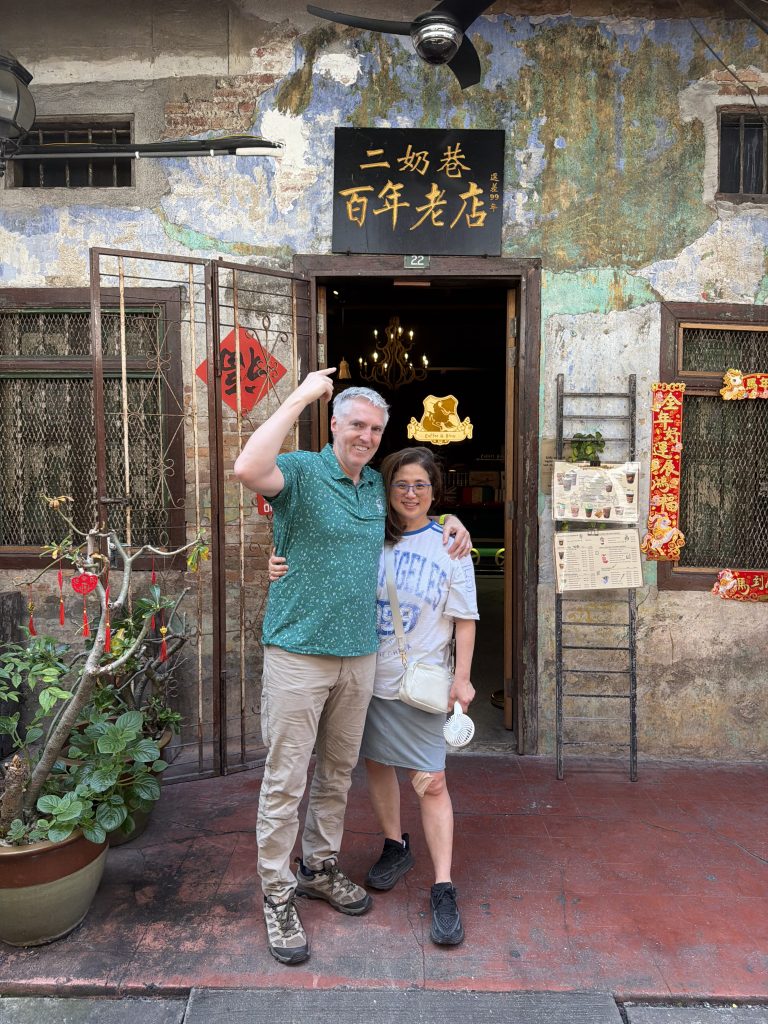
Concubine Lane
This is an alley with shops selling trinkets and it has become a popular tourist attraction. Concubine lane is officially known as Lorong Panglima and is a series of narrow alleyways in old town. There is over a century of history tied to this area and the tin mining boom that the region experienced in the late 19th and early 20th centuries. There was a fire in 1892 that destroyed much of the town and when the town was rebuilt with a grid layout, it included lanes of shop houses.
There is a legend that credits a Chinese mining baron named Yao Tet Shin with granting three of these lanes to three of his mistresses. The first was called Wife Lane, the second was called Concubine Lane, and the third Second Concubine Lane. The three mistresses were able to collect rent from the tenants located in the shops along those alleys.
A different story suggests that this area just represents the location where wealthy tycoons and British colonialists would keep their mistresses, located close to opium, dens, and gambling houses. When tin mining declined during the middle of the 20th century, and the town started to modernize, this area was neglected, and the shop houses were abandoned and began crumbling down. Revitalization efforts in recent decades have resulted in private developers restoring these lanes and preserving the colonial architecture, resulting in a transformation of this area into a vibrant tourist destination, which today is booming, lots of cafés, souvenir, shops, street art, different types of food and pastries, and also murals. A nice place to stroll around, but definitely one of the more touristy areas of town.

Murals in Old Town Ipoh

“The eagle snatching the chicks” (老鷹捉小雞) is one of my favorite childhood games growing up in Malaysia. The mother hen tries to protect the chicks from the eagle and the chick caught will become the eagle in the next game! Fond memories!

Ho Yan Hor

Dr. Ho Kai Cheong founded Ho Yan Hor herbal tea in 1945 on Treacher Street in Ipoh. Dr. Ho’s fascinating history was summarized on story boards throughout the historic home. He was a Chinese medical graduate from Canton Wah Lam National Physicians Medical School, after which he immigrated to Ipoh, Malaysia. He then returned to China to join the Chinese military and fighting against the Japanese before World War II began. He then returned to Ipoh and in the early 1940s, he launched Ho Yan Hor Herbal Tea in Ipoh, Perak, using a blend of 23-24 herbs to treat colds and heatiness. Starting with just RM$4 at a stall on Treacher Street, his remedy became a household name, especially during the 1957 Asian Flu pandemic. Initially produced from his home, the business grew, and he later shifted operations to Jiangsha Road. After his death (date unspecified), his son David Ho Sue San, trained in pharmacology in New Zealand, took over in the 1980s, modernizing the company into a global pharmaceutical enterprise . The original company name Ho Yan Hor has been changed to Hovid by Dr. Ho’s son whose name is David, and with the last name Ho, it became Hovid!
Dr. Ho’s legacy lives on through Hovid’s wide range of products and the Ho Yan Hor Museum, opened in 2016 in his Ipoh home to celebrate his life and contributions.
Despite his life being filled with hardship, his life motto was “吃得苦中苦,方为人上人” meaning if one desires to be successful, he must be willing to work hard and endure hardship. Dr. Ho received his PhD in his eighties and passed away at 93 years old.

Day 5
Chef Fatt
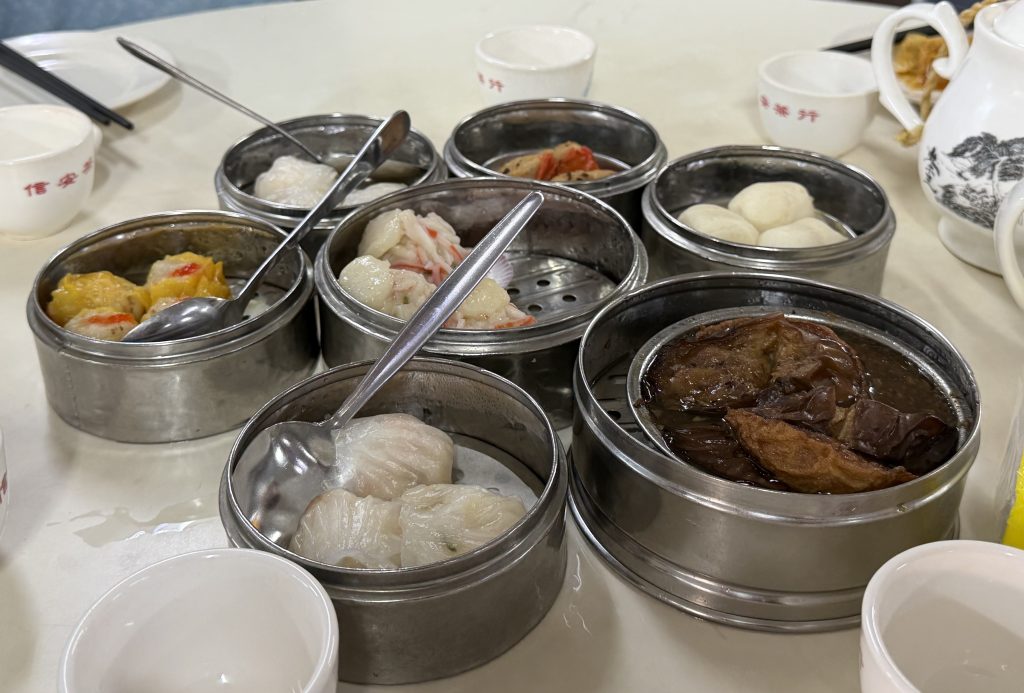
My childhood friend Ah Lek offered to show us around in Ipoh, he thinks that I’ve forgotten how to go around in Ipoh and it’s true. Ah Lek, together with his wife, Mee Peng, and his mother, took us to Chef Fatt restaurant for dim sum this morning.
After breakfast, we visited Perak Cave.
Perak Cave
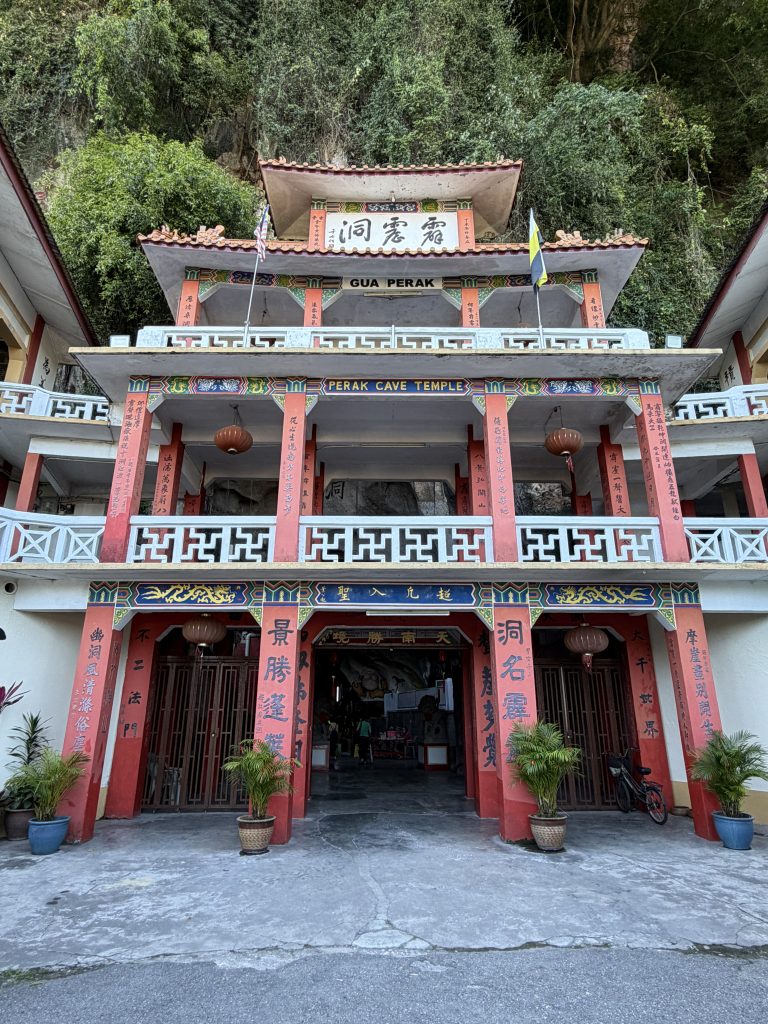
Perak Cave Temple (Perak Tong) is a prominent Chinese Buddhist cave temple located in Ipoh, Perak, Malaysia, nestled within the scenic limestone karst hills of the Kinta Valley. Founded in 1926 by Chinese immigrant Chong Sen Yee and his wife Choong Chan Yoke from Guangdong province, the temple was carved and developed from a natural cave during the region’s tin-mining era. The couple, supported by community donations, transformed the site into a place of worship, with their son later continuing expansions that added intricate artwork and structures.
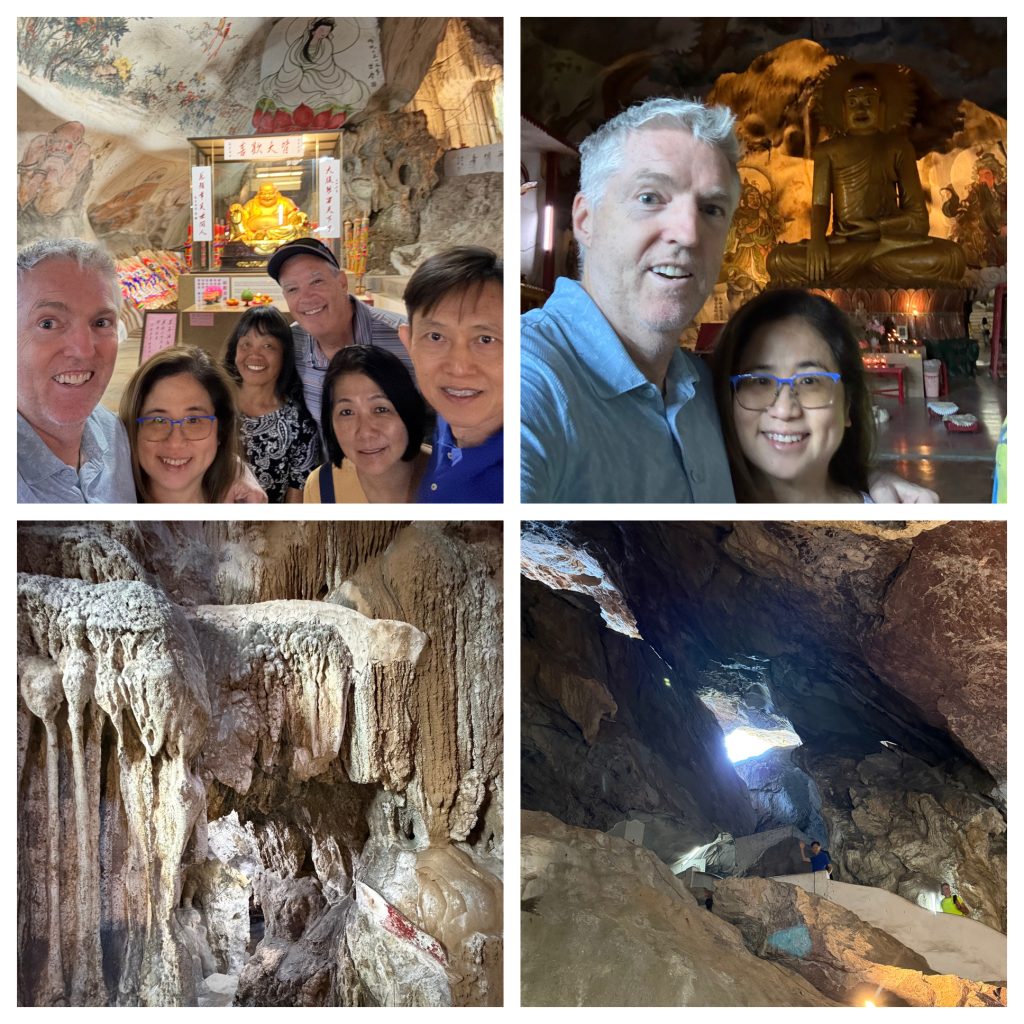
Today, it features impressive Buddhist statues—including one of Malaysia’s tallest standing Buddha figures—along with colorful murals blending Buddhist, Taoist, and other influences. Visitors can explore the cave interior and climb stairs for panoramic views of Ipoh. It serves as both an active spiritual center and a popular tourist attraction, symbolizing the perseverance of early Chinese settlers in Malaysia.
Canning Garden Food Court

Dinner at Canning Garden food court was good!
Day 6
Woolley Food Court
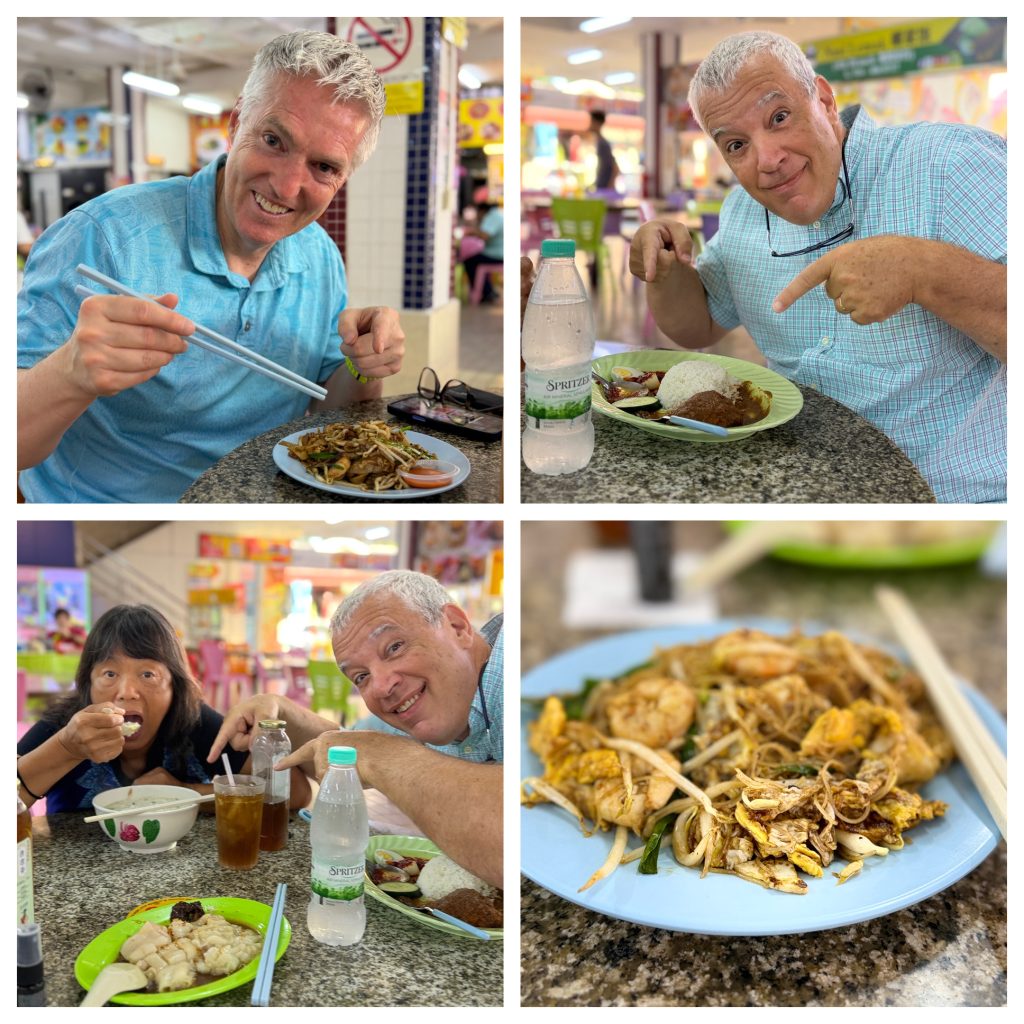
Breakfast at Woolley was amazing, their Char Kuey Teow is now our favorite. Woolley is a food court in Ipoh garden, very close to our Airbnb and the same place we used to go all the time when I was a kid. They have a wide variety of food stalls so we could each get whatever we wanted, and believe me, we took advantage of the variety and ordered a ton of different things.
Museum Ridzuan
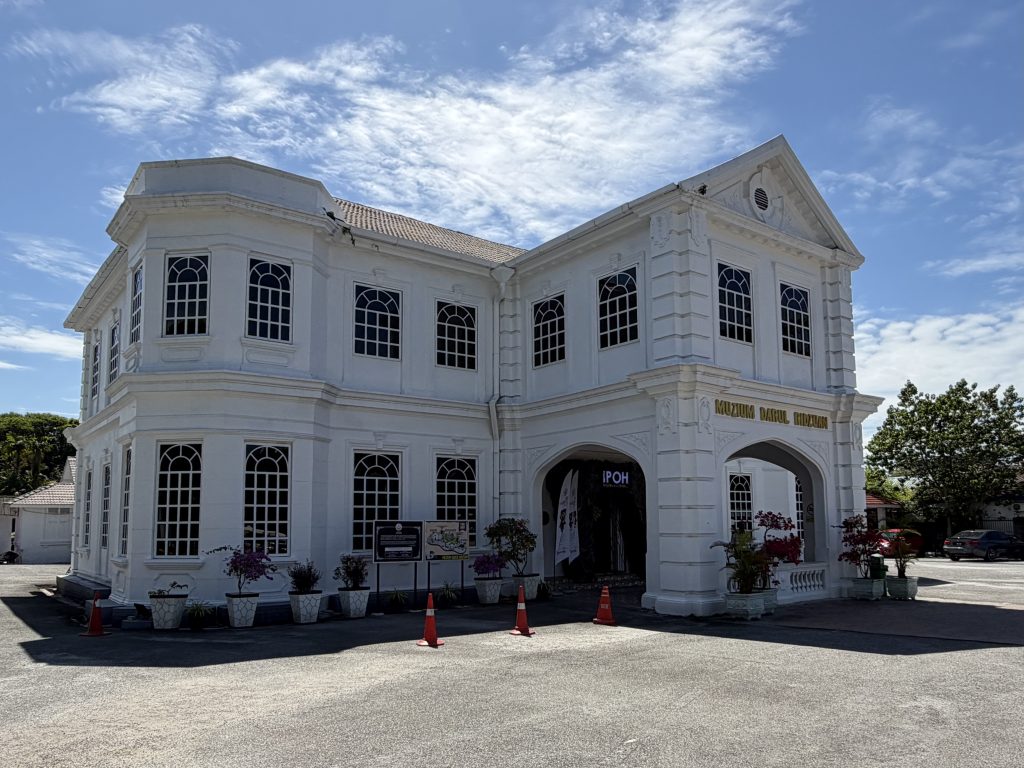
We visited the Museum Ridzuan, it was very interesting.
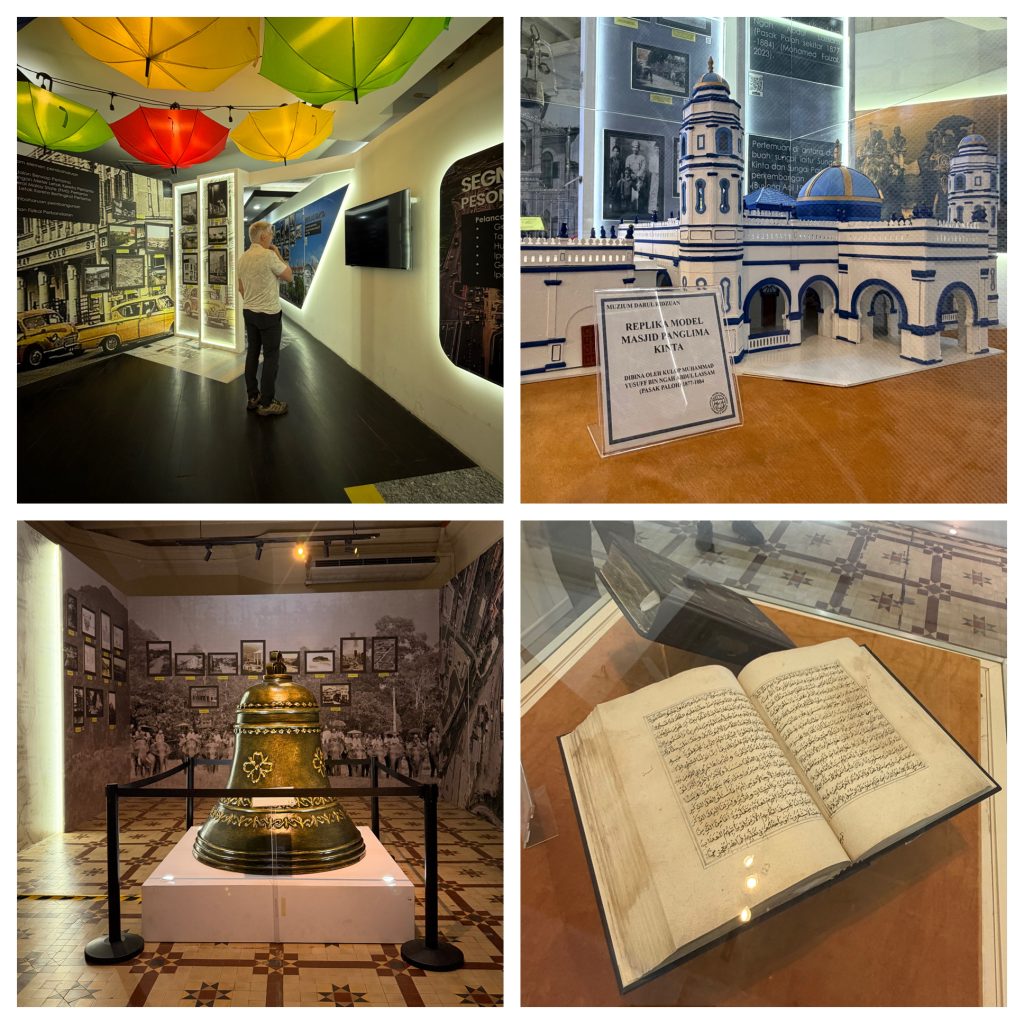
The museum includes the history of the province of Perak, including development as a result of the tin mining industry which included significant Chinese immigration into the area.
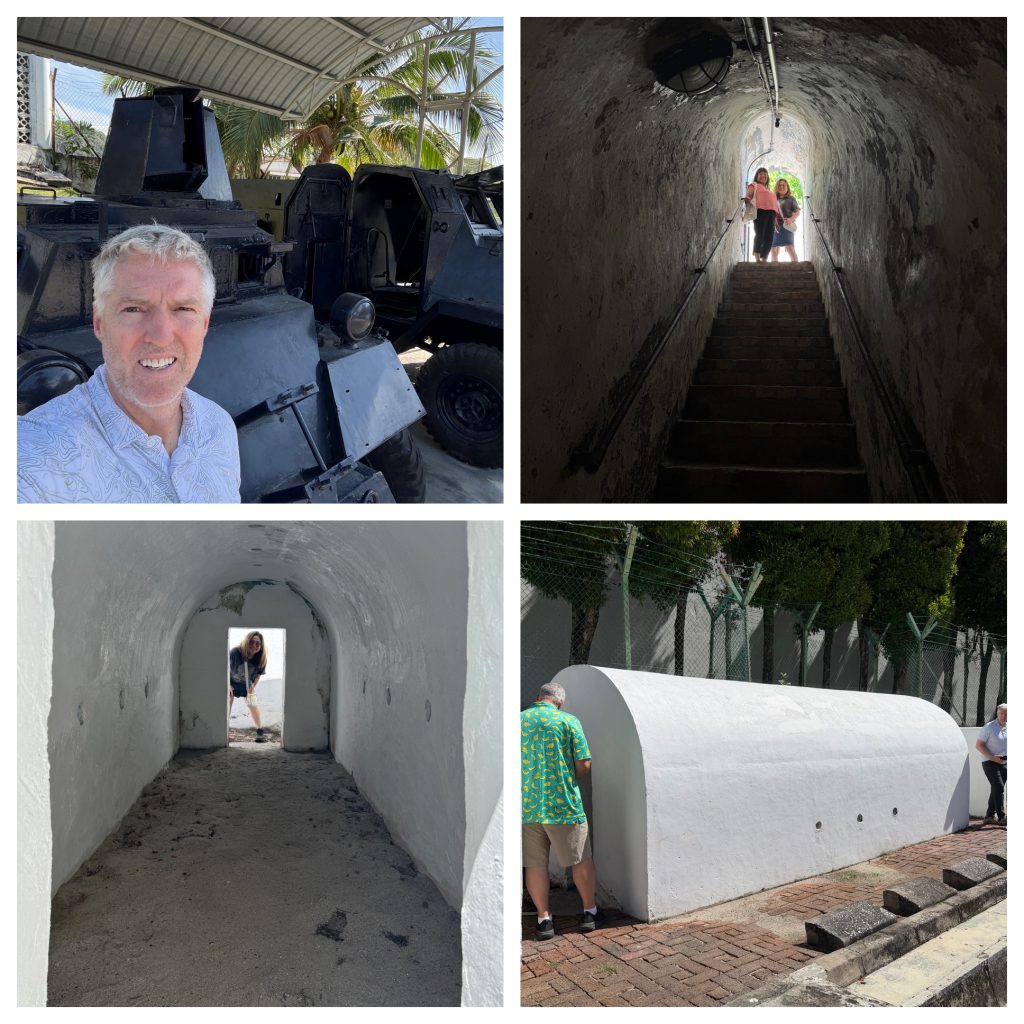
There is also a bomb shelter right behind the museum that was built right before World War II to protect from Japanese bombing runs. We went down into the bomb shelter and checked it out, pretty interesting to see, very glad we didn’t have to go through that time period.
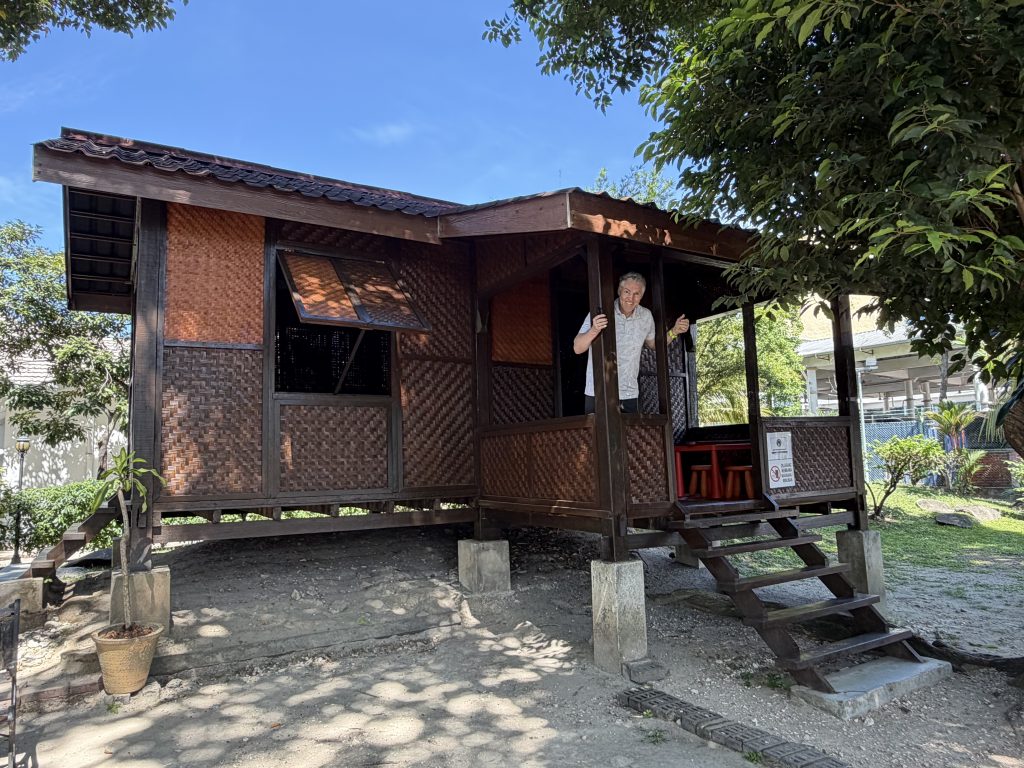
They also had a replica of a traditional Malaysian home, repeat with a number of games that kids play in Malaysia.

I imagine they have school groups that come through all the time to learn about Malaysian history and they play these games as well.
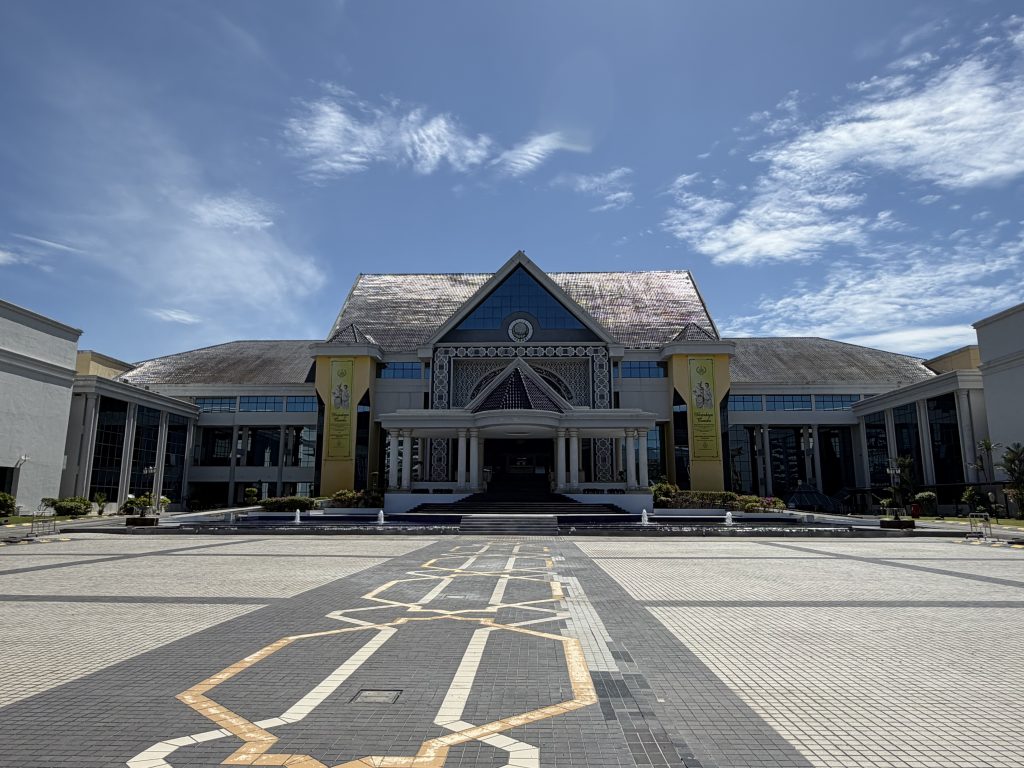
Next to the museum is the magnificent looking deputy vice minister’s office.
Ipoh Railway Station

We also visited the closely iconic Ipoh Railway Station. Ipoh Railway Station, located in the heart of Ipoh, is a historic landmark designed by British architect Arthur Benison Hubback and completed in 1917. It is also known as the “Taj Mahal of Ipoh.” Built during the colonial tin-mining boom, it continues to operate as a key KTM station for ETS and Komuter services while drawing visitors for its architectural beauty.
Day 7
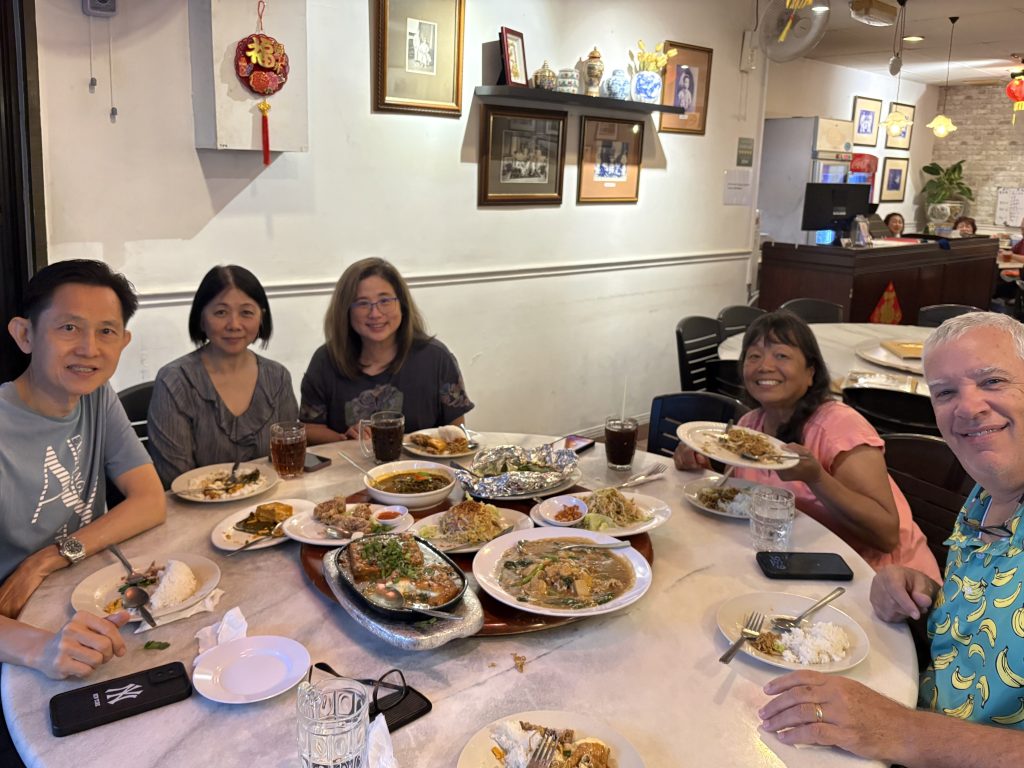
Dinner with our friends Ah Lek, Mee Peng, and the Mullens at Bee Geik, a Nyonya restaurant, was amazing.
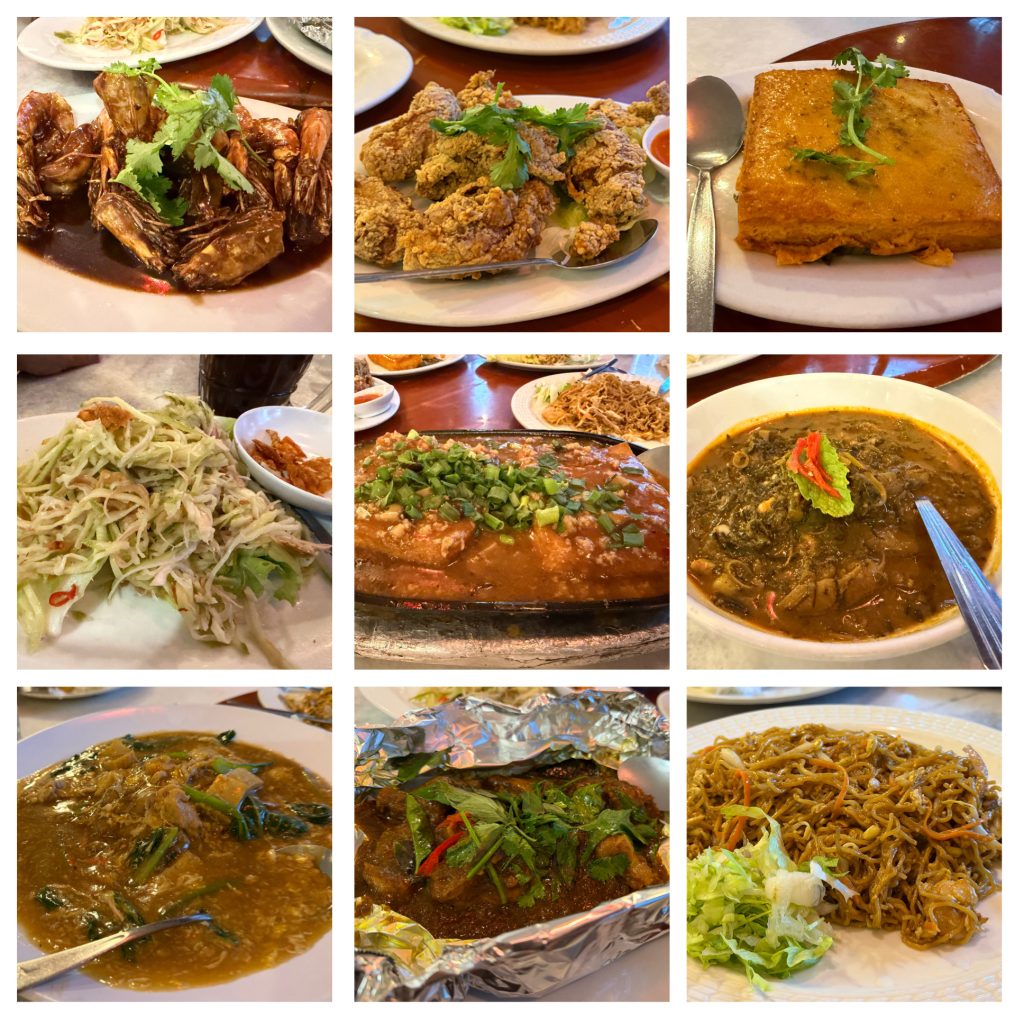
We ordered about 10 dishes and it was only about US$65. Unbelievable!

After dinner, we went to Gerbang Malam, a night market in town, the Mullens bought a knock off North Face backpack for only US$12. At least we think it was a knock off, hard to believe that price would be possible if it was legit.
It was a fun evening!
Day 8
For breakfast, we were trying our best to get some traditional Ipoh curry noodles. We had a number of different recommendations from friends and our landlord.
Majie Curry Noodles 媽姐咖哩粉

The first place we went to was the one we thought was the highest rated from all sources, Majie Curry Noodles, but unfortunately, her stall was not open today.
Xin Chuan Fang 新泉芳
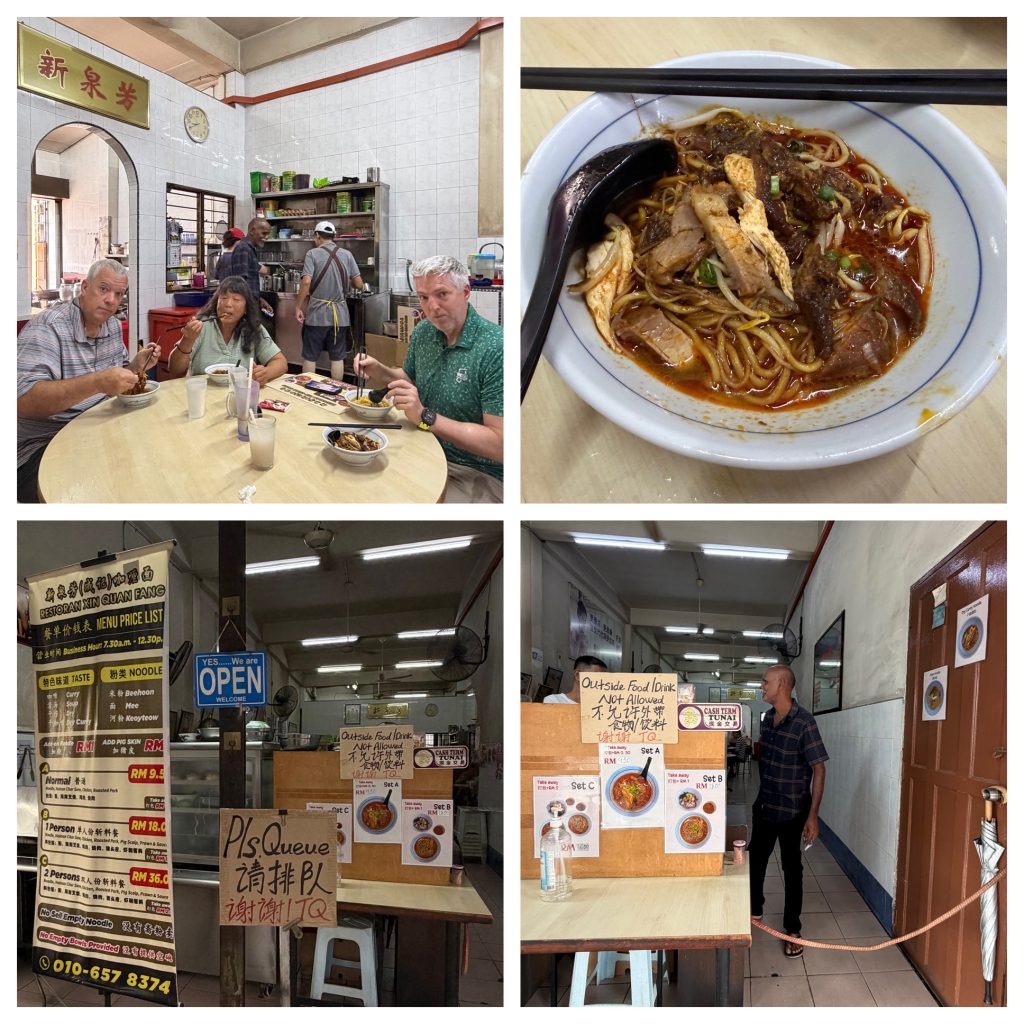
So we went to option two at Xin Quan Fang, they often have people lined up outside the restaurant for their famous curry noodles so you have to wait 30 minutes to an hour, but we hit it at exactly the right time and had no wait at all.Breakfast was really good.

We had Lunch at Ming Moon dim sum with Chiung Yao and her hubby, it was amazing! She is a good childhood friend and she and her husband are both Ipoh natives but they live further north now. They frequent this dim sum restaurant and told us it is the best in town and we definitely believe it, this is now our favorite dim sum restaurant in Malaysia.
They explained that this restaurant makes all of their own dim sum and we could actually see into the kitchen where it was all being freshly prepared. They said that many of the other dim sum restaurants around town just purchase prepared dim sum from a different place and then heat it up, which is why it doesn’t taste quite as fresh, which also brings true with us based on some of the other places we had been to. This is definitely the place to hit for authentic Chinese dim sum in Malaysia.
1919
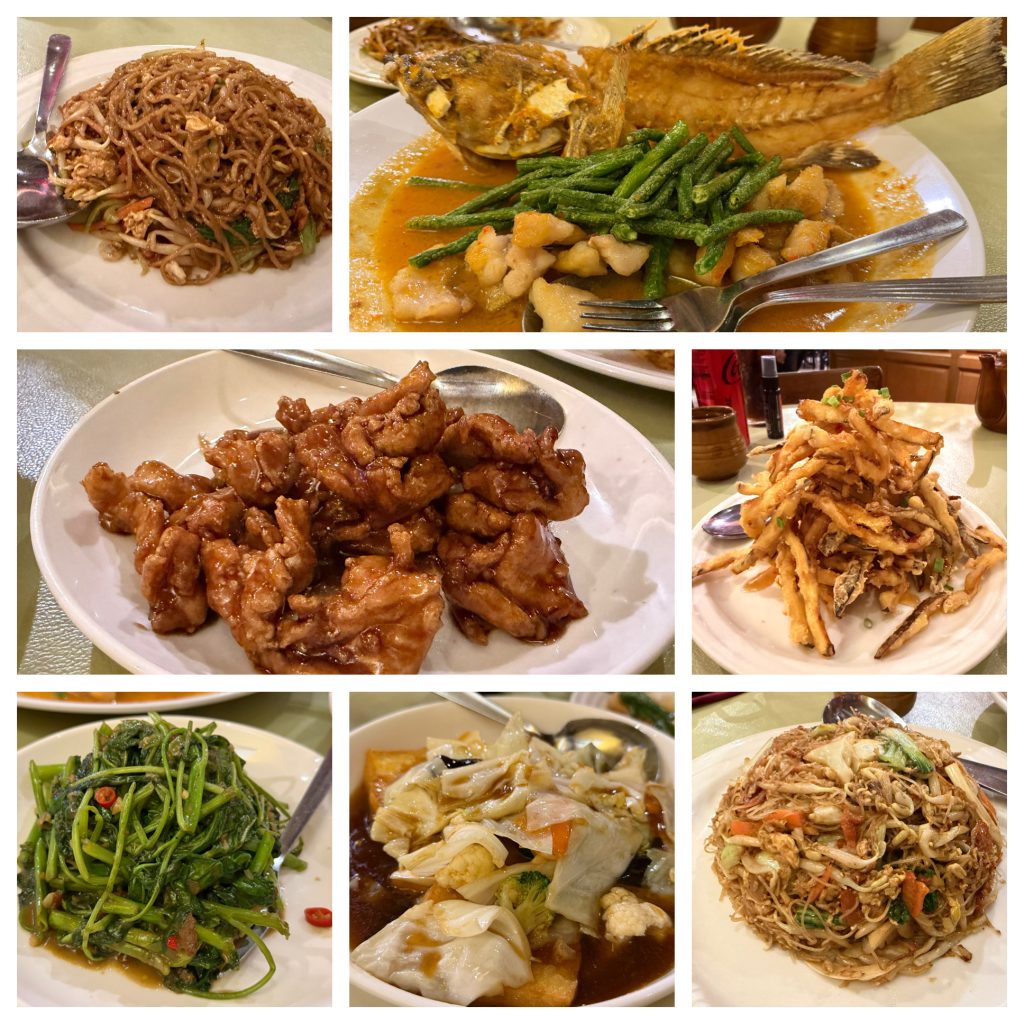
For dinner, we went to a restaurant called 1919, which is another Nyonya restaurant in Ipoh, introduced to us last year by our good friends the Tans. Nyonya is a Malaysian culture reflecting a group that was formed when Chinese immigrants moved to Malaysia in the 16th century and intermarried with local Malays, forming the Nyonya demographic/culture. They have wonderful food and clothing and this was our second night eating Nyonya food, it was even better than last night. Amazingly tasty!