 Swan Bradshaw
Day 1
Sea day, crossing international date line, gained a day!
Day 2
American Samoa
American Samoa is made up of 5 islands and 2 atolls. Evidence of inhabitants dates back about 3500 years. A few countries including the US sought to control the Samoan islands and in 1900 the US gained control of the part which is now called American Samoa.
American Samoa is an unincorporated territory of the US. American Samoa citizens are considered US nationals but without the right to vote in US elections.
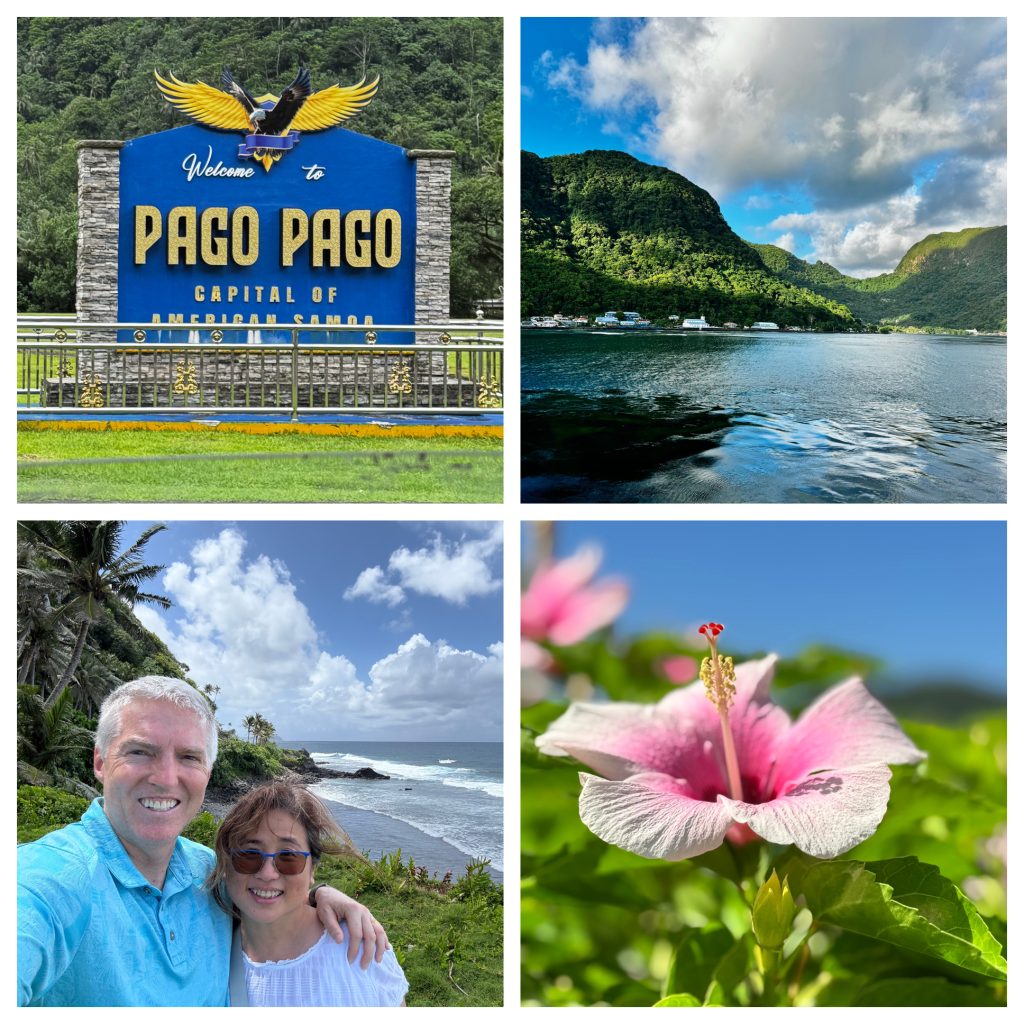
We docked at Pago Pago, the capital of American Samoa, located on Tutuila Island. The day before was interesting – we passed the international date line so we experienced Thursday twice in the same week!
Pago Pago (pronounced Pango Pango) was a great little harbor town with around 13,000 people. The island is about 98% Christian and dressing modestly is highly recommended. It’s got a deep, sheltered bay, very narrow entrance so it was interesting to see a 1,000 foot cruise ship navigate in and out.
The port is right next to downtown, on the way out we talked to a few different cruise/car operators, but none of them felt right until we met this middle-aged Samoan man wearing a traditional lava-lava who greeted us with a warm “Talofa” (hello) and a big happy smile. We negotiated the price for a tour to the places we wanted to see and we were off!
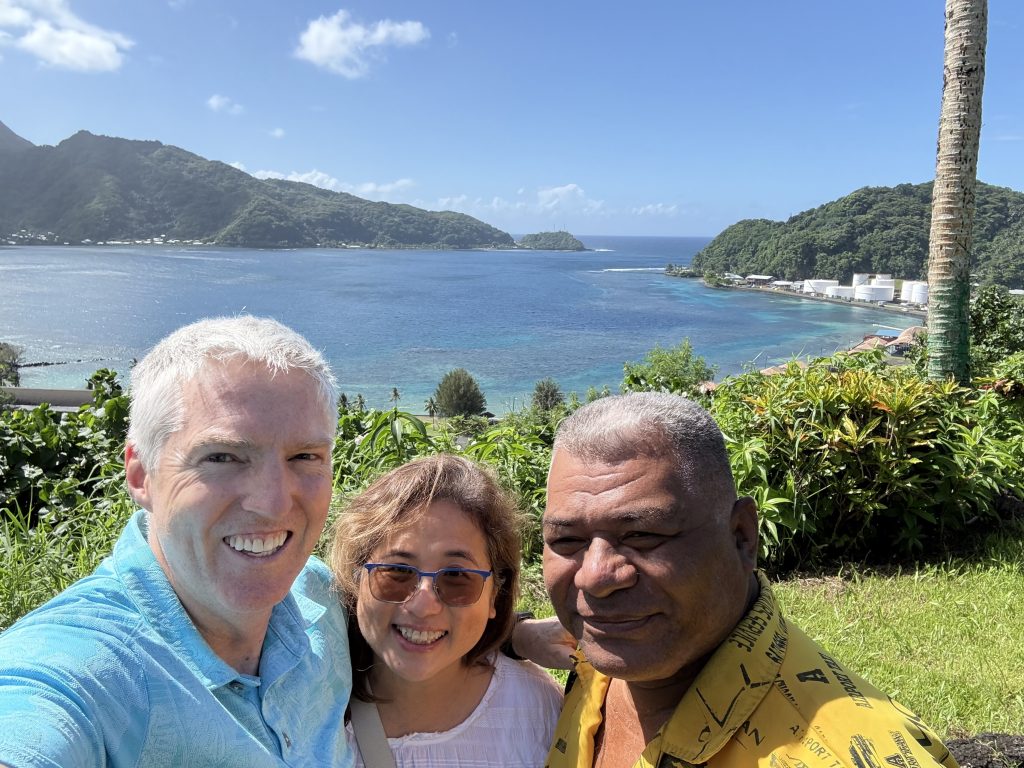
Our taxi driver’s name was Etuale and within the first 5 minutes he asked us our religion and when we told him we were members of the Church of Jesus Christ of Latter-Day Saints, he said he thought that was the case and that he was also a member of our church.
He was a great guide, originally from Samoa but moved to American Samoa over 20 years ago. He was very eager to share stories about the Samoan history, culture, and natural beauty.
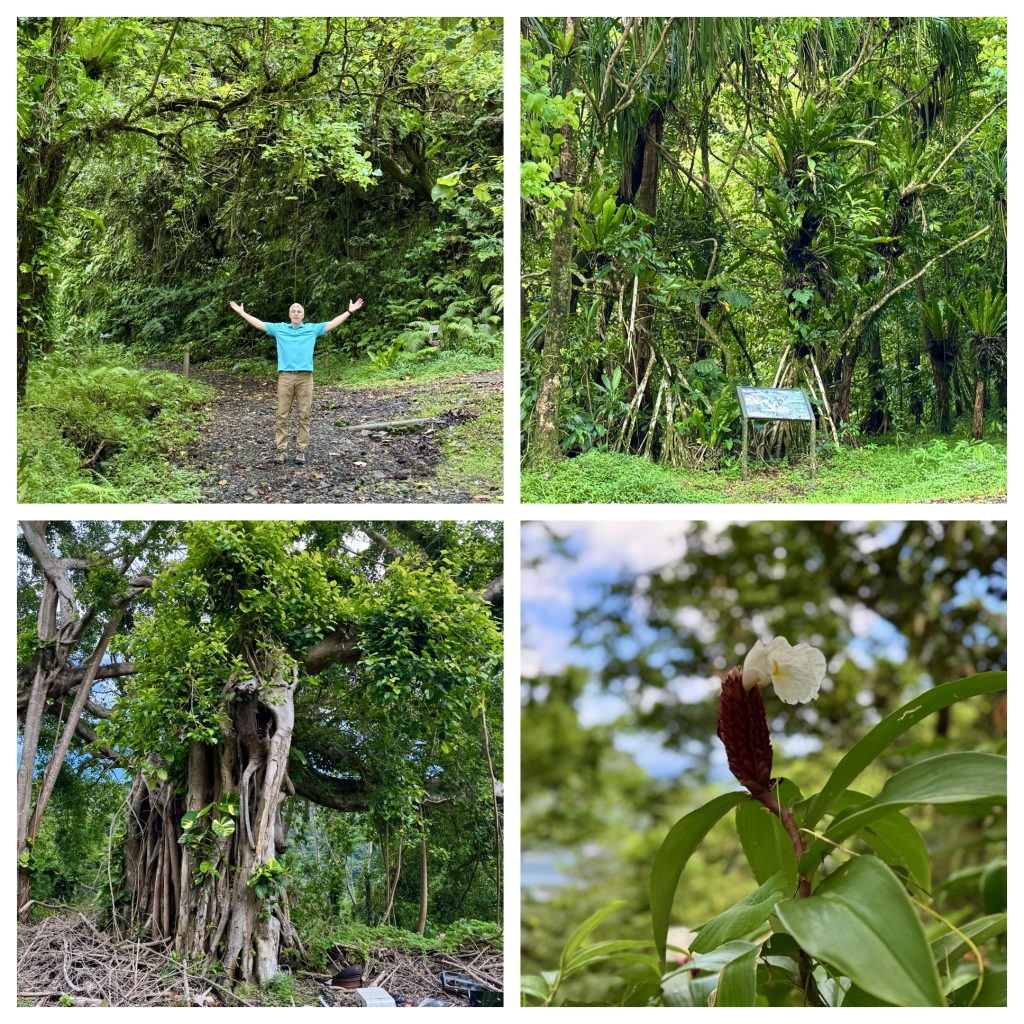
First stop was the National Park of American Samoa, lush rainforests and villages. Etuale pointed out traditional Samoan fale (open-air houses) and explained the island’s volcanic origins. This National Park is the only U.S. national park south of the equator and preserves coral reefs, rainforests, and Samoan cultural sites.
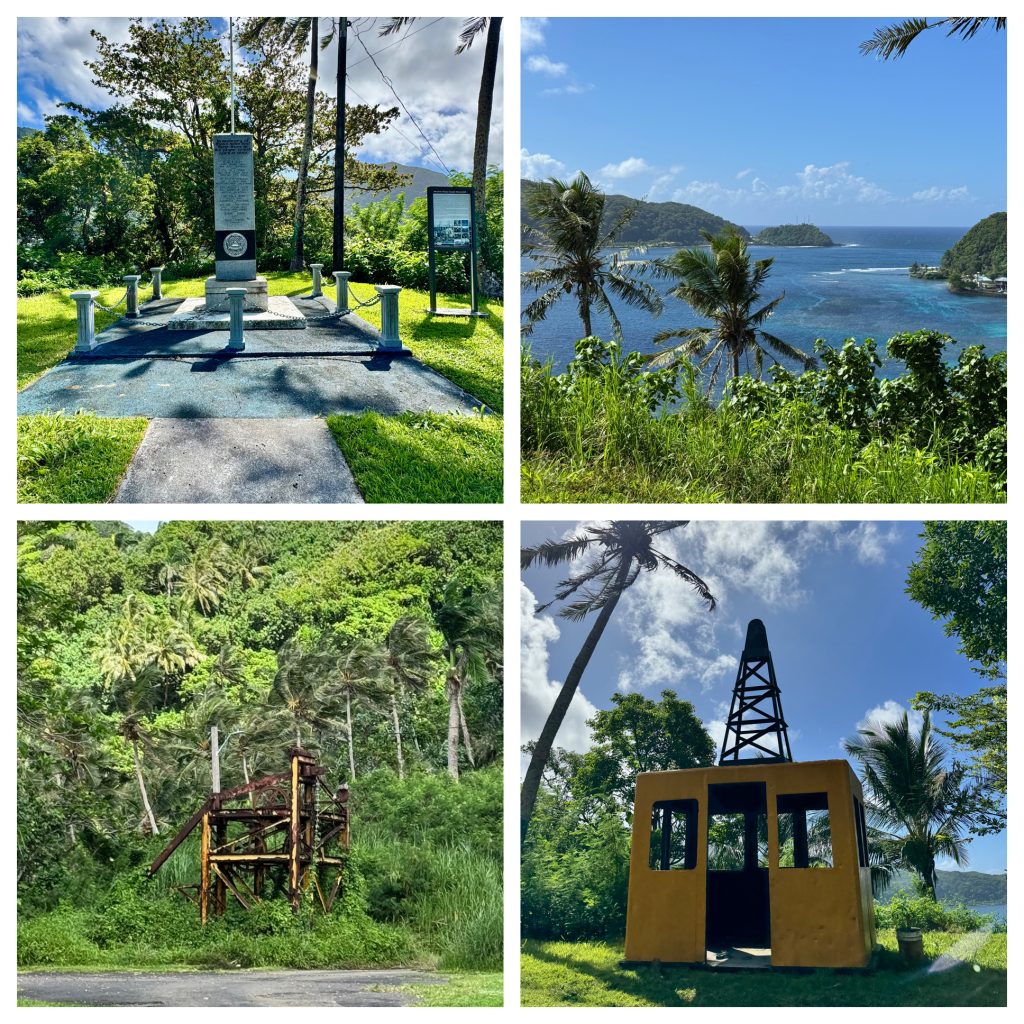
Our visit included a stop at an air crash memorial in Utulei, commemorating a tragic accident in 1980 when a U.S. Navy plane crashed during Flag Day celebrations, killing six servicemen and two tourists after clipping a cable car cable spanning the harbor. The stone memorial is on Solo Hill, up a steep, narrow road.
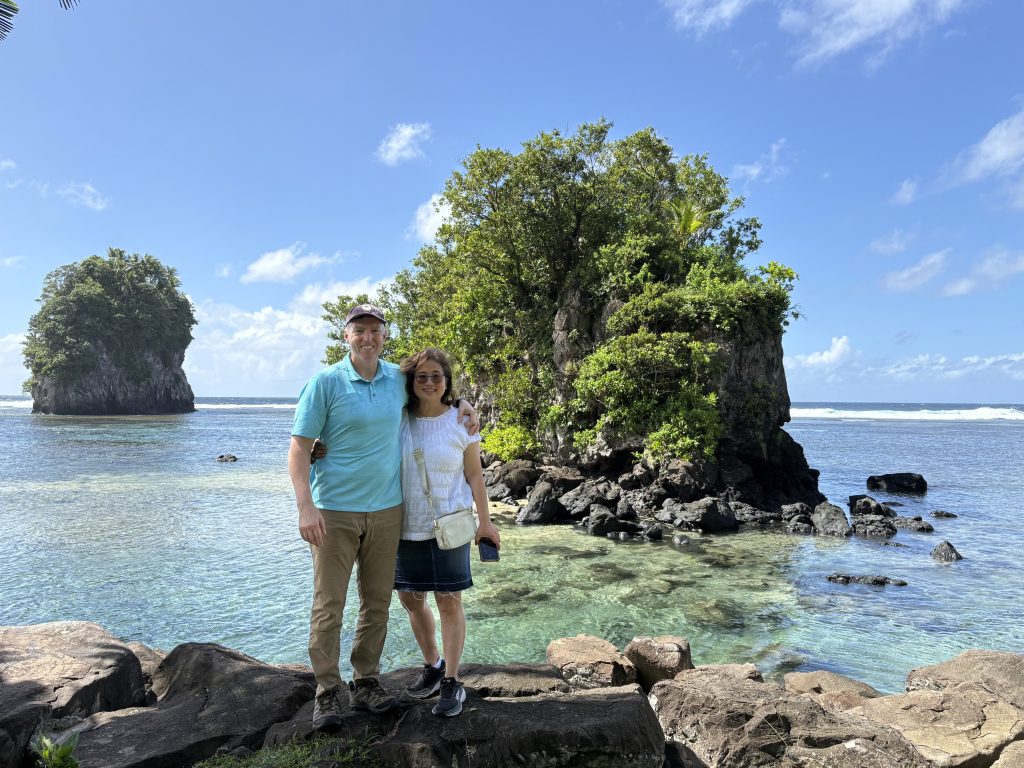
We also stopped at the Fatu Ma Futi Islands, a pair of dramatic, tree-topped rock formations in Pago Pago Harbor, visible from the road. Etuale shared the Samoan legend that a couple (Fatu and Futi) swam from Samoa and were attacked by a shark, forming these islands when the lovers died and were transformed into stone.
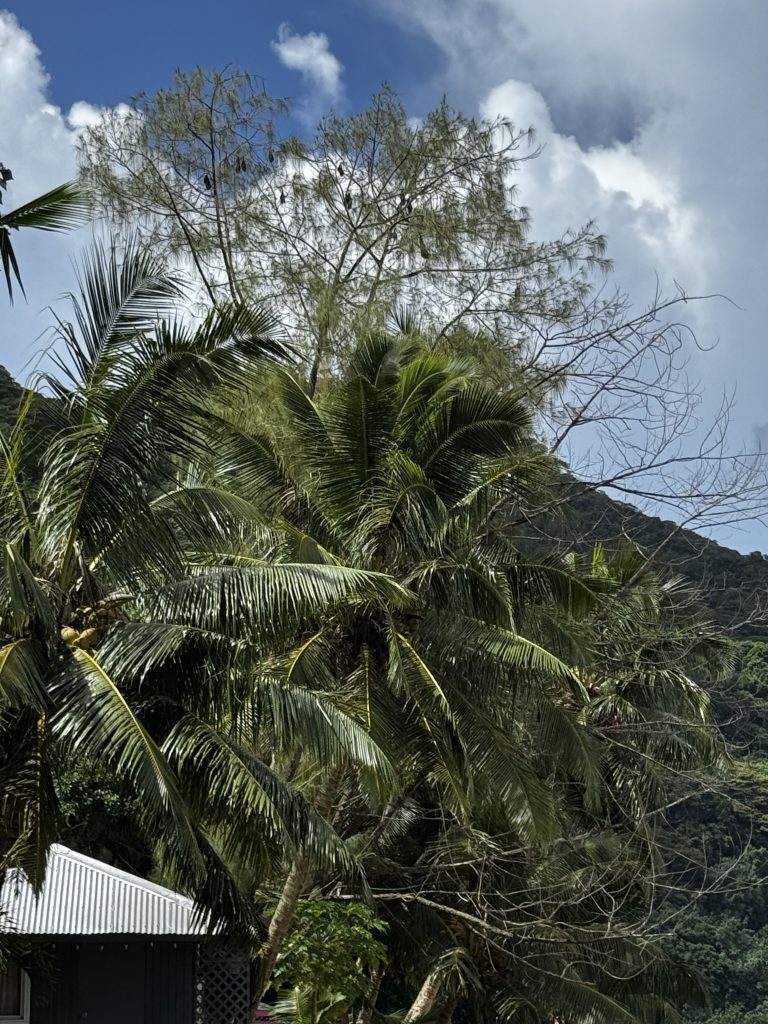
Here and elsewhere on the island, we saw a bunch of fruit bats and also hermit crabs, also stunning views of the Pacific. Fruit bats play an important role in the ecosystem as they fill a critical pollination role.
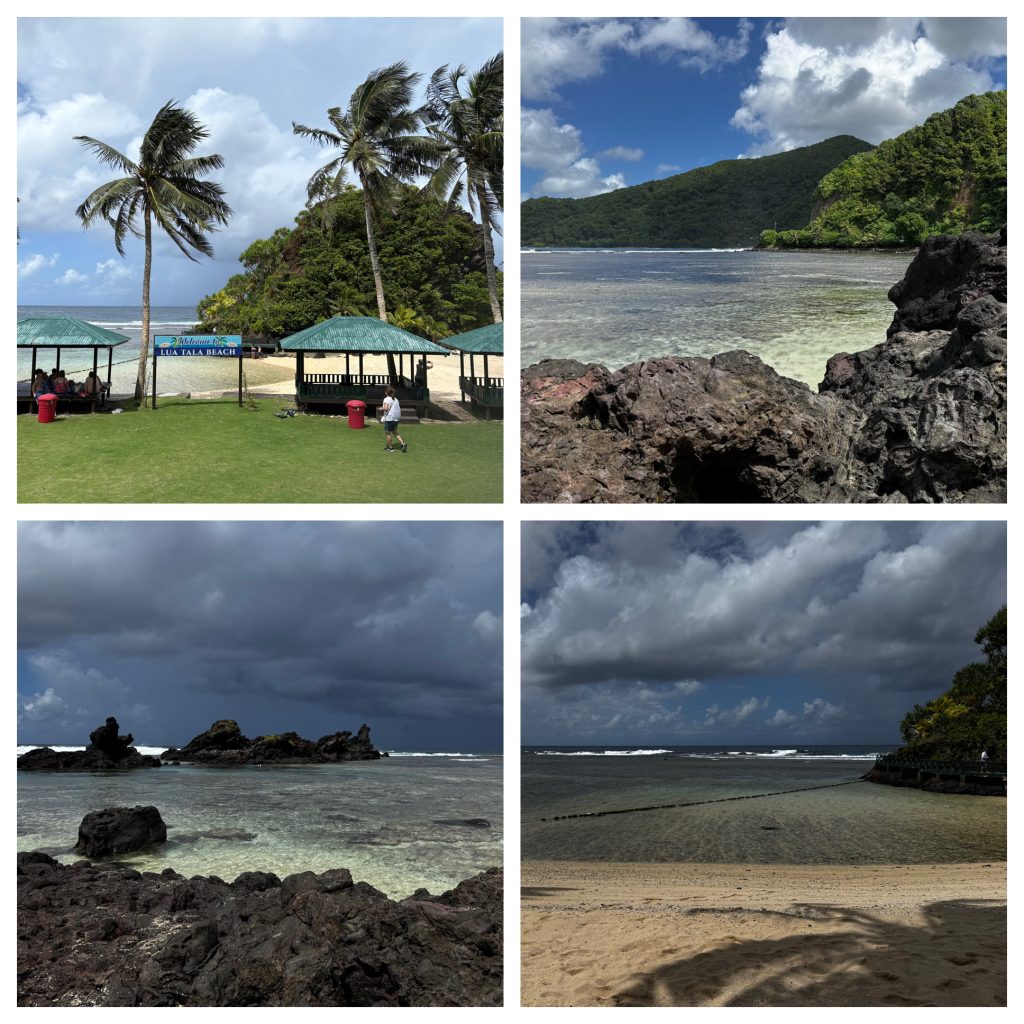
Then we visited Two Dollar Beach, a nice little beach, used to be a $2 entry fee (hence the name) but inflation has also hit Samoa and it’s now $5, paid to the local community group that owns the beach spot. you have to pay the five dollars even if you are just there to take pictures and not sunbathe or swim!
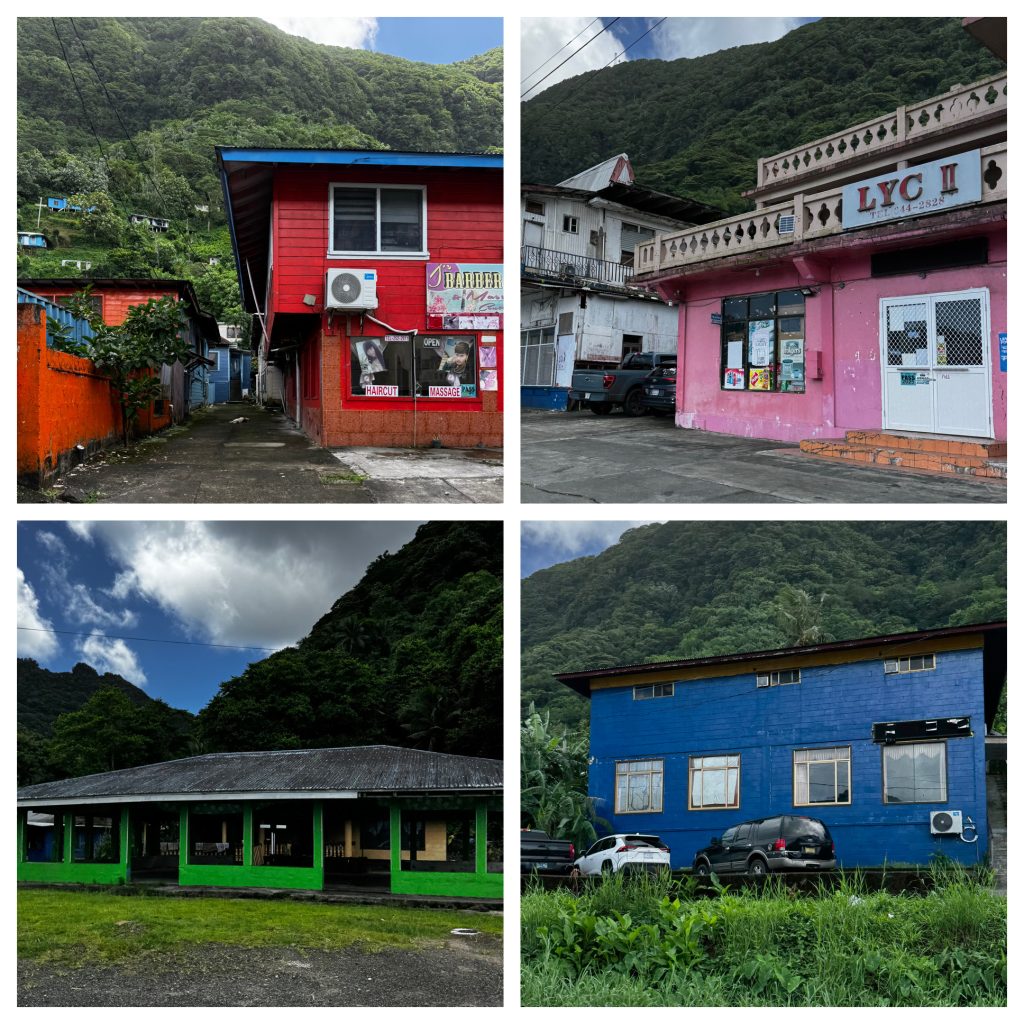
The houses in American Samoa are painted in vibrant colors. Many Samoans bury their deceased relatives right in their front/backyards. We passed many traditional Samoan houses and gardens, a fale, a great memorial site and also a wonderful scenic view of Pago Pago Harbor.
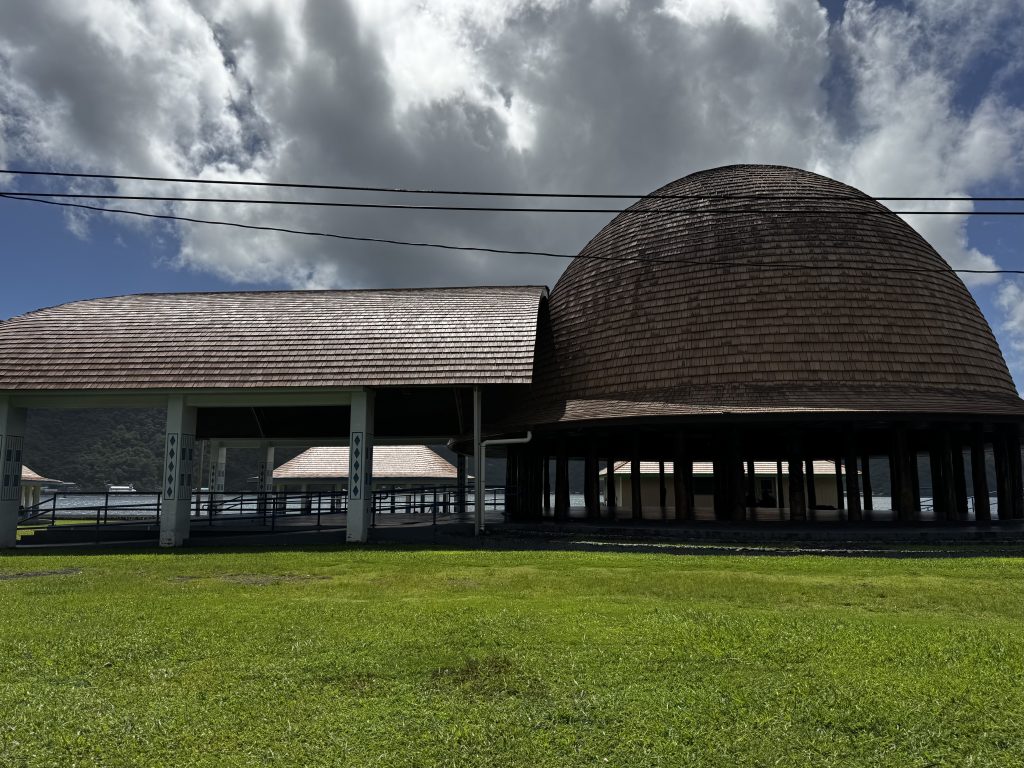
Great sights, but the highlight was really the chance to meet a new friend in Soi Etuale, who embodied Samoan hospitality and a deep love and connection to his heritage.
Day 3
All day at Sea!
Had a 75 minutes Swedish massage.
Day 4
All day at sea!
Walked well and felt great after the massage. Definitely improved mobility.
Walked around deck 3 in the morning before lunch for 3 laps equivalent to 1 mile in faster pace than I usually do. My left knee started to hurt… felt like a pinched nerve.
Had my hair colored and a blowout! Loved it!
Day 5
All day at sea!
9:30am Swedish massage for 75 minutes.
Day 6
All day at sea!
Day 7
All day at sea!
Day 8
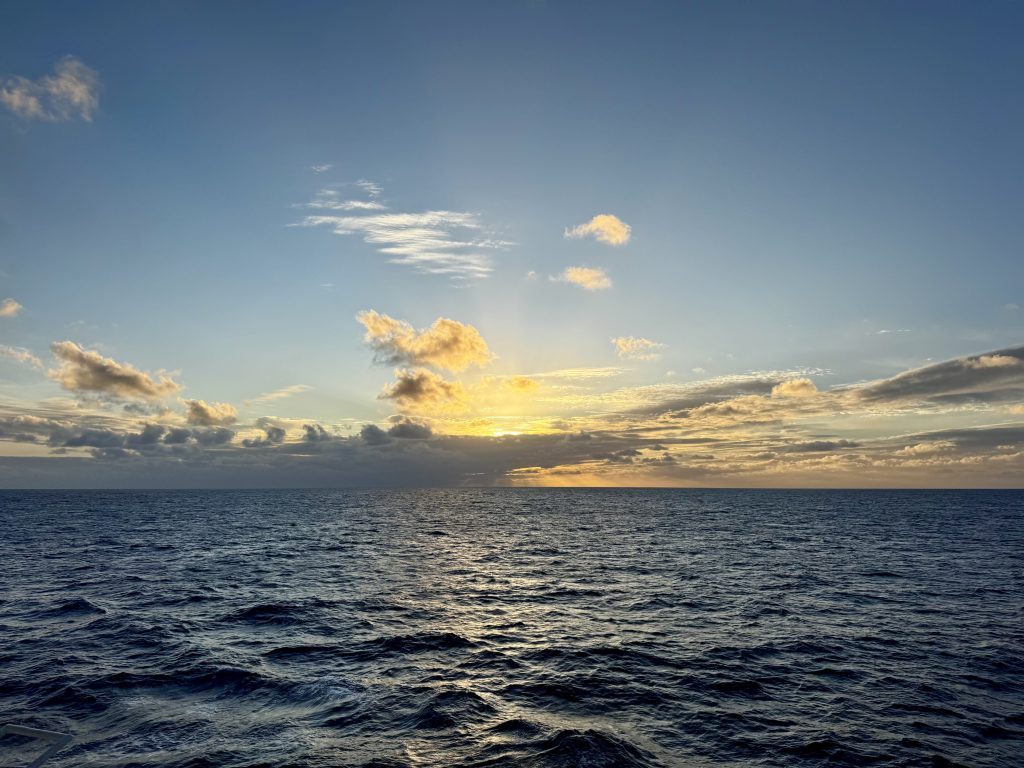
All day at sea! Beautiful sunset!
Day 9
Hilo
We stopped in Hilo today. Since this is the first port of entry in the US, we had to go through the US immigration check in the ship before heading out on our excursion. easiest immigration stop I have ever been through, Kevan flashed our passports, the officer took a quick glance and motioned us through, no words, no questions, took about five seconds.
We had a great day exploring the Big Island! Tons of geological wonders and cultural heritage. Our tour guide, Hannibal, from C Big Island Tours was amazing with deep knowledge of geology, Hawaiian history/language/culture, and engaging storytelling (and jokes). We visited Waiuli Beach (Black Sand Beach), Waianuinui (Rainbow Falls), Moana Chocolate Factory, 3 iconic spots at the Hawaii Volcanoes National Park (Kilauea), and the Nāhuku (Thurston) Lava Tube.
The Big Island is the largest Hawaiian island, over 4K square miles—more than twice the size of all the other islands combined. But population is only 200K, way less densely populated than Oʻahu or Maui. Hilo has about 45,000 residents, rainy climate, historic architecture, and strong Native Hawaiian identity. The Big Island was the historical seat of King Kamehameha I, who unified the Hawaiian Islands in 1810 after battles on this island.
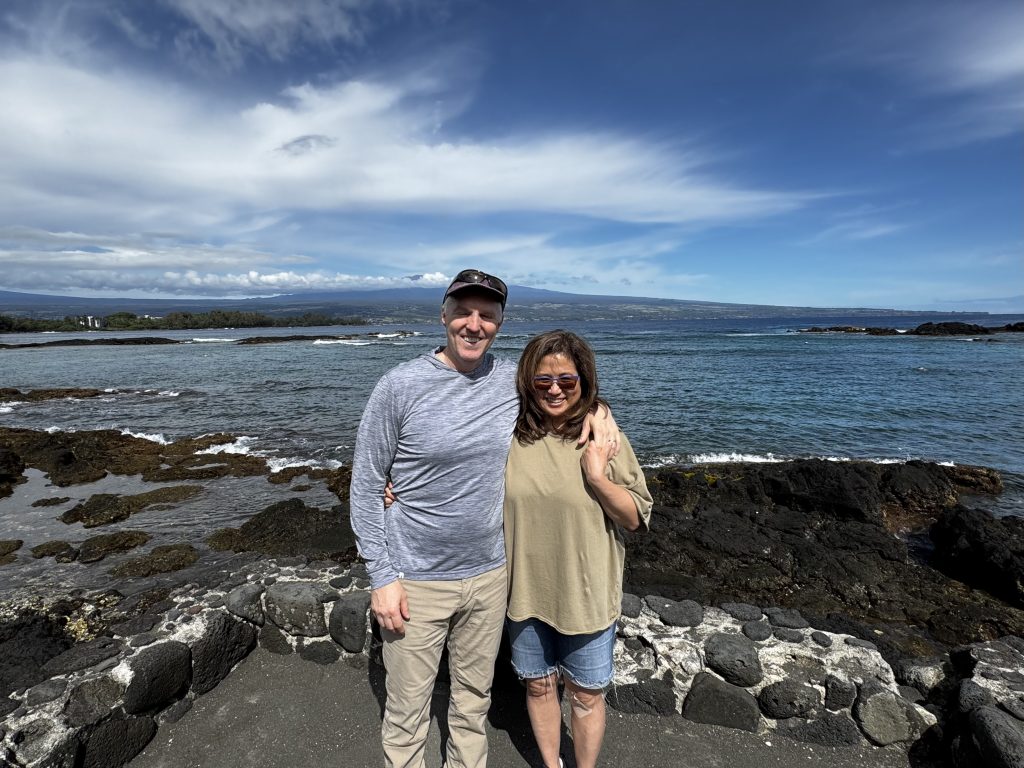
Waiuli Beach
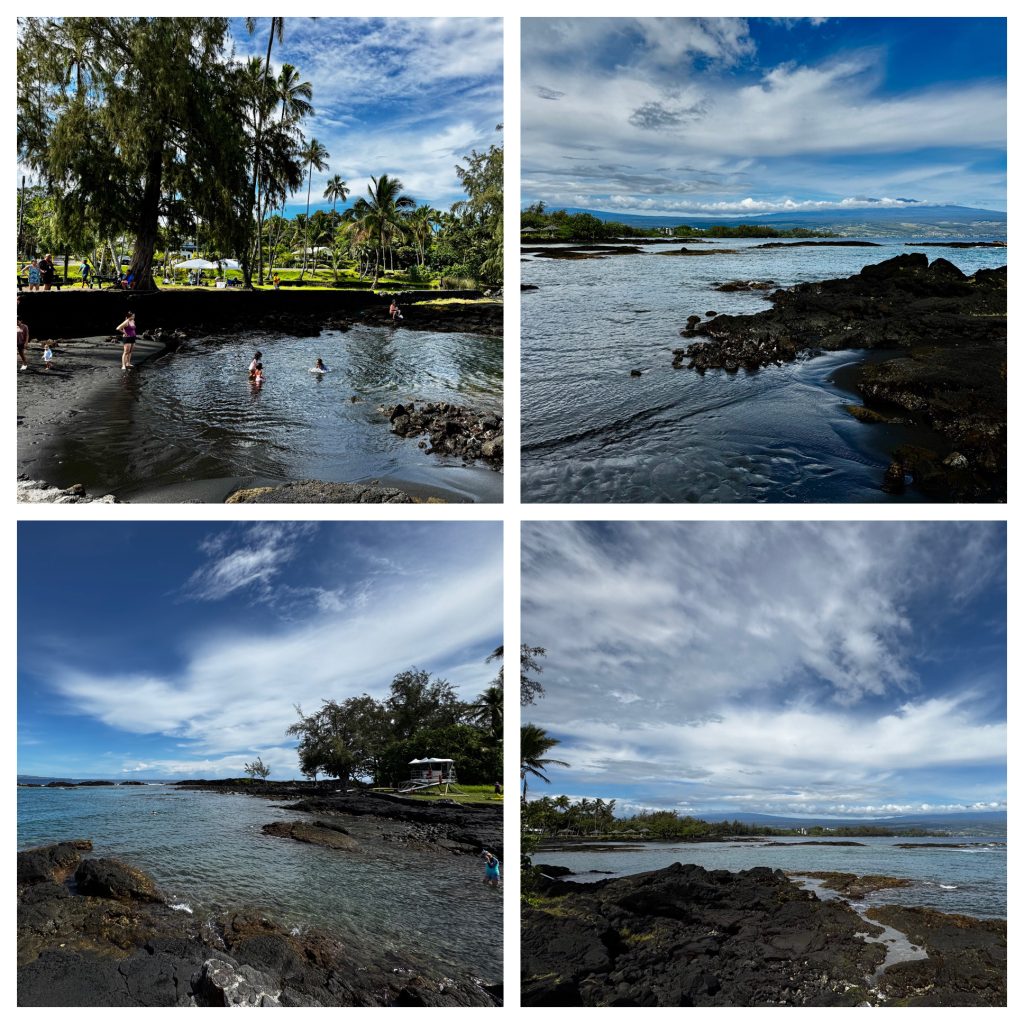
Formerly known as Leleiwi Beach Park, also known as Richardsons Beach Park, this beach is covered with black sand from rock erosion and sediment. It is located southeast of Hilo with ponds, inlets, and coves. It has a small beach and a swimming area where young children were playing in the water.
Richardson Visitors Center
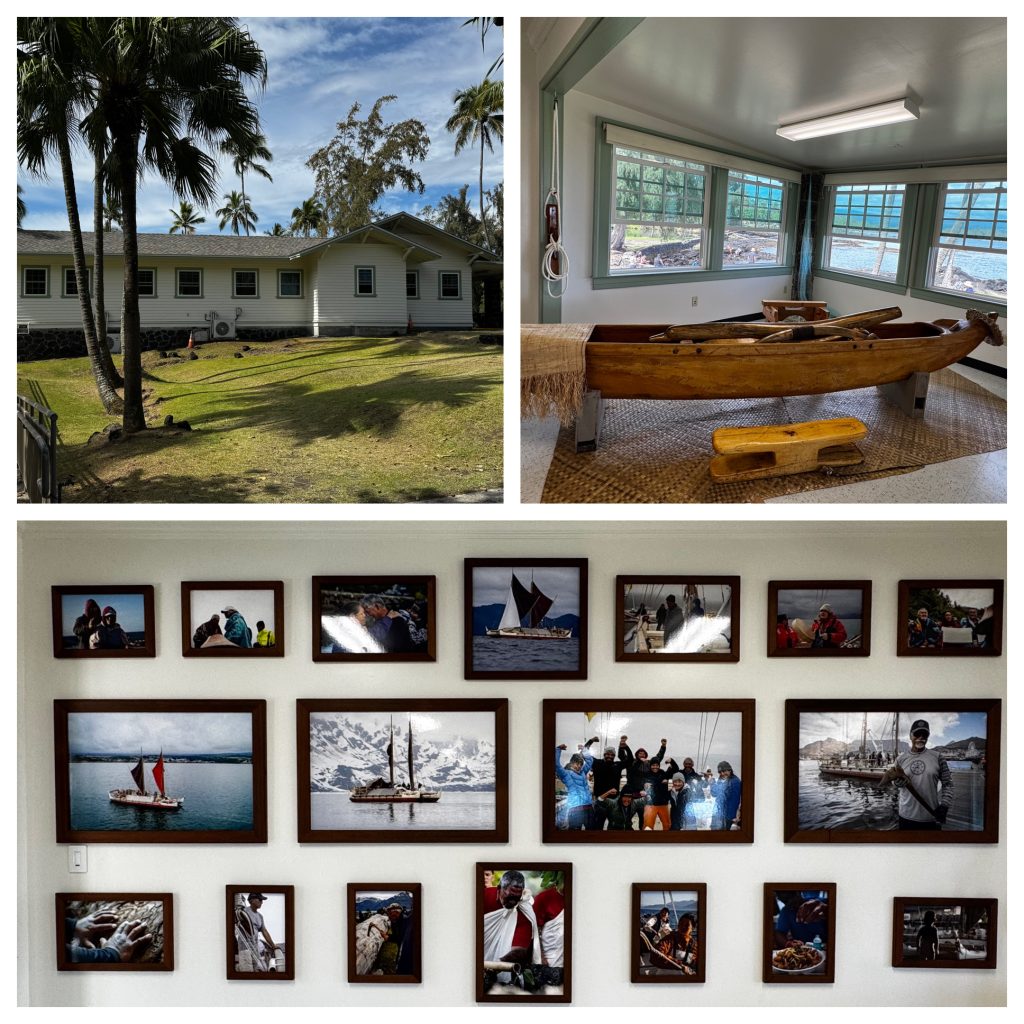
This area was originally inhabited by the Malo family. In 1923, the Malo family, David, Lucy, and their 6 children, were stricken with typhoid fever. Lucy managed to walked to George Richardson’s home to seek help. Richardson immediately took his boat to pick up the rest of Malo family and took them to the hospital in Hilo. Unfortunately, while the rest of the family recovered from the illness, one of the children did not make it. Richardson continued to care for the Malo family, bringing medicine and providing other assistance after that. The Malo family in return allowed Richardson to build on the property. Lucy even helped decide the house location in order to provide for high tides and tsunami resistance.
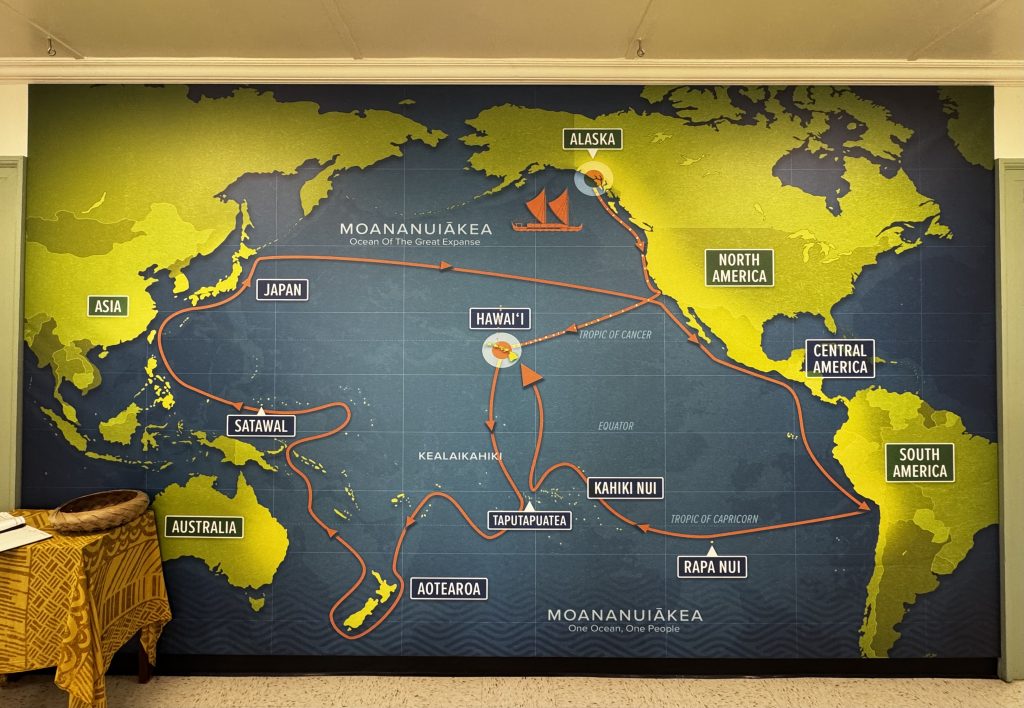
The home is now a museum, largely dedicated to the voyage of the Hokulea , which is a traditional Hawaiian sailing double-hulled canoe, kind of like a catamaran. The Hokulea was built in 1975 in order to demonstrate that the Hawaiians were able to navigate from Tahiti using only the stars. The maiden voyage of the Hokulea was over 2500 miles from Hawaii to Tahiti and was completed in a little over 30 days with only wind power, and the ability to chart a course using the stars, no technology or instruments of any kind. Since then it has returned to Hawaii in a little over 20 days and also circumnavigated much of the globe using the same techniques, principally, using the stars, swells, and birds. It is believed that the Polynesians migrated from Tahiti to Hawaii over 1500 years ago. Fascinating!
Japanese Garden
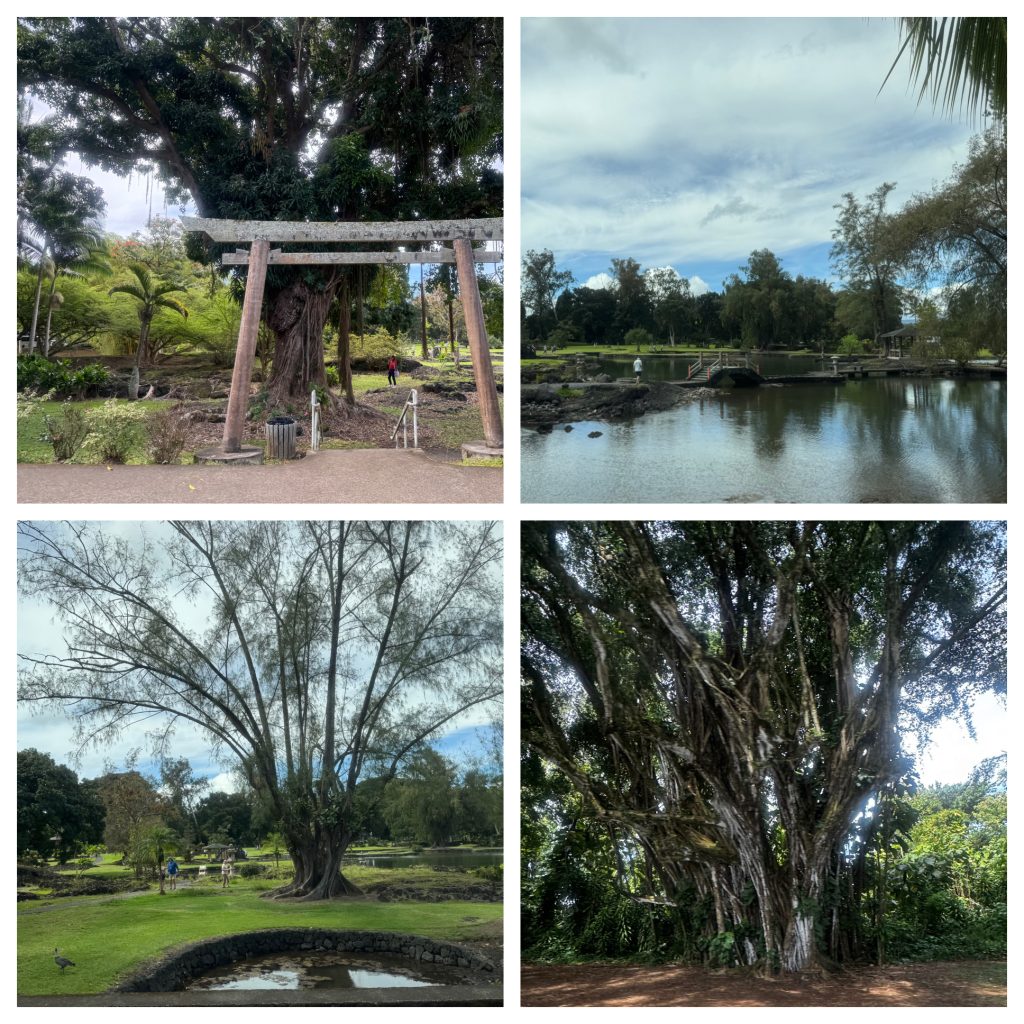
We also passed by a Japanese Garden with an old torii gate still standing strong.
Rainbow Falls
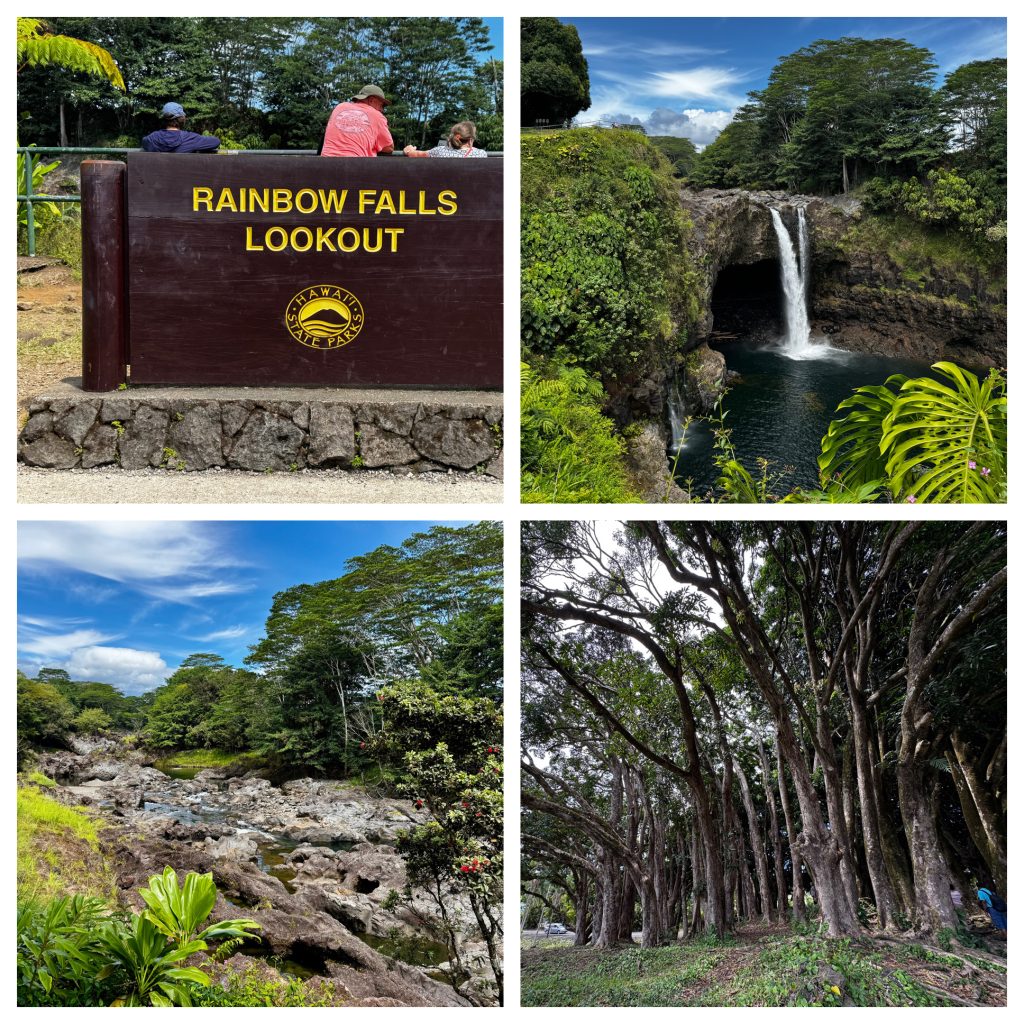
This is an 80-foot waterfall on the Wailuku River, not huge, but very beautiful. There are nice pools up top and down below as well.
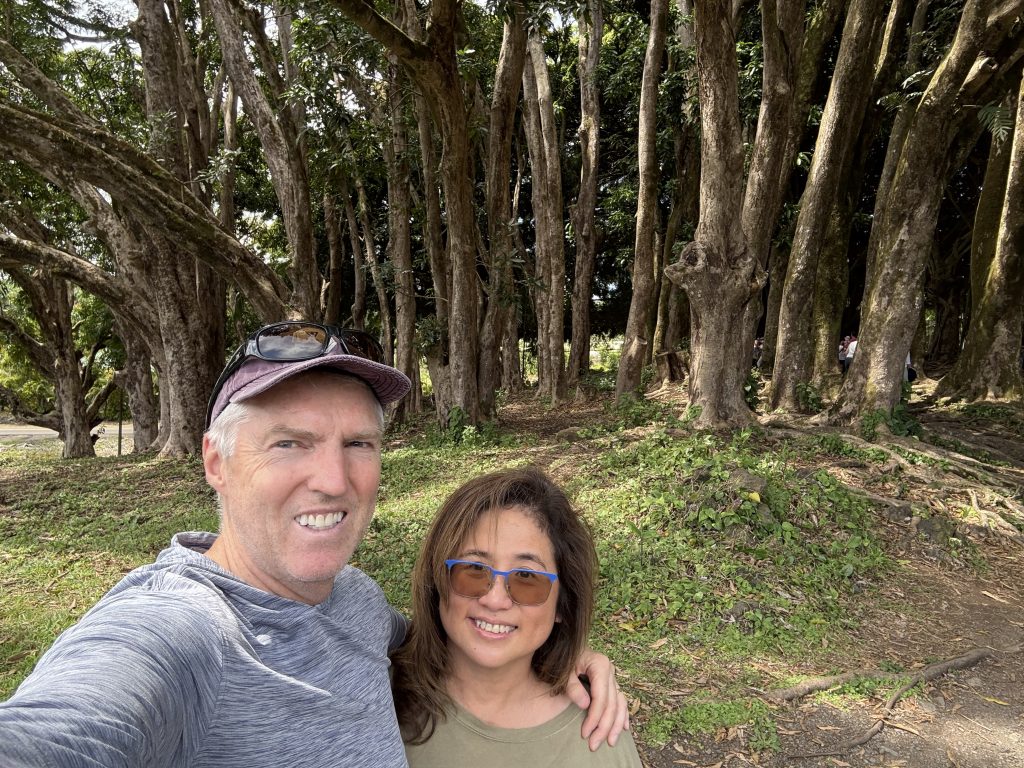
The falls were also carved by volcanic activity and erosion and are surrounded by banyan trees and ginger.
The Wailuku River means “waters of destruction”. In Hawaiian legend, the falls are tied to Hina, mother of demigod Maui, the cave beneath the Falls is said to be her home, guarded by a Mo’o (lizard spirit).
Moana Loa Chocolate Factory
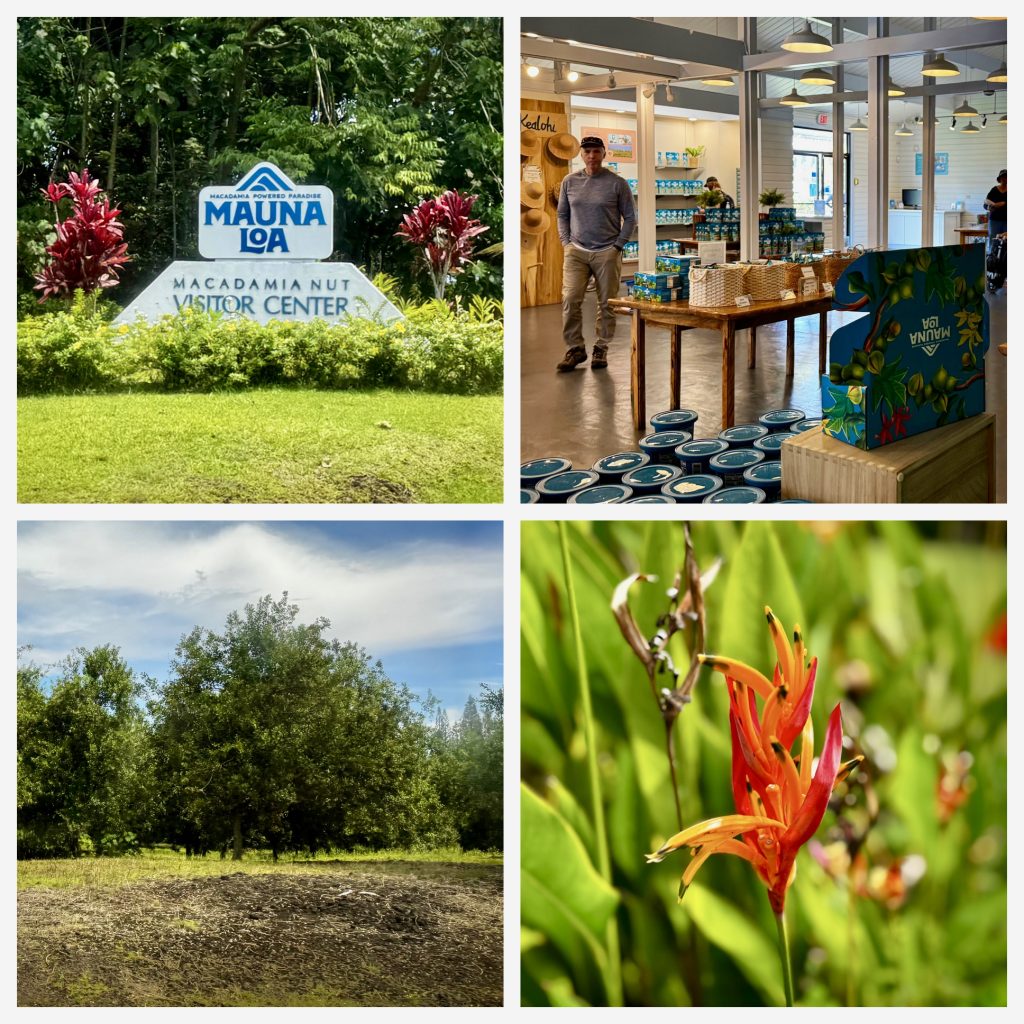
We visited the macadamia nut factory outlet and had lunch there. We were told that the chocolate sold at the factory is cheaper than Costco but the sandwiches we bought, though tasty, were definitely at an inflated price! Rows of macadamia trees stood steadfastly in the plantation adjacent to the factory with a nice little “Moana Walk” adorned with beautiful flowers and foliage for visitors to enjoy. Who knew that it took over 10 years for a macadamia nut tree to mature and begin producing, and that one tree typically produces 50–150 pounds of nuts in husk per year, and based on production yield this translates to 15 pounds of nuts.
Hawaii Volcanoes National Park
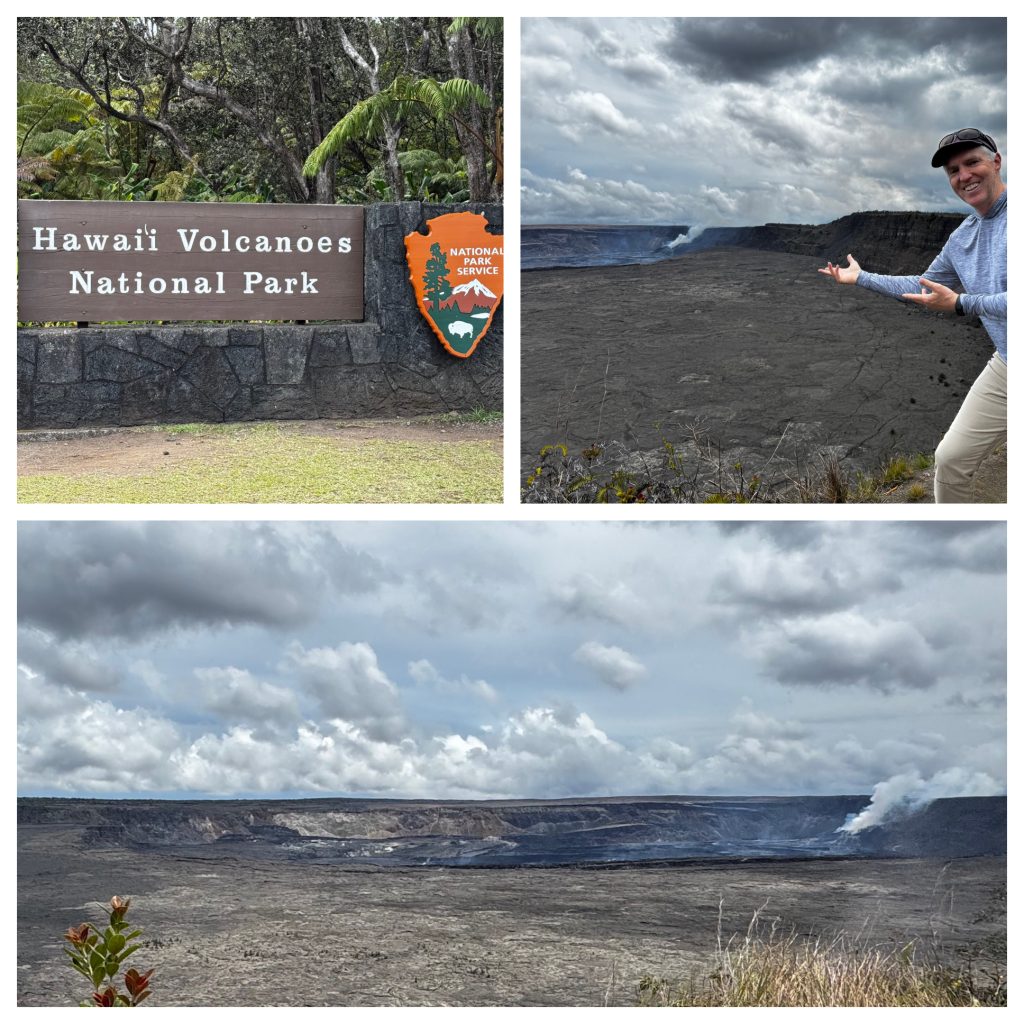
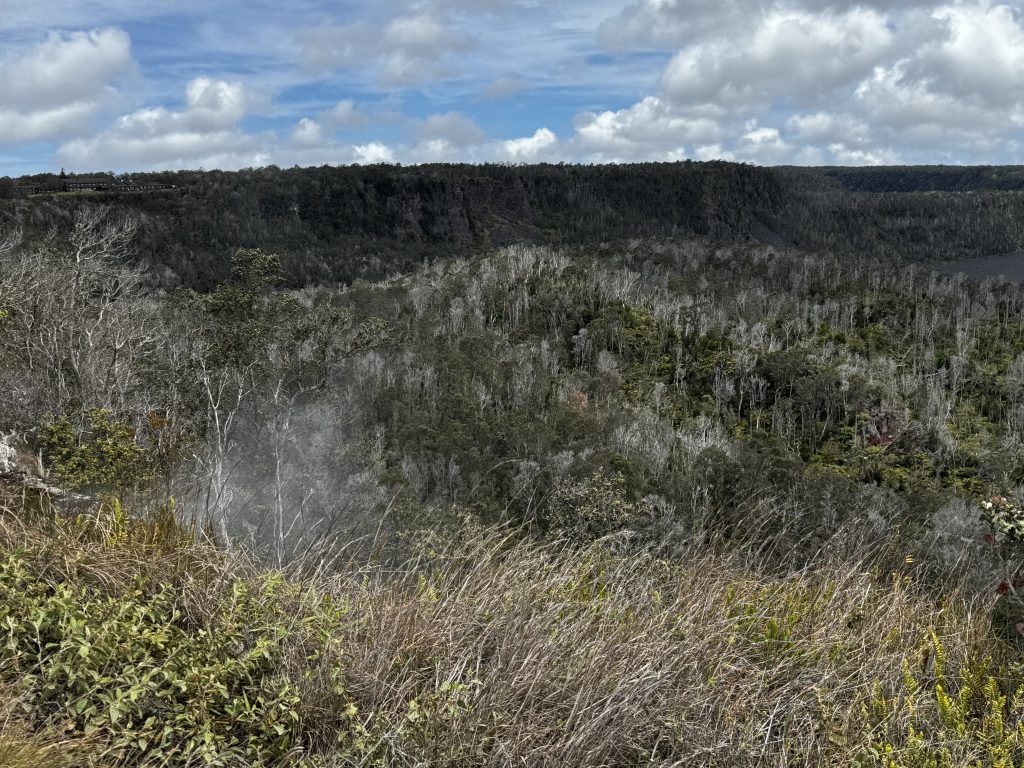
At Hawaii Volcanoes National Park, we saw Kilauea, the world’s most active volcanoe (it actually erupted the day before we arrived). Kilauea’s eruptions have shaped the island over millions of years and have added over 500 acres of new land in the last 40 years as lava has flowed into the ocean. The park and the crater was amazing with vast lava fields, steaming vents and sulfur banks. In Hawaiian culture, Kilauea is where Pele resides, the goddess of fire, and the Hawaiians honor Pele here with chants and offerings.
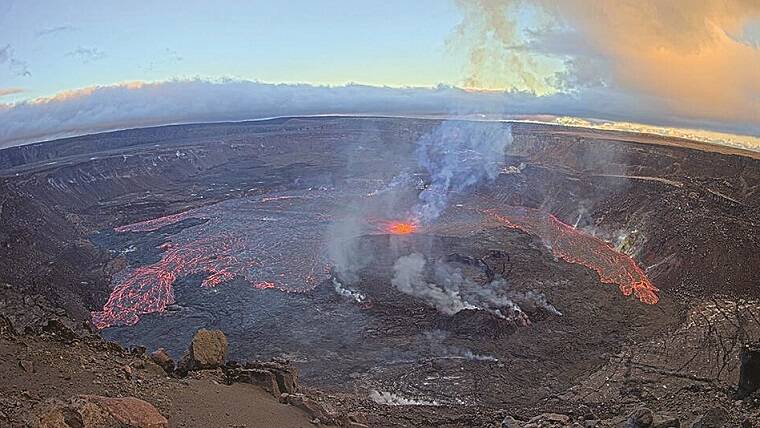
This picture was adopted from the website depicting lava eruption prior to our visit.
Kilauea Crater
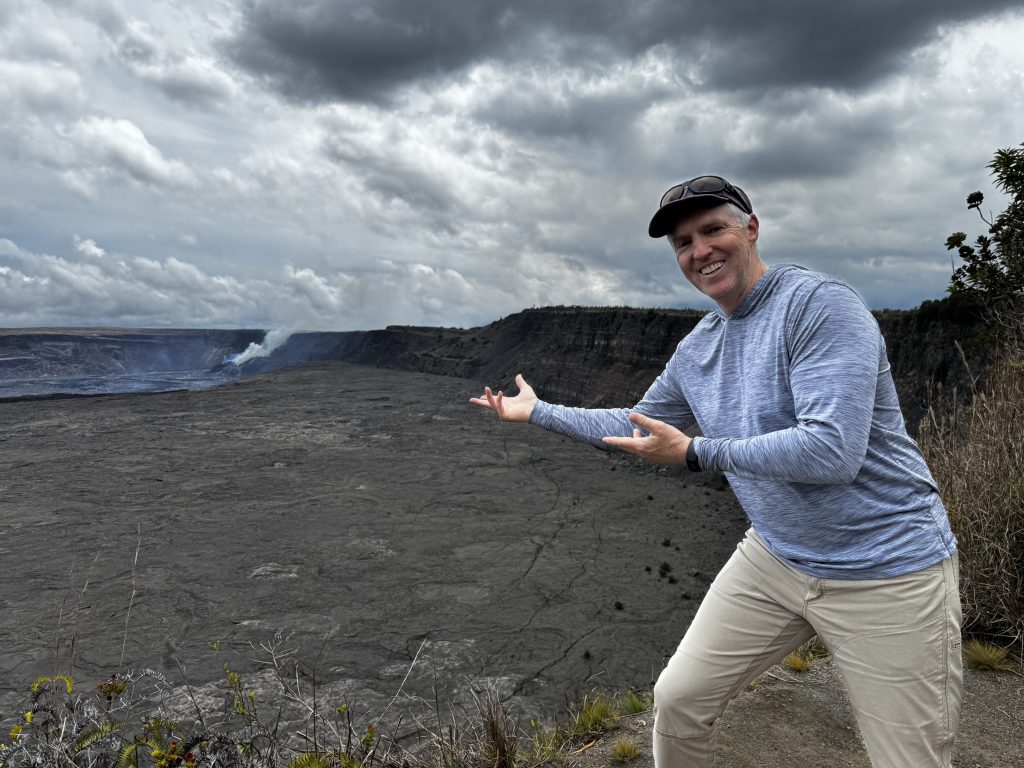
Steaming Vents
Nuhuku Lava Tube
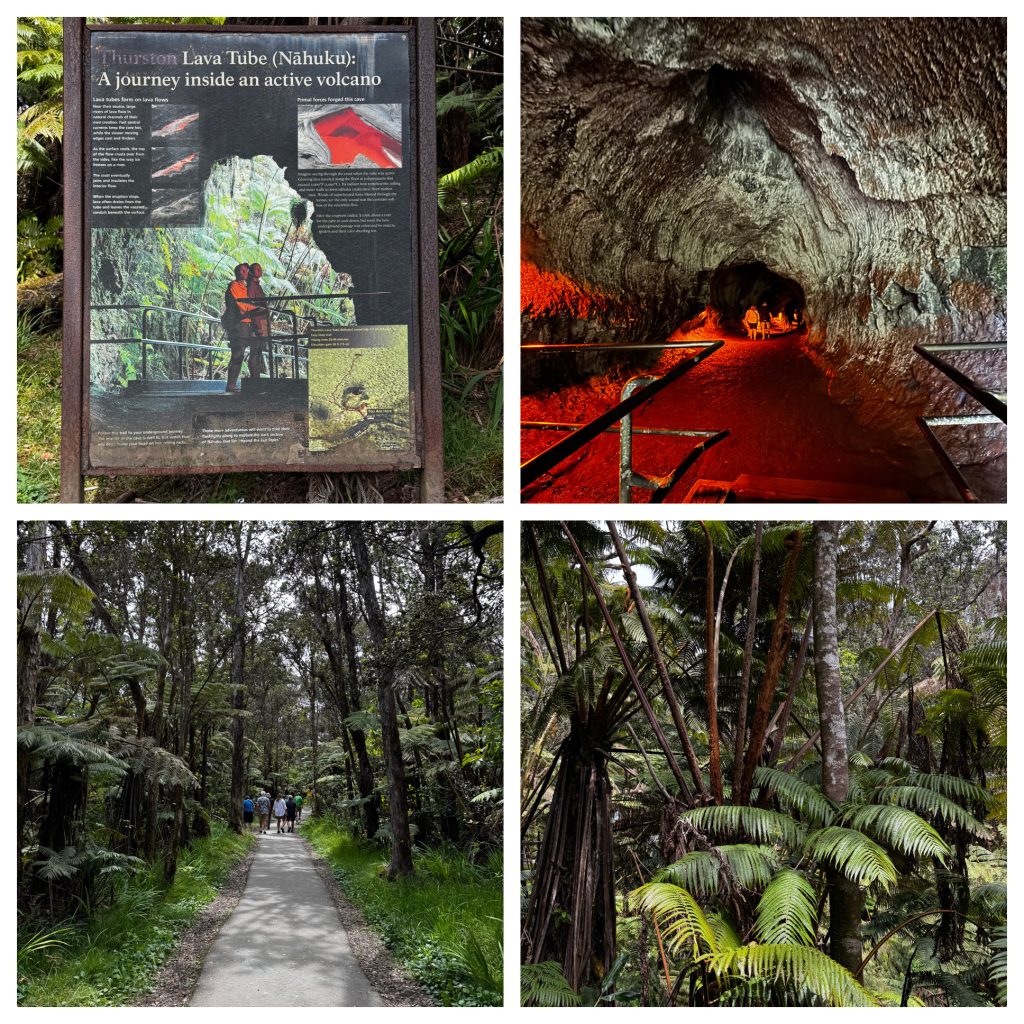
We walked through the Nāhuku (Thurston) Lava Tube, a 500-year-old volcanic cave-like tunnel that was left after molten lava flowed through it. It’s about 600-feet long, ceilings up to 20 feet, you get t it by walking down this path that looks straight out of Jurassic Park.
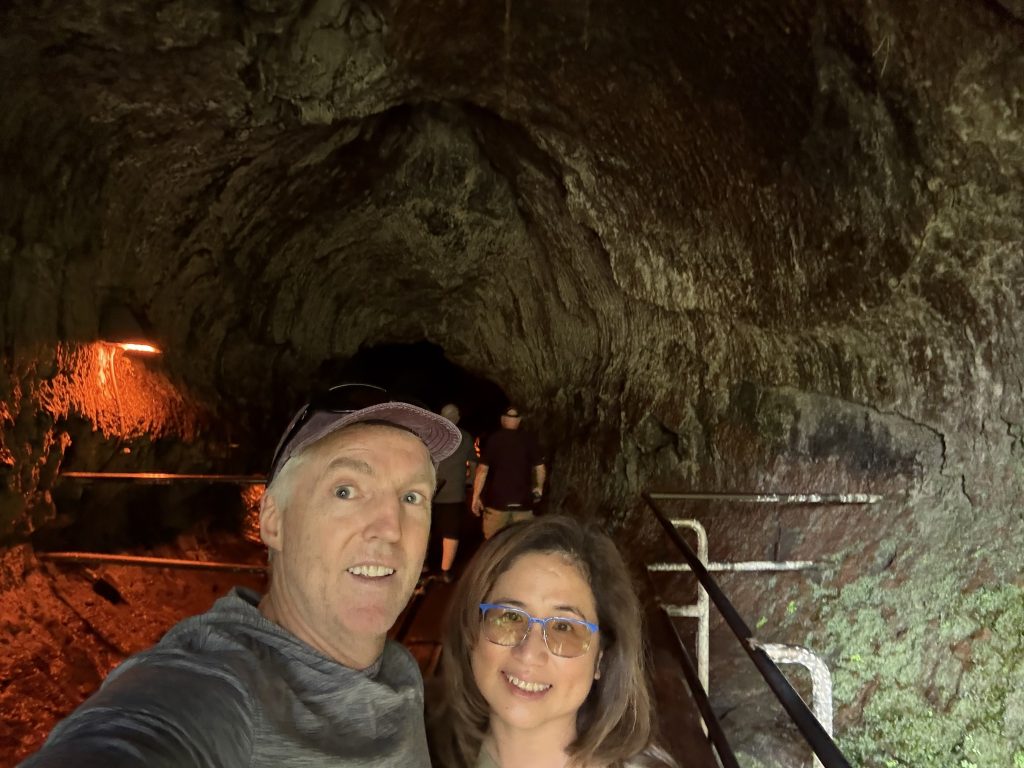
The lava tube was formed by the interaction of 2 types of lava, Pahoehoe lava and ‘A’a lava. The smooth, low viscosity Pahoehoe lava cooled and formed an insulated crust while the ‘A’a lava with higher viscosity continued to flow underneath forming a hollow tube as the lava drained out when the lava source stopped.
It was an amazing experience walking through the dark, cool, and dimly lit path lined with torches where once the molten lava flowed through thousands of years ago.
Spending the day in Hilo was great, we’ve spent a lot of time in Hawaii but have never been to the big island before. And we lucked out with great weather (mid-70s, no rain) and a fantastic tour guide. And we even stopped at the Macadamia Nut factory for lunch and a tour (and to pick up some chocolate!) – a great day!
Hawaiian words and Hawaiian trivial that I learned:
Kuliana – responsibility that goes both ways
Waiuli Beach (Back Sand Beach) – means fresh water meets the deep water
Hawaiianstate tree – Kukui tree
Kukui nuts (candle nuts)
Hawaiian state flower – Yellow hibiscus- Maohaoheile
Hawaiian state bird – neinei
Hawaiian state fish – humuhumunukunukuapuaa
Mountains in Hilo – Maonoloa and Maonokea
Hilo – Tsunami capital of the nation
Waianuinui- wai (fresh water) anuinui (rainbow) – Rainbow Falls
Maonokea- white mountain?
Maonoloa- biggest volcano in the world
Nahuku (lava tube)