
 Swan Bradshaw
Day 1
Our group enjoyed a fantastic road trip from Banff to Calgary, Alberta, covering about 80 miles on the Trans-Canada Highway (Highway 1).
We stopped at Lac des Arcs, Bow Valley Campground, Barrier Lake, then hit Peter’s Drive-In in Calgary for classic burgers and shakes. After that, while Kevan visited his friend at a nursing home, Esther, Wang Ge, and I explored Chinatown for some Hong Kong wonton noodles which was very authentic and delicious, and ended with a steak dinner with relatives at The Cattle Baron.
While in Chinatown, we found a grocery store. I picked up some dry goods such as dried tofu and dried vegetables to make Chinese soup. The main item on my list was to get some dried oyster but they were moldy due to unsafe packing.
At the register, I realized that the store did not accept US dollars, nor any credit cards, even Wells Fargo debit cards. So I went across the street to a Canadian National Bank (RBC) and was able to exchange some Canadian cash with US cash at the teller as I could not withdraw money from my Wells Fargo bank card
Lac des Arcs
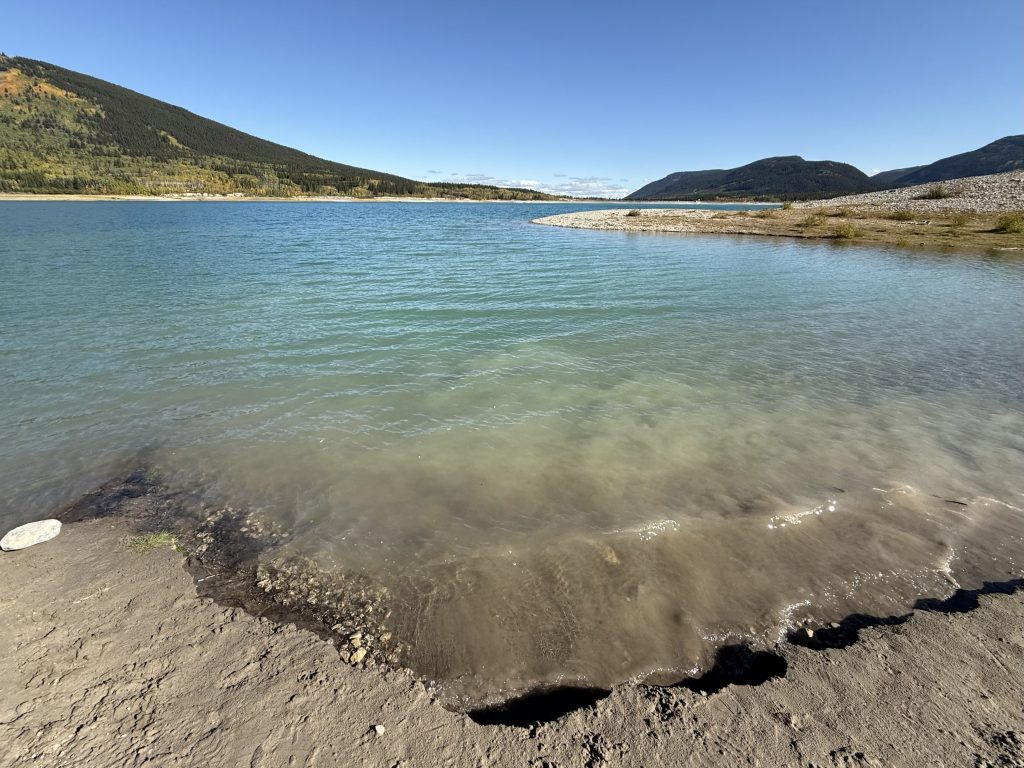
A turquoise lake 15 miles east of Banff in Kananaskis Country’s Bow Valley near Canmore, framed by the Three Sisters Peaks. We stopped at the pullout to snap photos of the water reflecting Mount Rundle. Named for its arc shape in the 1880s, it’s on Stoney Nakoda land. Fish are visible in the clear water.
Bow Valley Campground
It’s located about 10 miles east off Highway 40 in Kananaskis Country’s Bow Valley Provincial Park, along the Kansnaskis River. The campground was established in 1959 on Stoney Nakoda land with fur trade history. Great horned owls nest here!
Barrier Lake
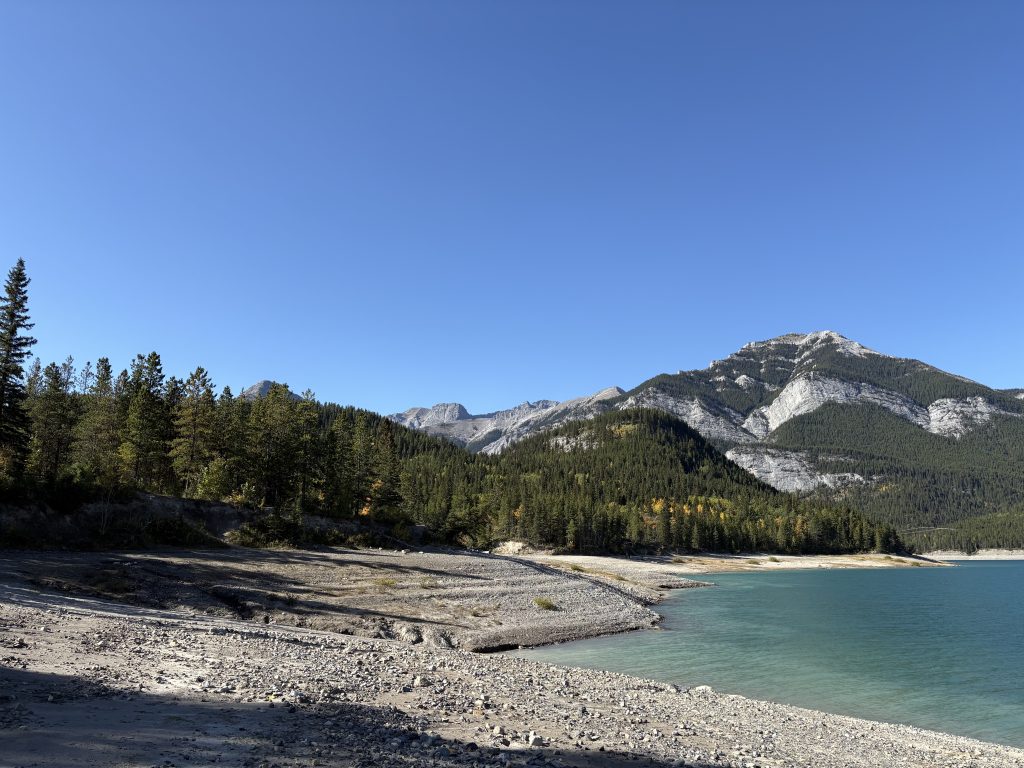
further south on Highway 40 in Kanamaskis is barrier lake,Built in 1947, this man-made reservoir with emerald waters sits under Mount Baldy. Valley winds make this place a wind surfing spot and bighorn sheep can be seen roaming nearby.
Calgary
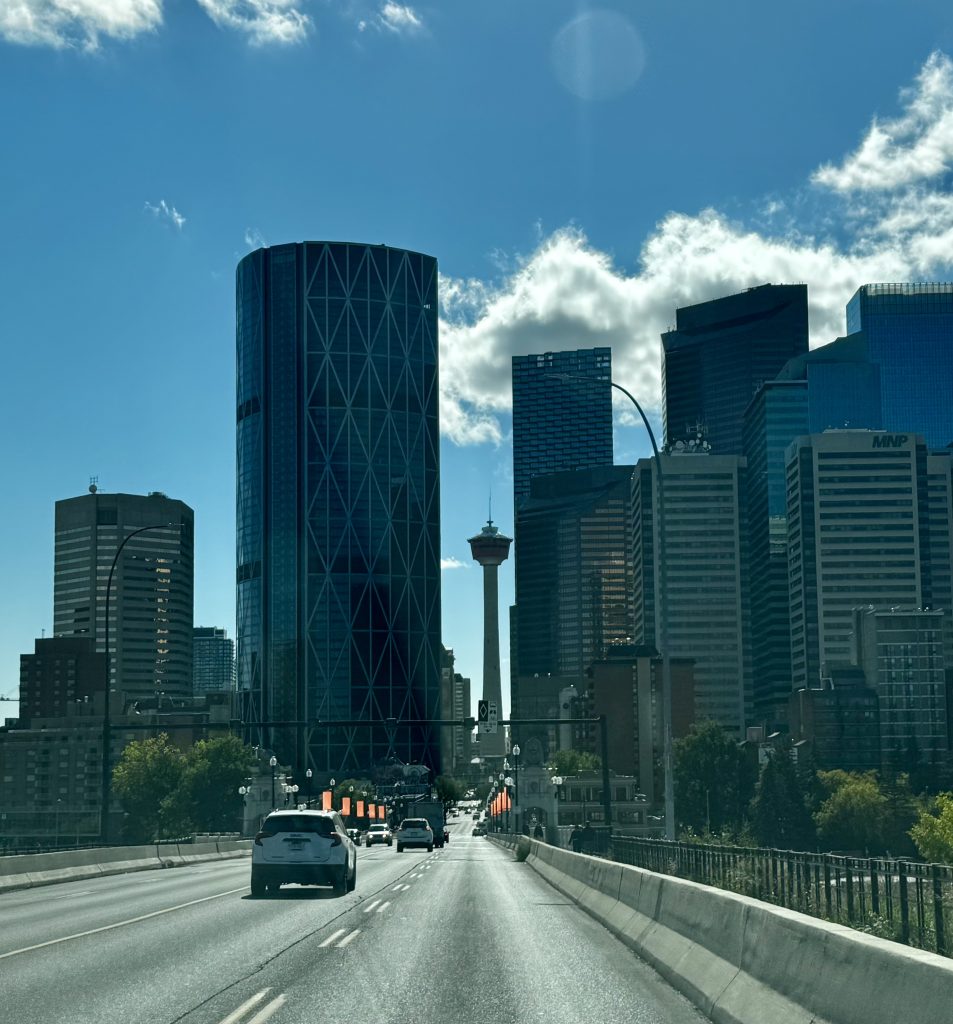
Arrived in Calgary! A city of 1.3 million, blending oil-boom energy with suburban calm and a city that enjoys 333 sunny days per year. Trivia: Alberta beef is world-famous, raised in the province’s vast prairies.
Peter’s Drive-In
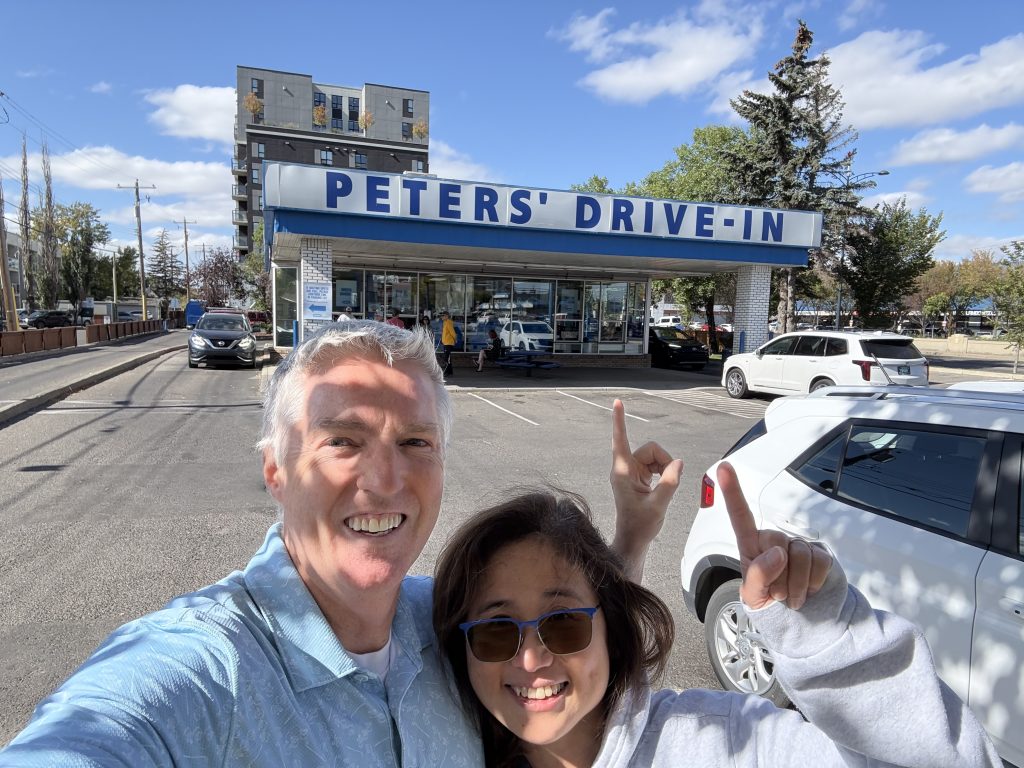
In Calgary, this 1962 drive-in is a local icon and the Bradshaw family favorite place. We grabbed cheeseburgers, fries, onion rings, and shakes. The menu hadn’t changed since they opened and the burgers are as good as when they were in the 60s. They apparently serve over 1000 burgers on weekends!
Calgary’s Chinatown
It is located in downtown Calgary and minutes from Peter’s. I had some very authentic Cantonese wonton noodles at Calgary Court Restaurant, it was amazing!
Chinese Cultural Center
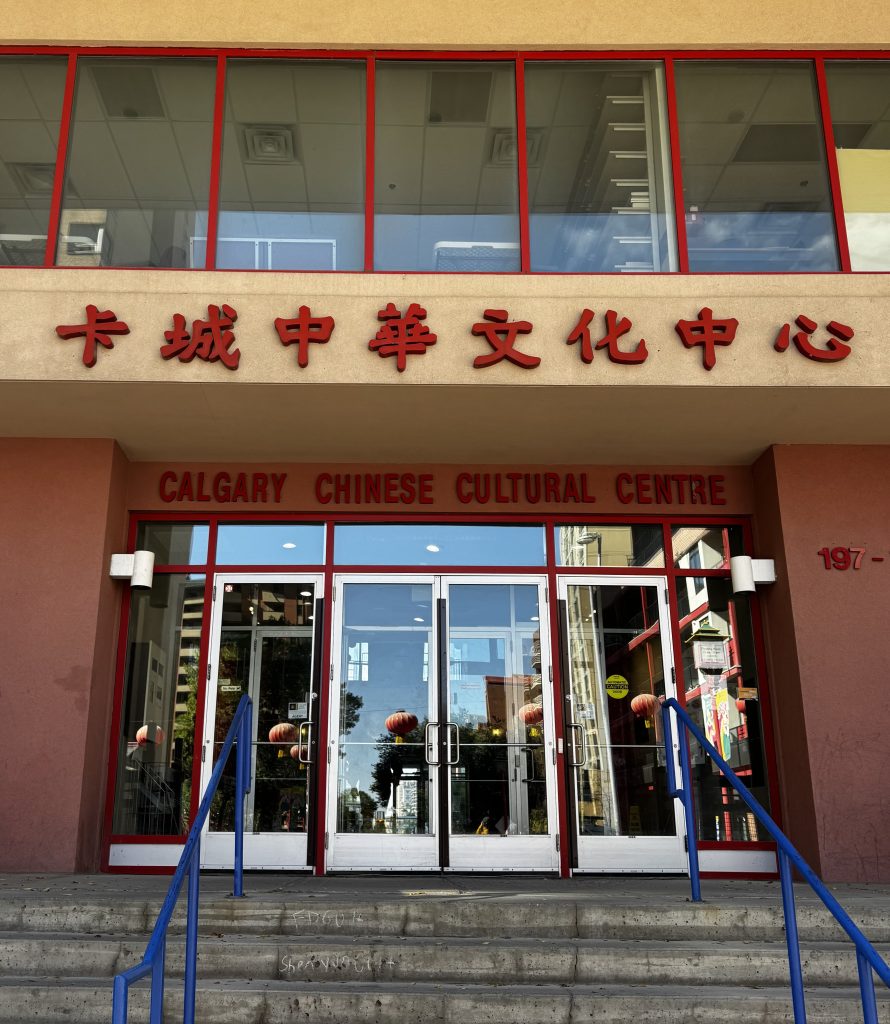
We visited the Chinese Cultural Center for exhibits on Chinese-Canadian history. It was founded in 1910s by railway workers. This place was pretty quiet with minimal exhibitions. The museum on the ground floor displays railway artifacts but unfortunately was not open during our visit. All the restaurants were also closed as they were under reconstruction. This place is fairly easy to spot as it has a Temple of Heaven – style roof.
The Cattle Baron
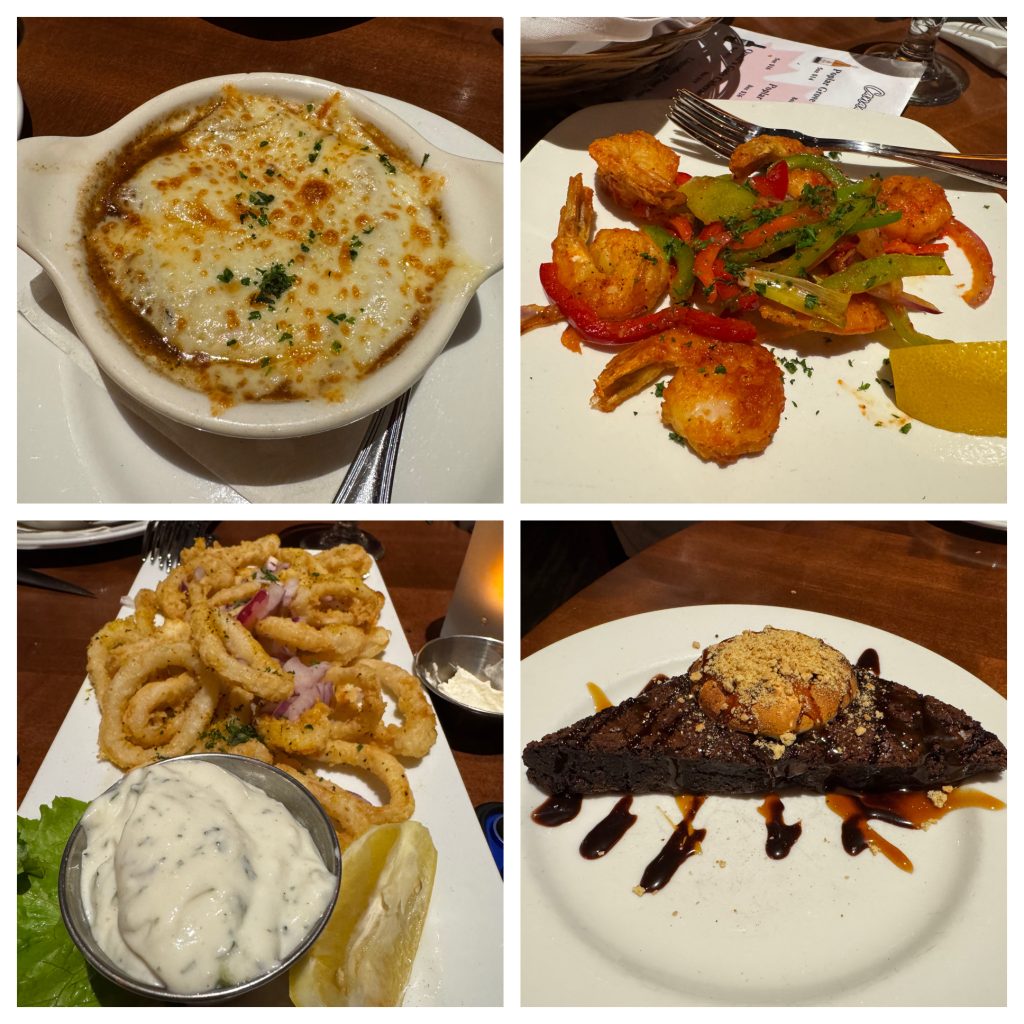
We joined Kevan’s cousins for dinner at The Cattle Baron and savored juicy Alberta steaks, a local specialty in a cozy Western-style setting. Opened in the 1990s, it’s a go-to for Calgary’s steak lovers. Huge thanks to Todd and Nancy for showing us around and putting us up for the night in Calgary.
Day 2
We started off early out of Calgary, driving south on the highway after a quick stop to visit Kevan‘s childhood home in Braeside, a small suburb in southwest Calgary. Driving south, we passed through a number of smaller towns, including Nanton, Claresholme, and then took the turn towards Pincher Creek to head towards Mountain View, a very small place in Southwest Alberta, a farming and ranching community just outside the gates of Waterton Park.
Here we visited the Bradshaw family Ranch, visited the two horses that are here and toured around down by the river and the waterfalls and the fields which are used to graze cattle. We also stopped in at the barn store in Mountain View, they have a small snack bar and grocery store and we tried their poutine, very tasty! After that, we visited the Mountain View cemetery, where mom and dad and both sets of grandparents are buried. We also ran into an old friend at the barn store, Kevan‘s bishop when he was in high school, which was a very tender reunion.
Prince of Wales Hotel
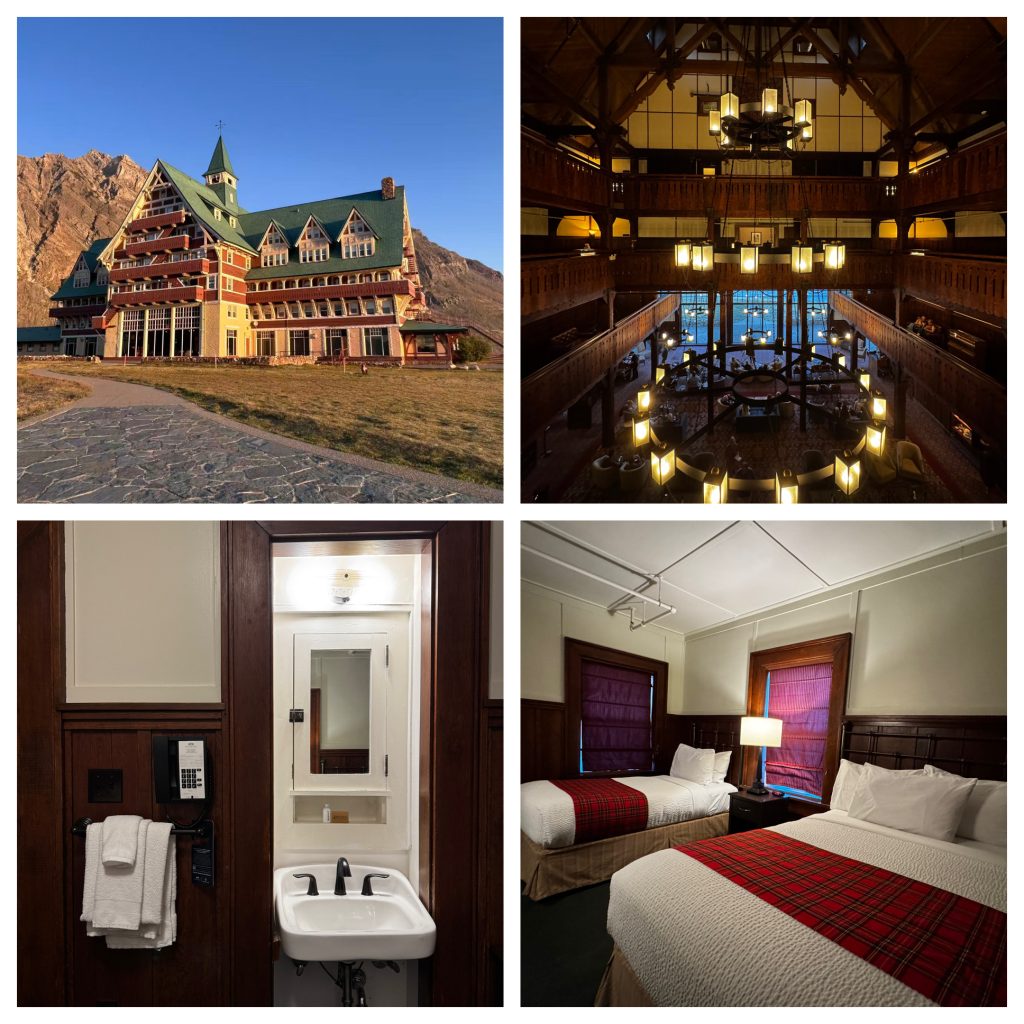
From there, we drove about 20 miles west to Waterton, drove around Main Street, and then checked into the Prince of Wales hotel, this hotel is almost a century old, and a iconic hotel perched overlooking Waterton Lake, absolutely beautiful location.
The elevator at Prince of Wales is the oldest manual elevator in North America, pretty fascinating!!!
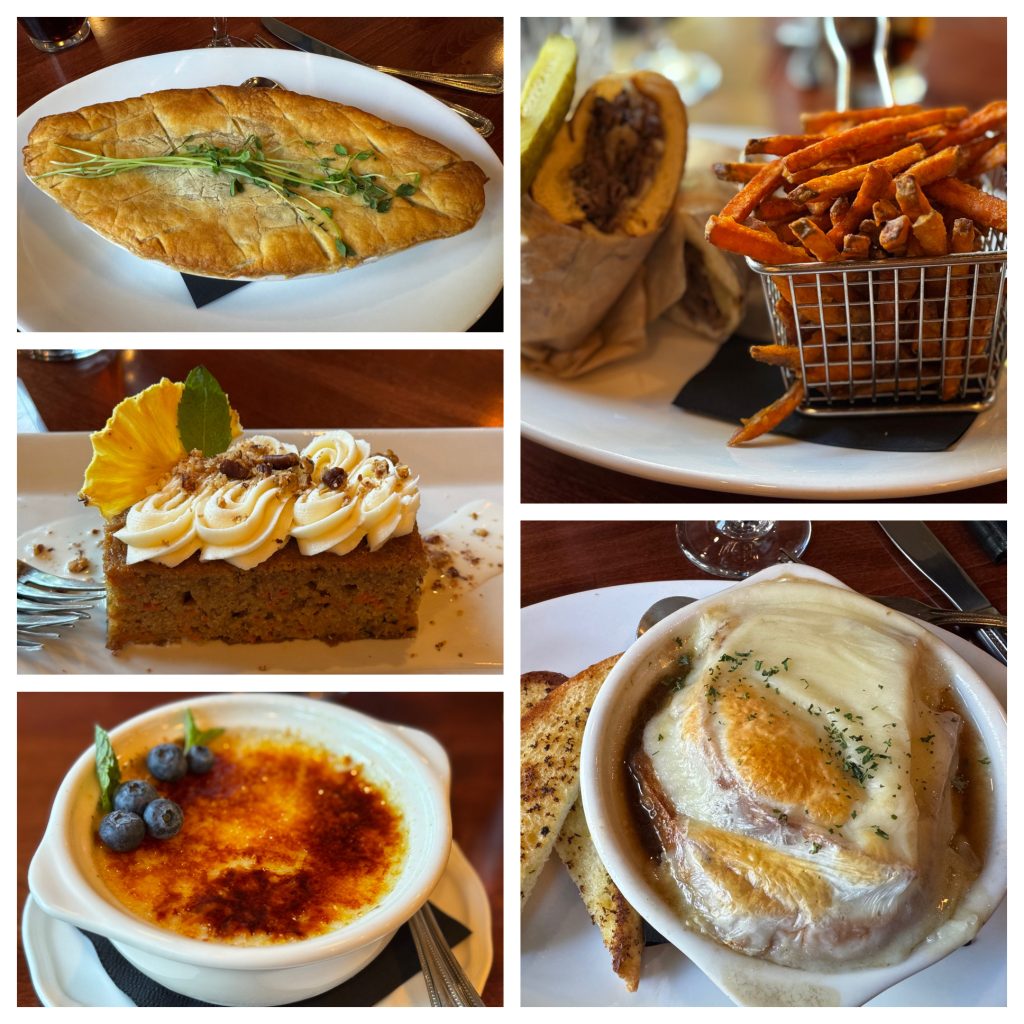
We then joined with friends, Dexter and Candace at the Kilmorey Lodge for a great dinner.
Day 3
We took our friends Esther and Wang Ge on an unforgettable road trip from Waterton, Alberta, through the heart of the Waterton-Glacier International Peace Park, down the iconic Going-to-the-Sun Road, and back home to Lake Blaine near Creston, MT. This journey weaves through jaw-dropping Rocky Mountain landscapes with a rich history, covering about 180 miles of pure adventure. The geography shifts from Canadian prairies to glacier-carved peaks, with a mix of Blackfeet heritage, bison lore, and Montana’s laid-back charm.
Bison Paddock
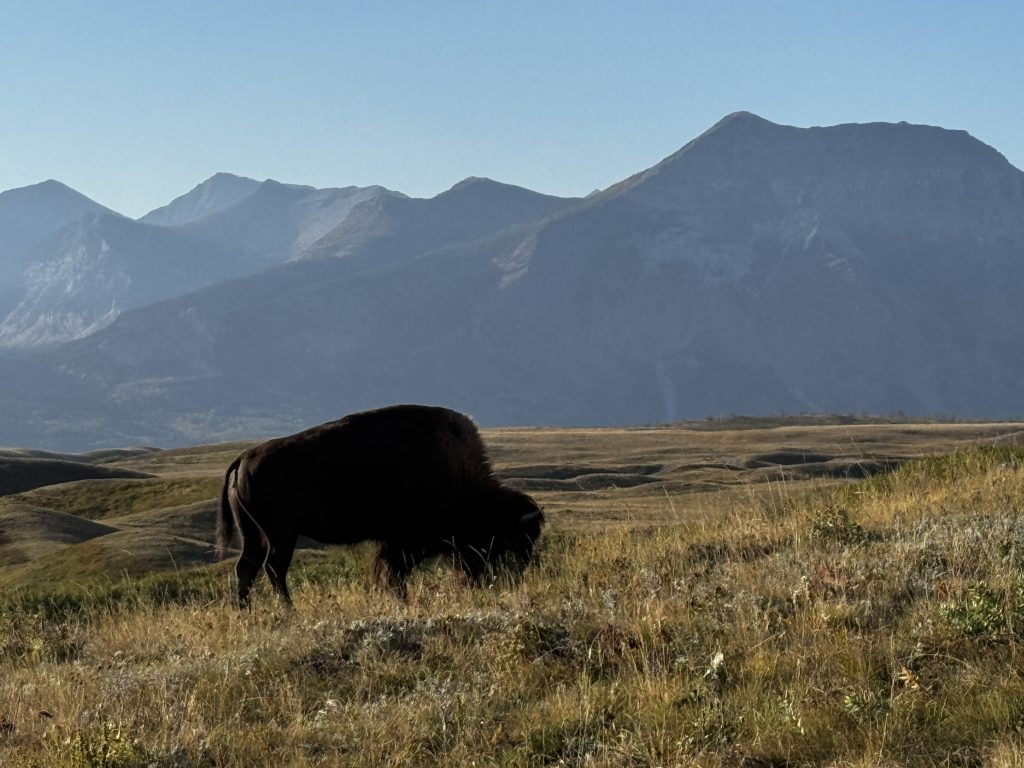
First stop was the Bison Paddock in Waterton Lakes National Park, a quick loop off Highway 6.
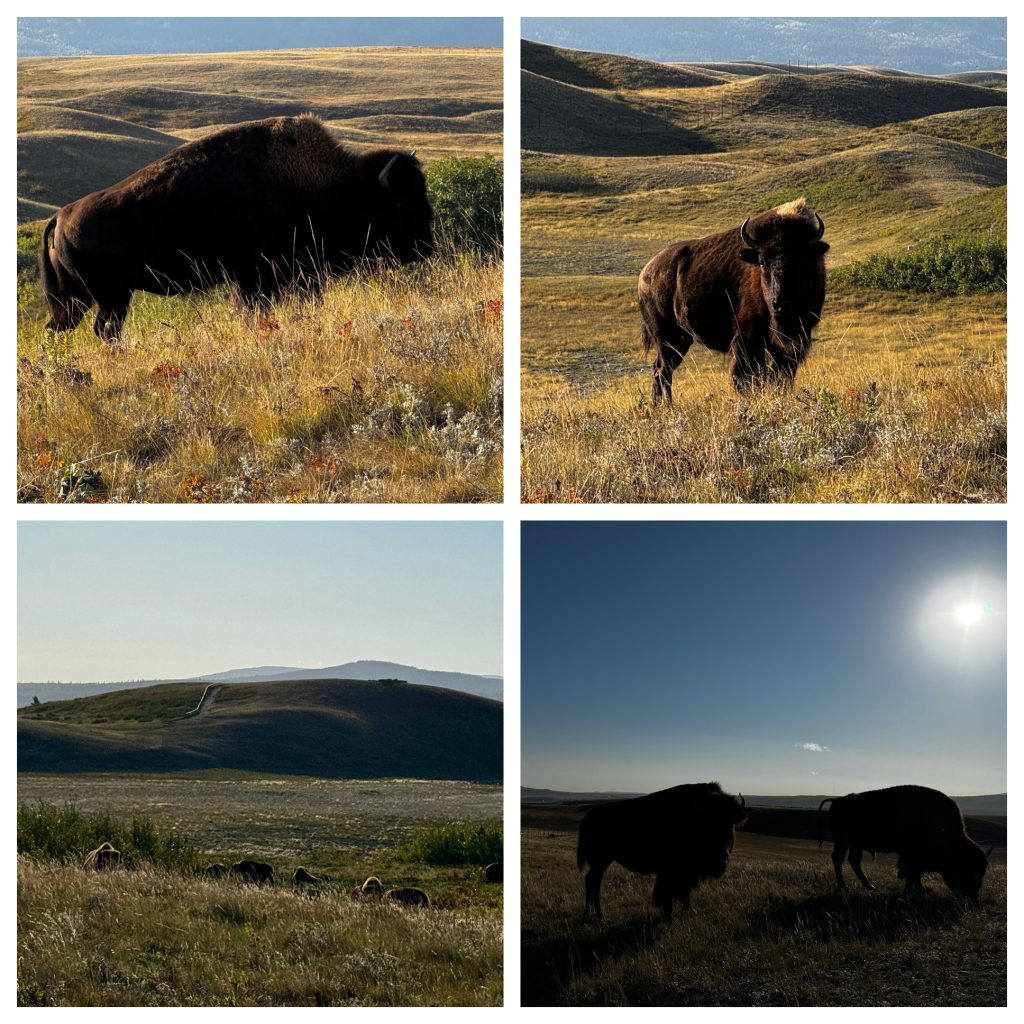
This grassy haven hosts a small herd of plains bison, reintroduced to honor their role in shaping the prairies. Against the backdrop of Bear’s Hump ridge, we rolled through the paddock and admired the huge bison grazing there.
Cardston, Alberta
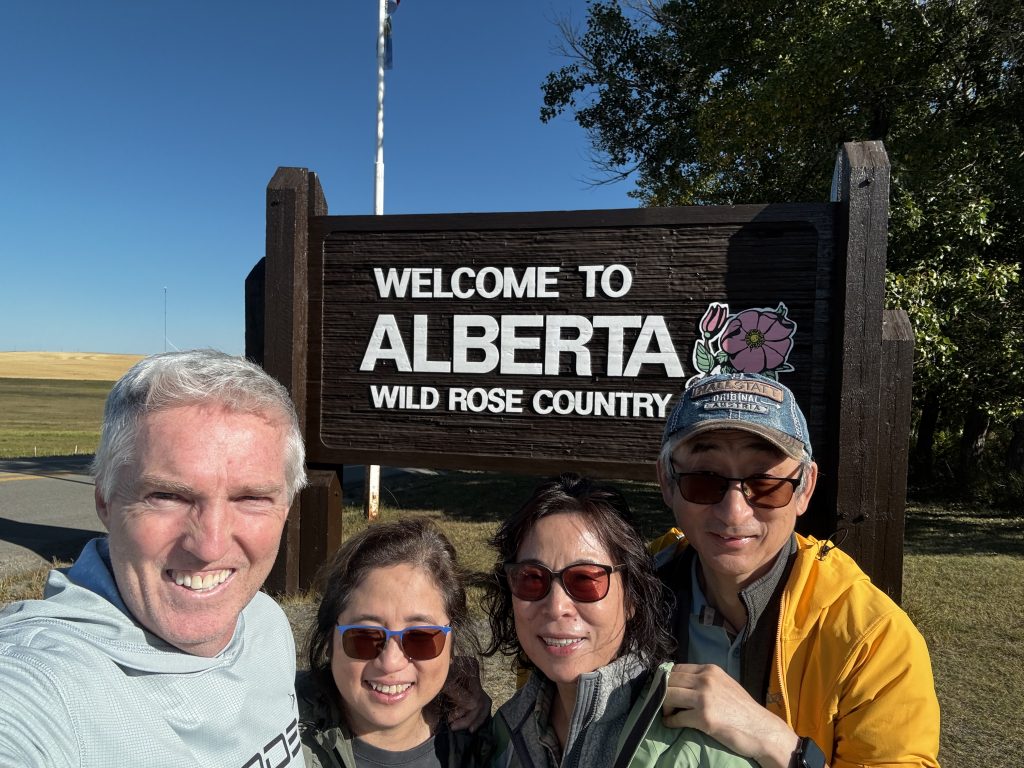
Next, we cruised 30 minutes south on Highway 5 to Cardston, Alberta, a prairie town founded in 1887 by Mormon pioneers under Charles Card. Surrounded by golden fields with the Rockies looming west, The flat-to-rugged landscape shift here sets the stage for what’s coming.
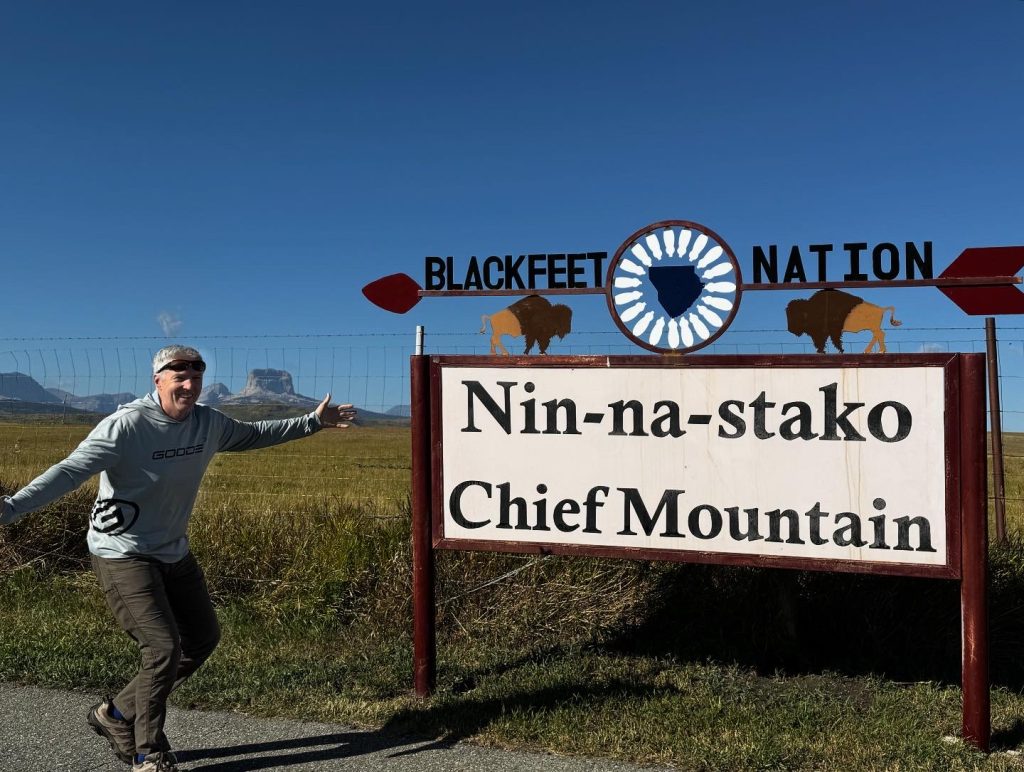
We crossed the U.S. border at Carway/Piegan, a quiet spot where open rangeland stretches across Blackfeet Nation territory. This land, home to the Blackfeet (an Indian tribe)for millennia, carries deep cultural weight—ancient hunting grounds and trade routes. The crossing was straightforward (2 American and 2 Chinese passports at the ready), with endless plains giving way to Montana’s mountains.
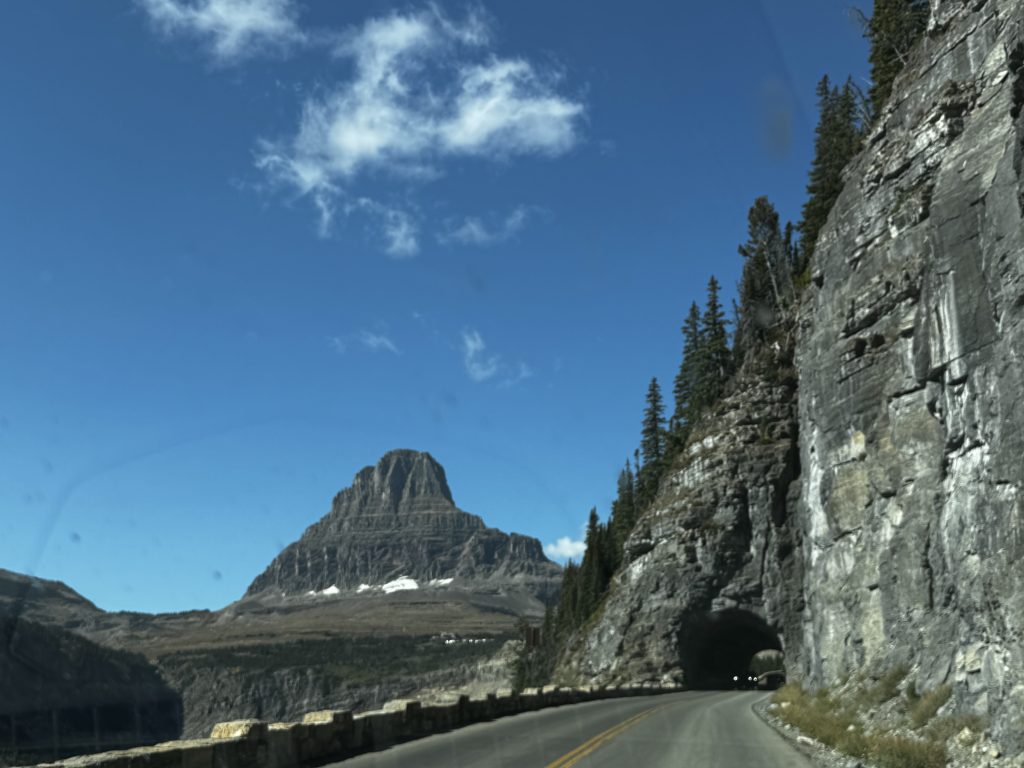
About 20 minutes later, we rolled into St. Mary, Montana, the eastern gateway to Glacier National Park. St. Mary Lake’s emerald waters, framed by 9,000-foot peaks like Bear-hat Mountain, were gorgeous. This former Blackfeet hub now buzzes with hikers and campers, marking the start of the epic Going-to-the-Sun Road.
This 50-mile engineering gem of a road, completed in 1933 and a National Historic Landmark, is the trip’s crown jewel. Winding through Glacier National Park, it hugs cliffs, crosses the Continental Divide, and dishes out unreal views of glacial valleys, waterfalls like McDonald Creek, and occasional mountain goats.
Logan Pass
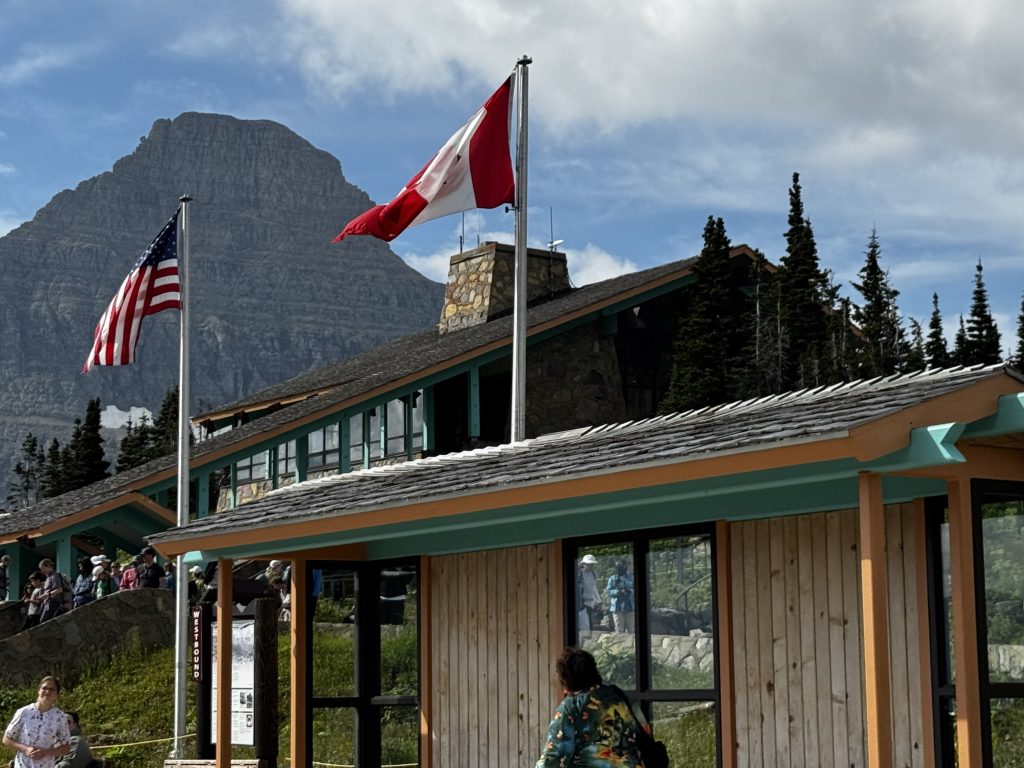
We paused at Logan Pass (6,646 ft), the road’s highest point, for a quick visit, but the parking lot was packed so we decided to return later in the week for a hike to hidden lake. Straddling the Divide, where waters split to the Pacific and Atlantic, this alpine meadow sparkles with snowfields and fall wildflowers. Logan Pass is a hotspot for grizzly/black bears and bighorn sheep—binoculars are a must. The 1.5-mile Hidden Lake Overlook trailhead offers killer views of Reynolds Mountain.
Descending the west side of Going-to-the-Sun Road, we coasted past Lake McDonald, Glacier’s largest lake at 10 miles long. Its crystal-clear waters, fed by glacial silt, reflect spruce forests and peaks like Stanton Mountain. The vibrant pebbles along the shore and occasional moose sightings make it a stunner. The road’s lower half weaves through cedar groves and past Weeping Wall, a cliff that drizzles like a natural shower.
Exiting the park at West Glacier, we felt the buzz of completing one of America’s most scenic drives. Just 15 minutes down the road in Columbia Falls, MT, we hit Mudman Burgers for a quick bite. This local gem serves up juicy, handcrafted burgers (try the Huckleberry shakes!) in a casual, logging-town vibe. Fun fact: Columbia Falls was once a timber hub, and Mudman’s is a perfect spot for refueling before the final stretch.
Lake Blaine
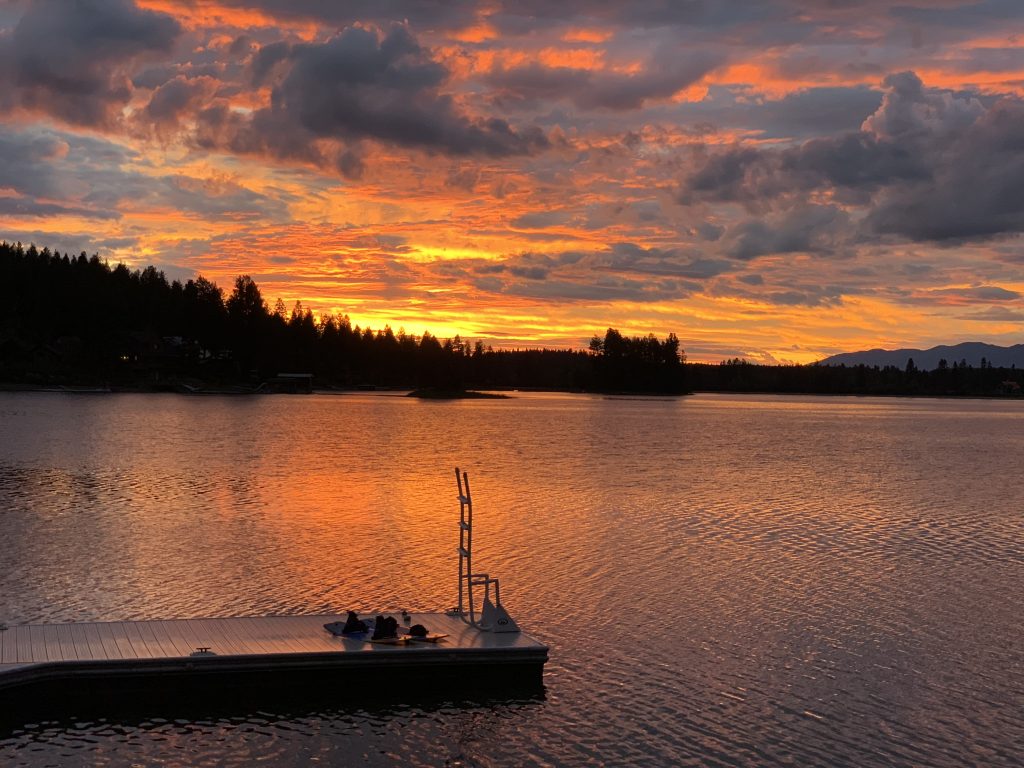
From there, it was a 30-minute drive home to Lake Blaine, a serene gem near Creston, MT. Tucked in the Flathead Valley, this quiet lake sits amid rolling hills and pine forests, with the Swan Mountain Range as a backdrop. The area’s history ties to early homesteaders and the Salish-Kootenai tribes, who fished these waters long before settlers arrived. Rolling into Lake Blaine felt like the perfect end to a day packed with peaks, prairies, and burgers.
This Waterton-to-Lake Blaine loop blends Canada’s wide-open spaces with Glacier’s rugged glory, tossing in Blackfeet and pioneer history, bison comebacks, and Montana’s cozy eats. A great trip!
Day 4
Glacier National Park – Logan Pass
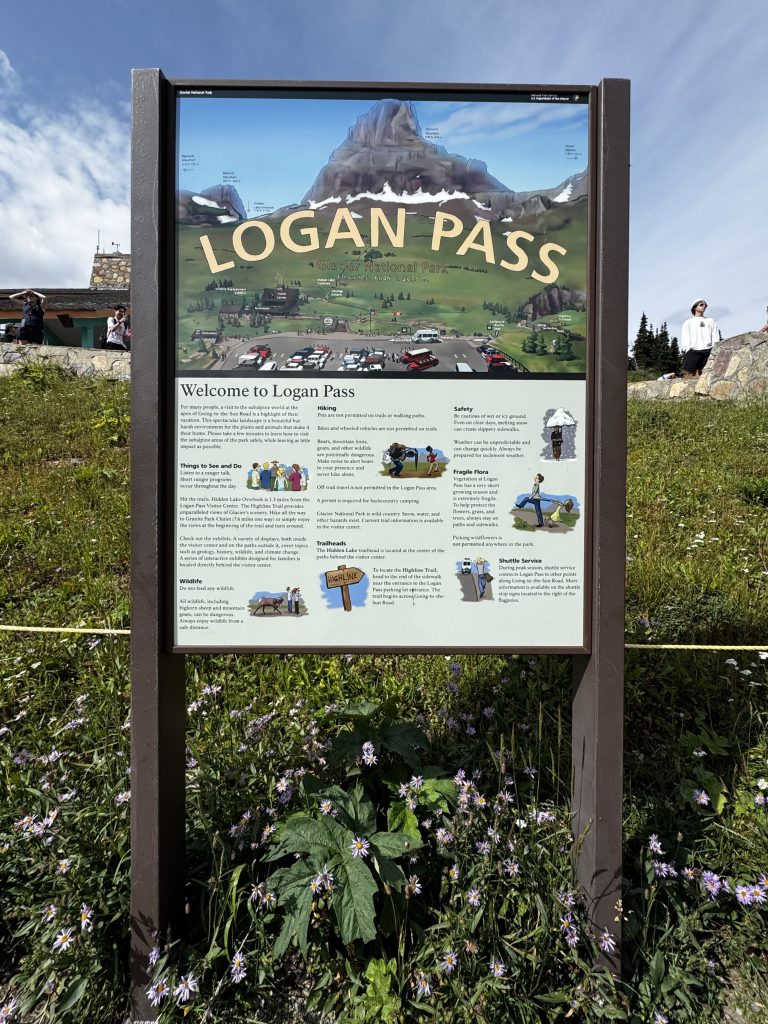
Glacier National Park covers more than a million acres in Montana’s Rocky Mountains, shaped by ancient glaciers that left behind sharp peaks and deep valleys from the Ice Age. Set up in 1910 as one of the country’s first national parks, it protects grizzly bears, mountain goats, and over 700 miles of trails—a real slice of the untamed American West.
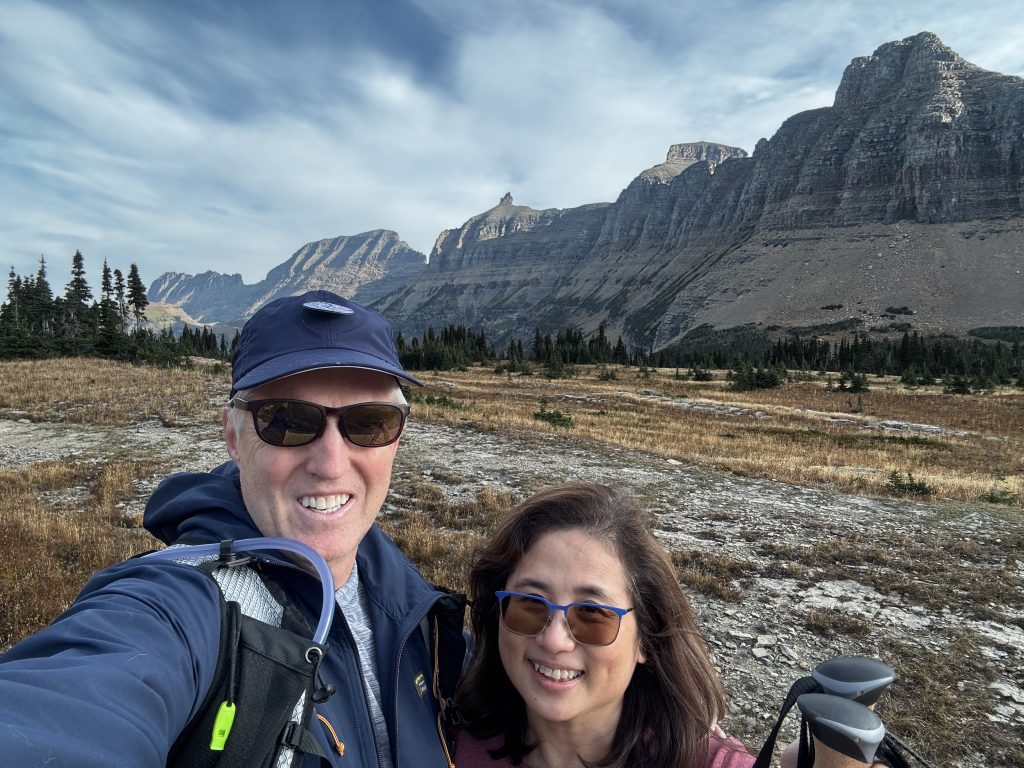
On this cool fall day, we headed out from West Glacier for a full-day drive up the Going-to-the-Sun Road to Logan Pass Visitor Center, then looped back with a stop at Lake McDonald. It was a solid trip that left us feeling connected to the outdoors.
We kicked off early from West Glacier, the main west entrance, and jumped on the Going-to-the-Sun Road. This 50-mile stretch, finished in 1932 after years of tough work by hand and mule, is a National Historic Landmark. It climbs along cliffs and streams, crossing the Continental Divide at Logan Pass, which sits at 6,646 feet and gets up to 80 feet of snow in winter. The drive takes you through the McDonald Valley’s cedar forests, up past the Garden Wall—a big ridge carved by old glaciers. We passed golden larch trees and alpine meadows, with turquoise creeks feeding into the Middle Fork of the Flathead River down below.
Midway up, by the Weeping Wall—a 100-foot cliff that drips with snowmelt—we spotted three black bears. The best part was a mom and her cub walking right down the road, just feet from our car. The cub played around a bit before they slipped into the bushes. The park has about 300 grizzlies and 600 black bears, so rangers stress keeping your distance and packing bear spray to respect their space.
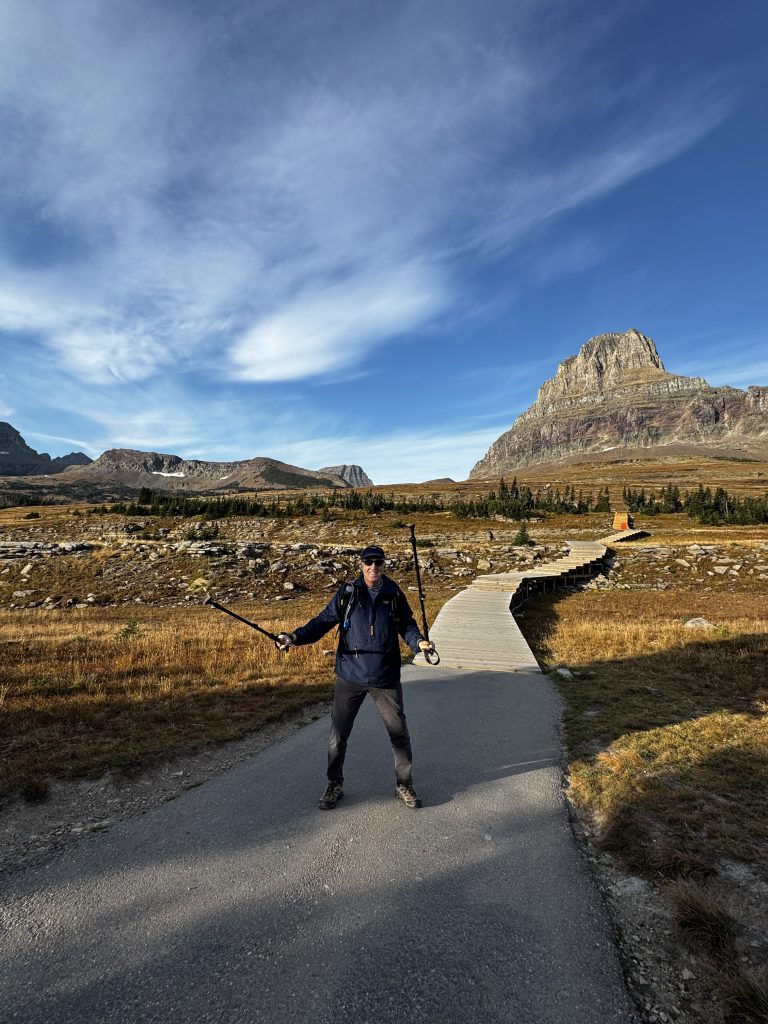
We kept going to Logan Pass Visitor Center, right in the middle of subalpine meadows full of wildflowers from July to September. From there, we hiked around to enjoy the boardwalk while our friends made the entire 2.7-mile round trip hike to Hidden Lake Overlook—moderate with 550 feet of climb, starting on boardwalks then hitting rocky switchbacks. You get views of Bearhat Mountain and the park’s glaciers.
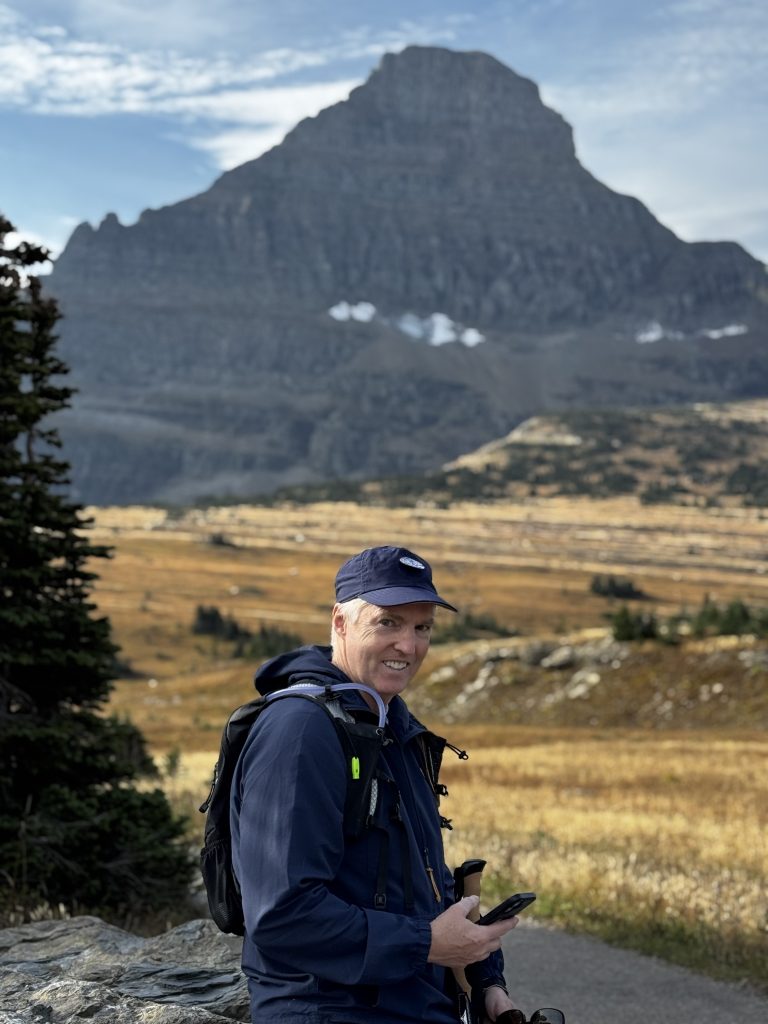
At the top, Hidden Lake sits in a basin carved by ice long ago, with marmots calling from the rocks. It’s a great spot to take it all in, especially on a clear day.
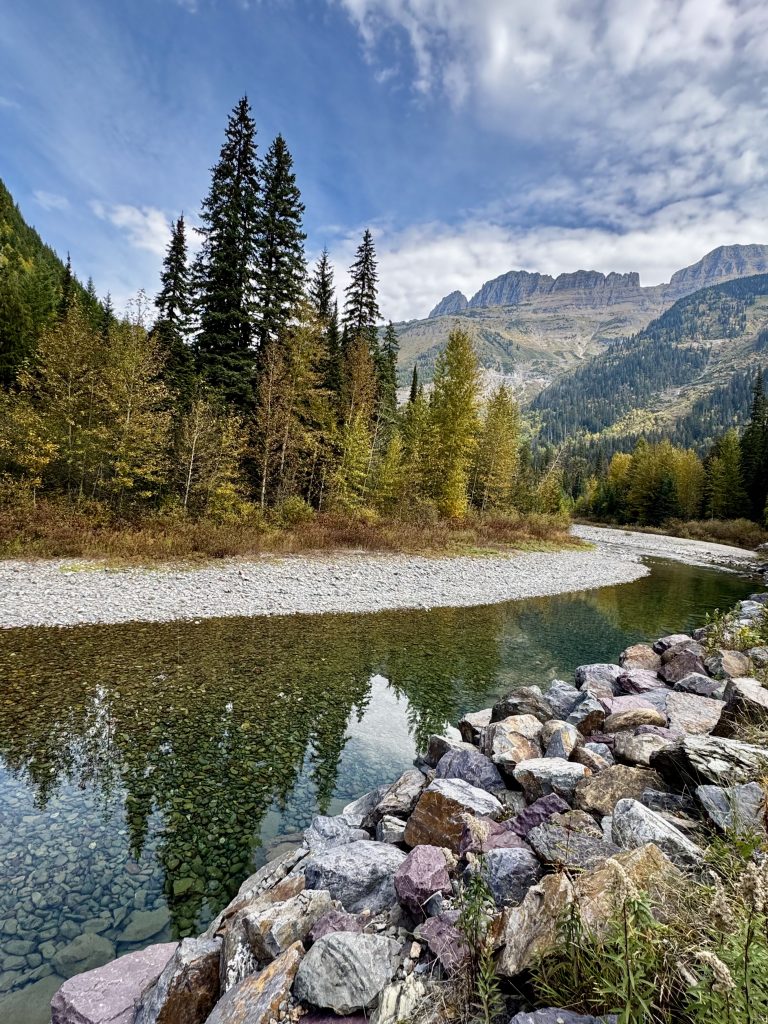
Heading down the east side brought some steep drops and tight turns. On the way back west, we stopped at Lake McDonald, the park’s biggest lake at 10 miles long and 472 feet deep. Glaciers from the Pleistocene dug it out, and the water shifts colors from blue to green thanks to glacial silt. We walked the shore near Apgar Village, tossing stones and spotting ducks. The Blackfeet and Salish peoples used this valley for gatherings way before it opened to visitors.
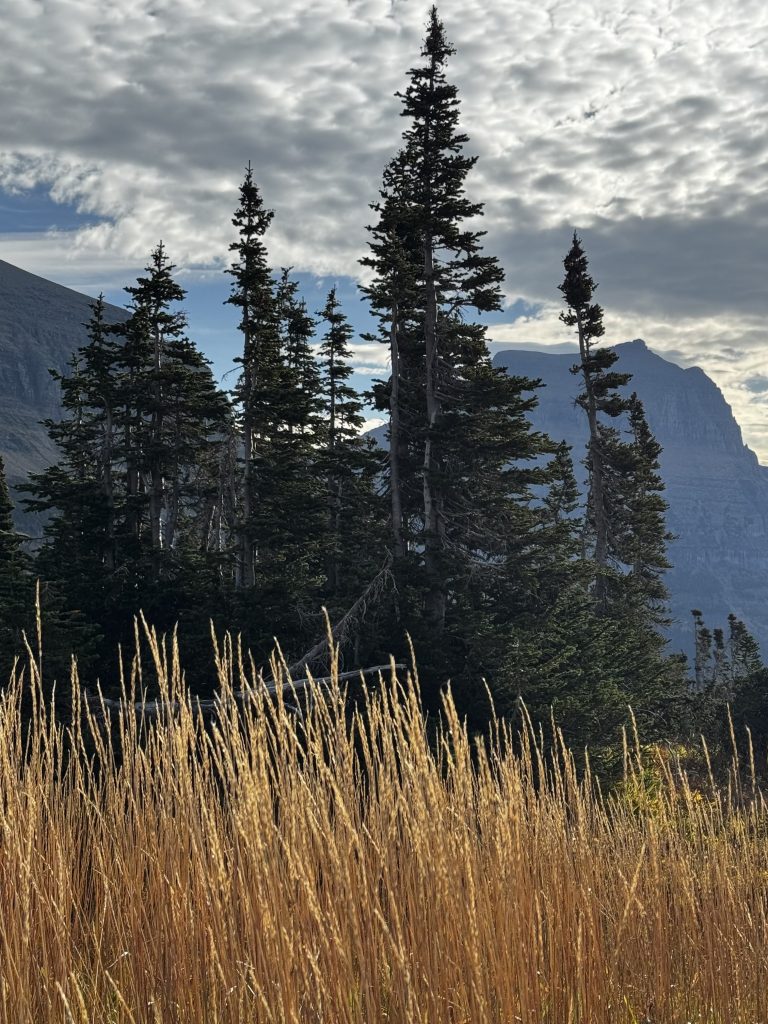
As the sun set, painting the sky soft pink, we drove out feeling recharged by the wildlife, the geology, and the easy flow of the road. For a day that hits the reset button while diving into nature’s story, this Glacier route delivers!
Day 5
Conrad Mansion
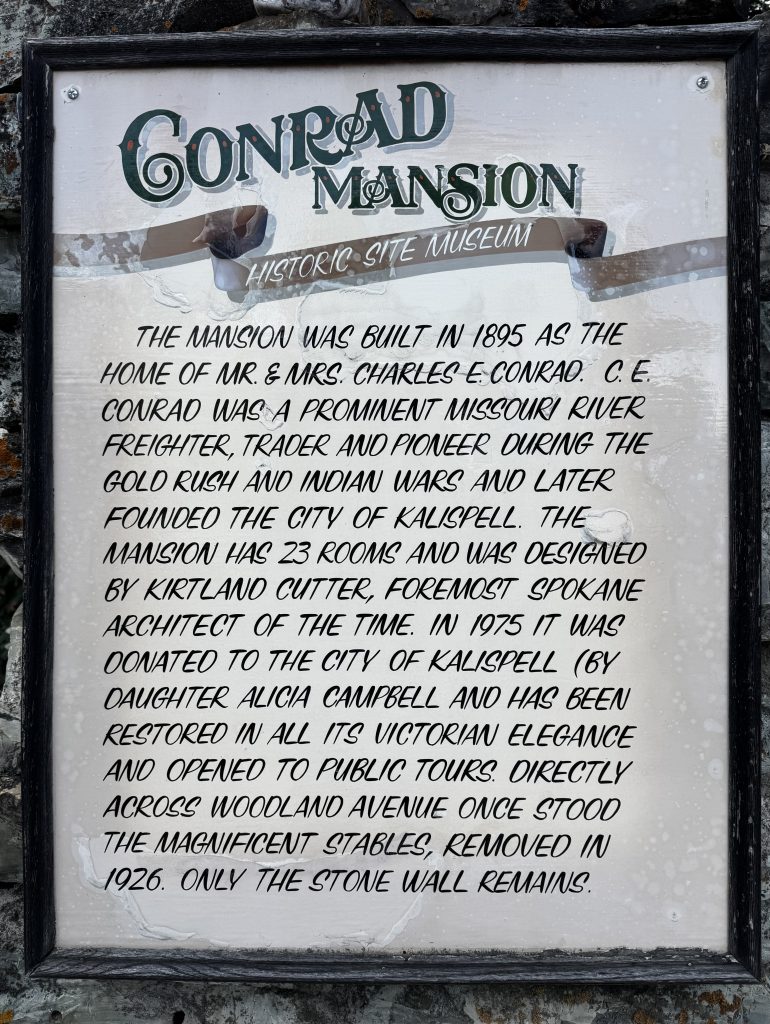
We visited The Conrad Mansion, entrance fee is $30 per person.
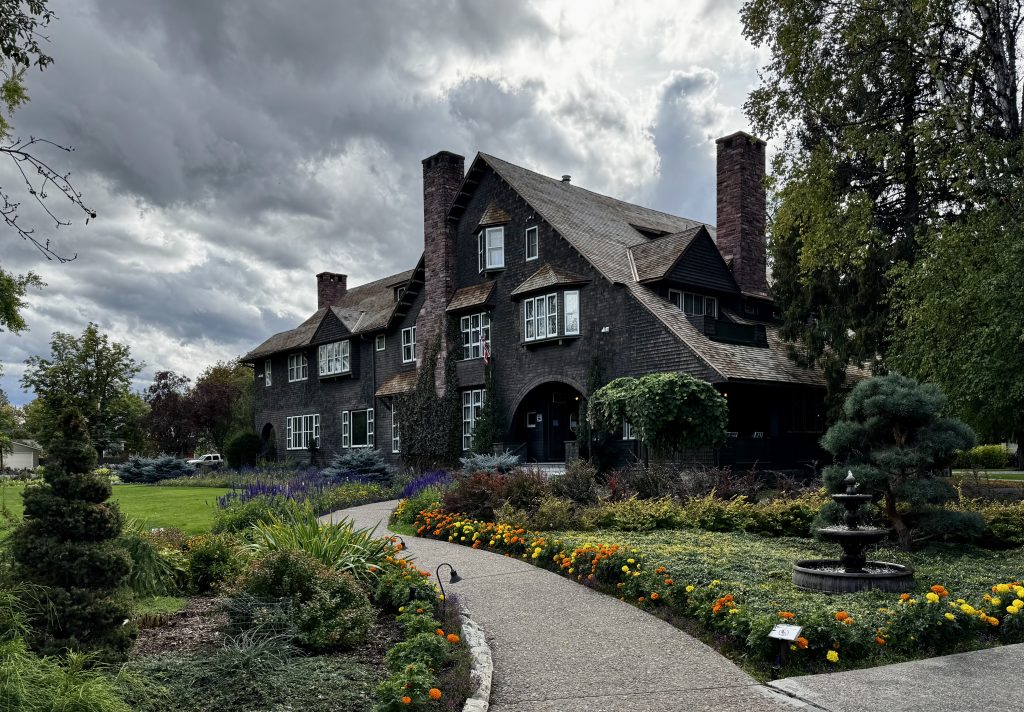
The Conrad Mansion is a historic 26-room Victorian shingle-style mansion (with Norman influences) located at 330 Woodland Avenue in Kalispell, Montana. Designed by architect Kirtland K. Cutter, it was built between 1892 and 1895. The 13,000-square-foot home sits on 2.7 acres and retains over 90% of its original furnishings, artwork, and personal items. It is listed on the National Register of Historic Places and operates today as a nonprofit museum offering guided tours and educational programs.
Charles E. Conrad, a Montana pioneer and businessman, founded the town of Kalispell in 1891–1892 as a division point for the Great Northern Railway. Originally from Virginia, he made his fortune in freighting, trading, and mercantile businesses in Fort Benton before expanding into shipping and other ventures. The mansion was constructed as his grand family home in the new town. Charles died in 1902, and his wife Alicia “Lettie” Conrad lived there until her death in 1924.
In 1974, the youngest daughter, Alicia Ann Conrad, donated the mansion and its entire original contents to the City of Kalispell on the condition that it be preserved and operated as a historical museum. This generous donation allowed the home to remain intact with nearly all its original furnishings. The Conrad Mansion opened as a museum shortly afterward and continues today as a self-supporting nonprofit focused on historic preservation and public education.
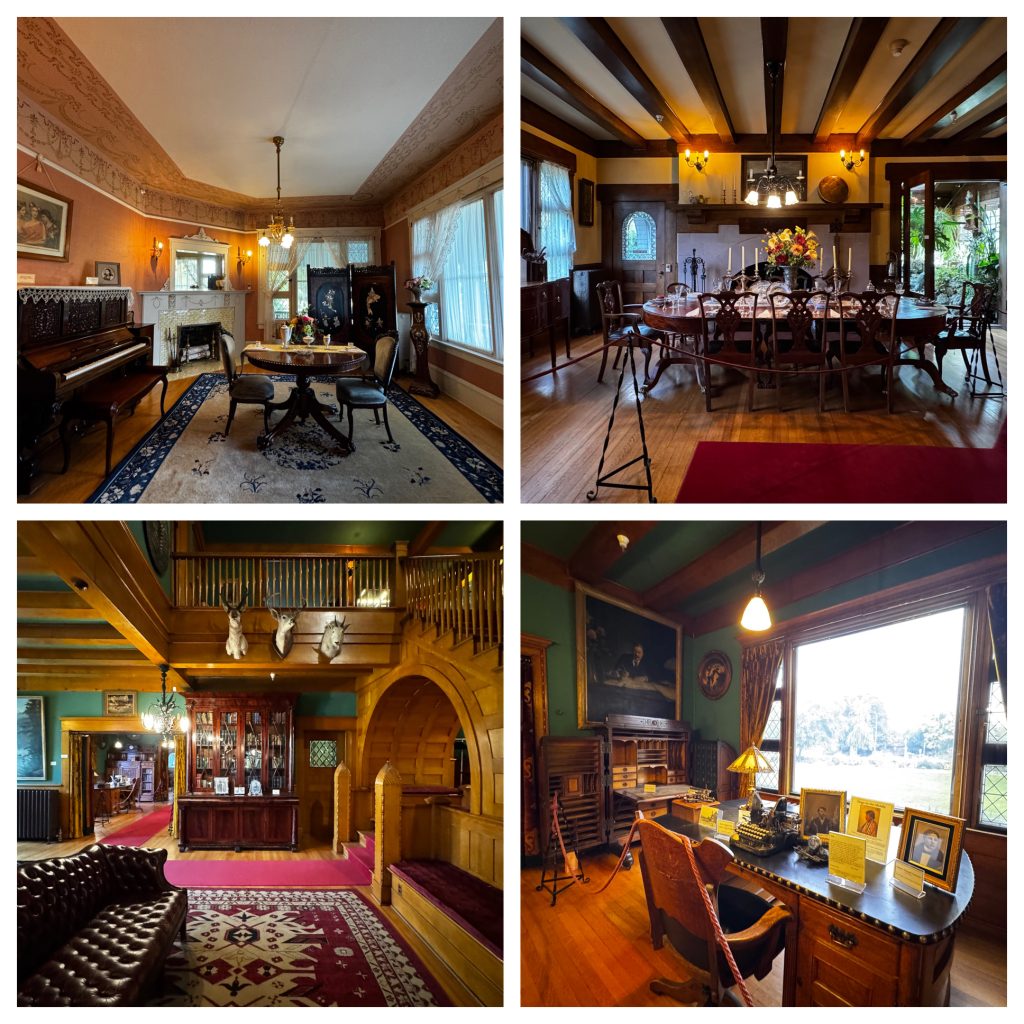
The mansion features opulent late-Victorian interior with warm quarter-sawn golden oak woodwork, paneling, massive sandstone fireplaces, hand-painted ceilings, and beautiful leaded- and stained-glass windows that fill the rooms with patterned light. The style blends European-inspired grandeur with practical Western pioneering elegance, using rich textiles, original furniture like Chippendale dining pieces, and innovative 1890s touches such as speaking tubes and a dumbwaiter.
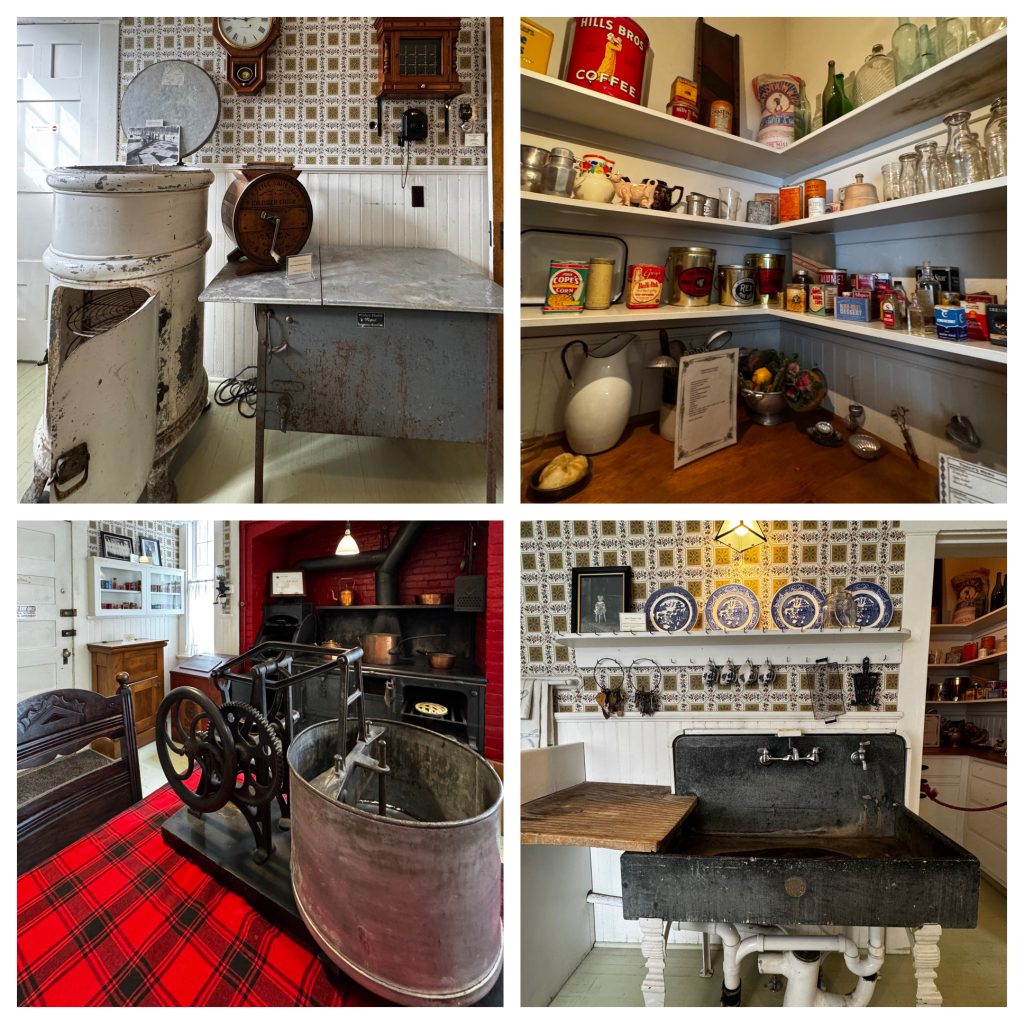
In the preserved kitchen, a large custom-built coal/wood-fired range/oven serves as the centerpiece, accompanied by period tools including a Southern beaten biscuit machine, a servants’ call board, warming ovens, and traditional copper and cast-iron cookware—reflecting both refined entertaining and efficient household operations of a prosperous Gilded Age family.
Day 6
Avalanche Lake
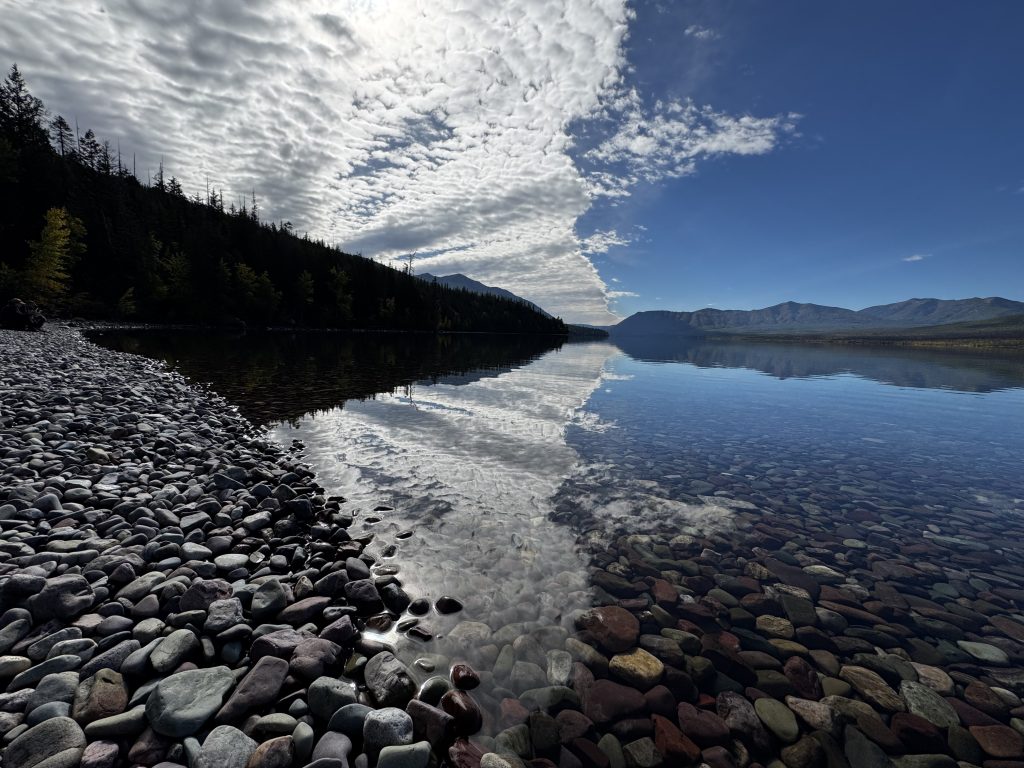
We just finished an awesome one-day getaway to Glacier National Park from our home base at Lake Blaine, a quick 30 minute drive to the West Glacier entrance. We explored two west-side gems—Lake McDonald and Trail of the Cedars.
Glacier’s a massive 1 million acres (1,583 square miles) of Rocky Mountain magic, nestled in the Lewis and Livingston ranges along the Canadian border. Known as the “Crown of the Continent,” it sits on the Continental Divide, splitting waters toward the Pacific or the Mississippi.
Our trip from Lake Blaine rolled past the Swan Mountain Range with golden aspens and evergreens beautiful in Fall colors. First stop was Lake McDonald, just a few miles into the park. This 10-mile-long, 1-mile-wide lake is one of our favorite stops at the park, a 472 feet deep beauty carved into the valley eons ago with a turquoise glow from glacial silt—tiny rock bits that catch the light like a prism.
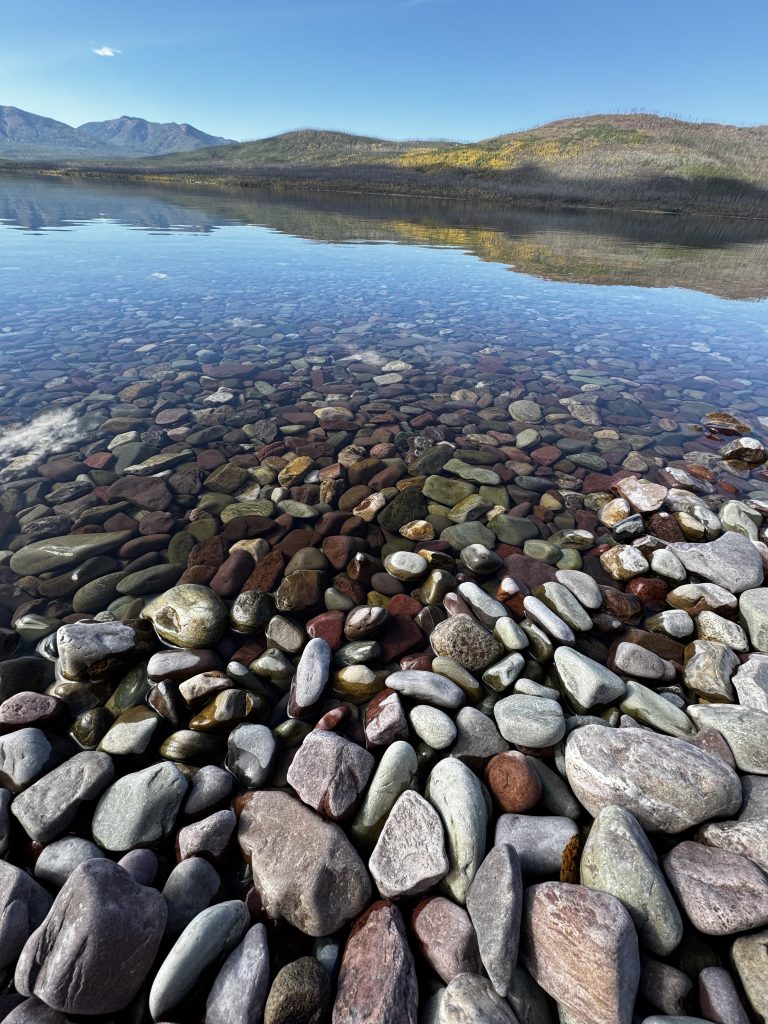
The shore sparkled with rainbow rocks—reds from iron, greens from copper, purples from manganese—polished smooth over millennia. Named for Duncan McDonald, a fur trader who scratched his name on a tree in 1878, the lake’s been a magnet since the park’s creation in 1910. We saw a pair of kayakers putting in their boats to fish for cutthroat trout and kokanee salmon. The lake is hugged by cedar-hemlock forests, a lush microclimate.
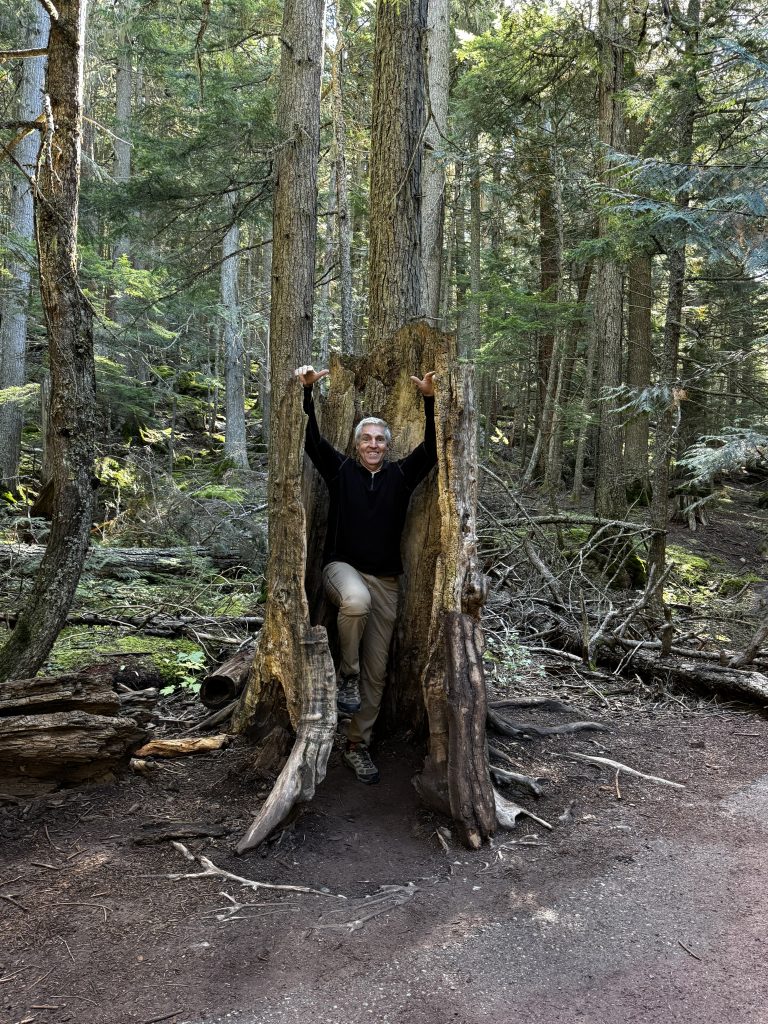
We then drove ~5 miles north to the Trail of the Cedars, a magical boardwalk loop through the forest. This flat path winds through an old-growth grove along Avalanche Creek, where the air smells like cedar and damp earth.
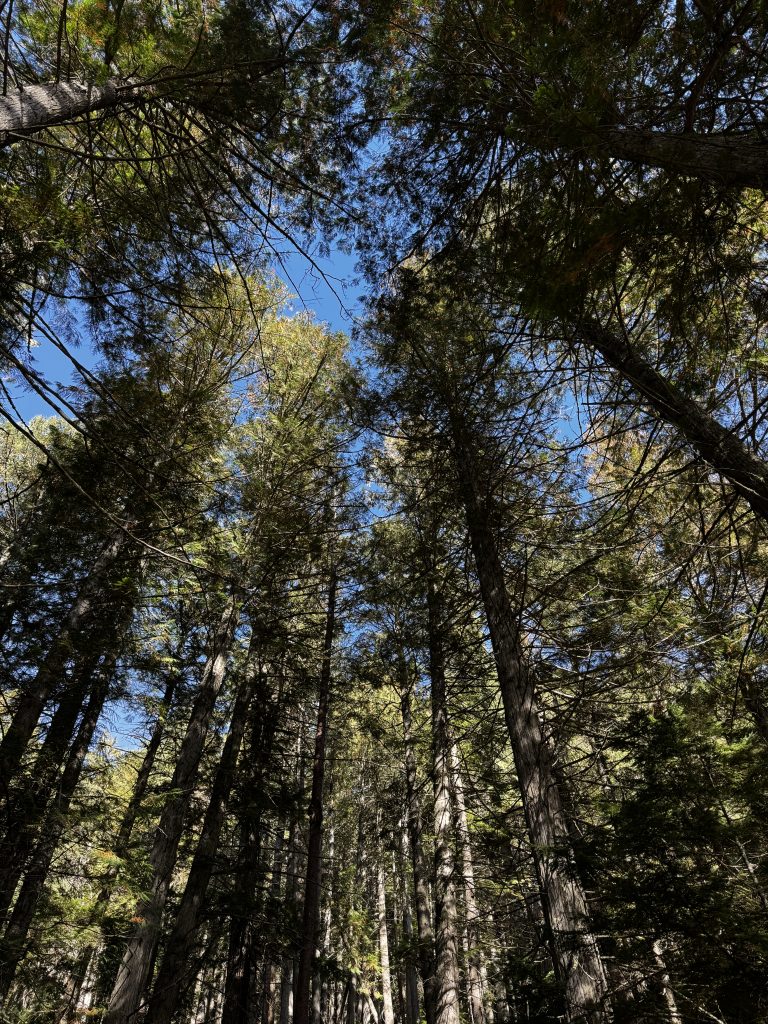
Western red cedars and hemlocks tower 80–100 feet, some with trunks 4–7 feet wide, thriving at their eastern range limit in this moist pocket. The trail’s a window into Glacier’s 170-million-year geologic saga, with rocks from the Lewis Overthrust holding fossils of ancient sea creatures.
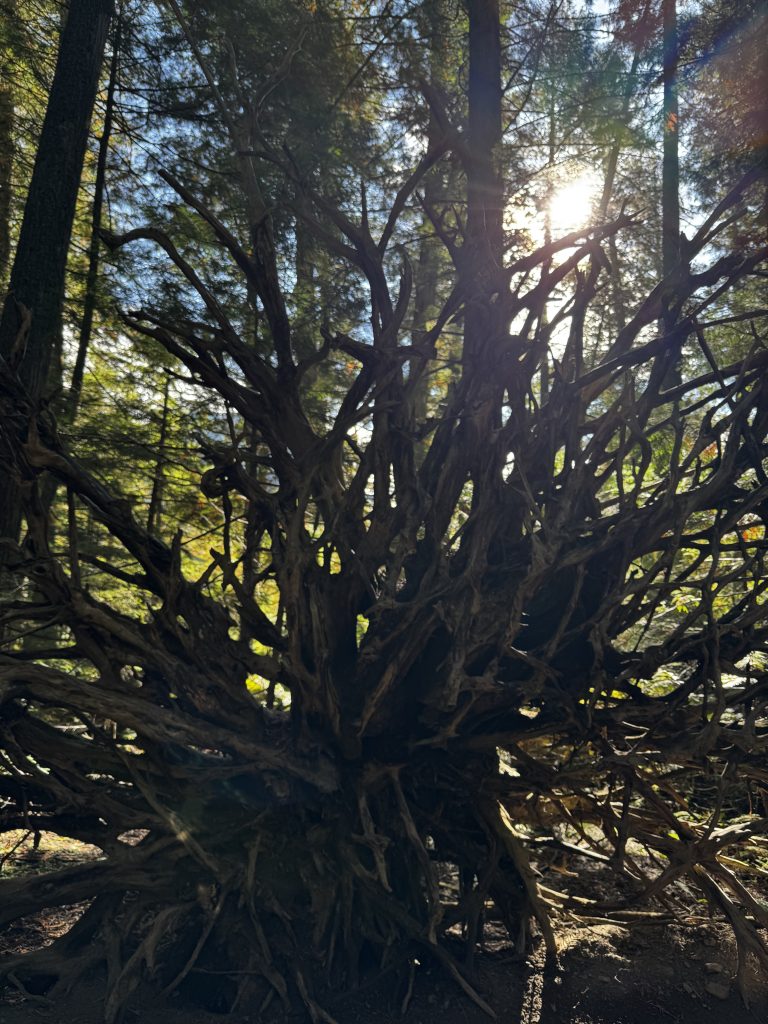
We stopped at Avalanche Gorge, where the creek roars through a tight basalt canyon. We skipped the longer Avalanche Lake hike to keep the day light, but this loop was perfect for our group to feel the park’s wild pulse.
We drove back with the Flathead River glinting beside us. A fantastic day trip for sure!