 Swan Bradshaw
Day 1
Thus began our Fall journey …
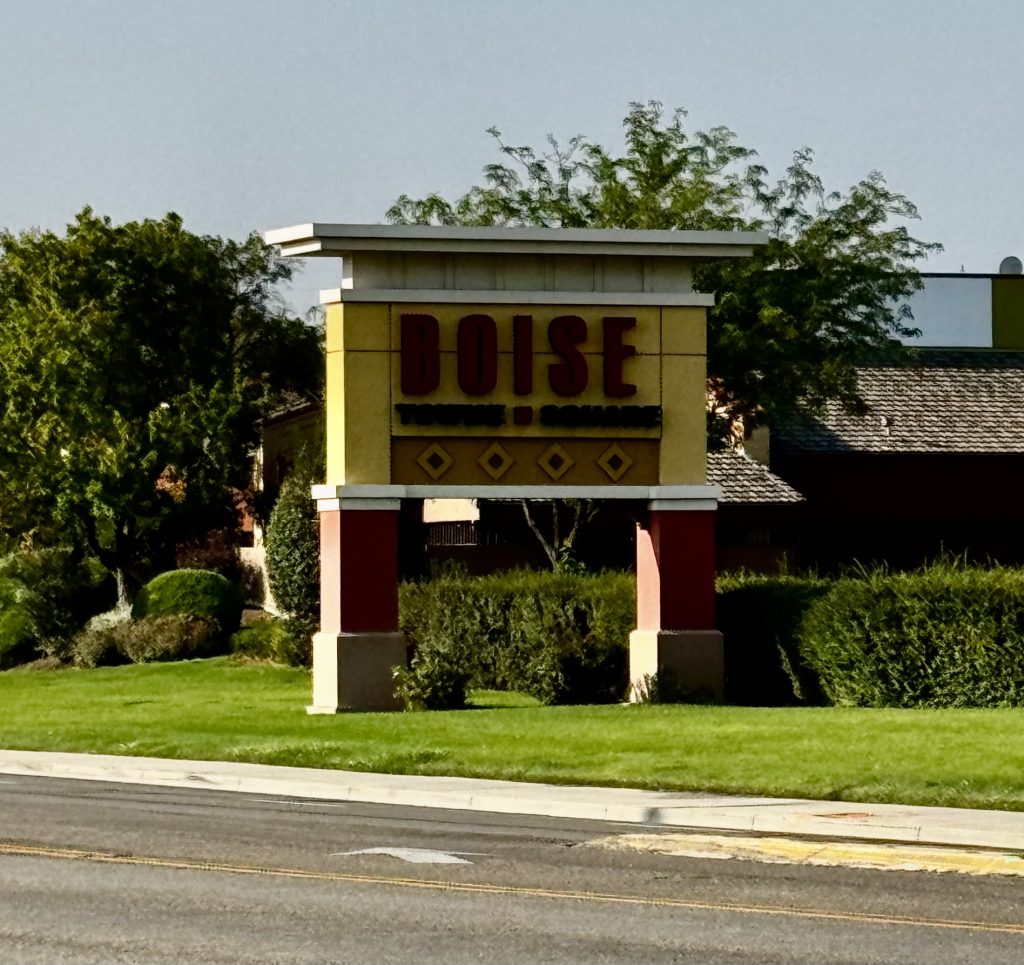
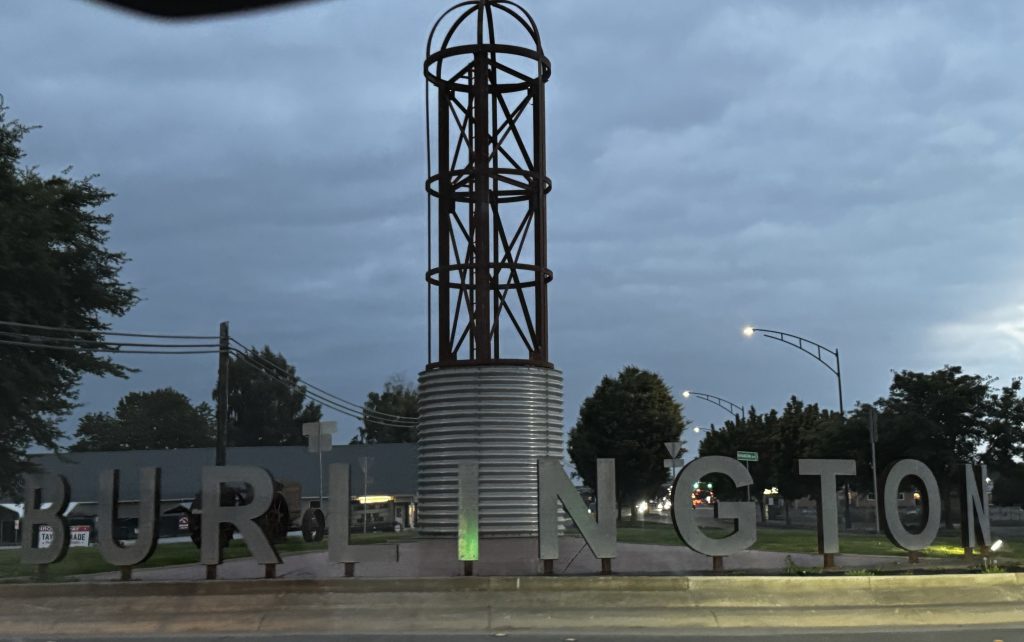
We started our drive from Utah, stopped in Boise for a night, and then continued our drive for 8 hours, stopped overnight in Burlington, Seattle, and then drove to Vancouver to pick up our friends from China, Esther and Wang Ge, at the airport. This is their first time visiting the US and we will be traveling together for the next two months!
Vancouver
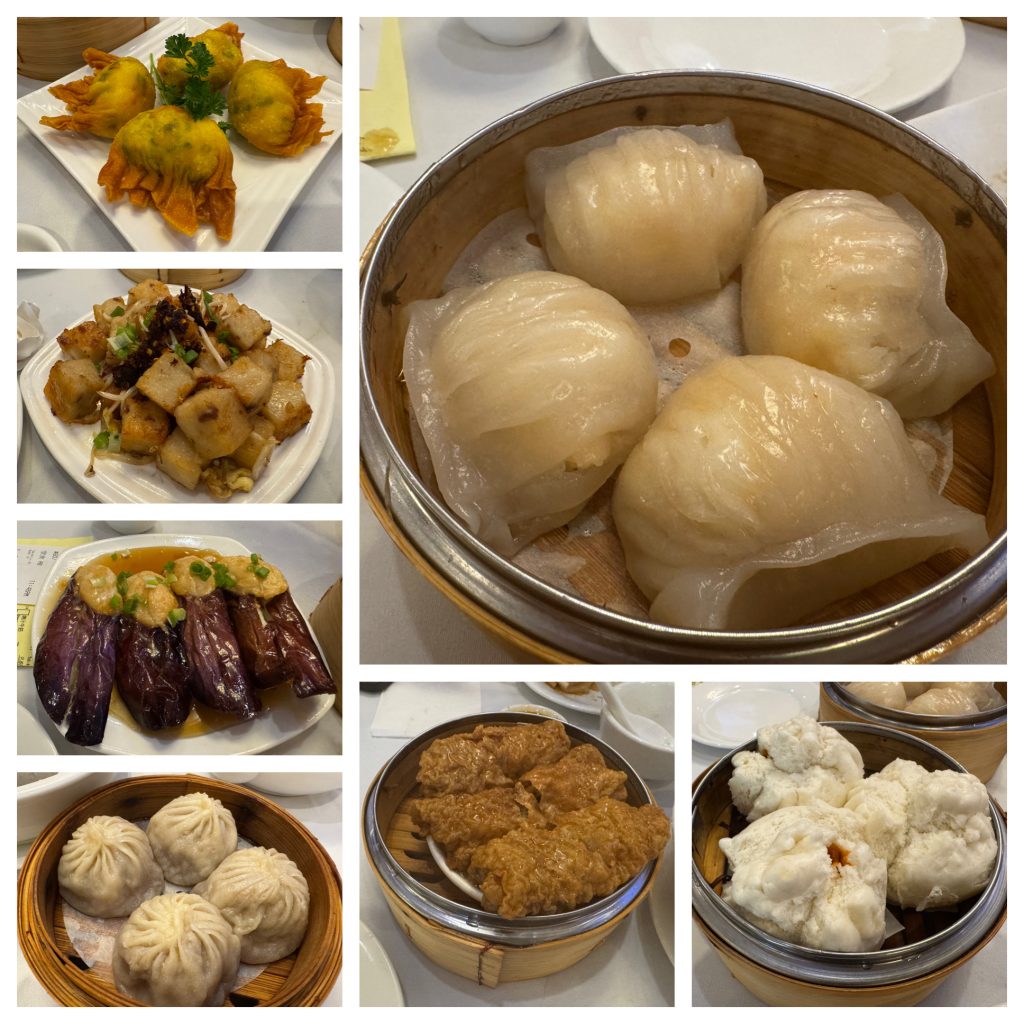
Naturally, our first stop after picking Esther and Wang Ge was to dine at Floata, a famous dim sum restaurant in Chinatown, Vancouver.
After that we checked into our hotel. we stayed at the element hotel, which is a Marriott branded hotel.
Esther brought a bunch of goodies for us from China!
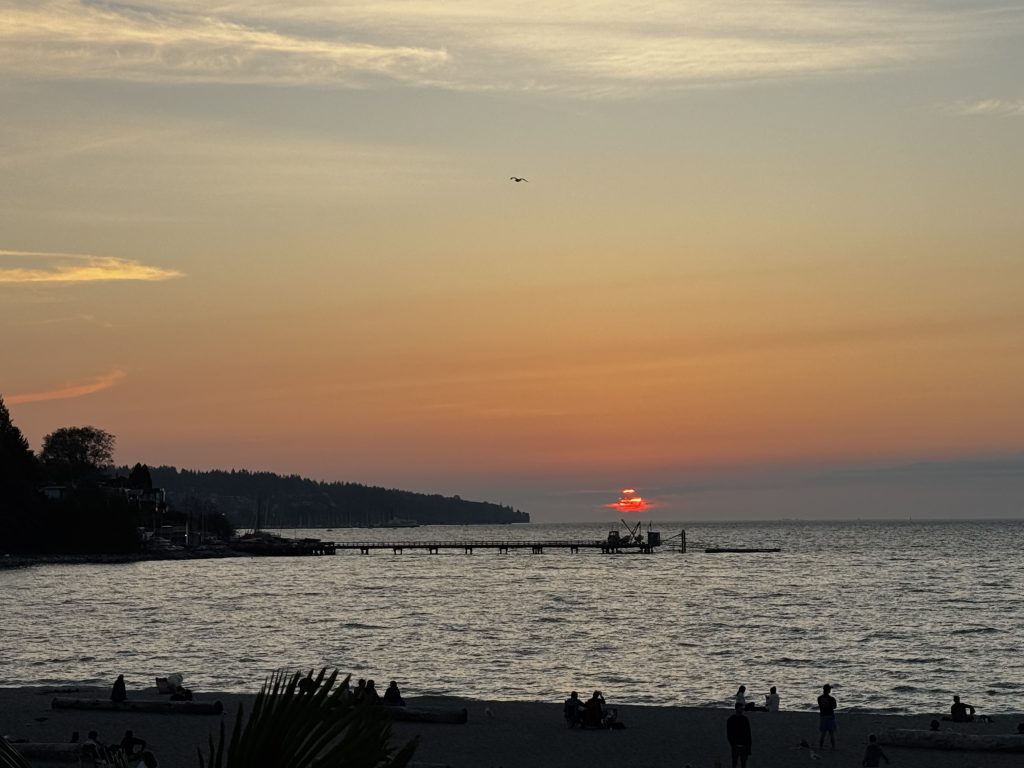
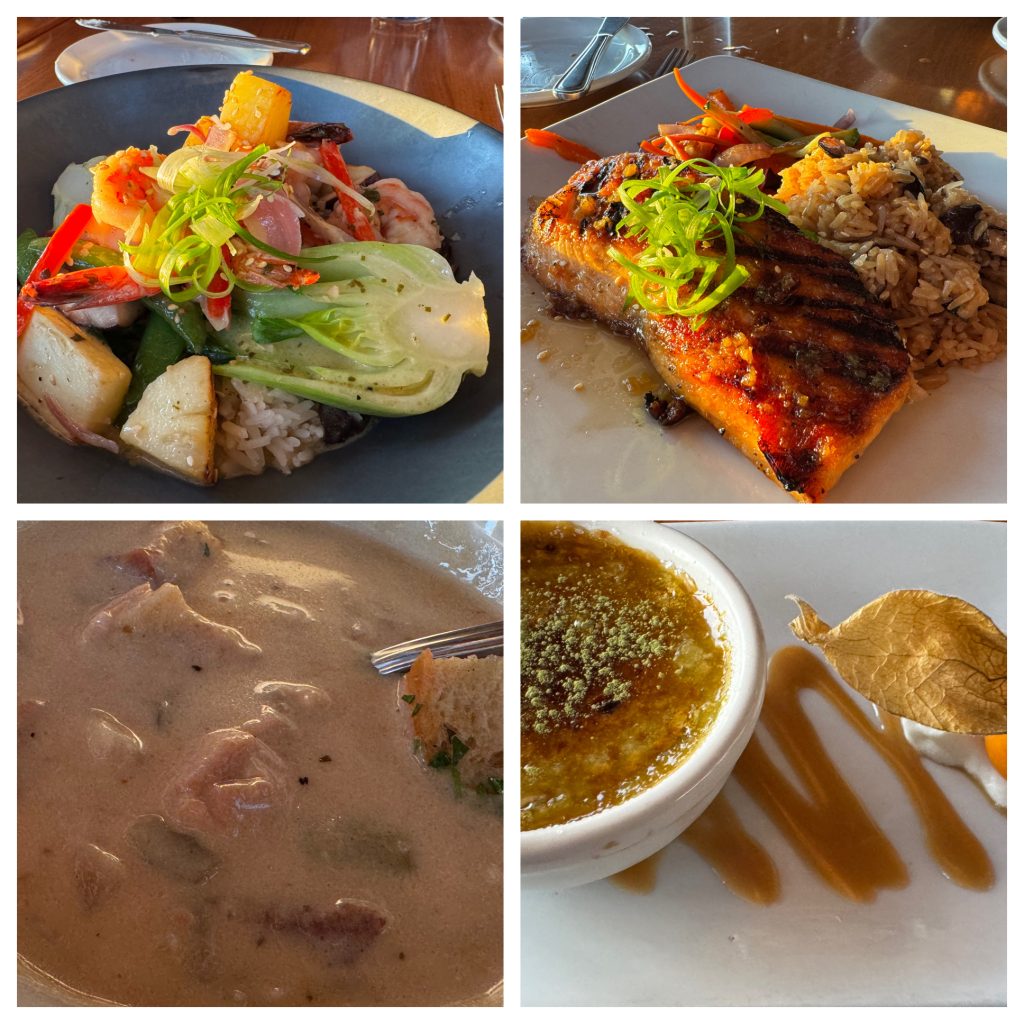
We then went to Kitsilano Beach to enjoy the sunset and had dinner at Boat House right next to the beach, the food was very delicious!
Day 2
We started our day with breakfast at 8am at the hotel!
A Day in Vancouver
Gastown, Stanley Park, Go Fish Lunch, and Granville Island
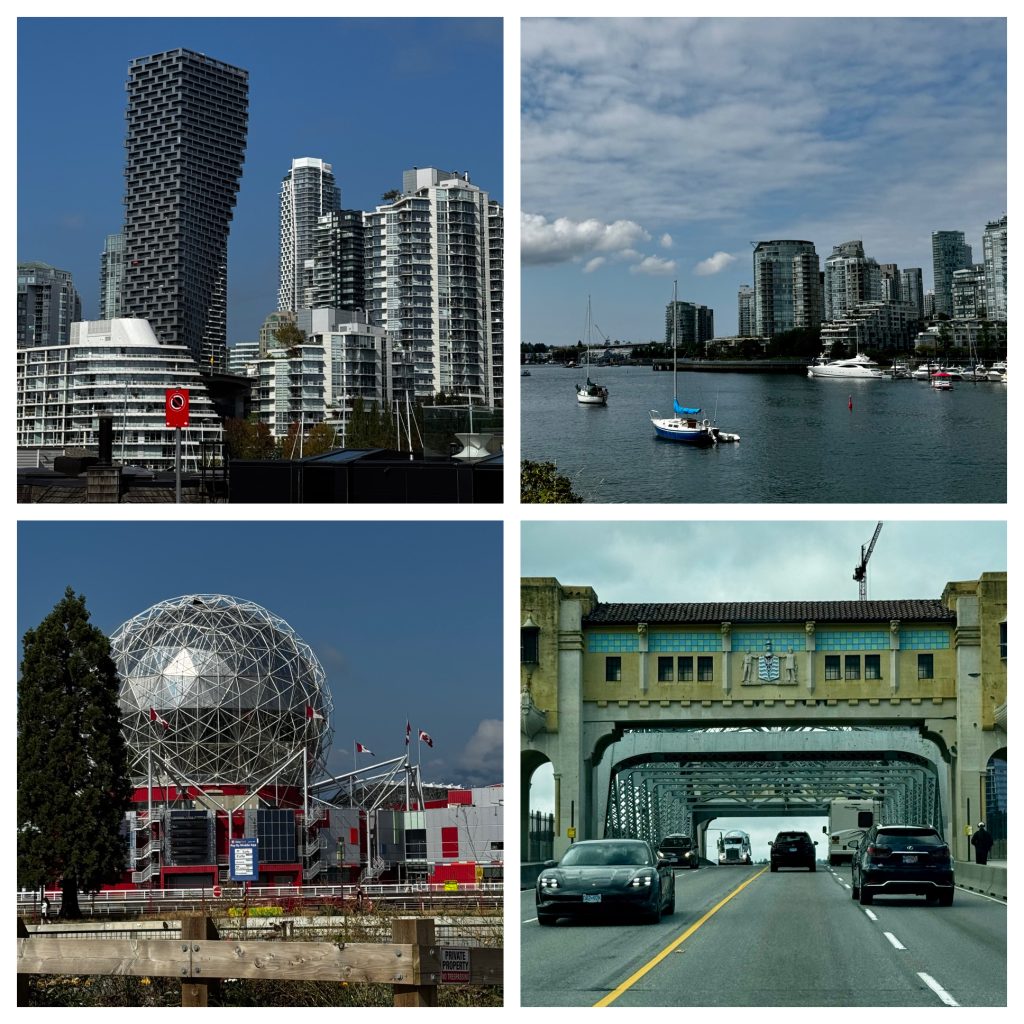
What a blast! Today we zipped through some of Vancouver’s best sites, from the funky cobblestone vibe of Gastown to the wild beauty of Stanley Park, a great fish and chips lunch at Go Fish right on the harbor, and a sweet finish at Granville Island with ice cream from Rogers’ Chocolates.
This city, hugged by the ocean and mountains, is Canada’s chillest playground, blending indigenous roots, old-school colonial charm, and a global vibe. With the salty breeze and jaw-dropping views, Vancouver feels like a postcard you can wander through.
Morning in Gastown
We started in Gastown, Vancouver’s oldest spot, just as the morning fog was clearing over the harbor. Built on the traditional lands of the Musqueam, Squamish, and Tsleil-Waututh peoples, this place goes back to “Gassy” Jack Deighton, a talkative sailor who showed up in 1867, opened a saloon, and was part of the group that started the Fraser Canyon Gold Rush.
By the late 1800s, Gastown was a hub for lumber and trade, helping British Columbia join Canada in 1871. A huge fire trashed it in 1886, but they rebuilt with those awesome Victorian buildings, now a National Historic Site since 2002.
Gastown is right by the water, with streets sloping to where big ships still dock. It’s small – just a few blocks of brick shops and old-timey lampposts – perfect for a morning walk.
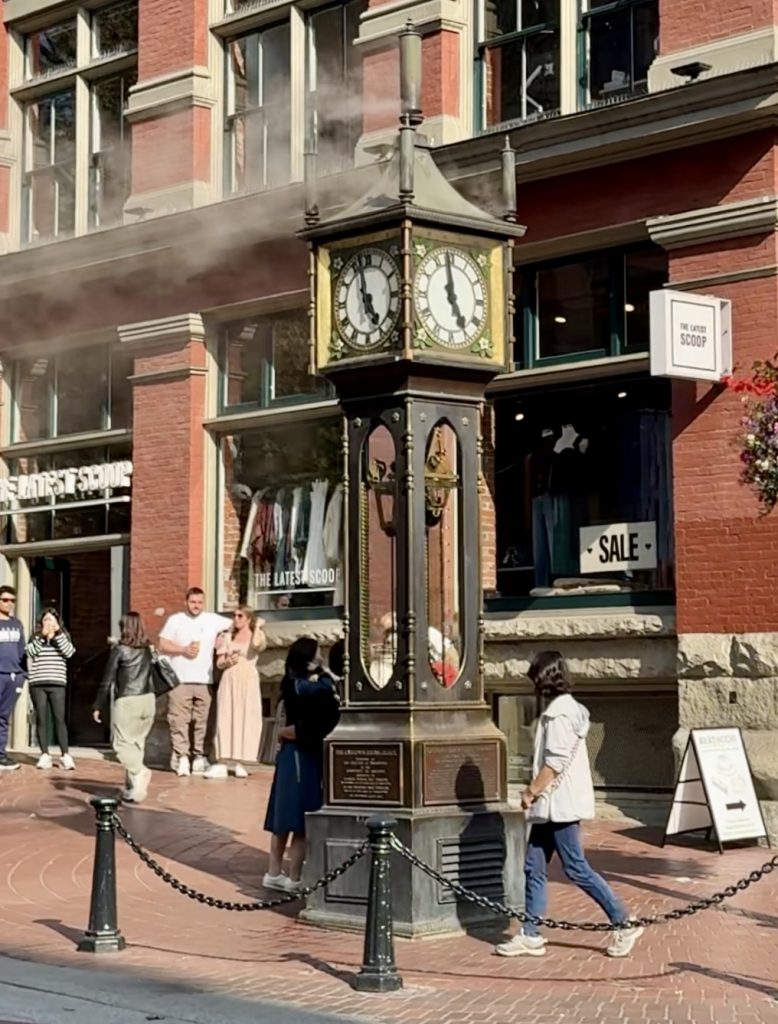
First up, we stopped at the Steam Clock on Water Street, puffing steam and whistling every 15 minutes. Built in 1977 by clockmaker Raymond Saunders for Vancouver’s 100th birthday, it’s not really Victorian (it’s steam, not gears), but it’s pretty great anyway.
Right past that is Maple Tree Square, where Gassy Jack’s statue marks his old stomping ground.
Stanley Park
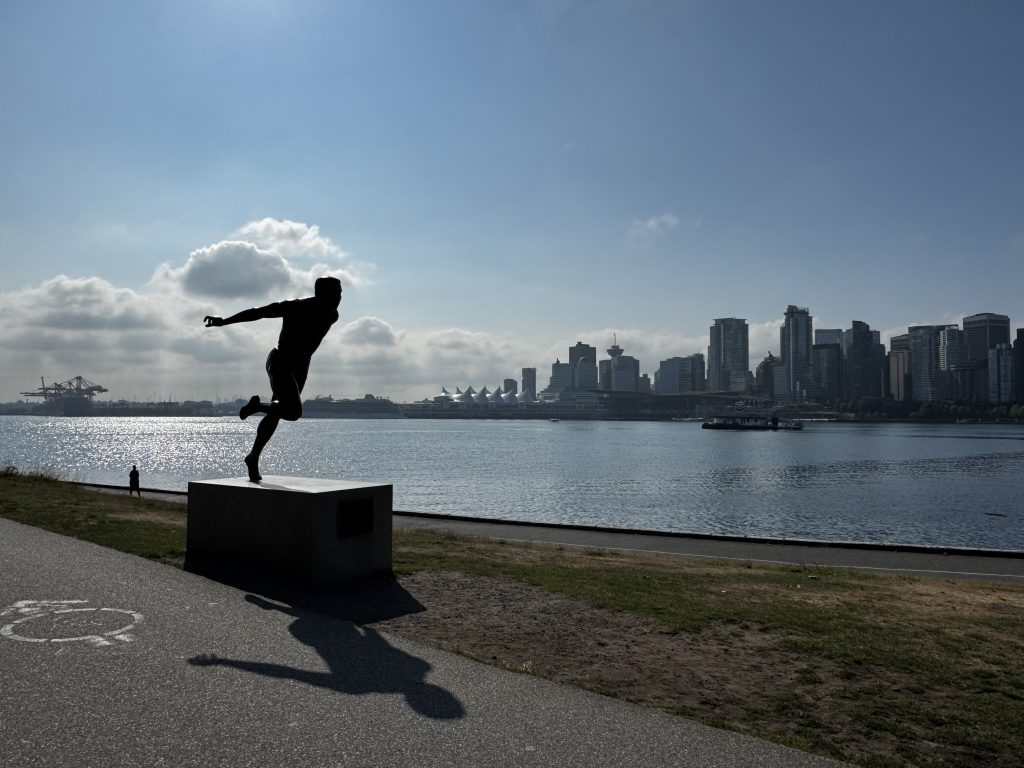
We then drove to Stanley Park, Vancouver’s massive 1,000-acre green escape (20% larger than NY’s Central Park, much wilder, with ocean views and giant cedars). Set up in 1888 on land once used by the Squamish and others, it’s named after Lord Stanley, a governor who wanted a public park as the city grew. It’s a peninsula that pokes into Burrard Inlet and English Bay, shaped by glaciers and home to eagles and seals. The rainforest, with 50 inches of rain a year, keeps it lush and green.
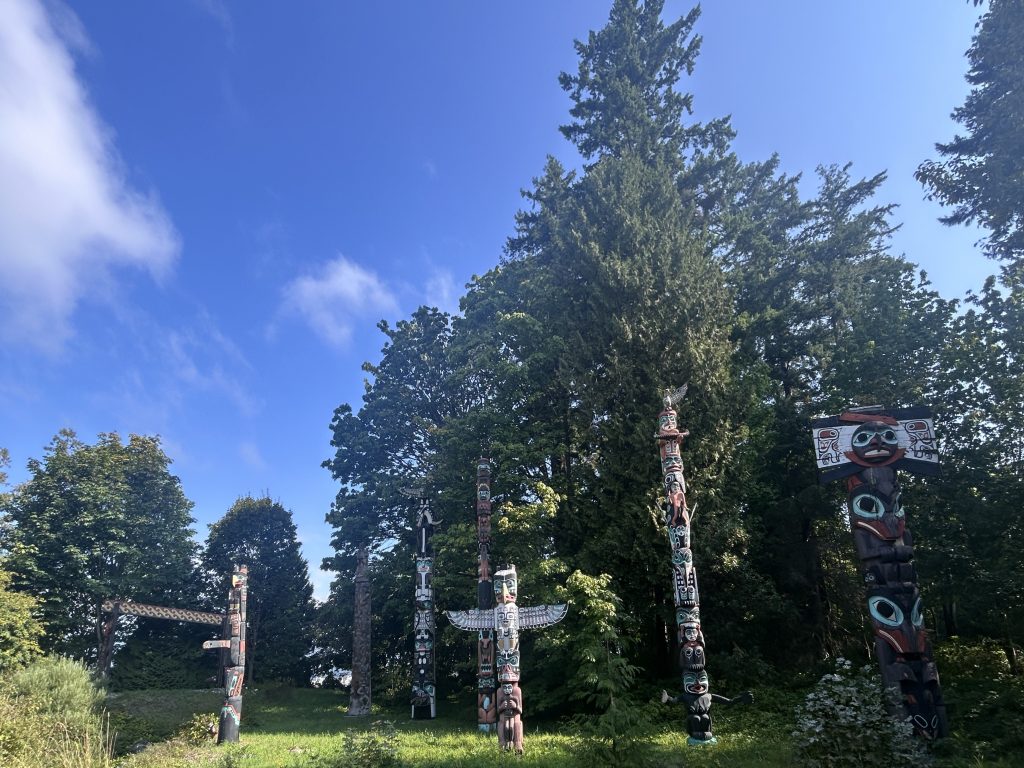
We started at the Totem Poles near Brockton Point. These huge cedar carvings are straight-up epic, telling stories of Pacific Northwest Indigenous peoples like the Haida and Nisha’a. Totem poles are like family crests with ravens, bears, and salmon showing lineage or legends. The first one (here) went up in 1920 to honor Indigenous culture after colonial bans on stuff like the potlatch (illegal from 1884-1951).
We then cruised the seawall along the waterfront, great views of the ocean, mountains, and freighters. The seawall is a city First Nations project to stop erosion, and it’s perfect for soaking in Vancouver’s coastal magic. We stopped at the Japanese Dragon Statue in the Japanese Floating World Garden, a bronze dragon from 1986, a gift from Yokohama, Japan. It’s a tribute to Japanese-Canadians who faced WWII internment, with cherry blossoms and koi ponds adding a chill vibe.
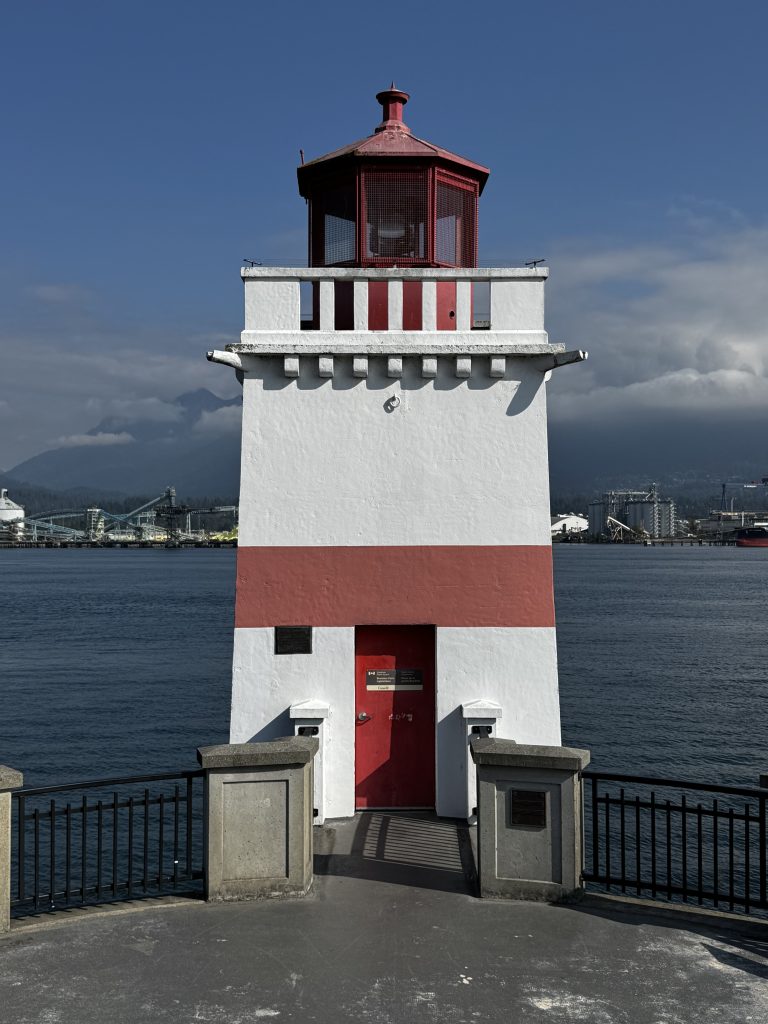
The Third Beach Lighthouse, a little white beacon, helps boats in the foggy inlet, tying into Vancouver’s shipping past.
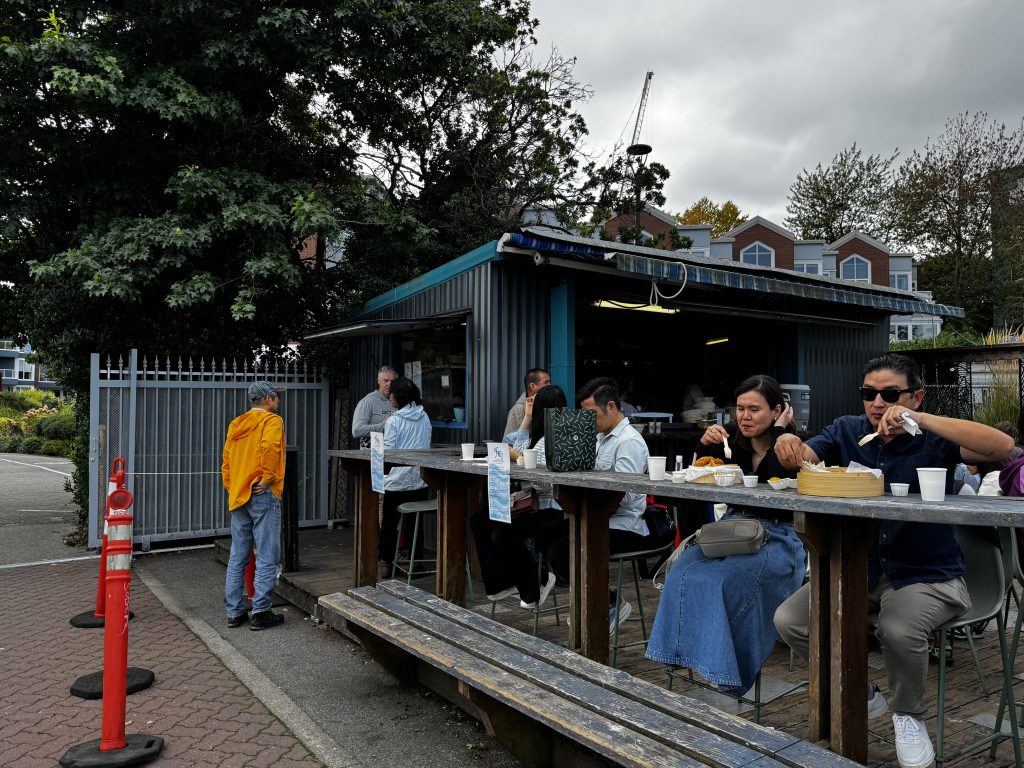
Before hitting Granville Island, we stopped at Go Fish, a no-frills seafood shack on the waterfront at False Creek Fishermen’s Wharf. Opened in 2006, it’s all about fresh, local catches, tied to Vancouver’s fishing culture and Coast Salish traditions.
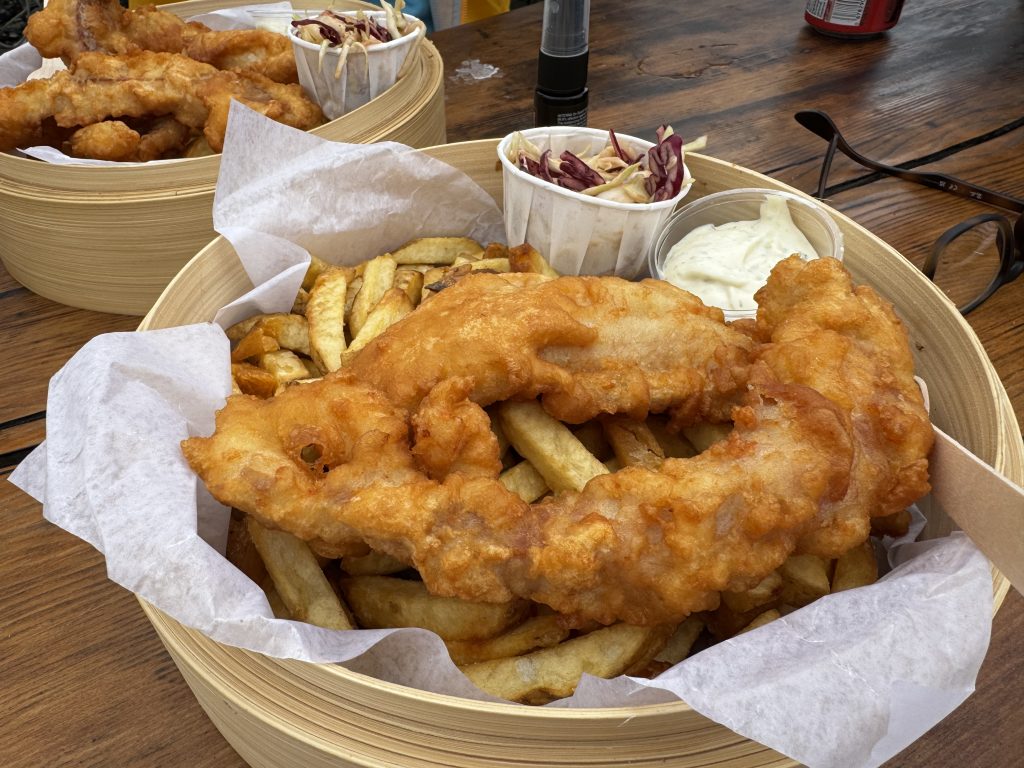
We got the fish and chips – crispy cod, golden fries, and house-made tartar sauce, for about CAD 26. Eating on a picnic table with boats bobbing and seals splashing nearby was great, unfortunately, the nearby trash bins attracted some wasps that we also had to fend off. Fish and chips screams British roots, but the local salmon and crab nod to Indigenous harvests that fed this coast forever. Go Fish’s laid-back, no-reservations vibe is so Canadian – friendly and real. Full and happy, we made our way to Granville Island.
Granville Island
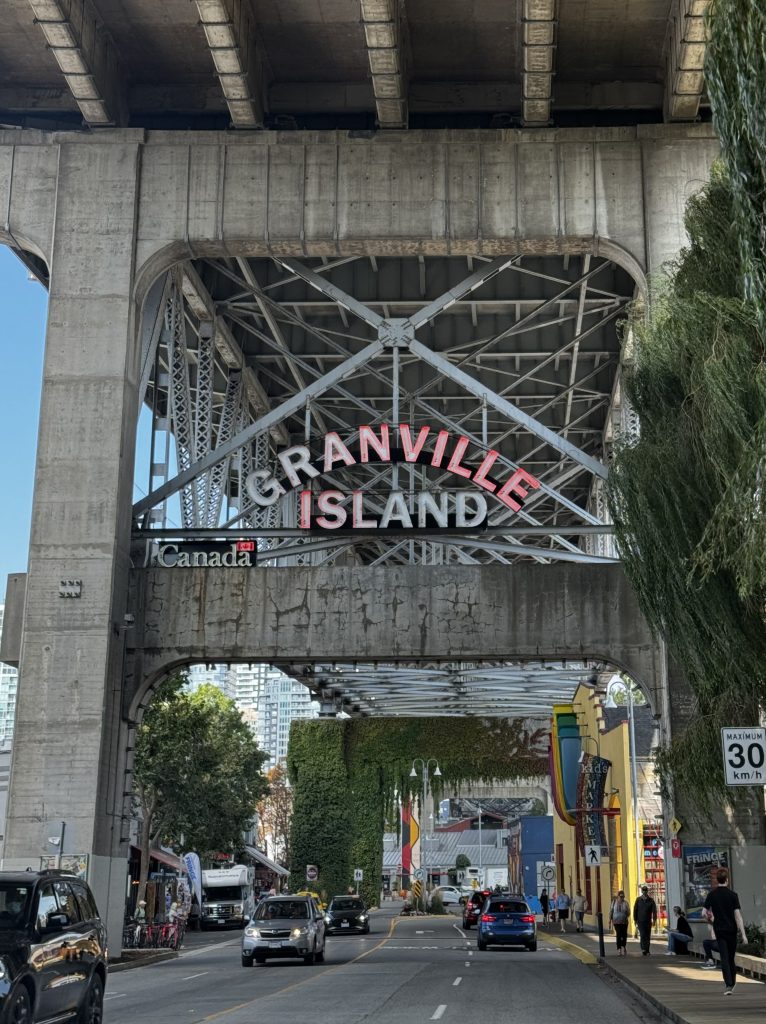
Granville Island used to be an industrial dump in the early 1900s, named after Lord Granville, a British politician. It was all rail yards and factories, tied to Canada’s railway boom after 1885. By the 1970s, it got a makeover into a creative hotspot, with old warehouses now full of galleries and theaters. It’s a peninsula in False Creek, linked by bridges and ferries, with herons chilling in the tidal flats.
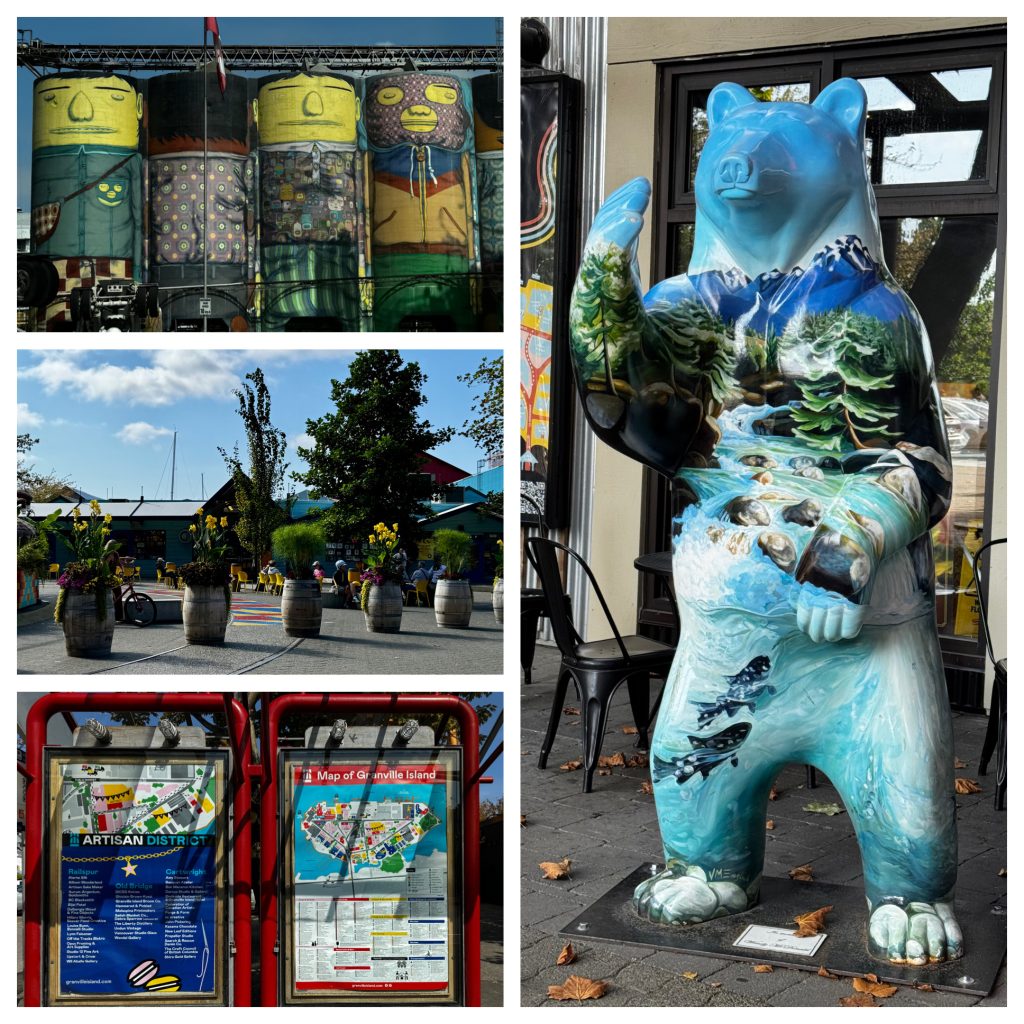
The place had lots going on, street performers, singers, jugglers, buskers strumming fiddles (shoutout to Scottish settler vibes), and the Public Market smelling like fresh bread and fish. The market is a huge food hall from 1979 packed with B.C. salmon, maple syrup, and Okanagan wines.
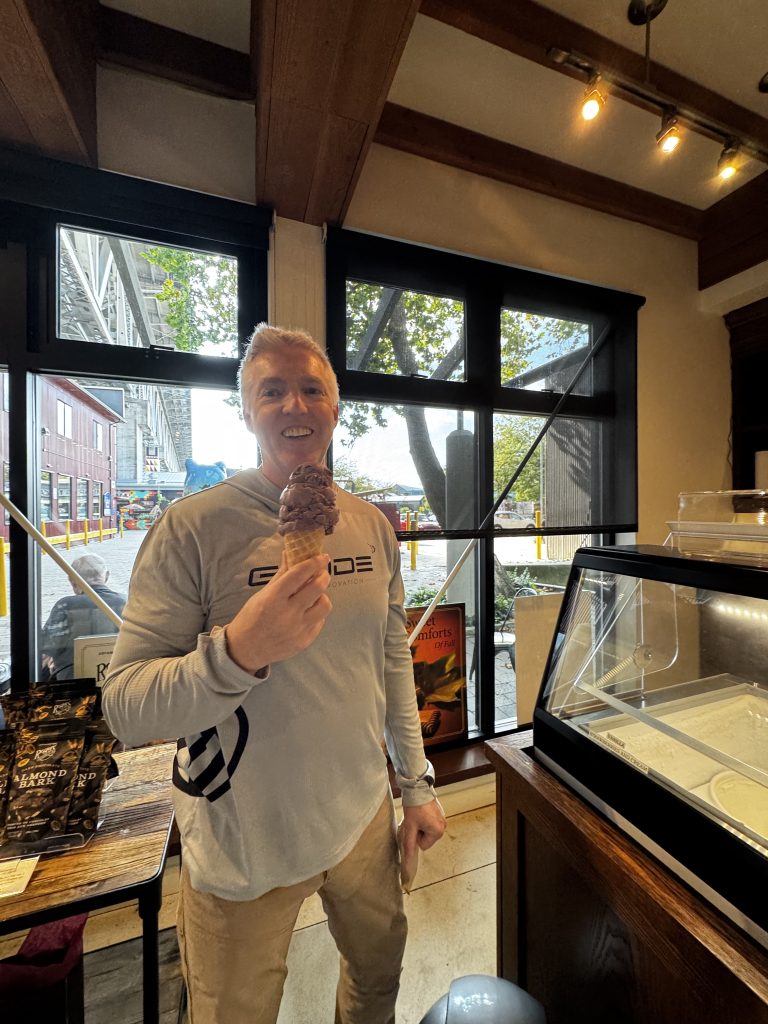
The best part of the visit was a stop at Rogers’ Chocolates for some seriously good ice cream. This Canadian icon, started in Victoria in 1885 by Charles Rogers, is famous for creamy chocolates, but their ice cream is next-level. We got cones (Kevan got a double) with chocolate, strawberry, salted caramel, super rich and smooth, for about CAD 7. It was the perfect sweet treat to cap off the day.
What a great day! From Gastown’s steamy clock to Stanley Park’s epic totems, an awesome lunch at Go Fish, and Granville’s artsy buzz with that Rogers’ ice cream, Vancouver’s got it all – history, nature, and heart. Can’t wait to explore more of this coastal gem. Now off to dinner – we were able to find a restaurant right across the street: “Ipoh Malaysian Cuisine”!!!
Day 3
We travelled all day started at 4:30am ride to the Vancouver Airport, took a flight to Fairbanks via Seattle (as there’s no direct flight from Vancouver to Fairbanks) with a 2-hour lay over. Our luggage was 5 lbs overweight and the first counter agent wanted to charge me CAD 100.
While trying to reallocate the excess weight into the carry-on, another agent (a Canadian -Chinese originally from Guangzhou who was helping our friends, Esther and Wang Ge, came over and issued the ticket without having to pay the additional charge. What a great day!
Flight from Seattle to Fairbanks
A screen popped up on Kevan’s iPhone immediately followed by a text from Tina that Charlie Kirk, a conservative activist got shot and killed while giving a talk at UVU ( Utah Valley University). Travis is currently attending UVU but all classes had been cancelled for the rest of the week. The shooter is still on the loose! Crazy!
Fairbanks
We checked into Westmark hotel, probably one of the best hotels in town, a 3-star rating with a strong chemical smell on the hallway and some in the room. I used the diffuser all night to eliminate the smell!
Thai House
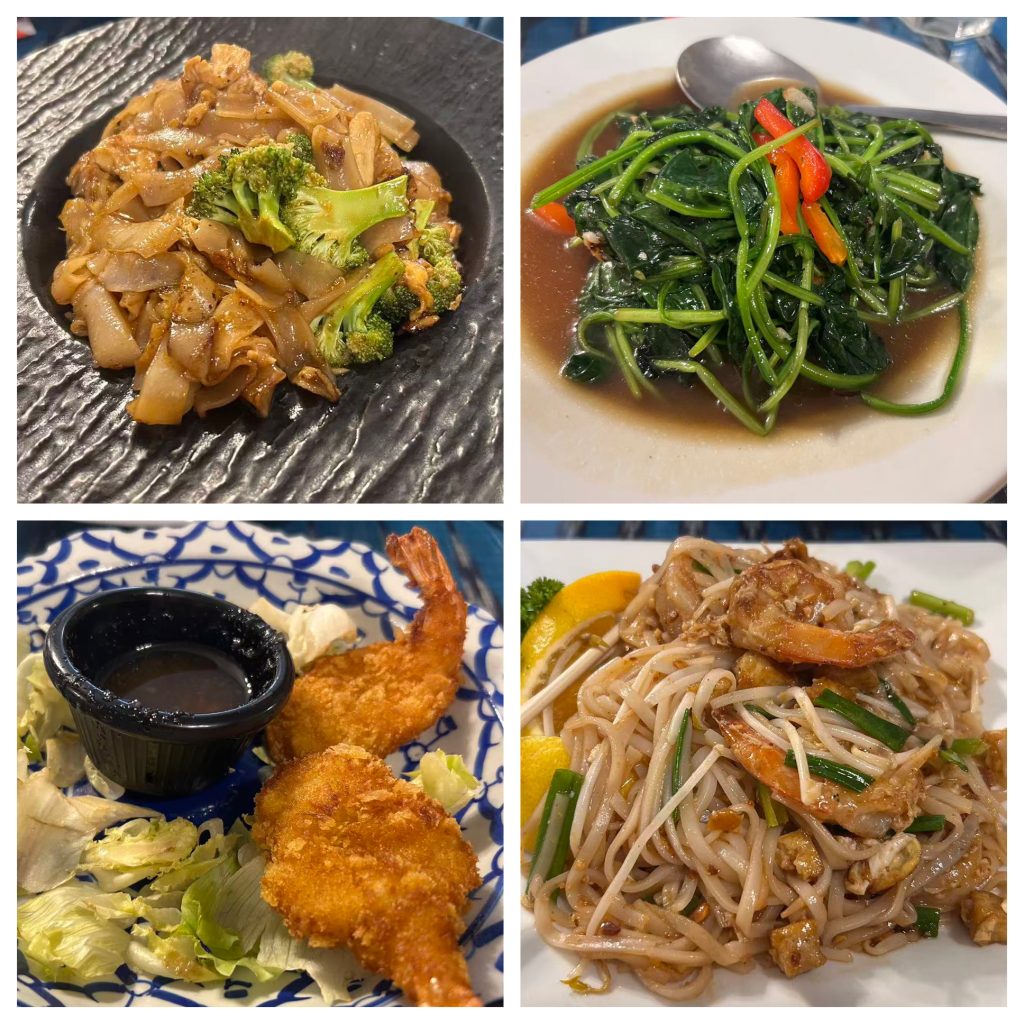
We walked to Thai House from the hotel, about 0.2 miles, with the help of my crutch. Food was amazing!
Day 4
Mooncake for breakfast for me and workout for breakfast for Kevan!!!
We had lunch again at Thai House, tasty and close by.
After lunch we checked into Princess Lodge Hotel, and then headed to Steamboat River tour…
Steamboat River Tour
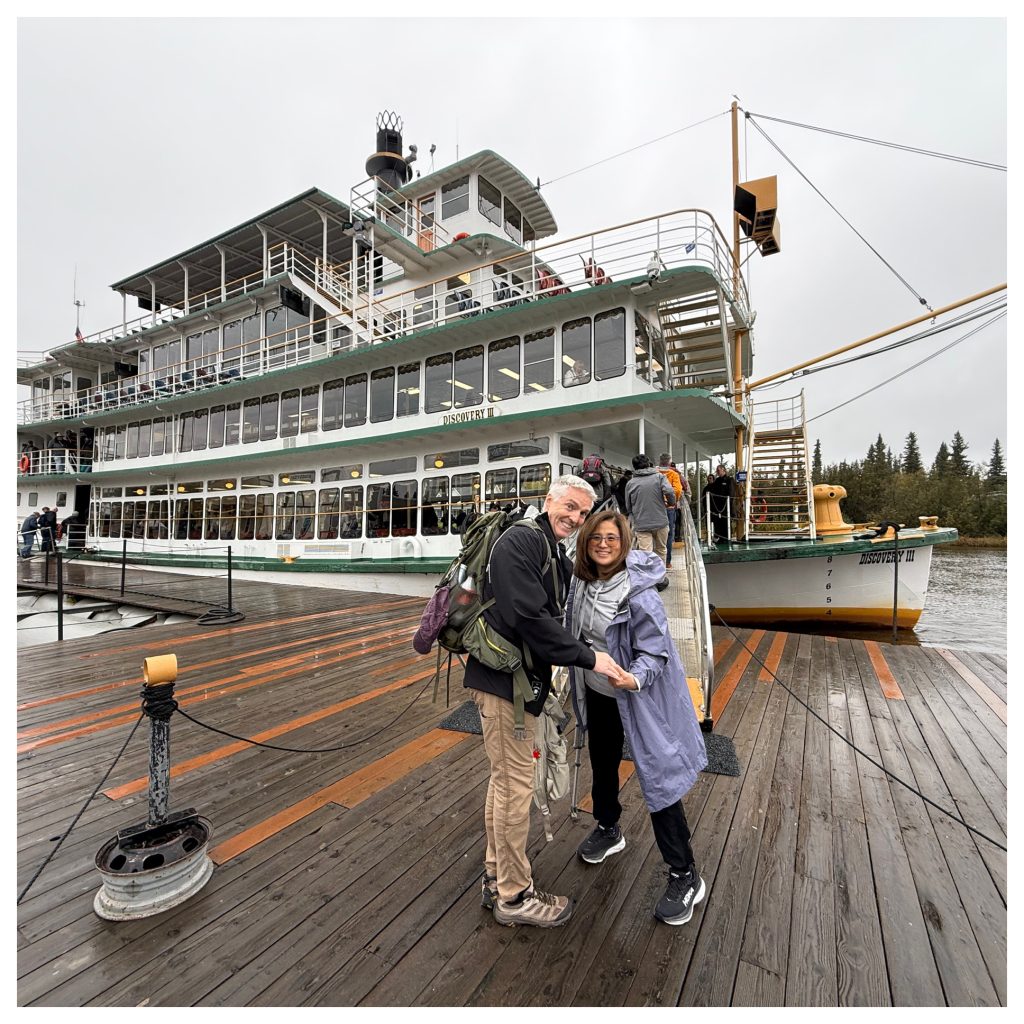
Today, we embarked on the Riverboat Discovery cruise in Fairbanks, a three-hour journey along the Chena River that offered a fascinating glimpse into Alaska’s history and culture. Boarding the authentic sternwheeler, we had a knowledgeable narrator sharing stories about the region’s past.
One of the highlights was watching a bush plane demonstrate a takeoff and landing right on the river, showcasing the vital role of aviation in remote Alaskan life.
Next, we stopped near Trail Breaker Kennel, the dog camp founded by the late Iditarod champion Susan Butcher and now run by her family, including her daughter and husband. I watched a lively mushing demonstration where energetic sled dogs pulled a 4 wheeler ATV, highlighting their speed, teamwork, and the training involved for long-distance races like the Iditarod.
The guides shared the inspiring story of Susan Butcher, a pioneering musher who became the second woman to win the Iditarod and the first to win it four times—in 1986, 1987, 1988, and 1990. Her lead dog, Granite, started as a shy and unpromising pup but, under her patient training, became a legendary leader who helped secure those victories, even defending the team from a moose attack during one race. We also learned about the dogs’ diet, including how salmon is prepared to fuel them, and the endurance required for the grueling 1,000-mile Iditarod trail.
Athabaskan Village
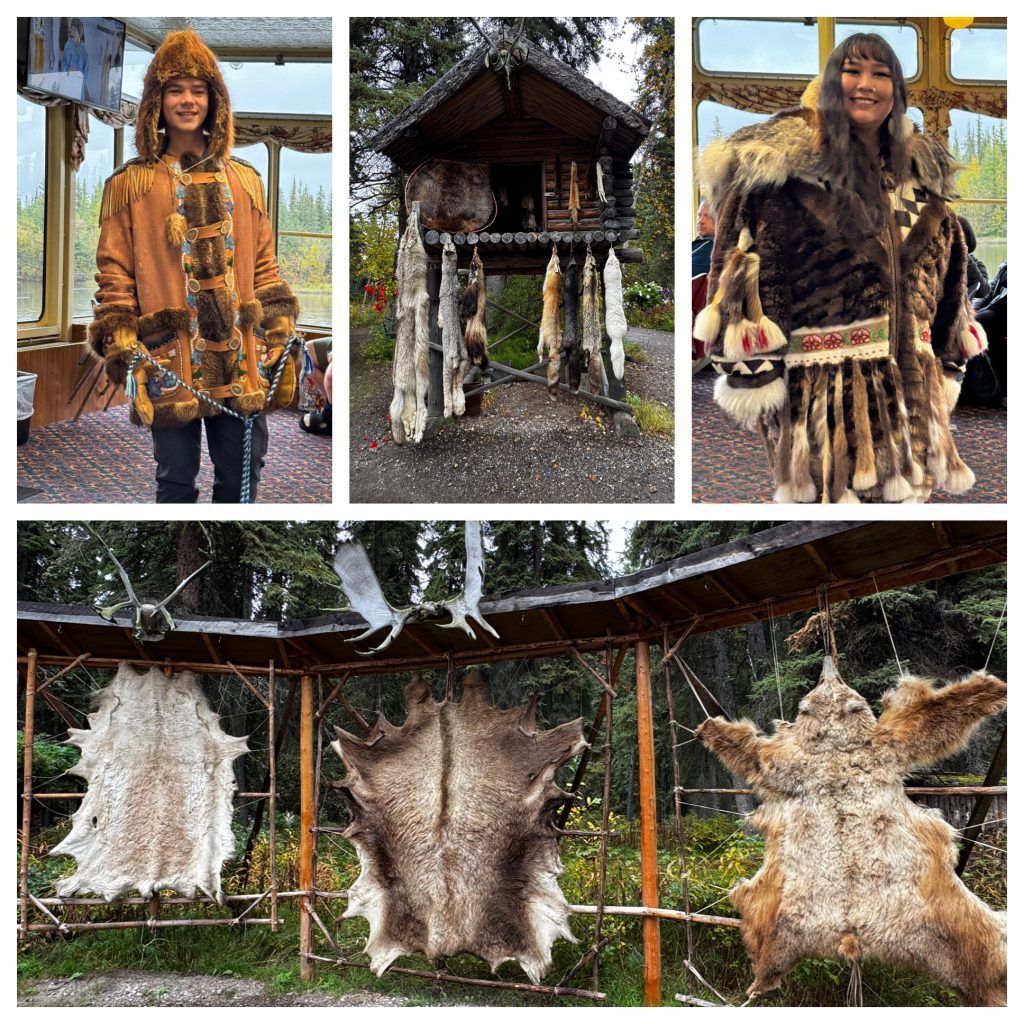
The cruise included a visit to an Athabaskan village, where guides explained traditional ways of life, from fish camps to fur trading, and demonstrated skills like salmon preparation.
Here, dog trainers from Trail Breaker Kennel were present with three of their main dogs, ready to answer questions about Alaskan Huskies, mushing techniques, and the sport’s demands. It felt educational yet relaxed, with opportunities to walk around, interact with the dogs, and ask questions.
Home of the River Cruise Founder
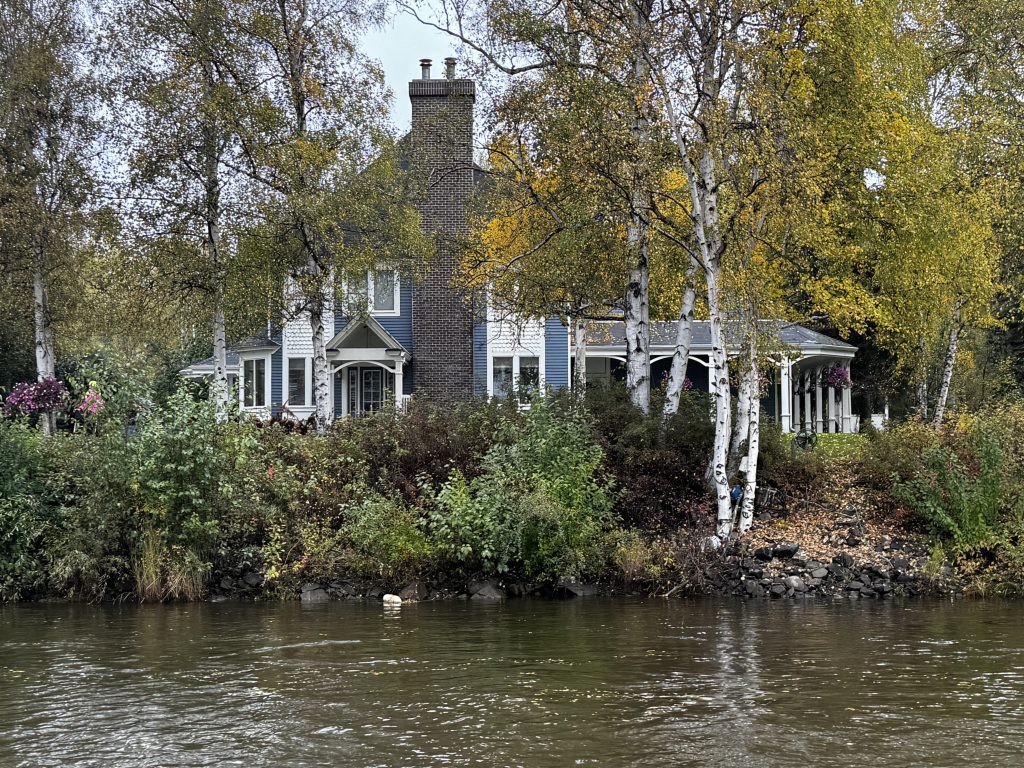
We were greeted by the 99-year old Grandma Buckley, wife of the cruise founder!
Overall, this family-run experience, now in its fifth generation, blended scenery, history, education, and a touch of adventure perfectly. If you are in Fairbanks, it is a great way to spend an afternoon appreciating the heart of Alaska.
Edgewater Restaurant
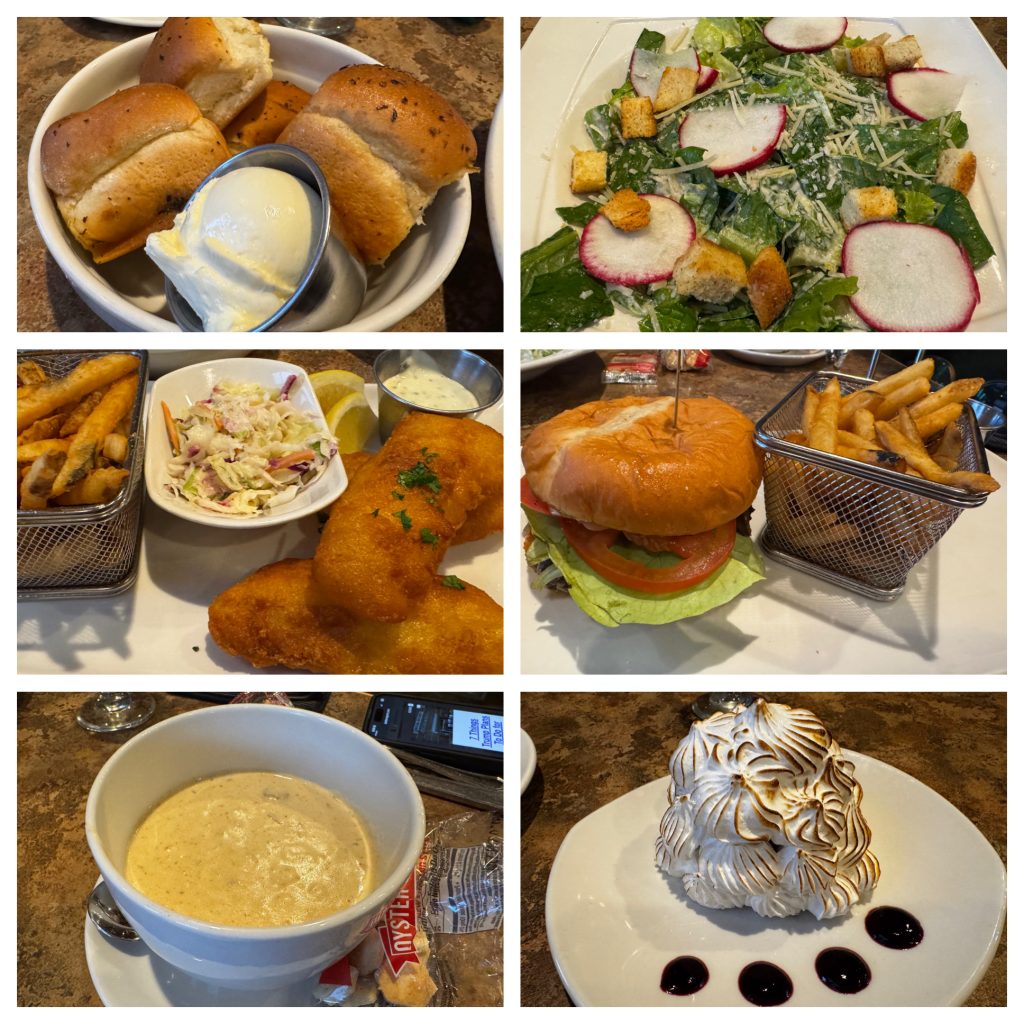
We had dinner at the hotel, slightly pricey but delicious. The salmon chowder and Baked Alaskan Huckleberry Ice Cream were my favorites!
Day 5
This morning we checked out of the hotel at 9am for a 3 1/2 hours bus ride to Denali. Our uber driver yesterday told us to sit on the left side of the bus for this leg for a better scenery during the ride.
On the way to Denali …
What an epic day kicking off our Alaska adventure! We started bright and early in Fairbanks, this cool northern city that’s all about that gold rush vibe from back in the early 1900s when prospectors flocked here chasing fortunes.
Founded around 1901, it’s got this rugged history tied to the harsh winters and the Chena River running through it. We hopped on our Holland America land cruise – basically a fancy guided bus tour that feels like a cruise on wheels, complete with comfy seats and big windows for soaking in the views.
We rolled out south from Fairbanks, covering about 125 miles over a couple of hours. The drive was stunning, winding through huge stretches of boreal forest – endless spruce trees and birch groves that make up Alaska’s taiga, this vast subarctic woodland that’s home to moose and caribou.
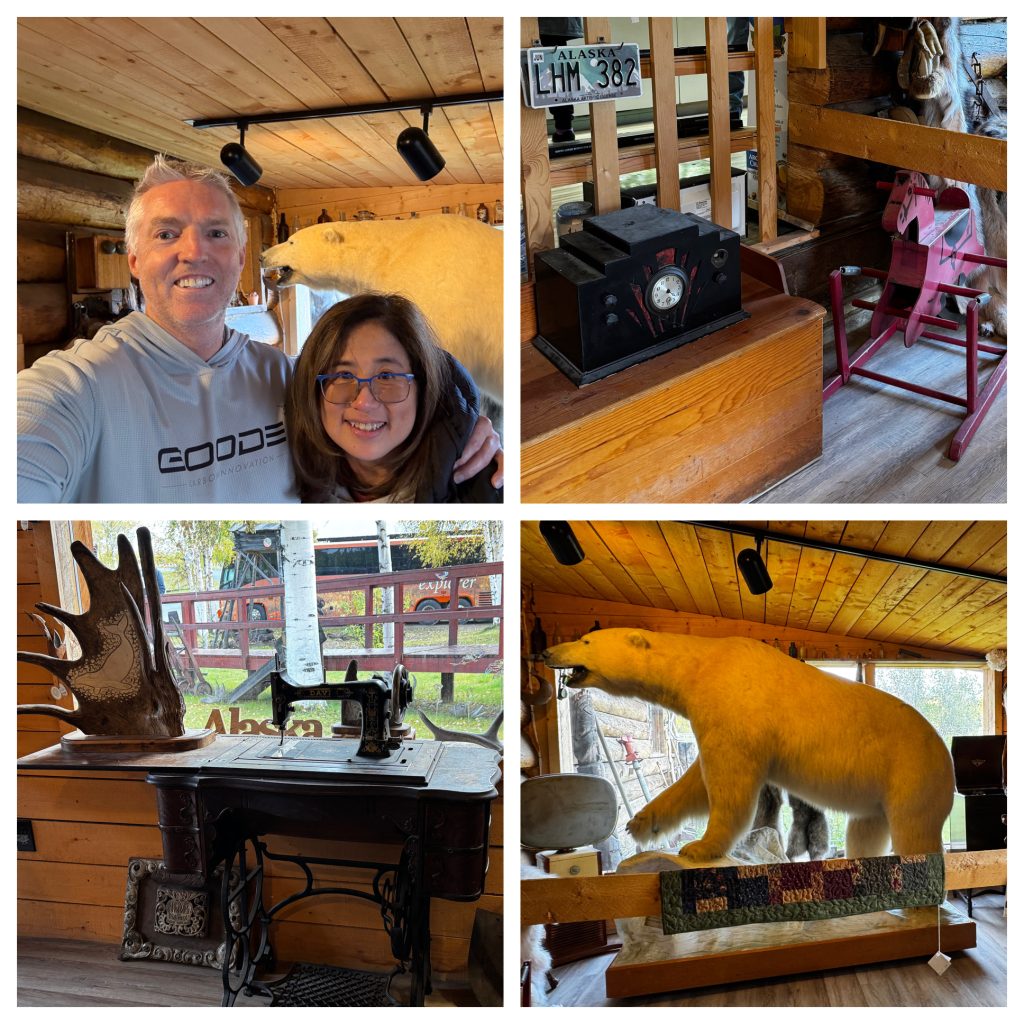
First stop after 1 1/2 hours of bus ride. This is where we stopped for potty break, grabbed some snacks, souvenir shopping.
As we got closer to Denali, the landscape shifted; the flatlands gave way to rolling hills and then the towering peaks of the Alaska Range started peeking out. It’s this massive mountain chain that stretches across south-central Alaska, acting like a natural barrier and creating all sorts of wild weather patterns.
Fun fact: It’s long been known as Denali, meaning “the high one” in the local Athabascan language, honoring the indigenous people who’ve lived here for thousands of years, but in 1896 a gold prospector renamed it Mount McKinley after President William McKinley, and it stuck officially until 2015 when it was changed back to Denali, but now has been changed back to McKinley! Whatever you call it, it’s an awesome sight! Unfortunately it was pretty overcast and rainy/snowy today so our visibility was limited.
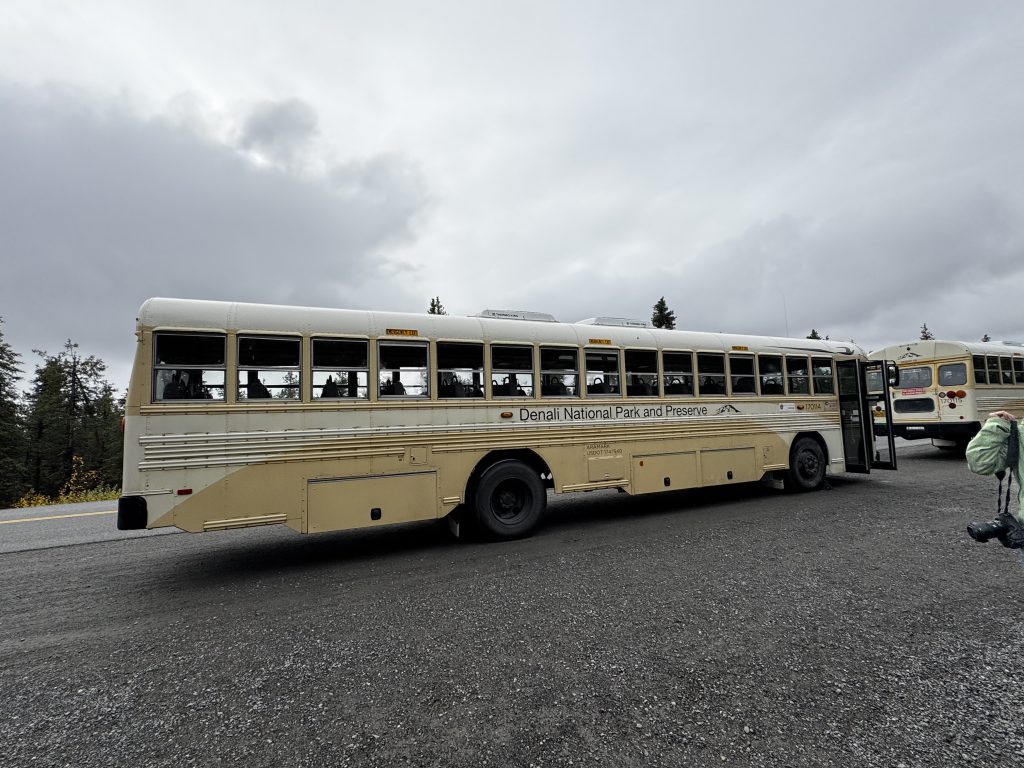
We pulled into the Denali area around midday, right at the edge of Denali National Park and Preserve, this massive 6-million-acre wilderness established in 1917 to protect the wildlife and those epic mountains. After a quick check-in at the lodge, we jumped on the Denali Natural History Tour, a 4-5 hour bus ride deep into the park.
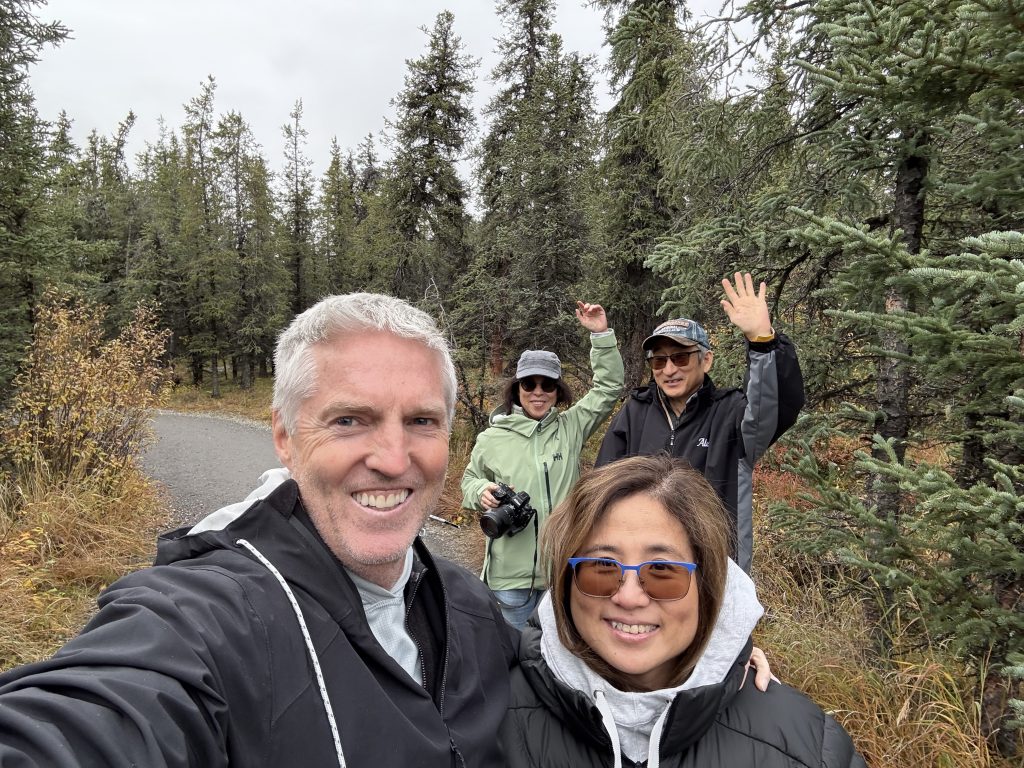
Our guide Sharon was awesome, sharing stories about the area’s past – like how the Athabascan tribes have called this place home for over 10,000 years, hunting and living off the land with deep respect for nature. We learned about the park’s creation during the early conservation movement and how it’s evolved to balance preservation with visitors like us.
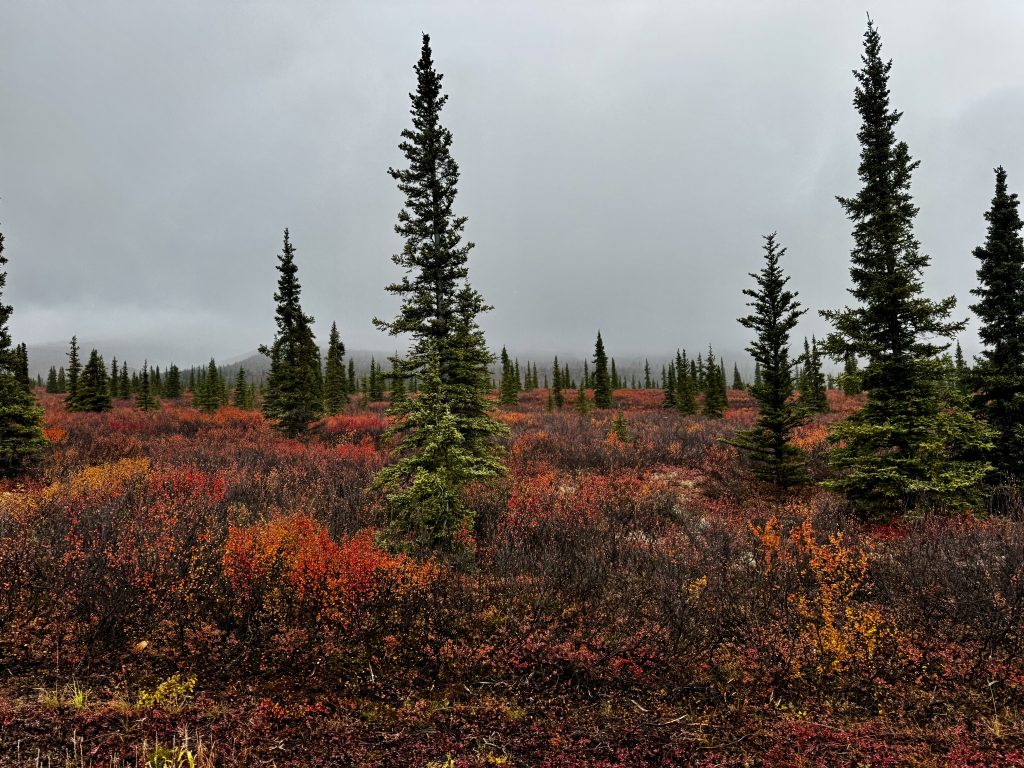
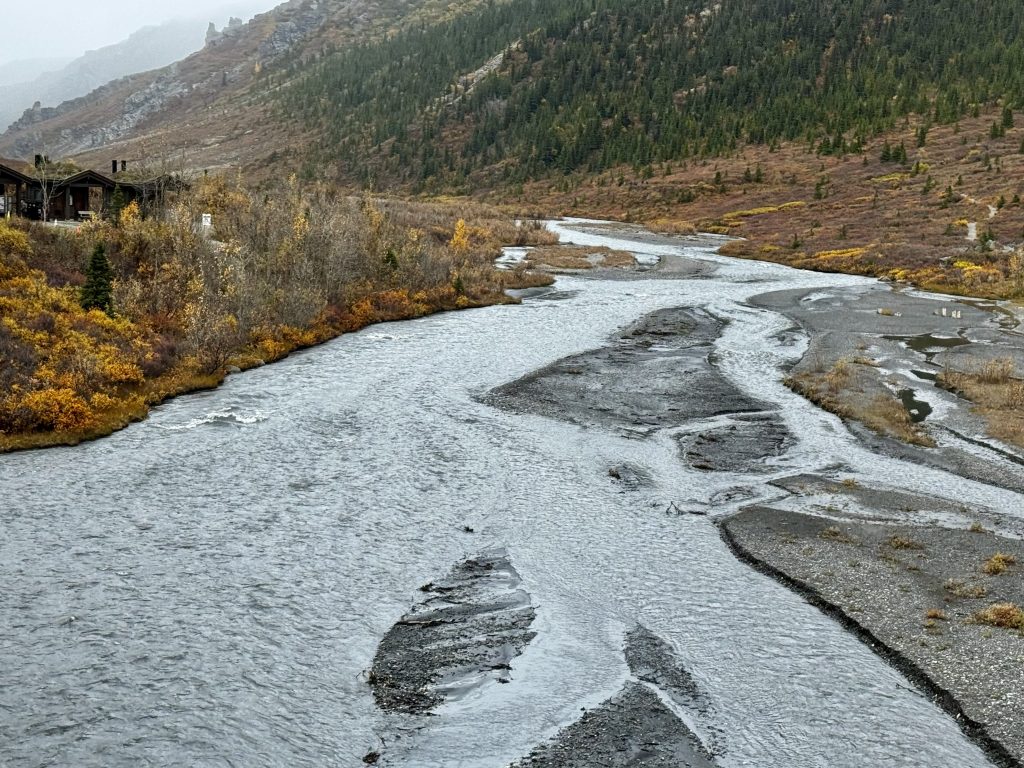
The scenic highlights were nonstop: We cruised along the park road, stopping at spots like the Savage River, where you cross this braided glacial river with crystal-clear water tumbling over rocks, surrounded by wildflowers and shrubs.
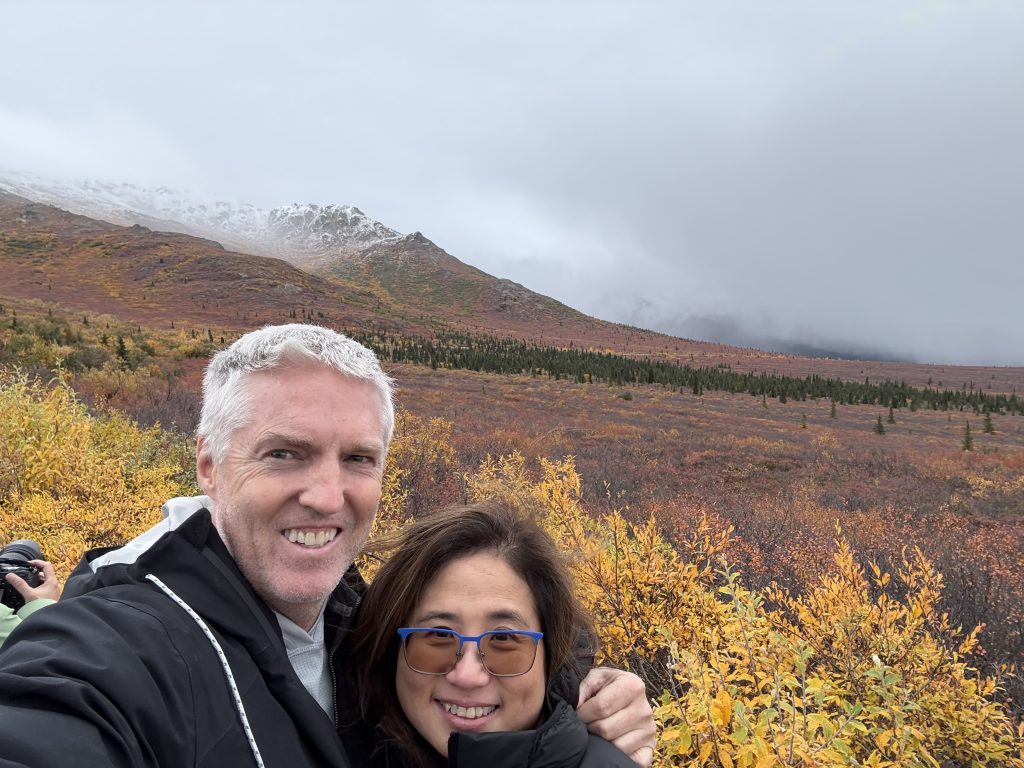
Then there was Primrose Ridge at mile 17, an overlook with great panoramic views of the outer Alaska Range – jagged peaks, valleys carved by glaciers, and if the weather cooperates, a teaser view of Denali’s snowy summit. Along the way, we spotted a moose cow and her calf munching on willows. The guide pointed out the tundra terrain, this open, treeless expanse that’s frozen underneath with permafrost, shaping how plants and animals survive up here.
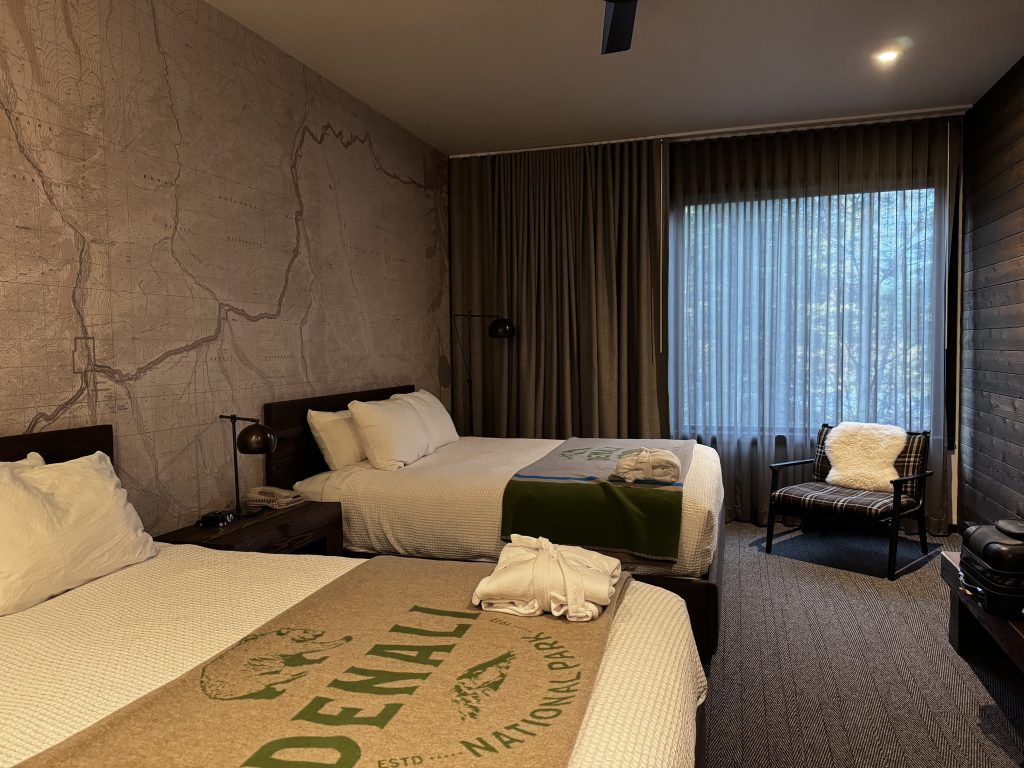
After the tour wrapped up, we headed back to the Holland America Denali Lodge where we stayed for the night – this place is a total gem, blending comfort with that Alaskan wilderness feel. It’s got over 500 cozy rooms, many with private balconies offering great views of Denali National Park and Preserve. The lodge is just minutes from the park entrance, with handy on-site tour pickups and a 24-hour front desk. For evening vibes, there’s Denali Square, this cool outdoor spot with fire pits, live music, and seating to chill around – perfect for roasting s’mores and swapping stories.
They also have the Music of Denali Dinner Theater for some fun entertainment, plus a couple of full-service restaurants, an espresso bar, and a bar/lounge to grab a drink or meal. It’s got all the modern perks like free WiFi, a gift shop, and even laundry facilities, making it super convenient after a day out in nature.
Overall, it was a perfect mix of chill vibes, jaw-dropping nature, and a dash of history that made us feel connected to this wild corner of the world. Can’t wait for more tomorrow – Alaska is a fantastic visit!
Day 6
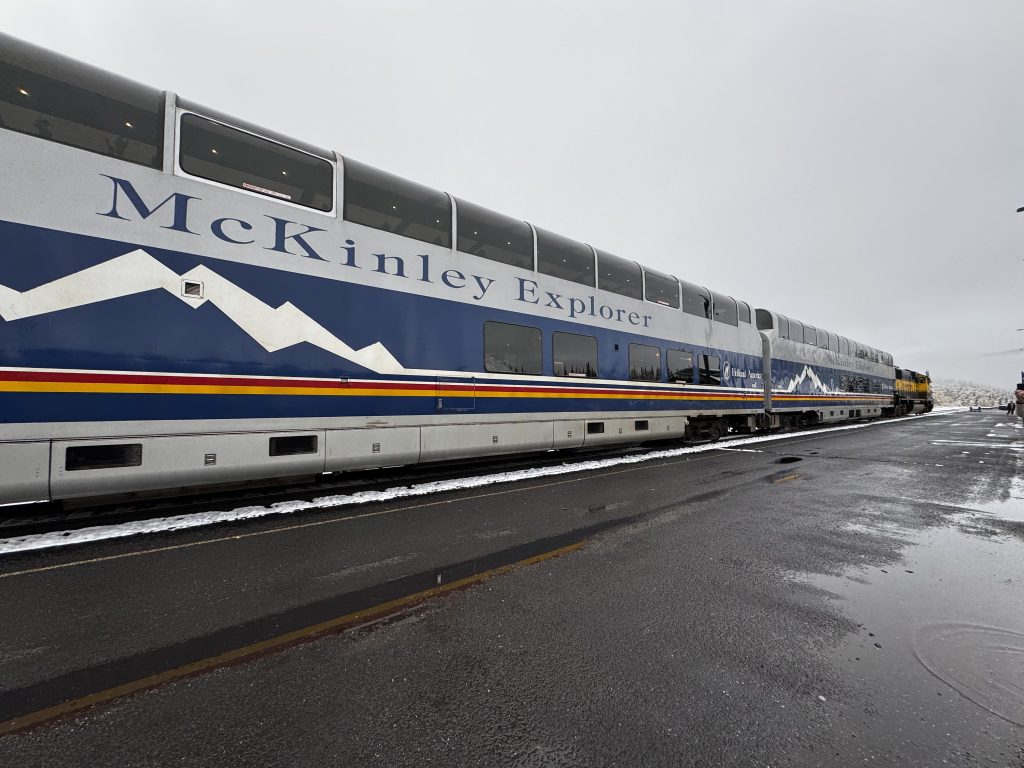
Our adventure in Alaska took a leisurely turn today as we hopped aboard the McKinley Explorer train, courtesy of Holland America Line, for the ride from Denali National Park down to Anchorage.
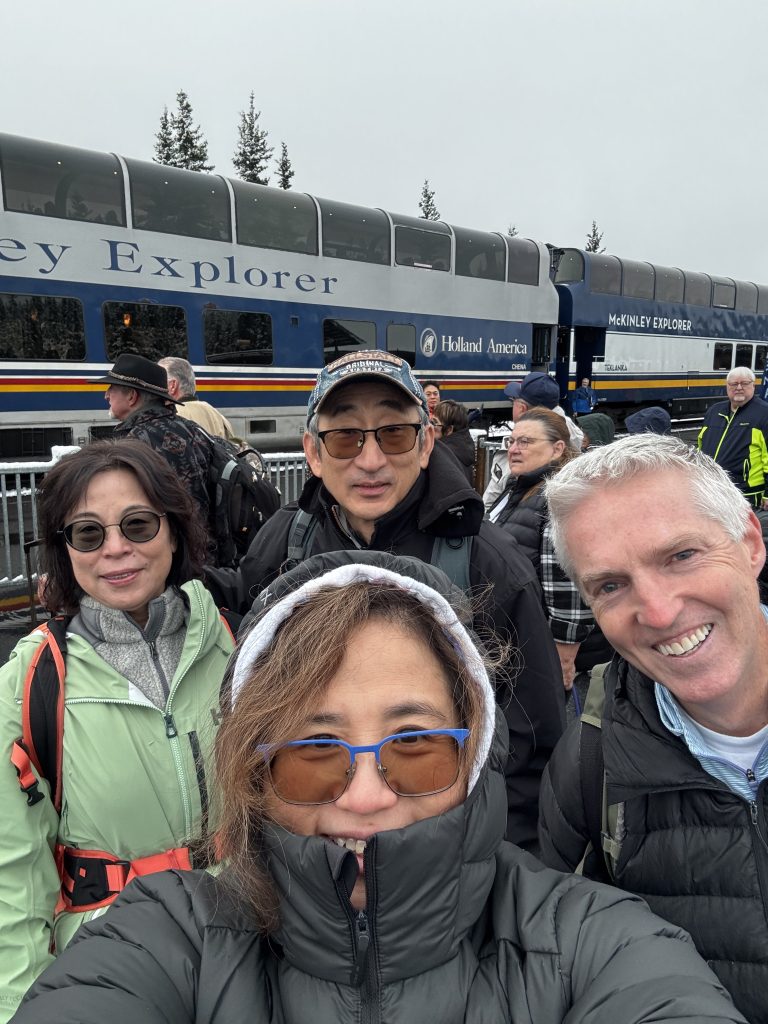
This isn’t just any train trip—it’s a rolling showcase of Alaska’s dramatic landscapes, blending luxury transport with the raw beauty of the Last Frontier.
As part of our cruise tour package, it bridged the rugged interior with the coastal vibes of Anchorage, giving us a perfect transition without the hassle of driving those winding roads.
We started from Denali Park station around 9 a.m., saying goodbye to the towering peaks of the Alaska Range.
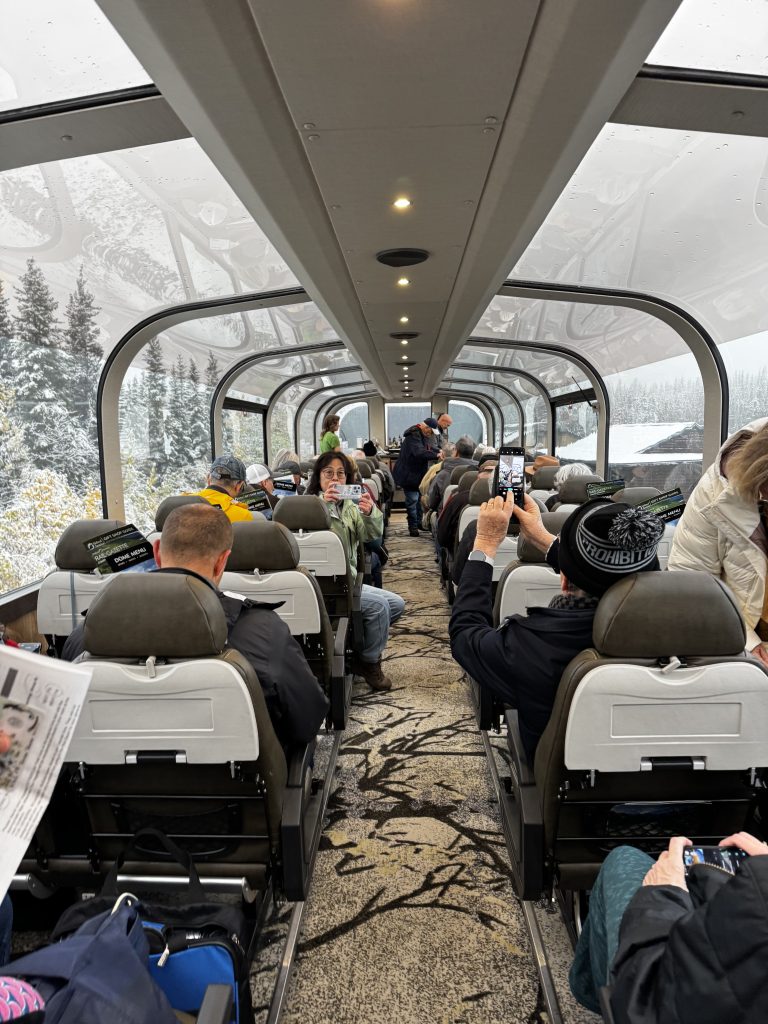
The McKinley Explorer itself is a gem: these private, two-level dome cars are designed for ultimate sightseeing, with massive curved glass windows stretching the full length of the upper deck.
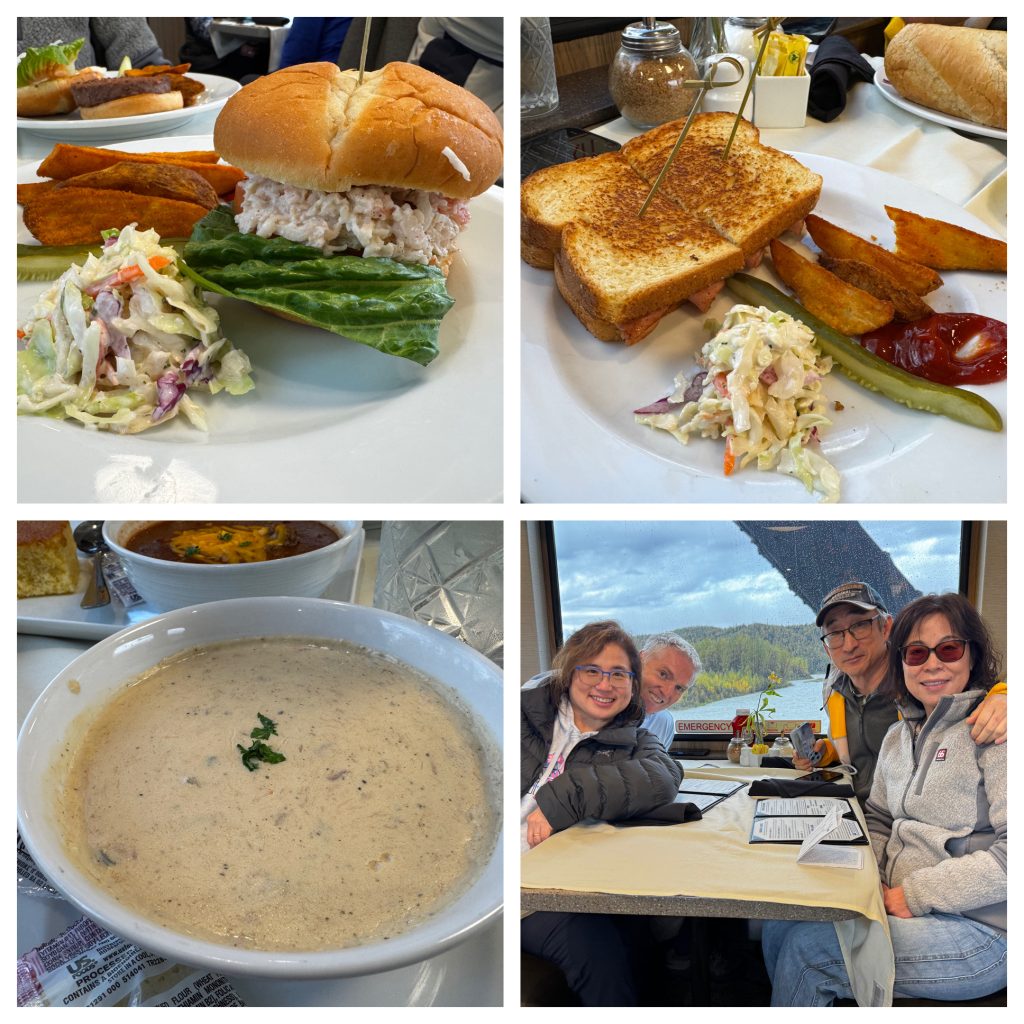
We settled into our assigned forward-facing seats—super comfy with plenty of legroom, footrests, and even fold-down trays for snacks. Up top, it’s all about those 360-degree views, while downstairs houses a cozy dining area where we enjoyed a gourmet lunch, featuring fresh Alaskan specialties like seafood sandwiches, the Alaskano (a creative twist on a Cuban sandwich but with tender bison meat instead of pork), hearty elk and bison chili, and a wonderful salmon chowder that warmed us right up.
And for that fresh mountain air fix, we stepped out onto the open-air platform at the back, feeling the breeze whip through as the train chugged along at a relaxed pace.
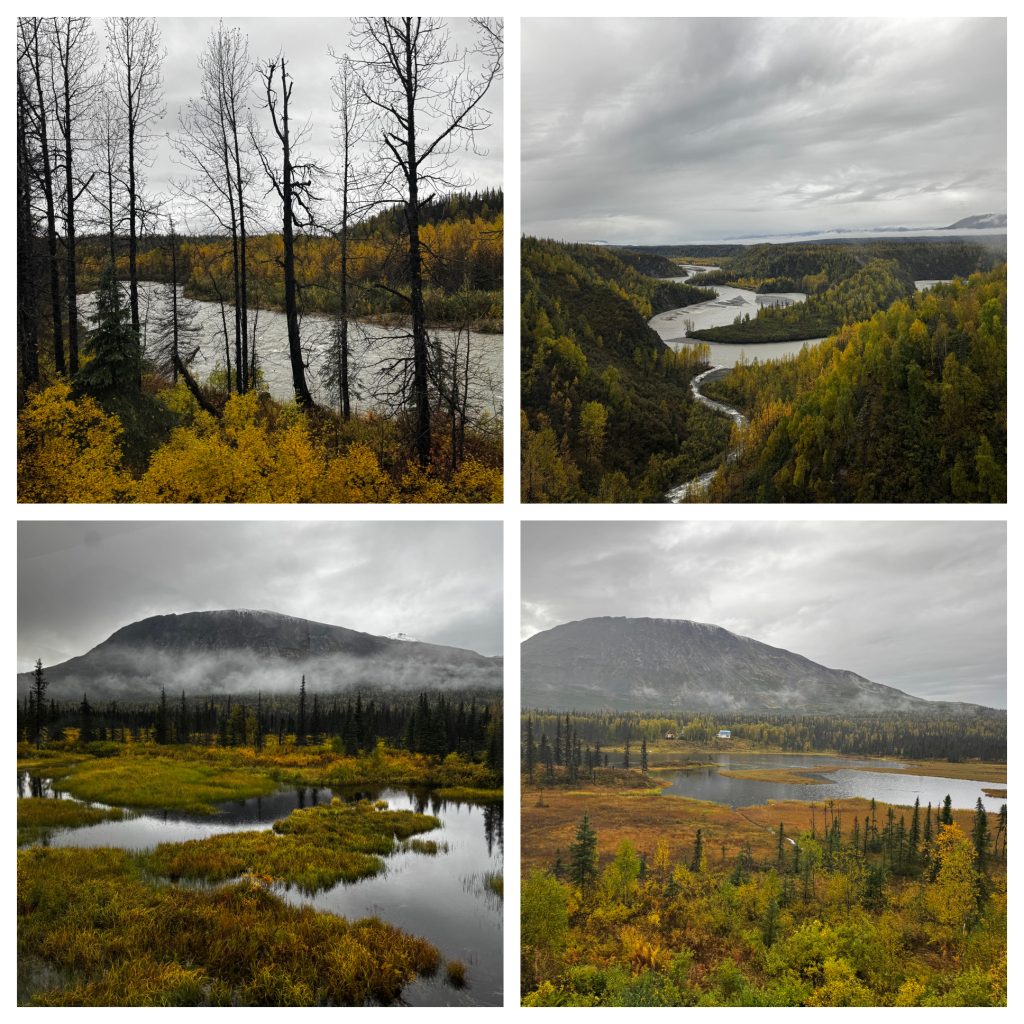
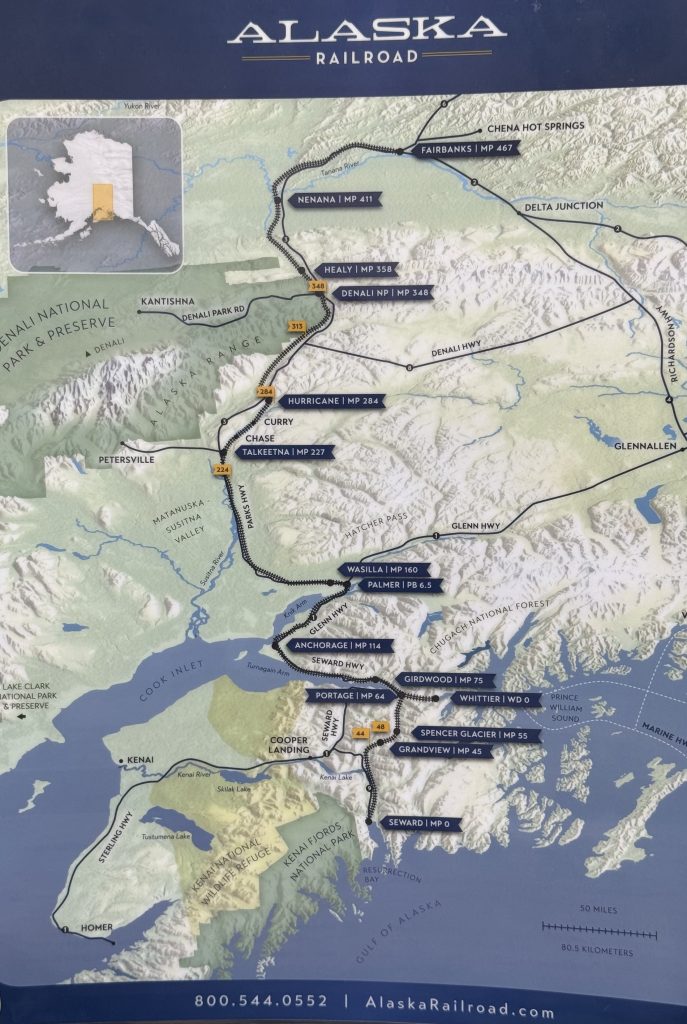
Geographically, this 233-mile route is a masterclass in Alaska’s diversity. Leaving Denali’s subarctic tundra behind, we crossed broad plateaus dotted with wildflowers and shrubs, then dipped into boreal forests thick with spruce and birch trees.
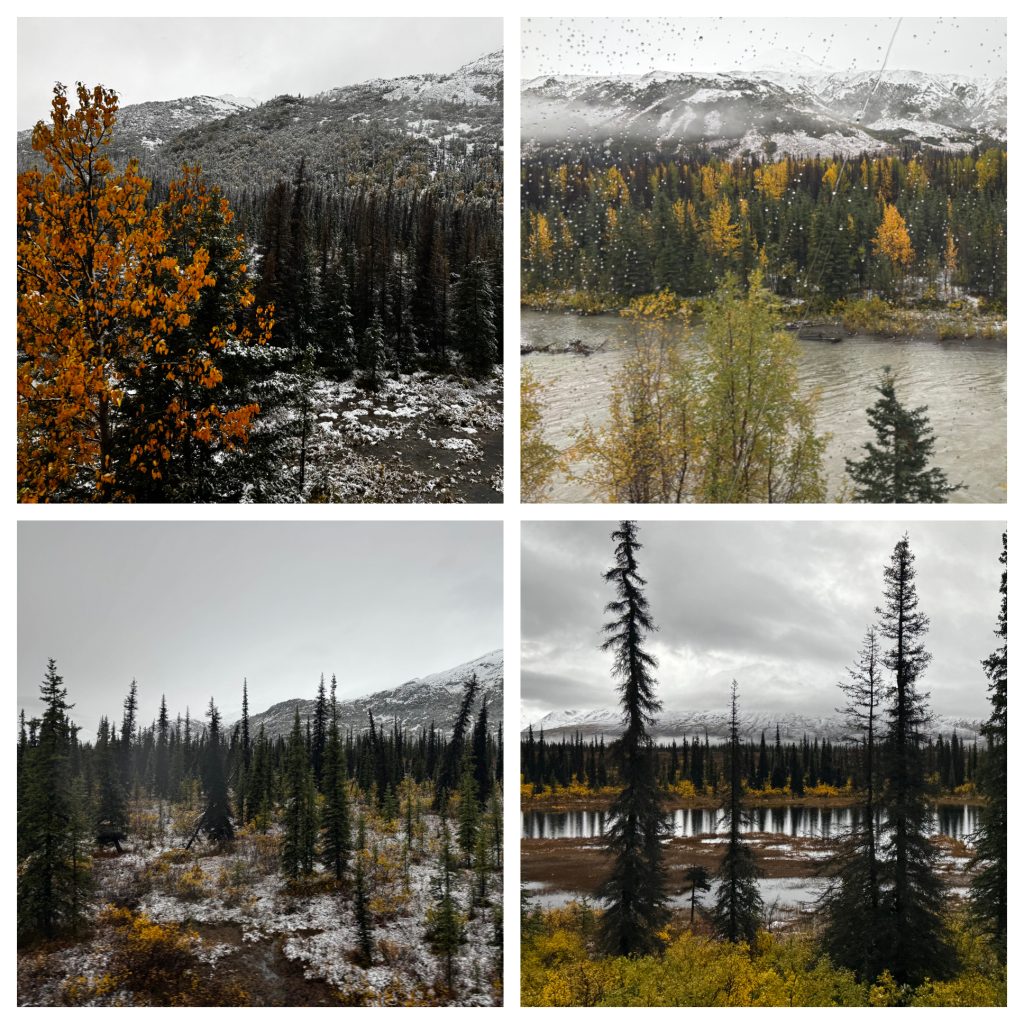
The train hugs the Alaska Railroad tracks, which were originally built in the early 1900s to haul goods and miners into the interior—talk about a historic lifeline that opened up this remote region.
One highlight was Broad Pass, the highest point on the railroad at about 2,300 feet, where meadows stretch out like a green carpet under the shadow of distant mountains.
If the weather cooperates (and it did for us on a partly cloudy day), you might catch glimpses of Denali itself, North America’s tallest peak at 20,310 feet, also known as Mount McKinley—which is how the train got its name back in the day.
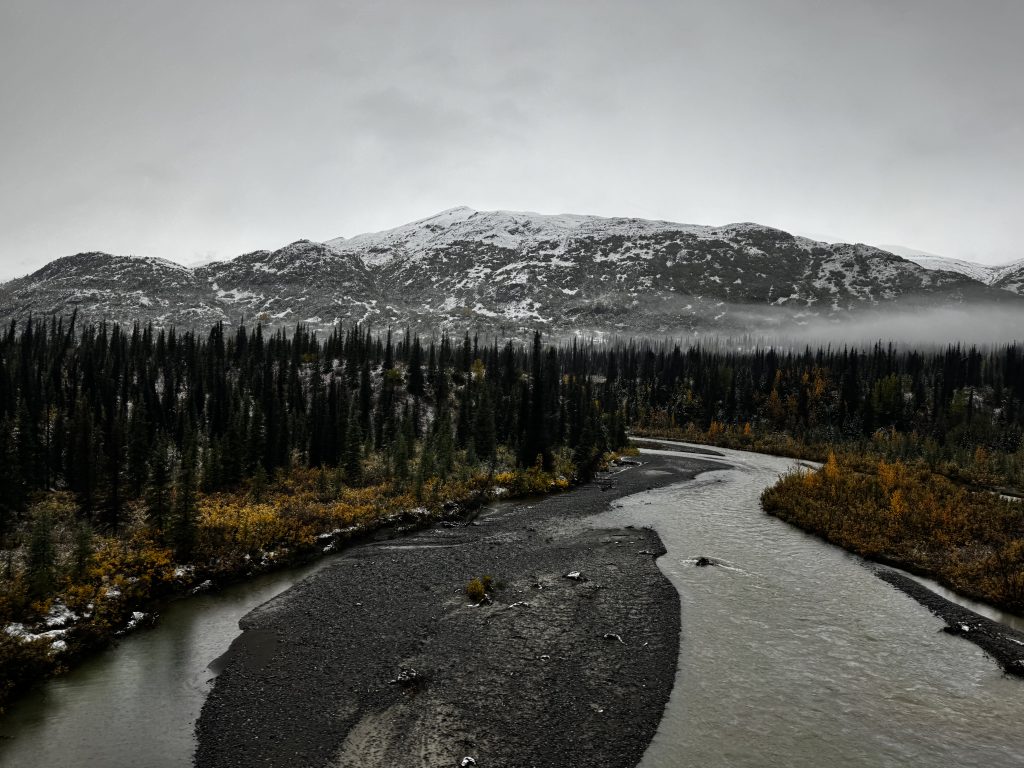
As we wound south, the scenery ramped up with thrilling spots like Hurricane Gulch, where the train crosses a steel bridge suspended 296 feet above a rushing river gorge—heart-pounding views straight down into the churning waters below.
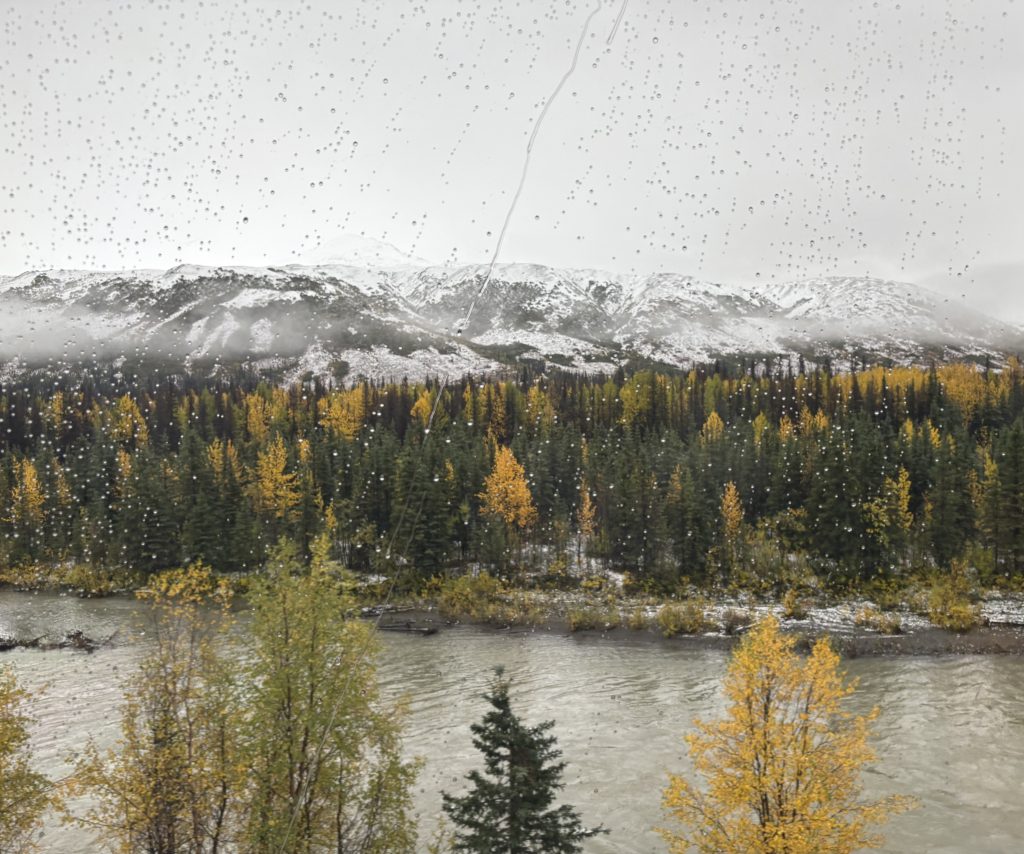
We passed through quirky towns like Talkeetna, a laid-back hub for climbers and artists that inspired the TV show “Northern Exposure,” and spotted the wide Susitna River snaking through valleys, with Mount Susitna (the “Sleeping Lady”) looming in the distance like a reclining giant.
We kept our eyes peeled for wildlife too; the route is home to moose, grizzly, caribou as well as bald eagles soaring overhead. The whole journey clocks in at a little over eight hours, averaging about 30 mph, so there’s no rush—just time to soak it all in.
By late afternoon, around 5:30 p.m., we rolled into Anchorage, the state’s bustling hub nestled between the Chugach Mountains and Cook Inlet. It felt like emerging from a wilderness dream into urban energy, ready for the next leg of our trip.
This train ride was better than just transportation; it was an experience that captures Alaska’s essence—vast, untamed, and utterly captivating. If you’re planning an Alaska cruise, don’t skip the land portion or the rail trip; the McKinley explorer is a great addition!
Day 7
We traveled beside Turnagain Arm, a narrow inlet of Cook Inlet flanked by the towering Chugach Mountains, where the water sometimes produces massive bore tides—waves up to 10 feet high rushing in with the tide (we saw surfers waiting to catch those waves as we passed).
Adding to the thrill, we spotted a bunch of beluga whales surfacing in the arm’s waters, their white forms contrasting against the blue-gray waves—a rare and magical sight, as these “canaries of the sea” are known for their vocalizations and are a protected species in this habitat.
The geography here is shaped by glacial activity from the last Ice Age, creating steep cliffs and lush valleys dotted with spruce forests. Our driver, Alex, a native Chugach, narrated bits of history and told us a bunch of native stories and legends, including explaining how Captain James Cook named the arm in 1778 after sailing in and having to “turn again” upon realizing it was a dead end, not the Northwest Passage he sought.
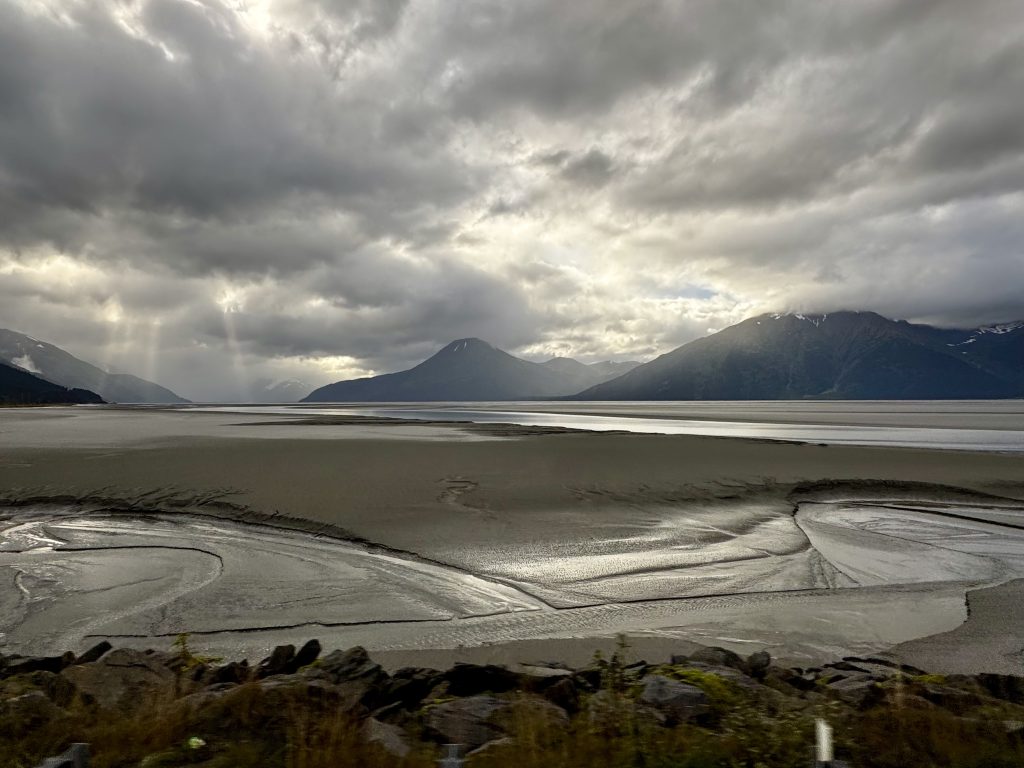
As we drove, Alex shared insights about his people, the Chugach, part of the Alutiiq or Sugpiaq culture, who have inhabited this region for thousands of years. They used the area as a vital portage route between Prince William Sound and the interior, traveling by foot or canoe to hunt seals, fish for salmon, and gather berries.
Stories from their oral traditions speak of harmony with the land, like tales of the Raven creator spirit who shaped the world and taught survival skills. We passed spots like the Alaska Wildlife Conservation Center, where some tours stop to see rescued bears and moose, adding a touch of wildlife context to the journey.
The highlight of the bus ride was the Anton Anderson Memorial Tunnel, the gateway to Whittier. This 2.5-mile engineering marvel, the longest highway tunnel in North America, burrows straight through Maynard Mountain and doubles as a rail line—the only combined road-rail tunnel of its kind on the continent.
Built during World War II as part of a secret military project to connect the isolated port of Whittier to the mainland, it was named after the engineer who oversaw its conversion for vehicles in the 1990s. Traffic alternates directions every 30 minutes, with cars driving right on the train tracks, guided by embedded rails. Inside, it’s dimly lit with massive jet fans whirring for ventilation, and emergency safe houses line the walls in case of breakdowns—though thankfully, we zipped through without issue.
Travelers often share anecdotes about the eerie, claustrophobic feel, like one story of a train passing through just as cars wait, echoing the tunnel’s dual-purpose history.
Emerging from the tunnel into Whittier felt like entering another world. This tiny town, population around 200, sits at the head of Passage Canal in Prince William Sound, surrounded by glaciers and rugged peaks. Its history is fascinating: established as a military base in 1941 for its ice-free, deep-water port hidden from enemies. It became a Cold War outpost with massive structures like the now-abandoned Buckner Building, a hulking concrete relic once housing thousands.
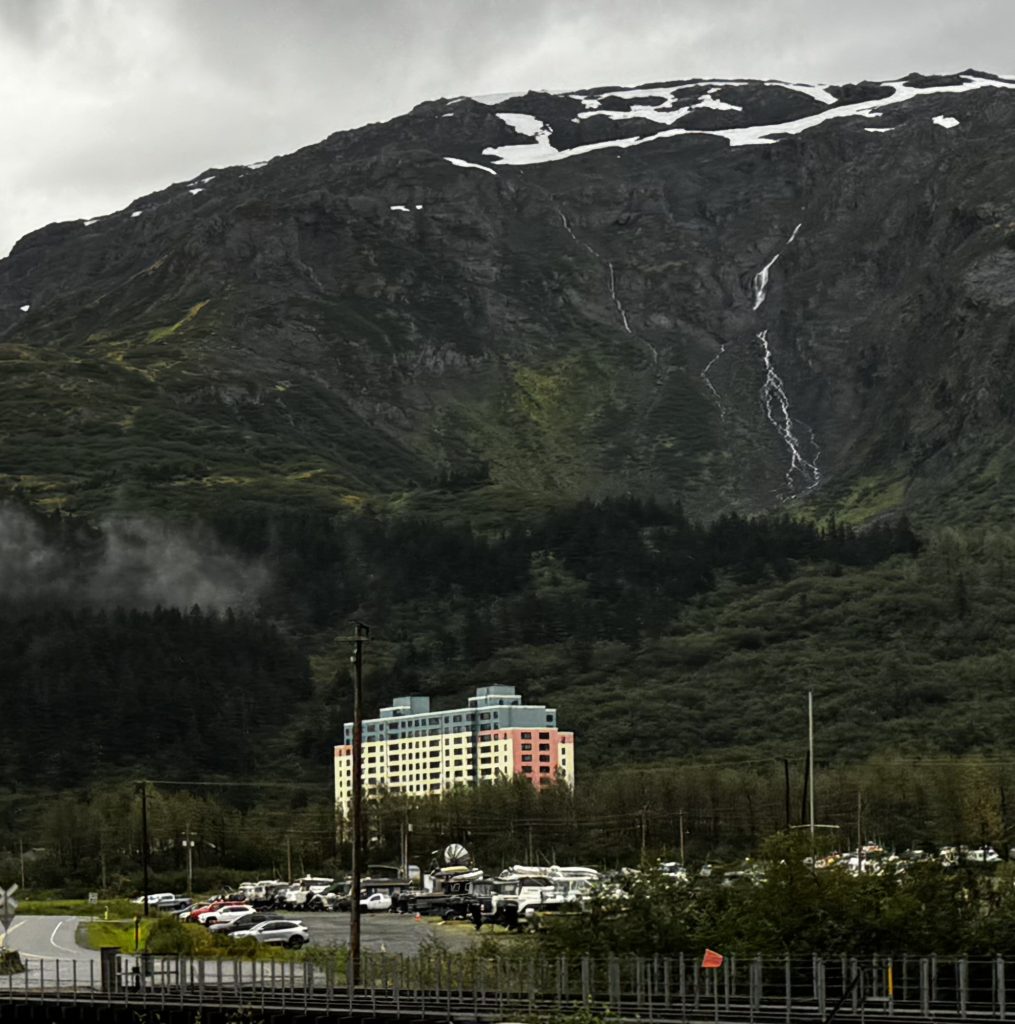
Most residents live in Begich Towers, a single 14-story building that includes apartments, a school, church, and even a post office—earning Whittier the nickname “town under one roof.” Native ties run deep, the Chugach used this as a seasonal camp, with stories of shamans interpreting the sound’s moods through whale migrations.
An interesting site is the small harbor museum, showcasing artifacts from indigenous kayaks to WWII memorabilia, and anecdotes abound about the town’s isolation—groceries arrive by barge, and winters bring 22 feet of snow.
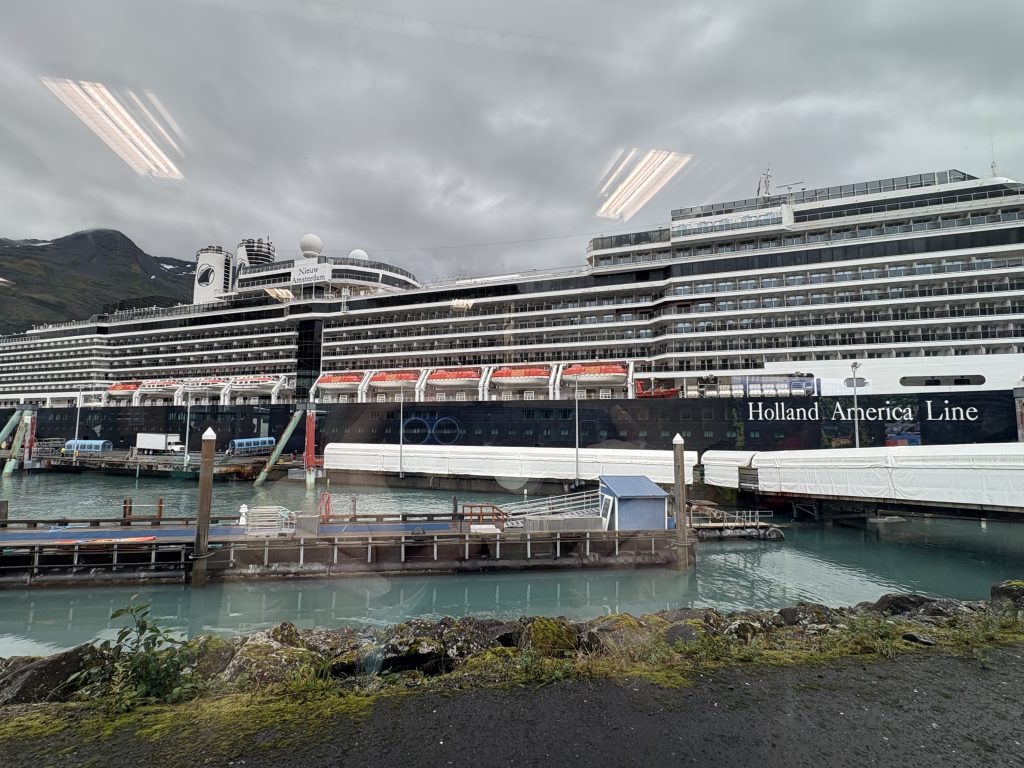
We boarded the New Amsterdam, an elegant mid-sized ship with about 2,100 passengers, known for its classic Dutch decor and Alaska expertise. The process was smooth. After checking in at the terminal around midday, we walked the gangway, scanned our cards, and settled into cabins with views of the sound. We explored the decks, enjoying a nice welcome lunch, all while the crew shared tips on spotting wildlife like orcas in the weeks ahead.
As evening fell, around 7:30 PM, we departed Whittier, gliding into Prince William Sound under a soft twilight. The geography unfolded with deep fjords carved by ancient glaciers, forested islands, and snow-capped mountains reflecting in the calm waters.
This sound, larger than San Francisco Bay, is a haven for marine life, but its history includes the tragic 1989 Exxon Valdez oil spill, which devastated ecosystems yet spurred remarkable recovery efforts.
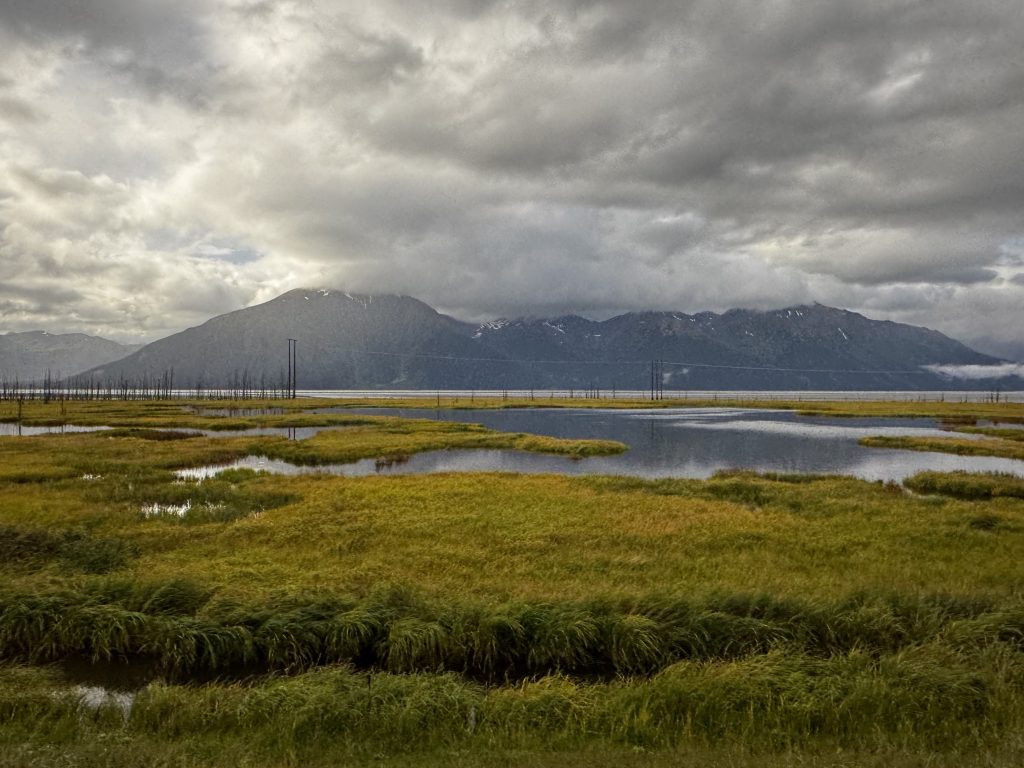
Native communities like Chenega, rebuilt after the 1964 earthquake-tsunami that wiped out the original village, embody stories of survival—elders recount rebuilding with federal aid while preserving traditions like bidarka (skin boat) crafting. One poignant anecdote is how Chugach fishermen aided spill cleanup, blending ancient knowledge with modern science.
Sailing out, with the tunnel’s mountain fading behind, we are looking forward to experiencing glacier bay tomorrow!
Day 8
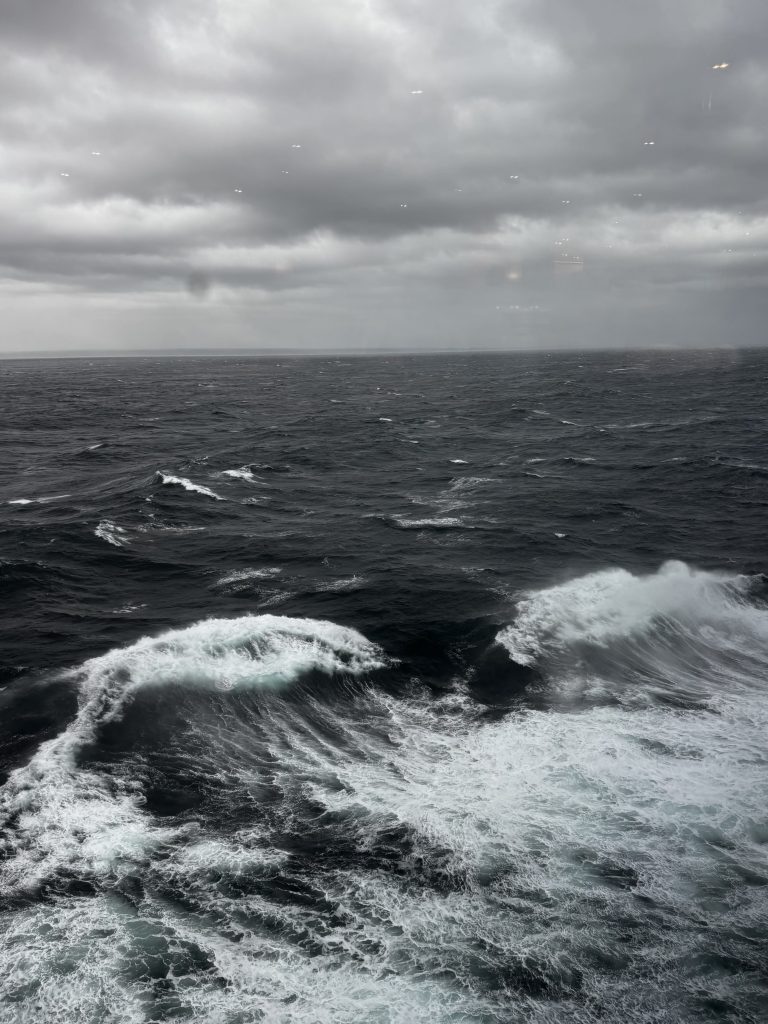
All day sailing with wind at 50mph and waves 20 feet high. We were intended to stop at Hubbard glacier but unfortunately, the waves in that area were unsafe and the captain made a decision to forgo that stop so we went directly to glacier Bay, bypassing Hubbard glacier. Waves are definitely extreme!
Day 9
We kicked off our cruise on the Holland America Nieuw Amsterdam in Whittier, Alaska, a small port town nestled in Prince William Sound, just a short drive from Anchorage. Surrounded by the rugged Chugach Mountains, Whittier is surrounded by fjords and icy waters carved by ancient glaciers. We set sail into the calm, iceberg-dotted expanse of the Sound, a 100-mile-long inlet buzzing with wildlife and over 150 glaciers.
However, things got wild fast—gale-force winds churned the Gulf of Alaska, making the ship rock and roll. We clung to our cups during meals and lectures, but the crew kept things under control, adjusting our course for safety and eventually slowing our pace to avoid too much rocking as we bit the 25-ft waves. The weather forced a schedule switch: we skipped Skagway, a Gold Rush hotspot known for its 1898 saloons and the scenic White Pass railway, and changed to a stopover in the small town of Haines.
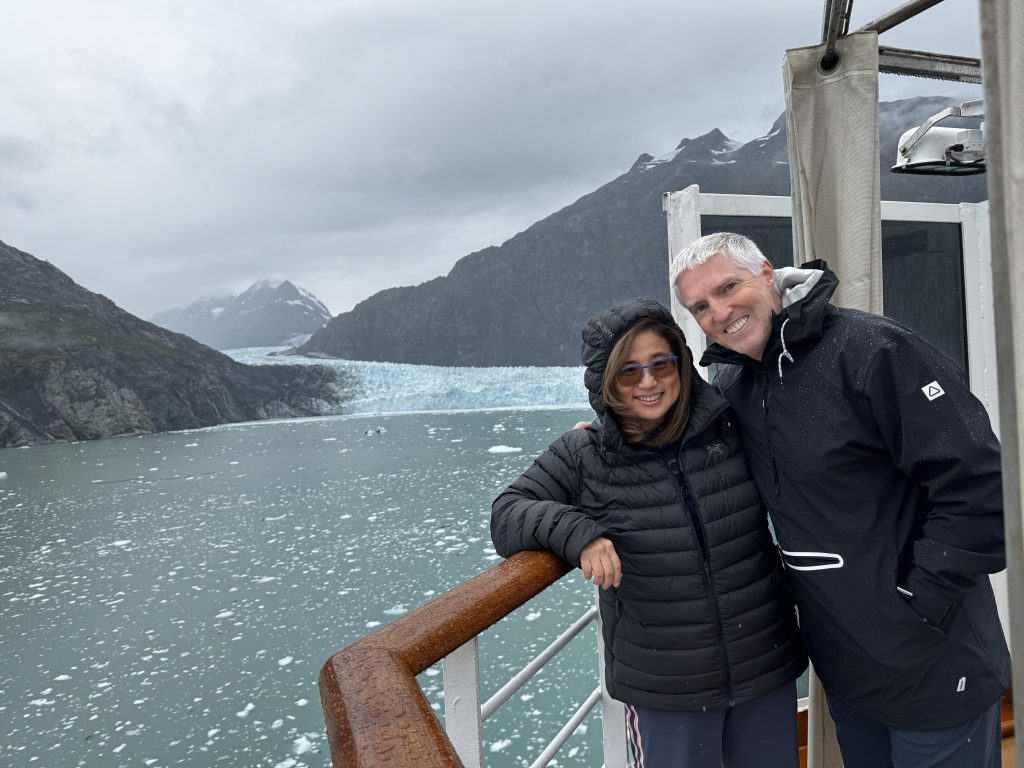
Today, the winds calmed, and we entered the breathtaking Glacier Bay National Park, a 3.3-million-acre UNESCO World Heritage site in southeastern Alaska. This place is a living testament to Mother Nature’s raw power—250 years ago, it was buried under a massive glacier, but rapid retreat since the end of the Little Ice Age (period of cooling from 1300-1850) has exposed new land where plants like fireweed are taking hold in a process called primary succession. Rangers boarded the ship, sharing this history as well as stories of the Huna Tlingit, who fished these salmon-rich waters before being displaced by advancing ice.
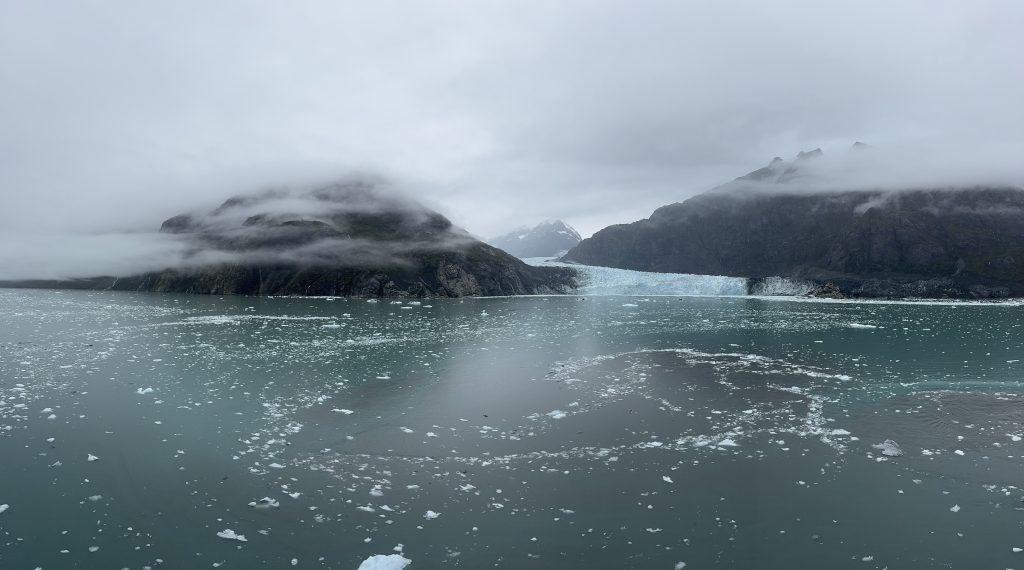
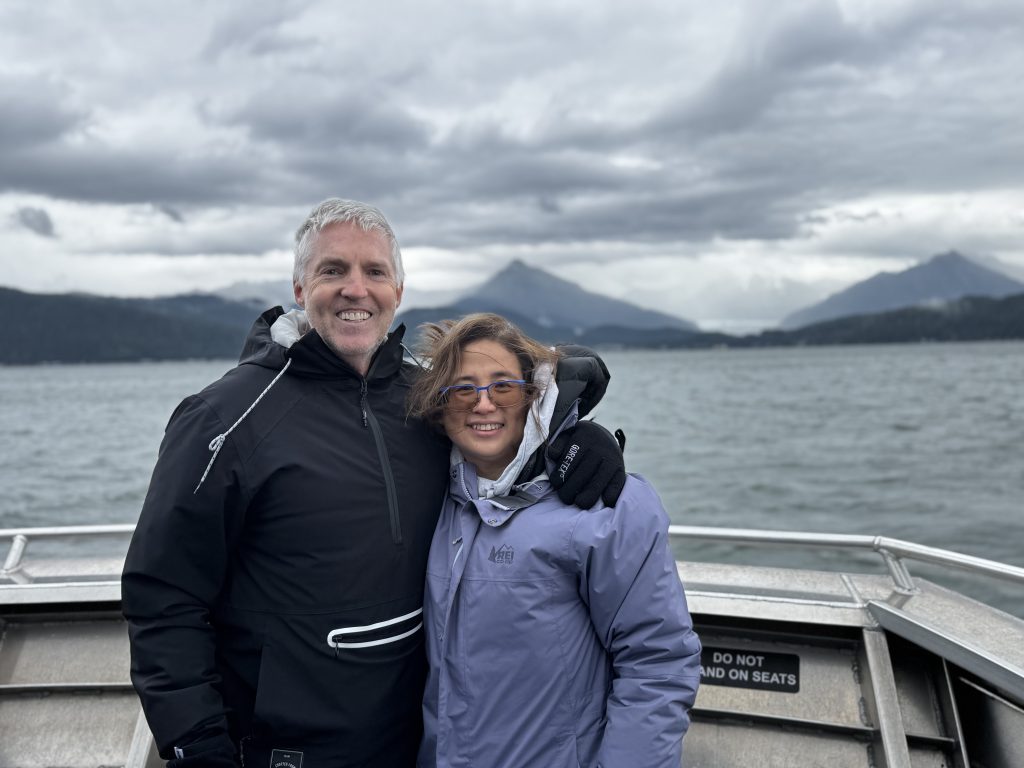
Cruising the West Arm, we spotted harbor seals lounging on ice floes, humpback whales breaching, killer whales swimming, bald eagles soaring, sea otters playing, and they told us they occasionally even see black bears foraging along the shore.
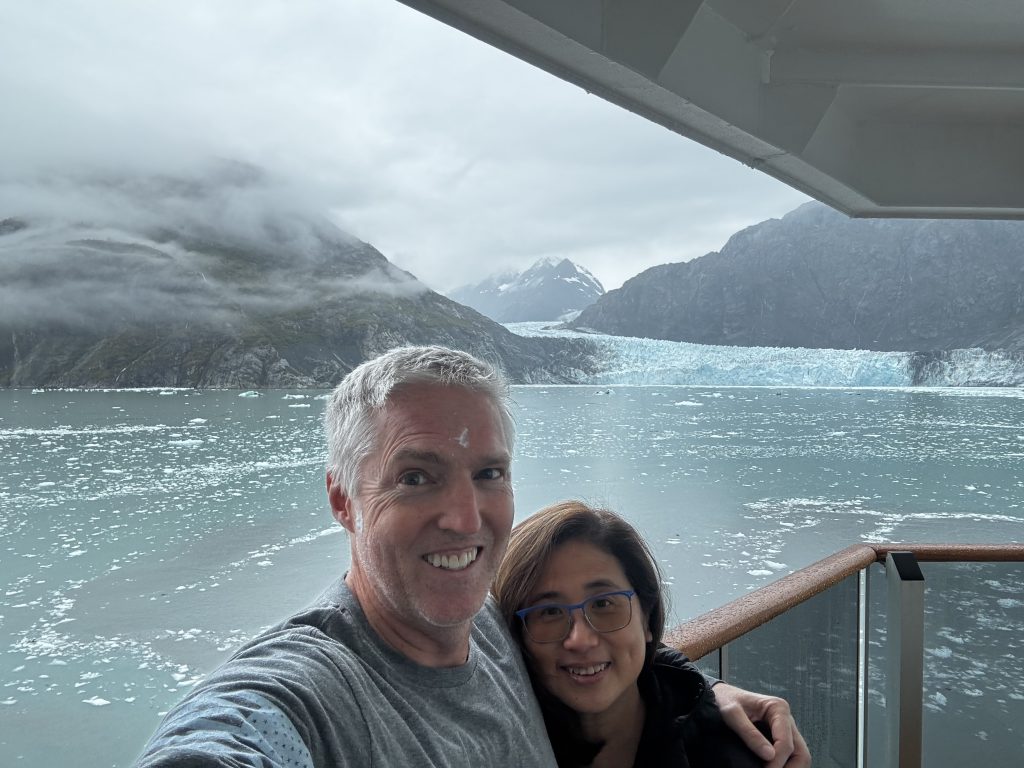
The highlight was Margerie Glacier, a mile-wide wall of blue ice towering 250 feet above the water. We watched it calve, with massive chunks crashing into the bay in a thunderous spectacle. Nearby, the Grand Pacific Glacier, spanning 2 miles wide, showed its retreating face—a stark reminder of how these ice giants have shrunk over centuries.
Day 10
After Glacier Bay, we docked in Haines, a laid-back fishing town on the Chilkat Peninsula with deep Tlingit roots, just 20 miles from Skagway across Lynn Canal. Haines has galleries and totem poles, a Gold Rush supply hub and home to the Alaska Chilkat Bald Eagle Preserve, where thousands of eagles gather in winter. Compared to Skagway’s touristy buzz, Haines is a quieter and more authentic little town.
Interesting fact: Glacier Bay hosts over 200 bird species and 40 mammals, from sea otters to wolves, in an ecosystem where new land can emerge at 10 feet per day in some spots. As we sailed toward College Fjord, named after Ivy League explorers from the 1899 Harriman Expedition, we reflected on the wild ride—bumpy seas, epic glaciers, and Haines’ chill vibe. Alaska’s untamed beauty keeps stealing the show, one icy vista at a time.
Kevan and I decided to stay back as there wasn’t much to see at this little town. Our friends Esther and Wang Ge decided to take the tender to take a few pics of the town, came back drenched with rain water. We saw some people who came back from the little excursion in the elevator, they looked very sad and wet.
Day 11
Juneau
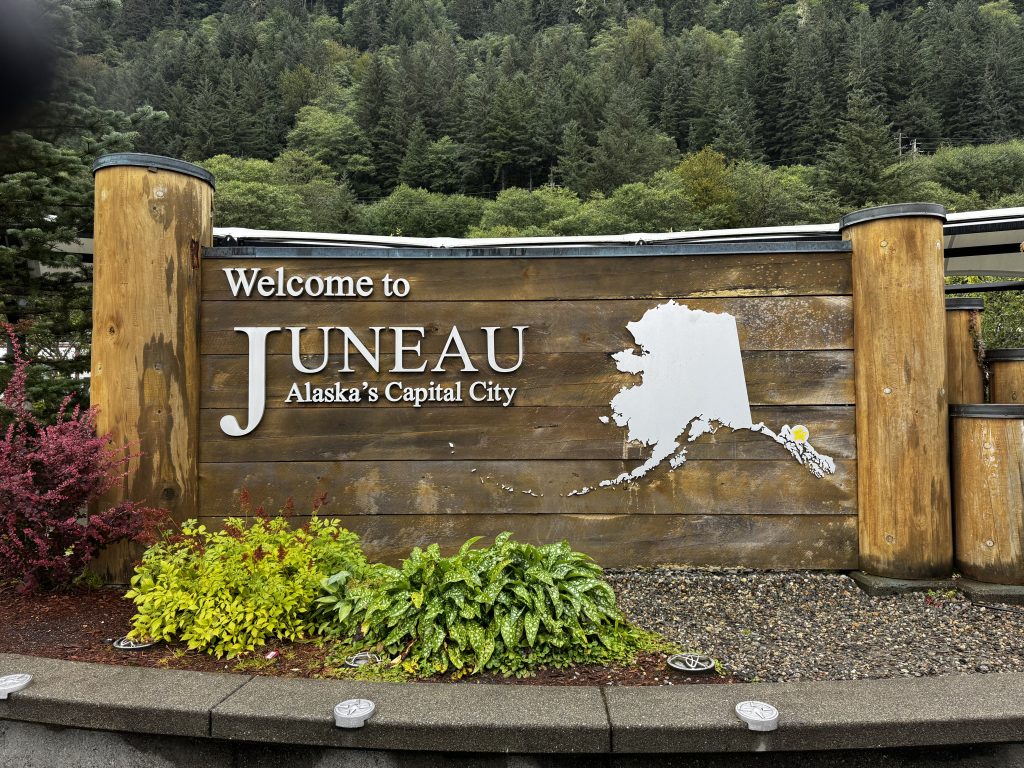
Our Juneau port stop was great, nestled in Alaska’s Inside Passage with no road access, just boat or plane. Surrounded by mountains, the Juneau Icefield, and the vast Tongass National Forest, Alaska’s capital city blends wild beauty with a cozy, historic vibe.
Founded in 1880 during a gold rush and named after prospector Joe Juneau, it’s been the state capital since 1906. The Tlingit people’s culture shines through in local art, and fun fact: Juneau’s got one of the highest bald eagle populations in the U.S. – we saw a bunch of them in just one day
Whale Watching
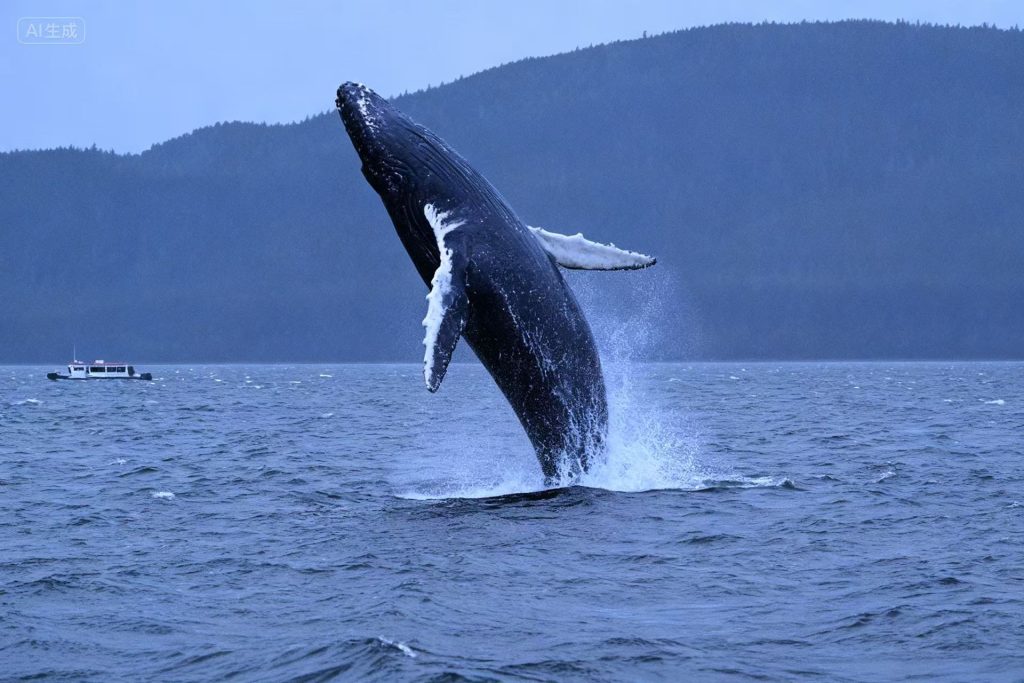
The highlight was our whale watching tour with Juneau Tours. We cruised the Gastineau Channel, surrounded by snowy peaks and lush islands, when humpback whales stole the show.
We saw tons of whales, spouting and diving, but one pair hung out by our boat forever, breaching and splashing like they were performing just for us. The guides shared cool tidbits, like how these whales migrate from Hawaii to feed here on herring and eat about 3000 pounds of fish per day. Pure magic.
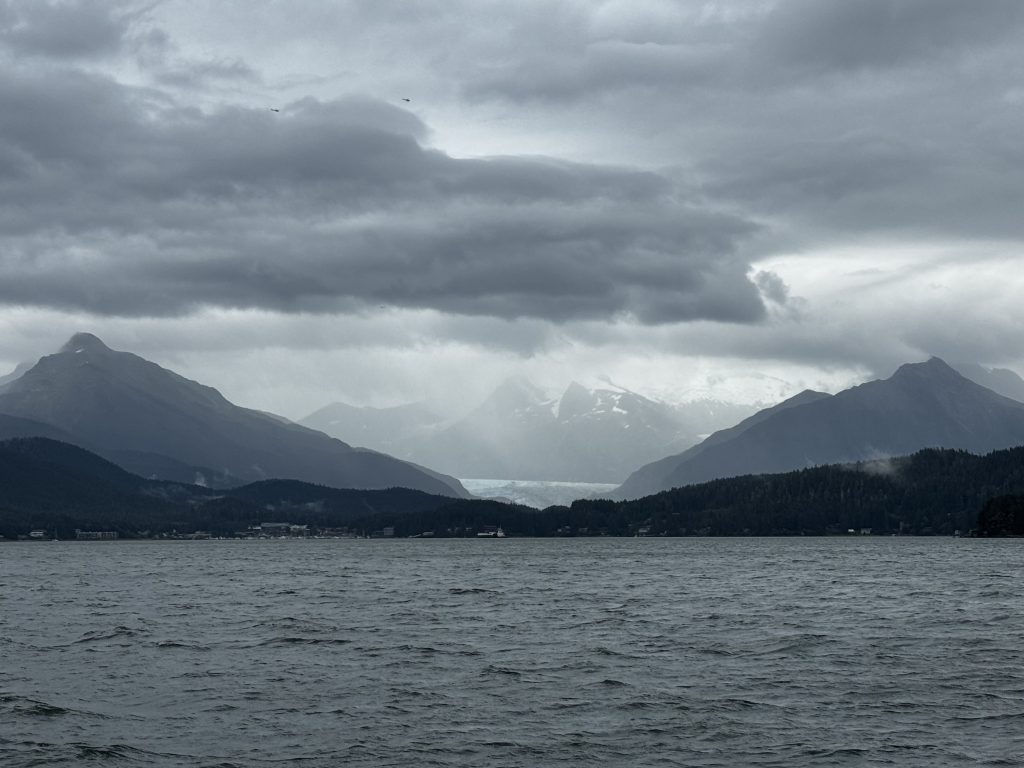
From the boat, we also got a stunning view of Mendenhall Glacier, a 13-mile-long ice giant flowing from the Juneau Icefield into Mendenhall Lake. Its glowing blue face, framed by mountains and forest, was unreal. Named after geologist Thomas Corwin Mendenhall, this 3,000-year-old glacier has been retreating since the end of the Little Ice Age in 1850, revealing new land and teaching scientists about glacial impact. Fun fact: it’s one of the few glaciers you can drive to, just 12 miles from downtown.
Juneau’s mix of gold-rush history, Tlingit heritage, and raw nature (bears, eagles, and fresh seafood) made this stop unforgettable. The whale show and Mendenhall’s icy grandeur from the water left us speechless. Juneau, you’re a wild gem!
Day 12
Ketchikan
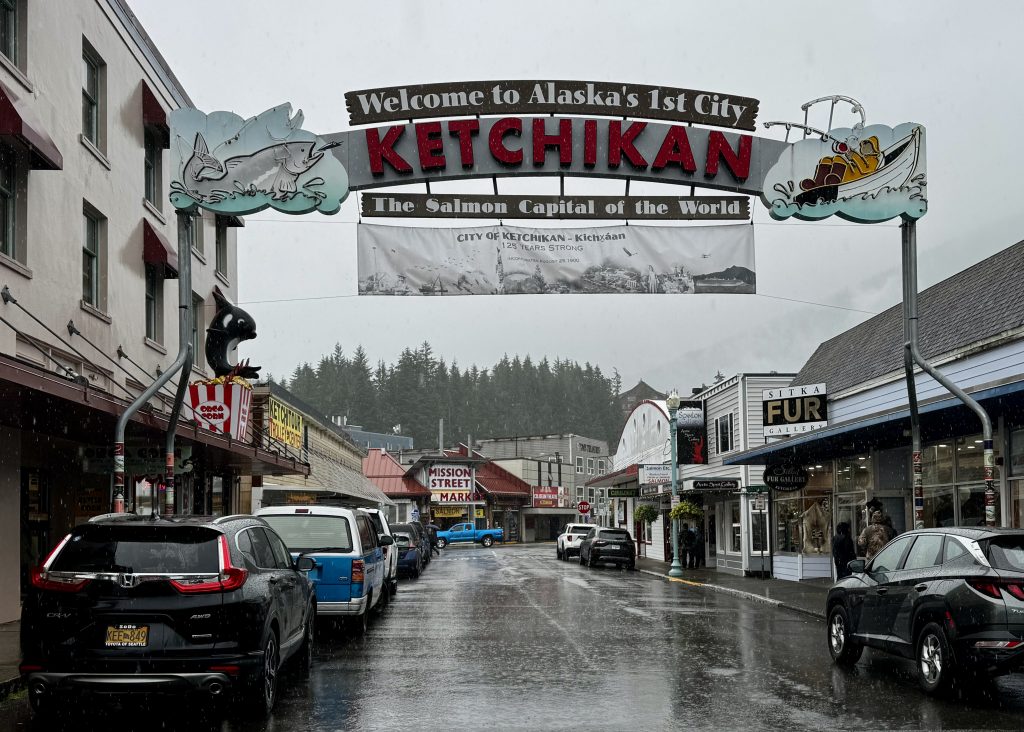
Our cruise docked today in Ketchikan, Alaska’s “First City”. The rain today was relentless—a full-on deluge from dawn to dusk that left us drenched to the bone despite our best attempts with ponchos and hoods.
This southern gateway to the Inside Passage, nestled on Revillagigedo Island in the heart of the Tongass National Forest—the planet’s largest temperate rainforest—certainly lives up to that with a jaw-dropping 162 inches of annual rainfall.
Today felt like it got half of that in one go! The rugged mountains along the coast plunge straight into fjord-like waters, and about 8,000 locals live here alongside a legacy stretching back 10,000 years to the Tlingit, Haida, and Tsimshian peoples, which is why this town has the world’s highest concentration of totem poles.
Known as the “Salmon Capital of the World,” Ketchikan’s history is woven with fish, from ancient camps to the Gold Rush-era canneries of the late 1800s. Stepping off the ship onto a sopping Tongass Avenue, we walked down the waterfront promenade, lined with whale-tail benches and fishing boats rocking in the harbor. This town was once a pitstop for miners and loggers chasing Yukon gold, but is now driven by tourism.
We opted for a self-guided trek, starting at Creek Street, a historic boardwalk built on stilts over Ketchikan Creek. It was once the rowdy red-light district of the early 1900s, complete with bordellos and secret whiskey stashes hidden under trapdoors for high-tide getaways. Now it’s a charming stretch of boutiques and galleries, which we dutifully checked out and did our part to drive tourism revenue for the town.
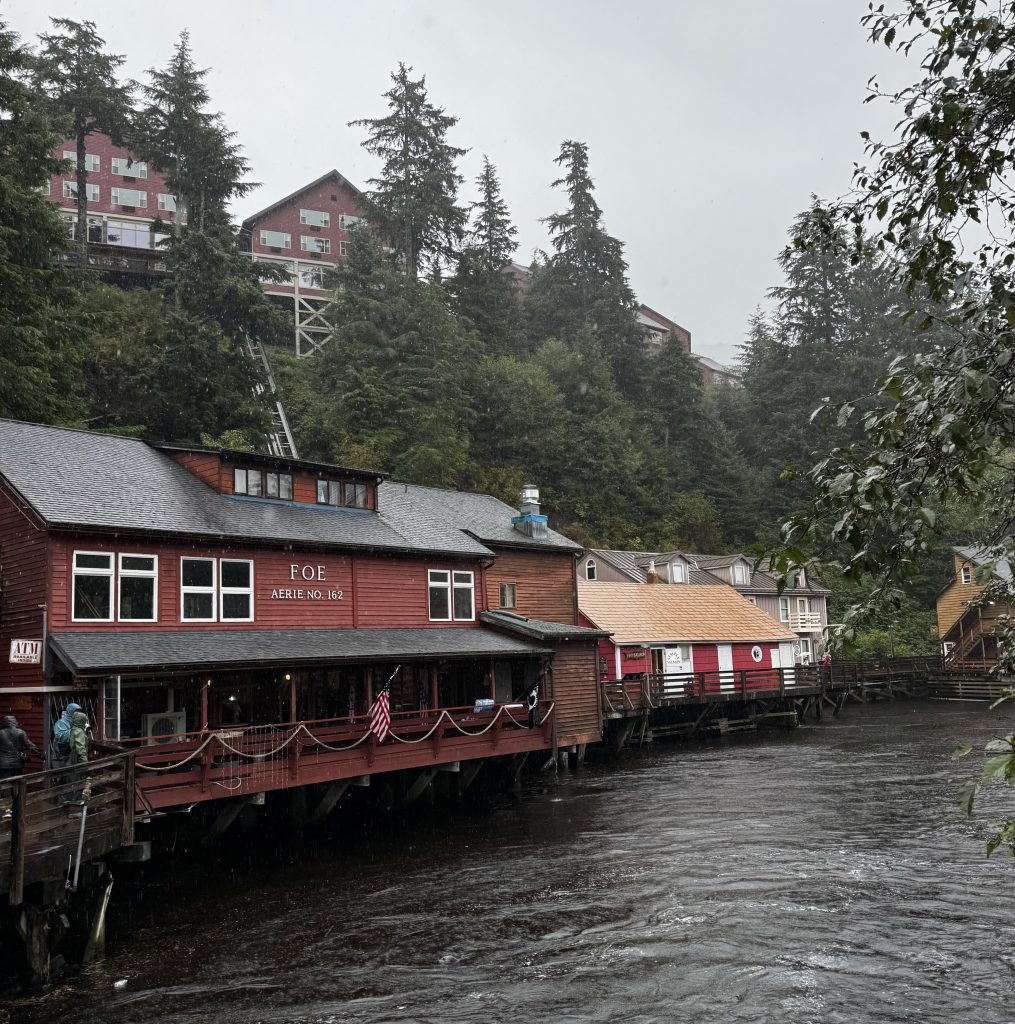
Braving the downpour, we followed the Salmon Walk trail to the salmon ladder, a fish-friendly series of steps helping salmon conquer the creek’s waterfalls.
It’s late September, the tail end of the pink salmon run, but the creek still had its share of silvery fish (likely coho) swimming and thrashing upstream. This is a high-stakes obstacle course, which became all too clear as a seal (and possibly a sea lion) went after the salmon in the shallow sections of the swollen creek. One seal lurked right below us and we watched it hunt, a raw glimpse of the food chain as salmon feed the seals, which then feed the bears and eagles in this rainforest ecosystem.
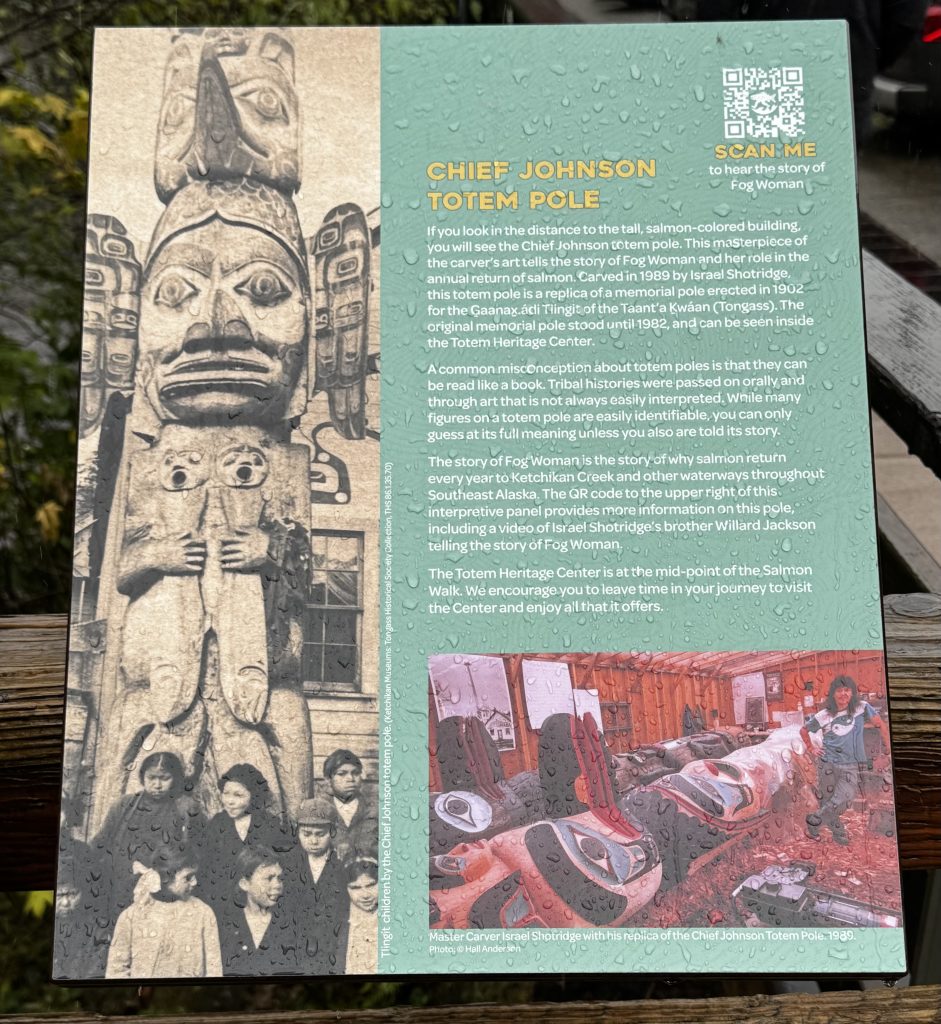
Sloshing back to the ship, we passed the Chief Johnson Totem Pole in a distance, and boarded the ship where we got warmed up at dinner with steaming salmon chowder. Ketchikan, with its drenched charm and untamed pulse, is a place that soaks you through but leaves you buzzing. If you have a chance to head this way, be sure to pack lots of rain gear, chase the salmon, and embrace the soggy adventure, we are glad we did.